Audiologists See Hearing Aid Apps as a Promising Tool for Family Support
A survey of hearing professionals found strong enthusiasm for smartphone apps that help families manage hearing aids, even as everyday use in the clinic lags behind.
Almost every hearing aid sold today can connect to a smartphone app, and those apps are quietly changing how people learn to live with their devices. Yet how professionals actually put these tools to work, and how much they trust them, has not been well documented.
A new study set out to fill that gap by asking audiologists directly. The focus was on families of young children who wear hearing aids, a group for whom day-to-day management falls largely on parents and caregivers.
About This Study
Title: Hearing-aid-connected mobile apps for caregiver hearing aid management: provider practices and perspectives
Authors: Karen Munoz, Madison Fitzpatrick, J. A. Schnittker, Danielle Glista, Michael P. Twohig
Affiliations: Utah State University (Speech and Hearing Sciences, and Psychology); Sonova AG (Switzerland); Western University and the National Centre for Audiology (Ontario, Canada)
Journal and date: International Journal of Audiology, published July 21, 2026
Study type: Cross-sectional survey of practicing audiologists
Source: PubMed, DOI 10.1080/14992027.2026.2702204
Background: Why the Researchers Looked at This
A hearing-aid-connected app is a smartphone program that talks wirelessly to the device. Depending on the model, it can adjust volume and listening programs, run a hearing check, show whether the aids are working, and offer guidance on care and troubleshooting. For a parent managing a small child's hearing aids, that kind of at-home support can be the difference between consistent daily use and devices that sit in a drawer.
Earlier research has suggested these apps can help personalize care, but little was known about how clinicians fold them into real practice. The researchers wanted to learn how often audiologists recommend apps, what they use them for, and whether they would welcome a dedicated app built to educate and support caregivers.
How the Study Was Done
The team ran a cross-sectional survey, meaning a one-time questionnaire that captures a snapshot of attitudes and habits. The respondents were audiologists in the United States who fit and follow up hearing aids for children from birth to about ten years of age.
The survey asked what these providers currently do with apps in their practice, from recommending them to helping caregivers install and set them up, and what features they would want in a hypothetical education and engagement app. It also probed the obstacles that get in the way of using apps during appointments.
What the Researchers Found
Roughly half of the audiologists said they routinely recommend an app to caregivers, about 58 percent, and a similar share, close to 58 percent, provide some orientation on how to use it. Just under half, about 49 percent, said they help install the app on a caregiver's phone during the visit.
Actual hands-on use for supporting hearing aid care was less common. Only about a quarter of providers, roughly 25 percent, reported using the app itself to help with wearing and maintaining the devices, suggesting that recommendation does not always translate into everyday clinical use.
Enthusiasm for the concept, though, was striking. About 90 percent said they would be comfortable recommending an education and engagement app to caregivers. Nearly all saw benefits to their processes, with about 99 percent pointing to easier access to information, and every respondent, 100 percent, agreed such an app could improve caregiver confidence.
The main sticking point was time. Around 30 percent flagged the minutes it takes to download and pair an app during a busy appointment as a real challenge. The authors concluded that a caregiver-focused app was widely seen as a desirable tool with the potential to improve both clinic workflows and family outcomes.
What It Means for People with Hearing Loss
The takeaway reaches well beyond pediatric clinics. When the professionals who fit hearing aids agree that apps build confidence and make information easier to reach, it points to a broader shift in what a hearing aid is: not just a device you wear, but a device you manage and personalize through software in your pocket.
The friction the study identified is worth remembering too. If setup during an appointment is a hurdle for trained clinicians, then an app that is genuinely easy to pair and navigate matters a great deal for everyday users, especially older adults setting up devices on their own at home.
When the App Does the Fitting: Personalization You Set Up at Home
This study captures a moment when the app is becoming central to the hearing aid experience, and that is precisely the idea behind newer over-the-counter devices designed to be tuned through software rather than only in a clinic.
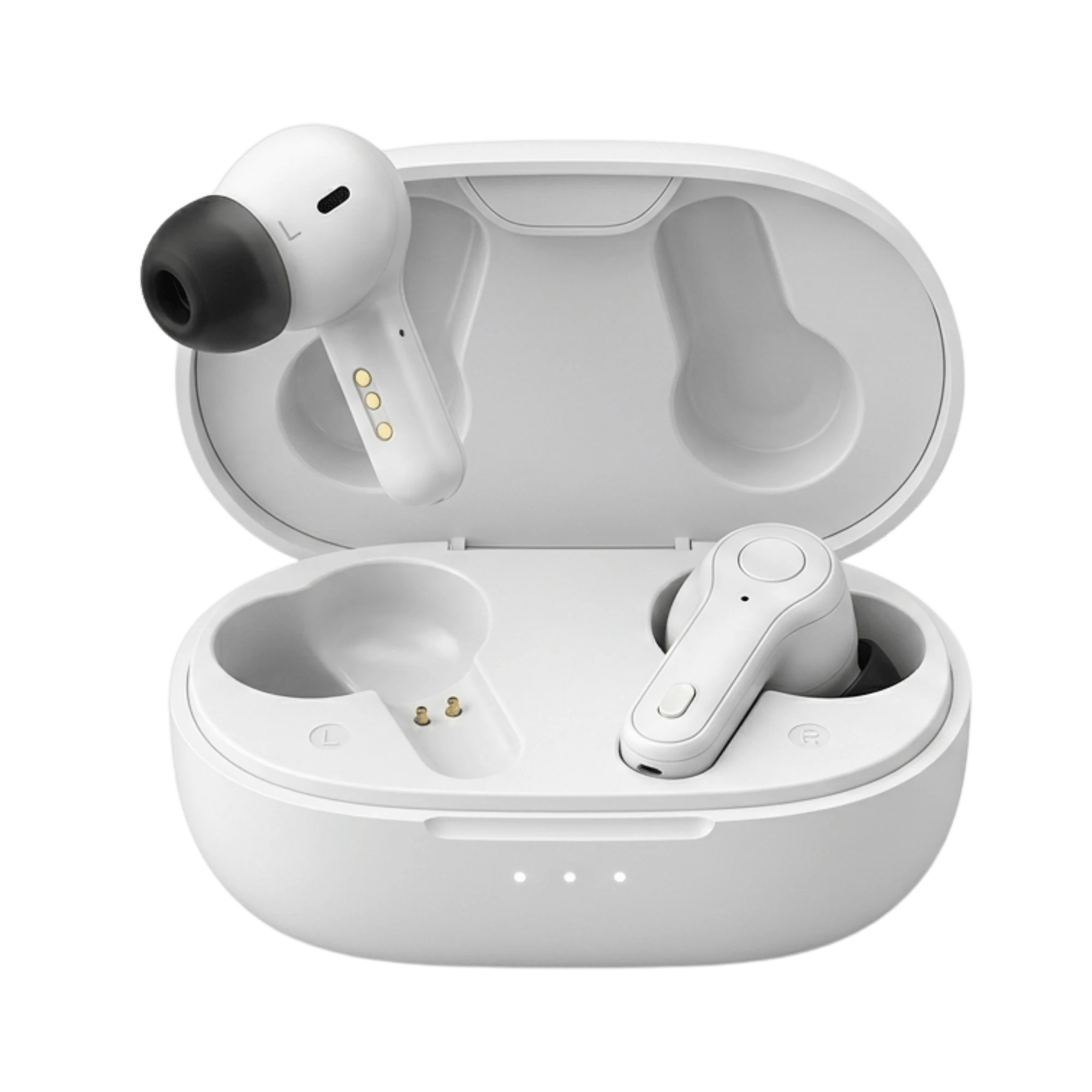
Panda Air is built around that approach. It is a modern earbud-style hearing aid that pairs with the Panda app to run an in-ear hearing test, which then auto-programs the device to your own audiogram, much like a clinical fitting but done at home. For the many people the study describes as gaining confidence from an app, that means the personalization and the guidance live in the same place.
As app-tuned, self-fitting OTC hearing aids, devices like Air aim to make the setup that clinicians described as time-consuming simpler for the user, with a rechargeable design and charging case to keep the routine easy. Over-the-counter devices are cleared for mild to moderate hearing loss, so people with more significant loss will still benefit most from a professional fitting.
Limitations of This Research
This was a survey of provider perceptions and self-reported habits, not a measurement of patient outcomes, so it cannot show whether apps actually improve how well families manage hearing aids or how children hear. The respondents were audiologists working with young children, which means the findings may not carry over directly to adults buying devices on their own. The proposed education app was also hypothetical rather than a product that was tested in practice.
One author is affiliated with a hearing aid manufacturer, which is worth noting when interpreting enthusiasm for app-based tools. As with any single survey, independent studies measuring real caregiver and patient outcomes would strengthen the case.
What to Do With This
If you or someone you care for uses hearing aids, it is worth learning what the companion app can do, since the people who fit these devices clearly see value in it. And if you are shopping for a device, how simple and helpful the app feels is a fair thing to weigh, because the software is now part of the hearing aid itself, not an afterthought.
Munoz K, Fitzpatrick M, Schnittker JA, Glista D, Twohig MP. Hearing-aid-connected mobile apps for caregiver hearing aid management: provider practices and perspectives. International Journal of Audiology. 2026. Retrieved from PubMed. DOI 10.1080/14992027.2026.2702204