Apple AirPods Pro 2 Hearing Aid Feature: Does It Meet Clinical Fitting Targets?
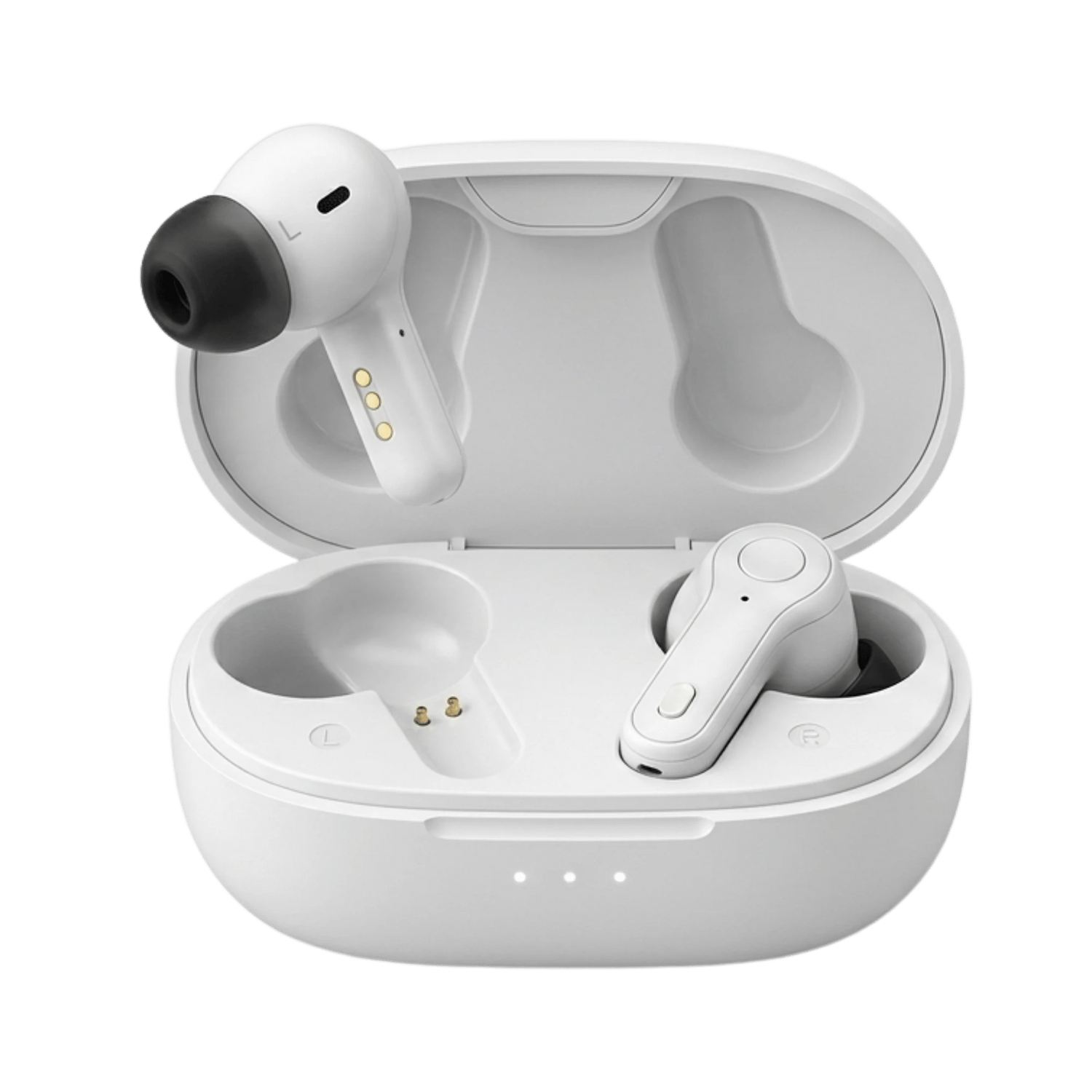
A new laboratory study put the Apple AirPods Pro 2 Hearing Aid Feature through real-ear measurement to see whether a mass-market earbud can actually deliver the amplification a clinical prescription calls for.
When U.S. regulators cleared a new category of over-the-counter hearing aids in 2022, and Apple later added a Hearing Aid Feature to the AirPods Pro 2, the line between a consumer earbud and a medical hearing device blurred for millions of people with mild to moderate hearing loss. The promise is appealing: skip the clinic, run a quick setup on a phone, and start hearing better with a device many people already carry in their pocket.
There is an important question hiding behind that promise. Hearing aids are normally fitted to a prescription, a target curve calculated from a person's audiogram that specifies how much amplification the device should deliver at each pitch. Researchers at Vanderbilt University set out to measure how closely the AirPods Pro 2 Hearing Aid Feature comes to those validated targets, and whether its simple consumer controls are enough to close any gap.
Title: Does the Apple AirPods Pro 2 hearing aid feature meet prescribed targets for standardized audiograms?
Authors: Haiping Huang, Taylor Dalzell, Erin M. Picou
Affiliations: Department of Hearing and Speech Sciences, Vanderbilt University, and Vanderbilt University Medical Center, Nashville, Tennessee, USA
Journal and date: International Journal of Audiology, published June 27, 2026
Study type: Laboratory verification study using real-ear measurement on an acoustic manikin
Reference: PubMed, DOI 10.1080/14992027.2026.2685112
Background: Why the Researchers Looked at This
Over-the-counter (OTC) hearing aids are devices an adult can buy and set up without seeing a hearing professional. They are intended for mild to moderate hearing loss, and they have opened the door to far cheaper and more convenient amplification than the traditional clinic route. The Apple AirPods Pro 2 Hearing Aid Feature, or HAF, is one of the most visible examples, because it turns a popular pair of earbuds into a self-fitted hearing aid driven by a setup process on the iPhone.
The benchmark these researchers used is a prescriptive target. The most widely used family of targets comes from Australia's National Acoustic Laboratories, and the version called NAL-NL2 calculates, from a person's audiogram, exactly how much gain a hearing aid should provide at each frequency for soft, average, and loud sounds. Matching that target matters because too little amplification leaves speech sounds inaudible, while too much can be uncomfortable or even harmful.
To check whether a device meets its target, audiologists use real-ear measurement, in which a tiny probe microphone records the actual sound level produced near the eardrum. The Vanderbilt team applied that same verification logic to the AirPods to answer a practical consumer question: when you set these earbuds up yourself, does the sound that reaches your ear come close to what a professional fitting would prescribe?
How the Study Was Done
Rather than rely on listener opinions, the researchers measured physical sound output on an acoustic manikin, a head-and-torso model fitted with calibrated ear canals and microphones. This lets them capture the real-ear aided response, the level of amplified sound at the eardrum, in a precise and repeatable way.
They tested both earbuds from two separate sets of AirPods Pro 2, using recorded speech presented at three input levels, 55, 65, and 75 decibels, to represent soft, conversational, and loud speech. Two standardized audiograms were entered by hand into the setup, one representing a mild hearing loss and one a moderate sloping loss, and each was used to generate its matching NAL-NL2 prescriptive target.
Finally, a researcher tried to steer the output toward those validated targets using the two consumer controls Apple exposes in the iPhone interface, an Amplification slider and a Tone slider. The goal was to see not only how the default setup performed, but also how much room the simple sliders give a motivated user to fine-tune the result.
What the Researchers Found
At the default setting, the Hearing Aid Feature consistently under-amplified relative to the prescriptive targets. For both the mild and the moderate audiograms, the sound reaching the ear fell short of what NAL-NL2 called for, meaning a user who simply accepted the out-of-the-box result would likely be getting less help than their hearing loss warrants.
The encouraging part came during fine-tuning. By adjusting the on-screen sliders, the researcher was able to bring the output up to match the prescriptive targets for both audiograms. In other words, the hardware was capable of delivering target-level amplification; the gap was in the default configuration, not in the earbuds themselves.
The study also quantified how much the controls actually move the sound. The Amplification slider produced roughly 10 decibels of broadband level change, raising or lowering overall loudness, while the Tone slider produced about 5 to 10 decibels of spectral tilt, shifting the balance between low and high pitches. That is a meaningful but limited range, enough to correct a modest mismatch but coarse compared with the frequency-by-frequency control of a professional fitting.
The authors describe their results as preliminary evidence that the Hearing Aid Feature can be fitted to mild and moderate sloping audiograms, and that its tuning controls can be used to reach prescriptive targets. The catch is that reaching those targets took deliberate adjustment guided by knowledge of where the output should land, not the casual setup most buyers would perform.
What It Means for People with Hearing Loss
The headline for consumers is reassuring and cautionary at the same time. Mainstream earbuds with a hearing aid mode really can produce amplification in line with clinical targets, which validates the basic idea behind over-the-counter hearing care. But the same study shows that the default settings tend to leave people under-amplified, so the value depends heavily on whether the setup is matched to the individual's hearing rather than left as it arrives.
For someone choosing a self-fitted device, the lesson is to pay attention to how it is configured. A product that measures your hearing and adjusts itself to your audiogram is doing the work that closed the gap in this study. A product that simply plays at a generic level, and asks you to nudge a slider until it sounds acceptable, may leave you short of the amplification you need without you realizing it.
The Gap Was in the Default Fit, Not the Hardware: Why Matching the Setup to Your Audiogram Matters
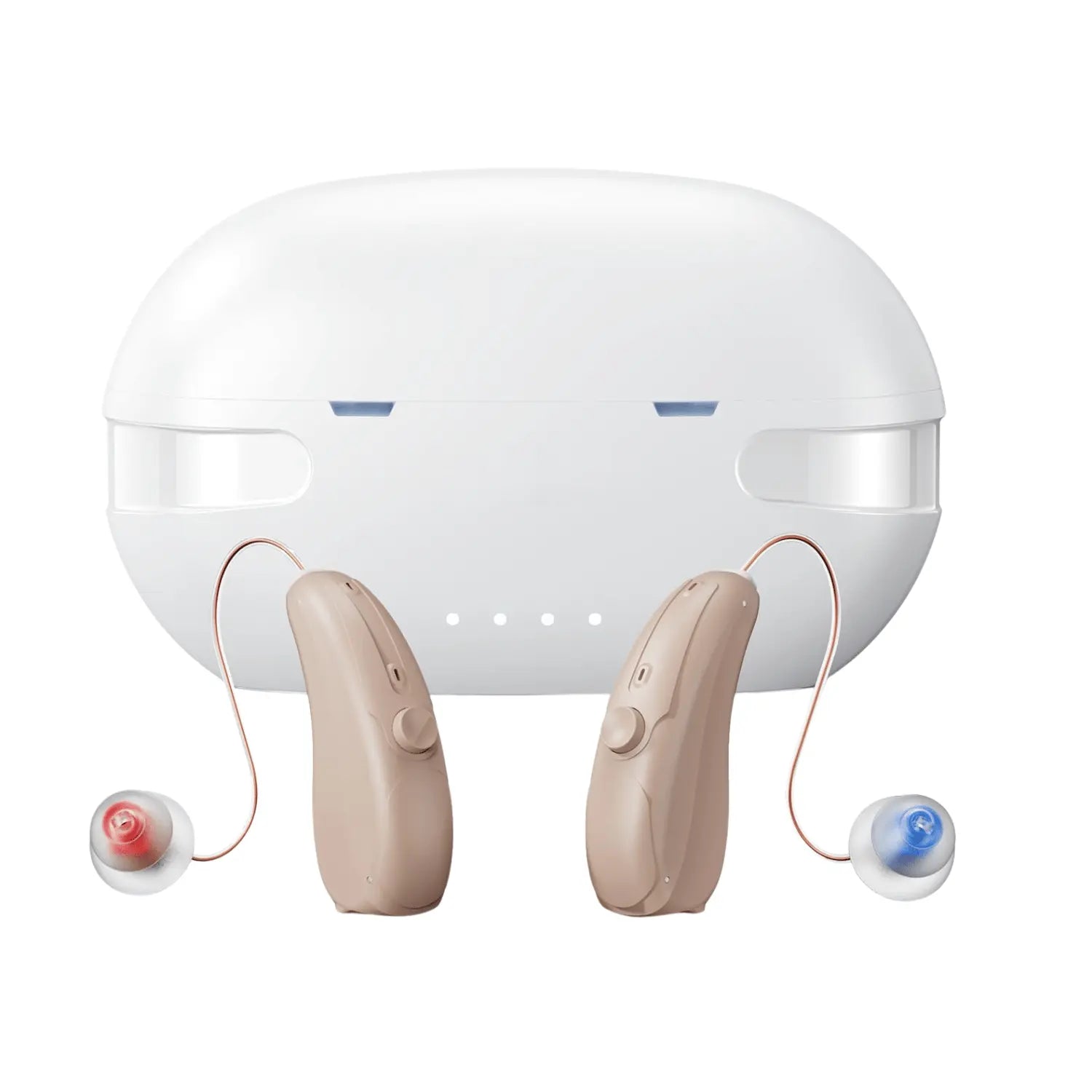
This study lands on a specific point: the earbuds could hit clinical targets, but only once the fit was matched to the user's audiogram, and the default self-fit fell short. That is exactly the problem a guided, measurement-based fitting is designed to solve. Among self-fitting OTC hearing aids, the Panda Air takes this approach in its earbud-style form. After the device arrives, the user pairs it with the Panda app, which runs a frequency-specific hearing test through the hearing aid itself and then programs the gain and frequency response to match the resulting audiogram, similar to what an audiologist does at a clinical fitting.
The difference matters because it replaces guesswork with app-based hearing personalization. Instead of dragging a broadband loudness slider and hoping the balance is right, the frequency-specific hearing adjustment aims the amplification where each person's loss actually sits. The Panda Air pairs that fitting approach with 16-channel wide dynamic range compression and multi-band adaptive noise reduction, a 60-hour fast-charge case, a 5-year warranty, and a 45-day return window so the fit can be lived with in the real world before committing.
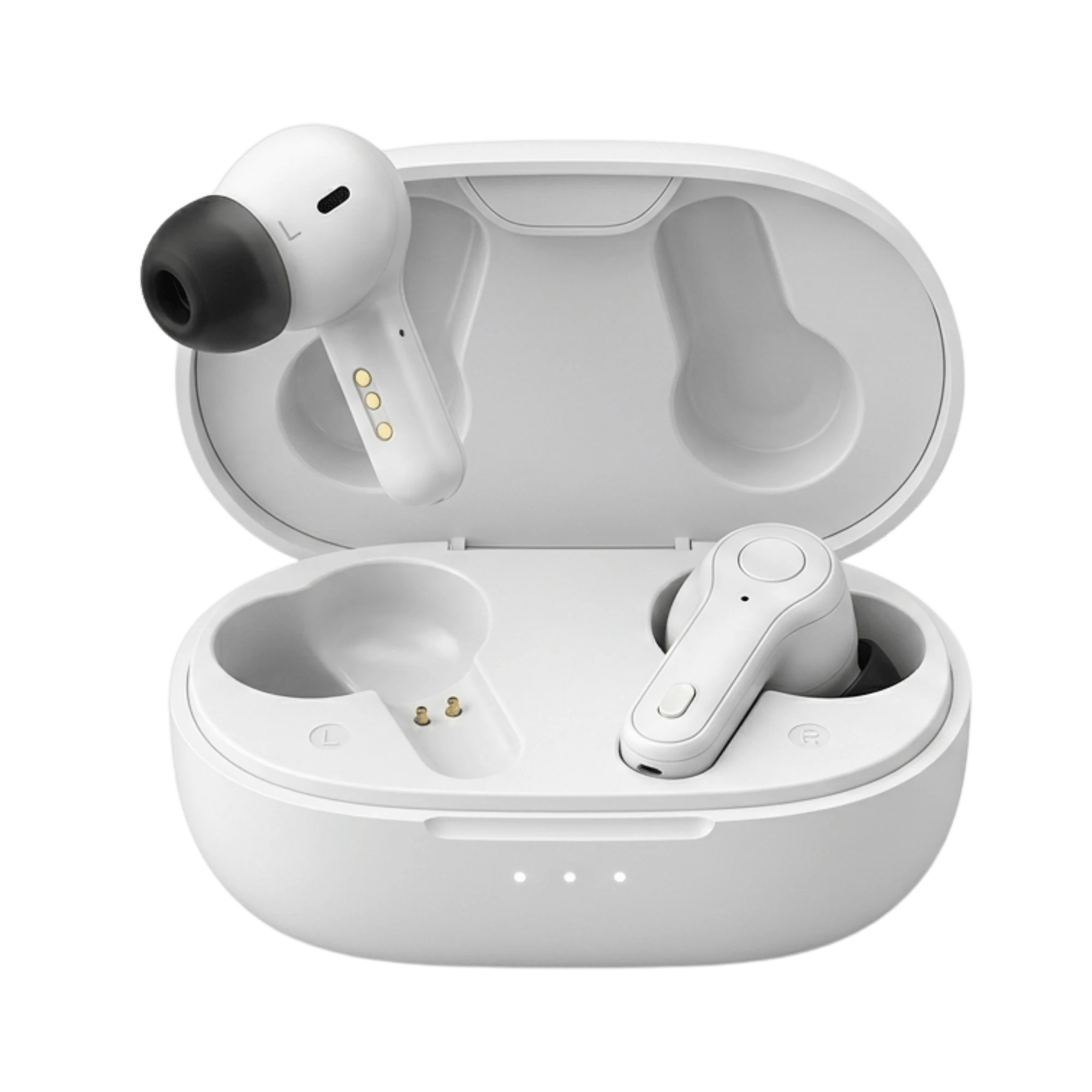
One caveat worth keeping in view: over-the-counter devices like these are intended for mild to moderate hearing loss. People with severe or profound loss still tend to benefit most from a professional clinical fitting. You can read more about the Panda Air here.
Limitations of This Research
This was a controlled bench study, and its scope is narrow by design. The measurements were made on an acoustic manikin rather than on people, so they capture the physical output of the device but not how real listeners hear, tolerate, or benefit from it. Only two standardized audiograms were tested, both in the mild to moderate range, and the fine-tuning was performed by a researcher who knew the prescriptive targets, which is not how a typical buyer would set the device up at home.
The authors themselves frame the work as preliminary. The abstract does not report a commercial funding source or conflict of interest, but readers should treat the findings as an early, technical proof of concept rather than a verdict on everyday outcomes. How well self-fitted users replicate these target-matched results without professional guidance remains an open question.
Where This Leaves Us
The takeaway is that consumer earbuds with a hearing aid mode can reach the same amplification targets as a clinical fitting, but they will not necessarily get there on their own. Whether you are considering mainstream earbuds or a purpose-built over-the-counter hearing aid, the question to ask is how the device decides on its settings, and whether it measures your hearing and adjusts to it rather than leaving you to chase the right sound by feel.
Huang H, Dalzell T, Picou EM. Does the Apple AirPods Pro 2 hearing aid feature meet prescribed targets for standardized audiograms? International Journal of Audiology. 2026. Retrieved from PubMed. DOI 10.1080/14992027.2026.2685112.