Hearing Loss Ranks Among the Leading Drivers of Years Lived in Poor Health
A global analysis covering 204 countries finds that people now spend an average of 10.7 years of life in poor health, and names age-related hearing loss among the small group of chronic conditions responsible for most of that time.
Public health has spent a century getting good at keeping people alive. It has been markedly less successful at keeping them well. The distance between those two achievements has a name in health metrics: the morbidity gap, meaning the years a person lives after health has declined but before life ends.
A new analysis from the Global Burden of Disease programme has measured that gap across every country in the world, tracked how it changed over thirty-three years, and then broken it apart to see which conditions fill it. Age-related hearing loss appears in the short list of answers, which is a stronger statement than it first sounds given how many diseases were in contention.
About This Study
Title: Global, regional, and national trends in the morbidity gap and contributing diseases, injuries, and risk factors, 1990-2023: a systematic analysis for the Global Burden of Disease Study 2023
Authors: Simon I Hay, Paul Nam, Haaris Saqib, Susan A McLaughlin, Catherine Bisignano, Samuel M Ostroff, Marie Ng, Shuhei Nomura, Austin E Schumacher and Christopher J L Murray, writing for the GBD 2023 collaboration
Affiliations: Institute for Health Metrics and Evaluation and Department of Health Metrics Sciences, School of Medicine, University of Washington, Seattle; Jackson School of International Studies, University of Washington; Yong Loo Lin School of Medicine, National University of Singapore; Global Health Policy Lab, International Research Institute of Disaster Science, Tohoku University, Japan
Journal and publication date: The Lancet Public Health, August 2026, volume 11, issue 8, pages e487 to e505
Study type: Systematic analysis of modelled global health estimates covering 204 countries and territories, 1990 to 2023
PubMed DOI: 10.1016/S2468-2667(26)00098-8
Background: Why the Researchers Looked at This
There is an old and optimistic idea in gerontology called the compression of morbidity hypothesis. It proposes that as prevention and medical care improve, disability will be pushed back further than death is, so that the period of poor health at the end of life gets shorter. Live long, decline briefly, is the hope.
Testing that idea requires two numbers. Life expectancy is familiar. The second is healthy life expectancy, usually abbreviated HALE, which estimates how many years a person can expect to live in good health rather than merely alive. Subtract one from the other and you get the morbidity gap. Divide the gap by life expectancy and you get the proportion of a lifetime spent unwell.
The authors set out to calculate both figures for every country over three decades, then to decompose the result: to work out which diseases and which underlying risk factors actually occupy those unhealthy years. That decomposition is where hearing enters the story, because conditions that rarely kill anyone can still consume a great deal of healthy life.
How the Study Was Done
The team used Global Burden of Disease 2023 estimates of life expectancy and healthy life expectancy at birth for 204 countries and territories across the years 1990 to 2023. Results are reported globally, by GBD super-region, by individual country, by Socio-demographic Index quintile, and separately for each sex. The Socio-demographic Index, or SDI, is a composite measure of income, education and fertility used to group countries by development level.
To attribute the gap to specific causes, the researchers assigned each cause group its proportional share of years lived with disability, a measure known as YLD. Importantly, they adjusted for comorbidity, meaning they corrected for the fact that one person often has several conditions at once and their disability should not be counted twice.
All figures are reported as mean estimates with 95% uncertainty intervals drawn from 250 or more samples of the underlying statistical distributions. These are modelled estimates rather than direct measurements, a point that matters for interpretation and that the authors state openly.
What the Researchers Found
The compression hypothesis did not hold. Globally the morbidity gap widened from 8.8 years in 1990, with an uncertainty interval of 6.7 to 11.2, to 10.7 years in 2023, interval 8.2 to 13.7. That is an increase of 1.9 years, or 21.9%. The point estimates indicate the gap widened in 203 of the 204 countries and territories studied, which leaves very little room to call this a regional phenomenon.
Expressed as a share of life, 14.5% of the average lifespan was spent in poor health in 2023, up from 13.6% in 1990. The widening was not confined to the final years before death. When the researchers examined age-specific patterns, they found the gap had grown across the adult life course rather than concentrating at the very end, meaning people are accumulating unhealthy years in middle age as well as in old age.
The pattern by development level is counterintuitive at first glance. Morbidity gaps in 2023 were largest in the highest SDI quintile and smallest in the lowest. Countries with longer life expectancies had larger absolute gaps, since surviving longer creates more time in which to live with chronic conditions. The relationship between life expectancy and the proportional gap, however, was less clear-cut.
The decomposition produced the study's sharpest result. A small number of chronic, largely non-fatal causes accounted for most of the damage. Musculoskeletal disorders, especially low back pain; mental disorders, principally depressive and anxiety disorders; sense organ diseases, for which the authors single out age-related hearing loss; unintentional injuries, particularly falls; and other non-communicable diseases together made up 57.4% of unhealthy years globally in 2023. The leading contributing risk factors were high fasting plasma glucose, high body-mass index, and child and maternal malnutrition.
Read carefully, that list is a statement about what modern medicine has and has not solved. Not one of those five leading contributors is a condition that typically kills. They are conditions that persist, and persistence is precisely what the morbidity gap measures.
What It Means for People with Hearing Loss
Hearing loss is routinely treated as a nuisance rather than a health condition, by patients and often by clinicians. This analysis is an argument against that habit. When a global accounting of where healthy life disappears puts sense organ diseases into the top five, with age-related hearing loss named as the exemplar, the condition has stopped being a matter of convenience.
There is a second implication that is easy to miss. Because hearing loss almost never appears on a death certificate, it is invisible to the mortality statistics that drive most health policy and most personal urgency. Measuring years lived with disability rather than years lost to death is what makes it visible at all. If your own reasoning about whether to address hearing loss runs on the question of whether it is dangerous, this study suggests the question is the wrong one.
The finding that gaps are widest in wealthy countries also deserves attention. Longer life is producing more years in which untreated hearing loss can accumulate its costs, and the countries best equipped to treat it are the ones where the accumulated total is largest.
When Hearing Loss Becomes Years of Poor Health, Cost Is the Barrier Worth Removing
A condition that quietly consumes years of healthy life, and that has an available treatment, is a condition where the obstacle is usually access rather than medicine. For hearing aids the obstacle has historically been price, with traditional clinical fittings running into thousands of dollars and putting treatment out of reach for many of the people counted in this analysis.
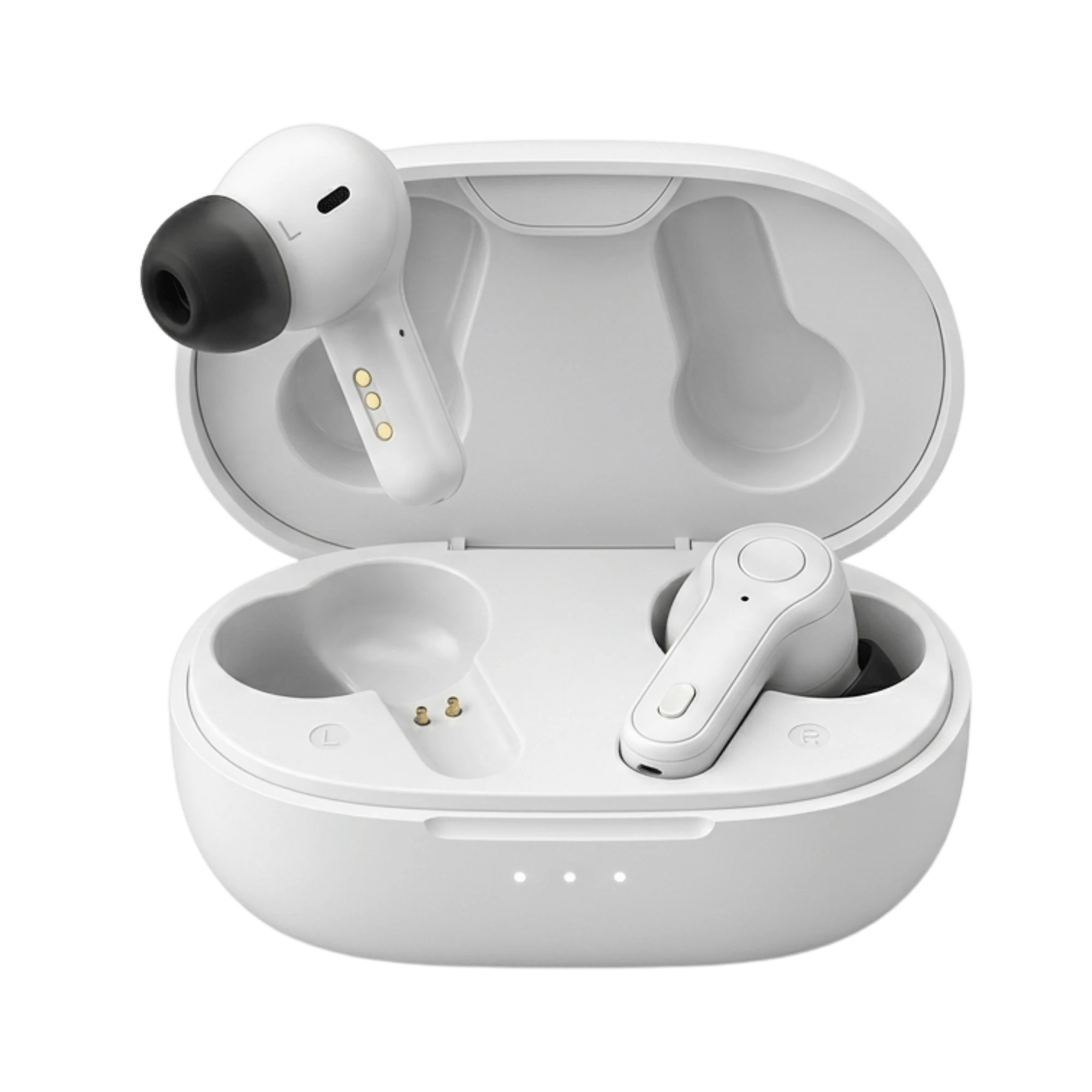
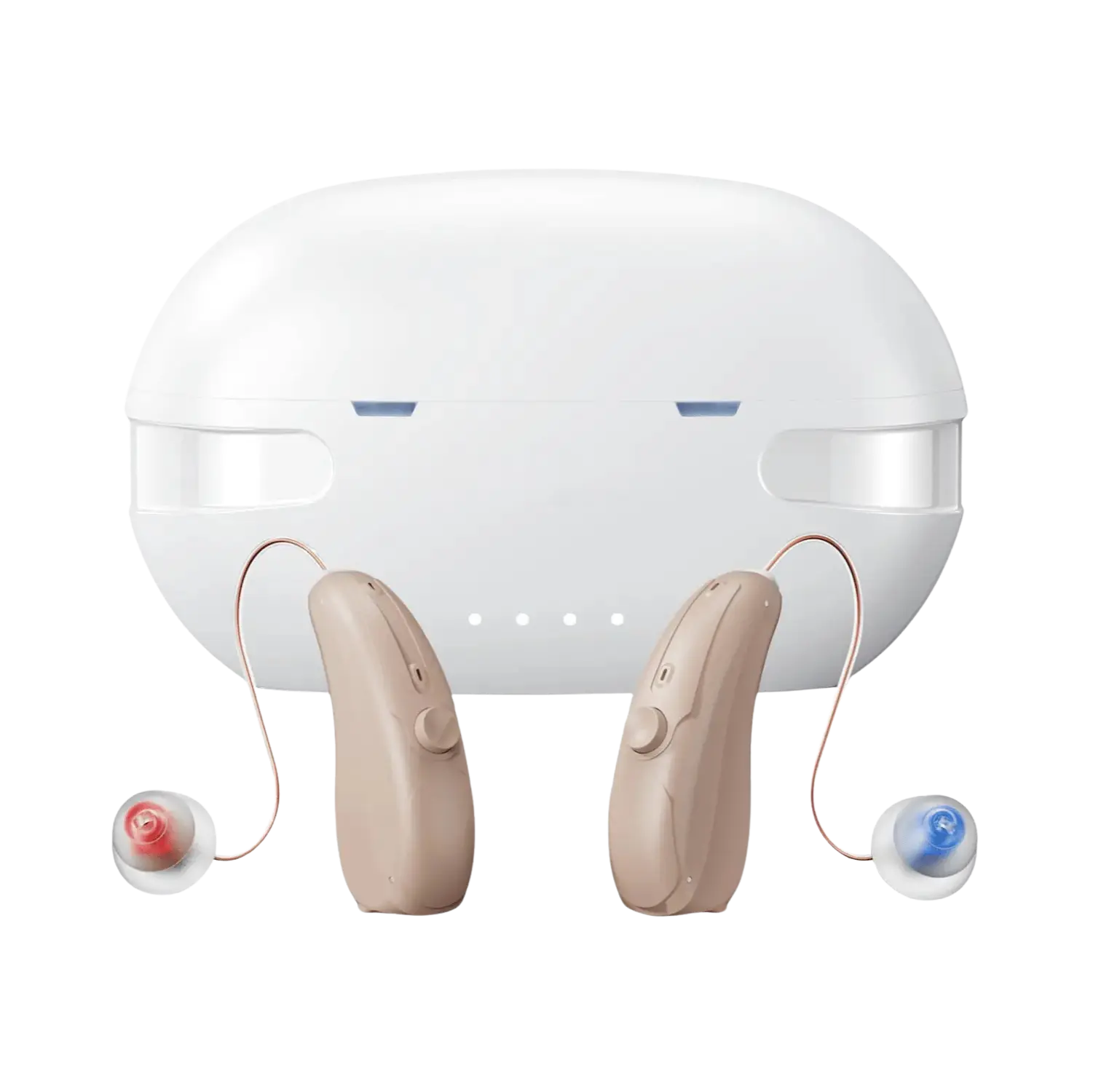
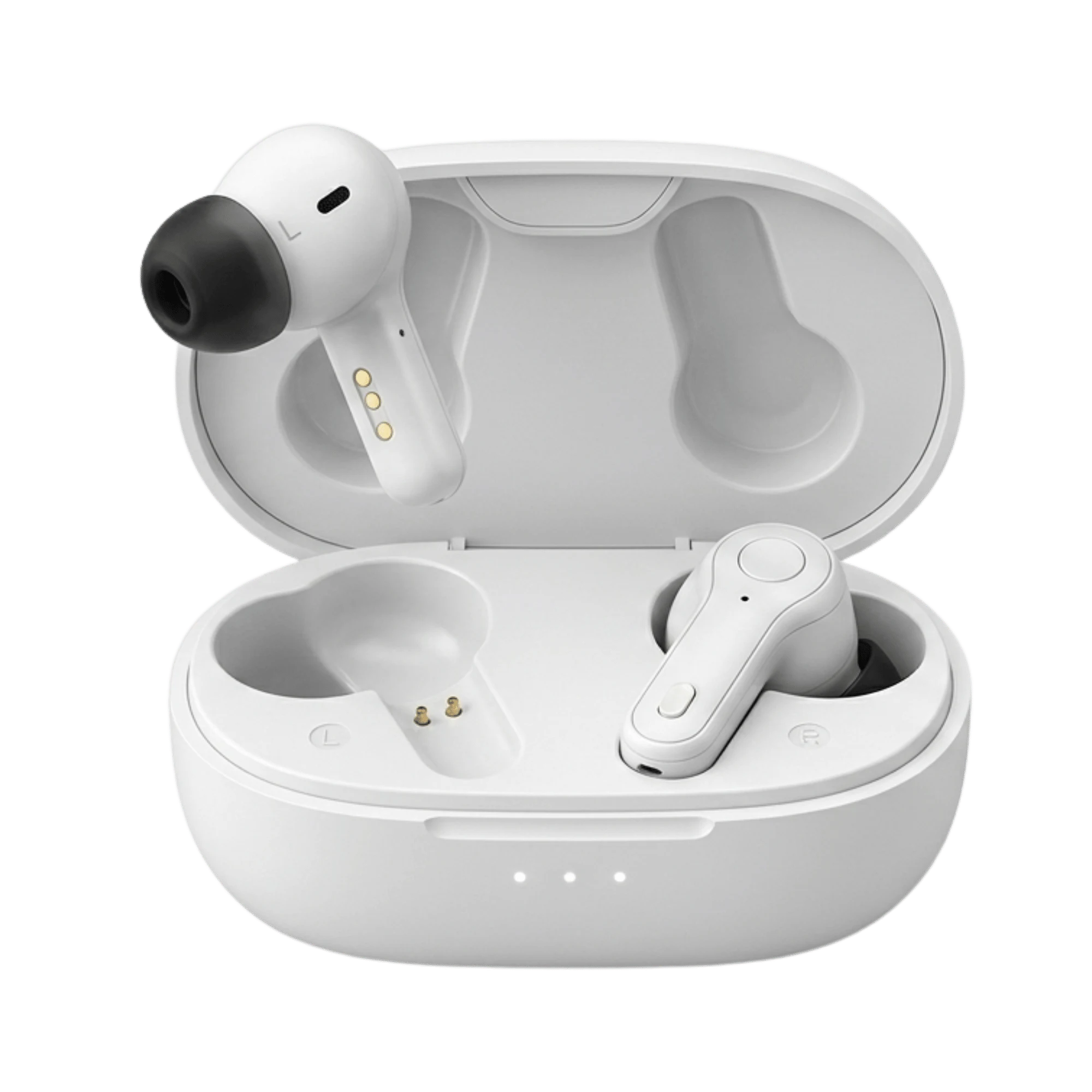
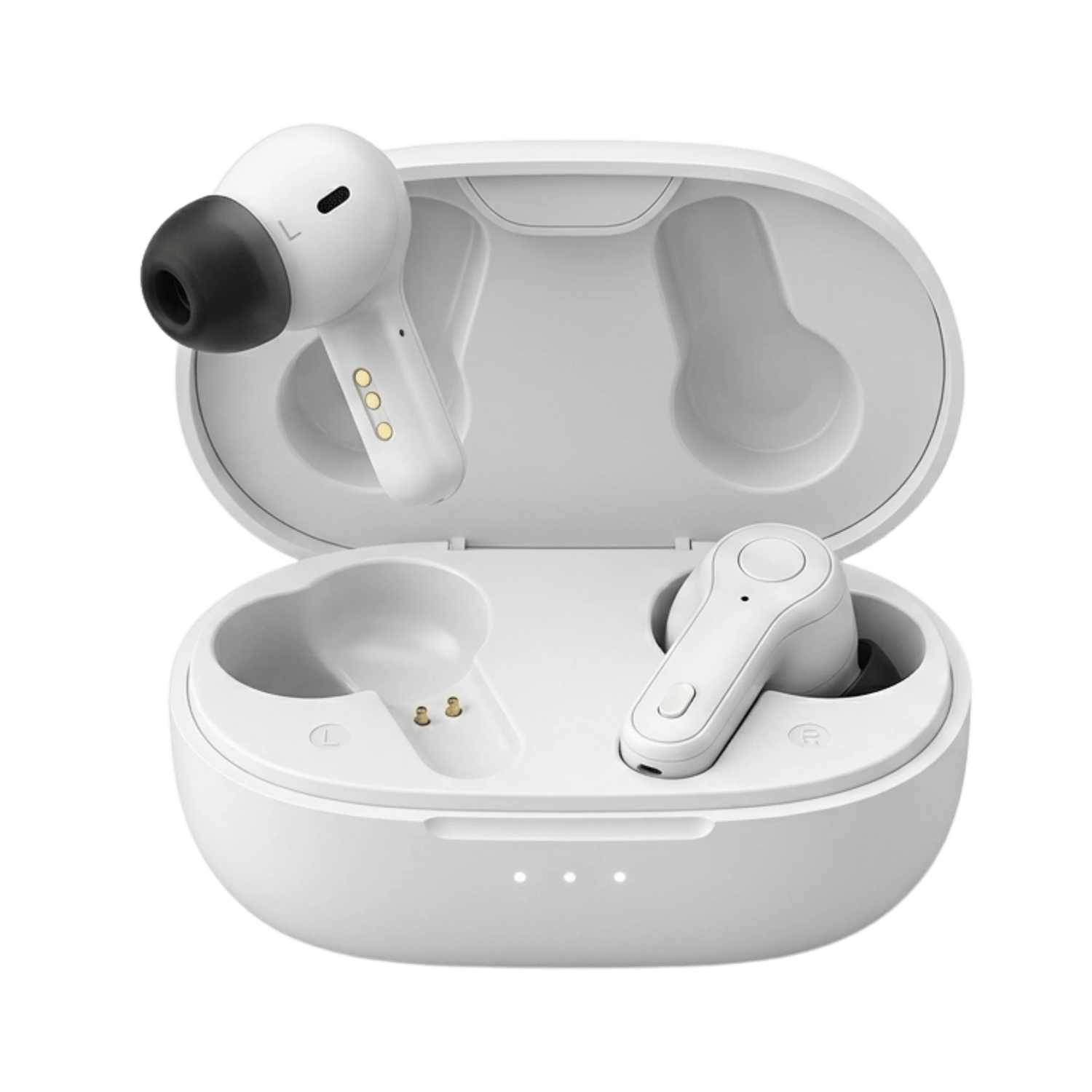
Because this study frames untreated age-related hearing loss as a driver of years lived in poor health rather than a minor inconvenience, the case for lowering the cost of entry gets stronger. FDA-cleared over-the-counter devices exist for exactly that reason. Panda Air is one of them: an earbud-style in-the-canal aid with 16-channel wide dynamic range compression and multi-band adaptive noise reduction, sold without a clinic appointment.
What keeps it from being a blunt amplifier is the app-based in-ear hearing test. After delivery the wearer pairs Air with the Panda app, which runs a frequency-specific test through the aid itself and automatically programs gain and frequency response to that person's audiogram, in the manner of a clinical fitting. As one of the self-fitting OTC hearing aids now on the market, it also uses a rechargeable design with a 60-hour fast-charge case, and comes with a five-year warranty and forty-five-day returns. The usual caveat applies: over-the-counter devices are approved for mild-to-moderate hearing loss, and severe or profound loss still benefits most from a clinical fitting.
Limitations of This Research
Everything in this study is a modelled estimate. Global Burden of Disease figures are constructed from surveys, registries and statistical imputation, and in countries with weak health data systems the underlying inputs are thin. The wide uncertainty intervals, for example 8.2 to 13.7 years around the 2023 global morbidity gap, are an honest reflection of that. Healthy life expectancy in particular depends on disability weights, which are judgements about how much a given condition reduces health, and those judgements are contestable.
The decomposition is also proportional rather than causal. Assigning sense organ diseases a share of unhealthy years describes how disability is distributed; it does not by itself demonstrate that treating hearing loss would remove those years, though it does identify where the potential sits. The study was funded by the Gates Foundation, which the authors disclose. Finally, the analysis is a population-level accounting exercise, and population averages say nothing reliable about any individual person's trajectory.
What to Do With This
The useful takeaway is a change of category rather than a change of behaviour. Age-related hearing loss belongs on the same list as back pain, depression and falls: conditions that will not shorten a life but will reliably occupy a portion of it, and that are worth treating for that reason alone. If you have been postponing a hearing check on the grounds that the problem is not serious, this analysis offers a precise sense of what postponement costs, measured not in risk but in years.
Hay SI, Nam P, Saqib H, McLaughlin SA, Bisignano C, Ostroff SM, Ng M, Nomura S, Schumacher AE, Murray CJL, et al. Global, regional, and national trends in the morbidity gap and contributing diseases, injuries, and risk factors, 1990-2023: a systematic analysis for the Global Burden of Disease Study 2023. Lancet Public Health. 2026;11(8):e487-e505. Retrieved from PubMed. https://doi.org/10.1016/S2468-2667(26)00098-8