A new review pulls together the epidemiology, the biology and the clinical evidence on hearing loss and cognitive decline, and lands on a more careful answer than the headlines usually give.
Few findings in hearing research have travelled as far as the link between hearing loss and dementia. It has been on television, in newspapers and in advertising, usually compressed into a single line: treat your hearing, protect your brain.
A review published in Audiology Research goes back over the actual evidence base, and the picture it draws is genuinely useful precisely because it is less tidy. The association is real and consistent. The explanation for it is still contested, and the evidence that treating hearing loss protects cognition is mixed.
About This Study
Title: Hearing Loss, Cognitive Decline, and Dementia: Clinical Intersections
Authors: Danielle S. Powell, Carrie L. Nieman, Per Thorsell, Natalie A. Phillips, Ingrid Ekstrom
Affiliations: Department of Hearing and Speech Sciences and Institute for Health Computing, University of Maryland; Department of Otolaryngology-Head and Neck Surgery, Johns Hopkins School of Medicine and the Johns Hopkins Cochlear Center for Hearing and Public Health; Aging Research Center, Karolinska Institutet and Stockholm University; Department of Psychology, Concordia University, Montreal
Journal and date: Audiology Research, volume 16, issue 4, published 30 June 2026
Study type: Narrative review integrating epidemiological, neurobiological and clinical research
PubMed: PMID 42496263 · DOI 10.3390/audiolres16040097
Background: Why the Researchers Looked at This
Age-related hearing loss, known clinically as presbycusis, is among the most common chronic conditions in older adults. It creeps in over decades, usually starting with the high frequencies that carry consonant sounds, which is why the first complaint is often that people mumble rather than that the world has gone quiet.
Over the past fifteen years, hearing loss has been reclassified in a significant way. It is now widely listed among the modifiable risk factors for dementia, meaning risk factors that in principle can be changed, unlike age or genetics. That reclassification carries weight in public health planning and in how clinicians counsel patients, so the strength of the evidence behind it matters.
The authors, a group spanning public health, otolaryngology, ageing research and neuropsychology, set out to summarise what is established, what is proposed and what remains uncertain, with clinicians and researchers as the intended audience.
How the Study Was Done
This is a narrative review rather than a trial. The authors gathered and synthesised findings from three bodies of work: population studies that track hearing and cognition over time, neurobiological research into what happens in the brain when auditory input declines, and clinical studies of hearing rehabilitation.
They organised the material around four questions: what the epidemiological associations actually show, which mechanisms have been proposed to explain them, what the association means for cognitive screening and diagnosis, and what the evidence says about whether hearing treatment changes cognitive outcomes.
A narrative review of this kind is a considered synthesis by experts in the field. It is not a systematic review, which follows a pre-registered search protocol and formally scores the quality of every study included. That distinction matters when weighing the conclusions.
What the Researchers Found
On the central question, the review is clear: accumulating evidence indicates that hearing loss is associated with faster cognitive decline and with a higher risk of dementia. This is not a single startling result but a pattern that has held up across multiple populations and study designs.
Where the review is more cautious is on why. It sets out several proposed mechanisms rather than endorsing one. Increased cognitive load is one, the idea that straining to decode degraded speech consumes mental resources that would otherwise go to memory and comprehension. Reduced sensory input is another, in which an under-stimulated auditory system contributes to changes in brain structure and function. Social isolation and depression form a third pathway, since people who cannot follow conversation often withdraw from it. And a fourth possibility is that hearing loss and dementia share underlying neurodegenerative or vascular pathology, in which case hearing loss would be an early marker rather than a cause. The authors state directly that the causal pathways remain incompletely understood.
On treatment, the finding is qualified. Emerging evidence suggests hearing rehabilitation may help preserve cognitive function in some groups, but the review describes the findings as heterogeneous, meaning studies point in different directions and no single effect size can be quoted with confidence. This is a more measured position than the advertising version of the story.
The review's most immediately practical point concerns diagnosis. Standard cognitive tests are largely delivered by voice. If someone cannot hear the instructions or the word list clearly, they may score as impaired when the real problem is in the ear. The authors argue that unrecognised hearing impairment can distort test performance, communication and diagnostic accuracy, and that hearing should be considered during cognitive assessment.
What It Means for People with Hearing Loss
The honest takeaway is narrower than a promise and wider than nothing. Nobody can tell you that buying a hearing aid will prevent dementia. What the evidence supports is that hearing loss belongs in the conversation about brain health in later life, and that it is one of the few contributors on that list you can actually do something about.
The screening point deserves attention from families in particular. If an older relative is being assessed for memory problems, it is fair to ask whether their hearing was checked first. A misattributed diagnosis is costly in every sense, and the fix in that scenario is a hearing test rather than a neurology referral.
There is also a case for acting earlier rather than later, independent of dementia. The mechanisms the authors describe, listening effort, withdrawal from conversation, low mood, are things people live with for years before they seek help. Those costs are real on their own terms, whatever the eventual verdict on causation.
Why the Gap Between Noticing and Acting Matters Here
If part of the concern is the years spent straining to follow conversation before anyone intervenes, then the practical question becomes what stands between noticing a problem and doing something about it. Historically that has been cost and the number of clinic appointments involved, which is the barrier FDA-cleared over-the-counter devices were introduced to lower.
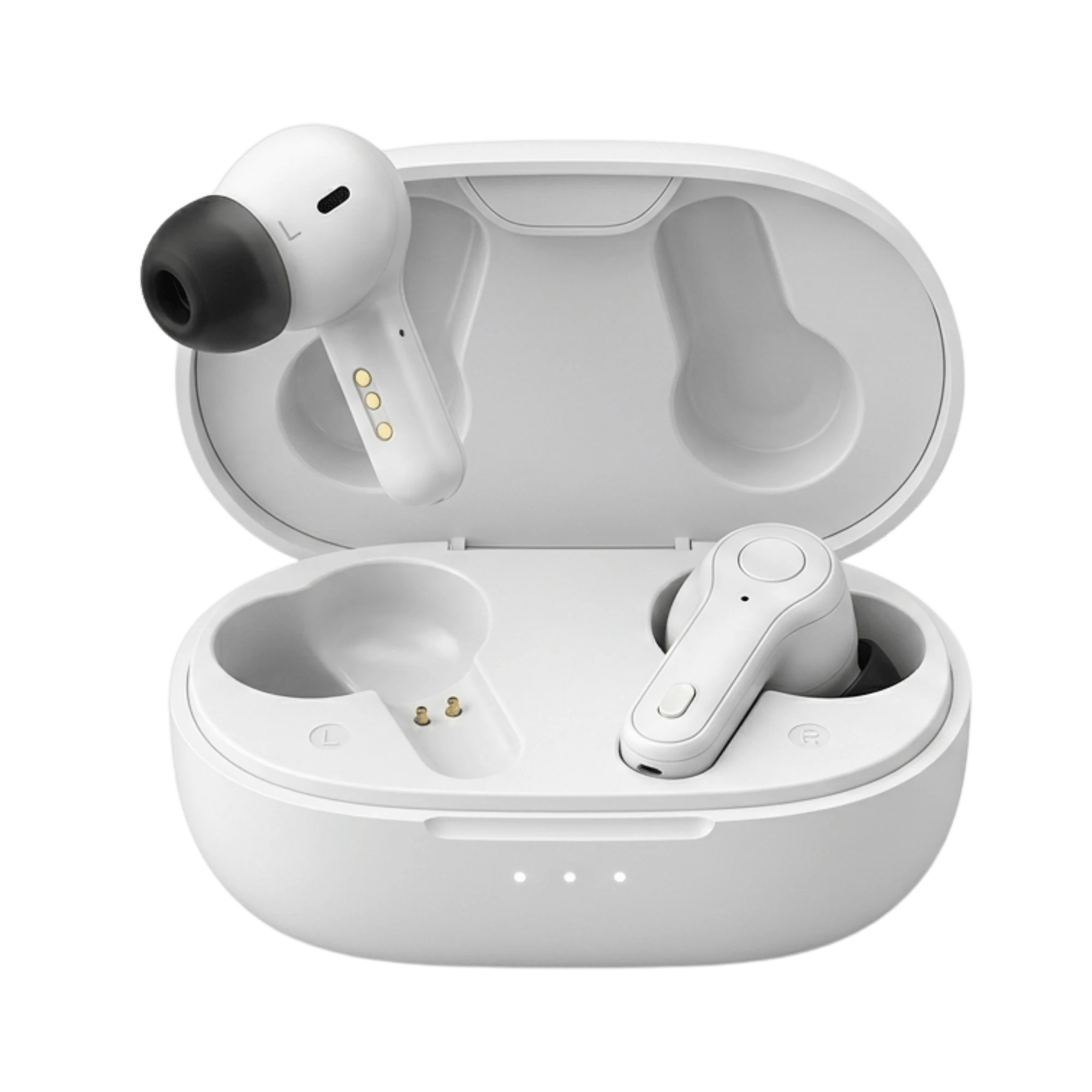
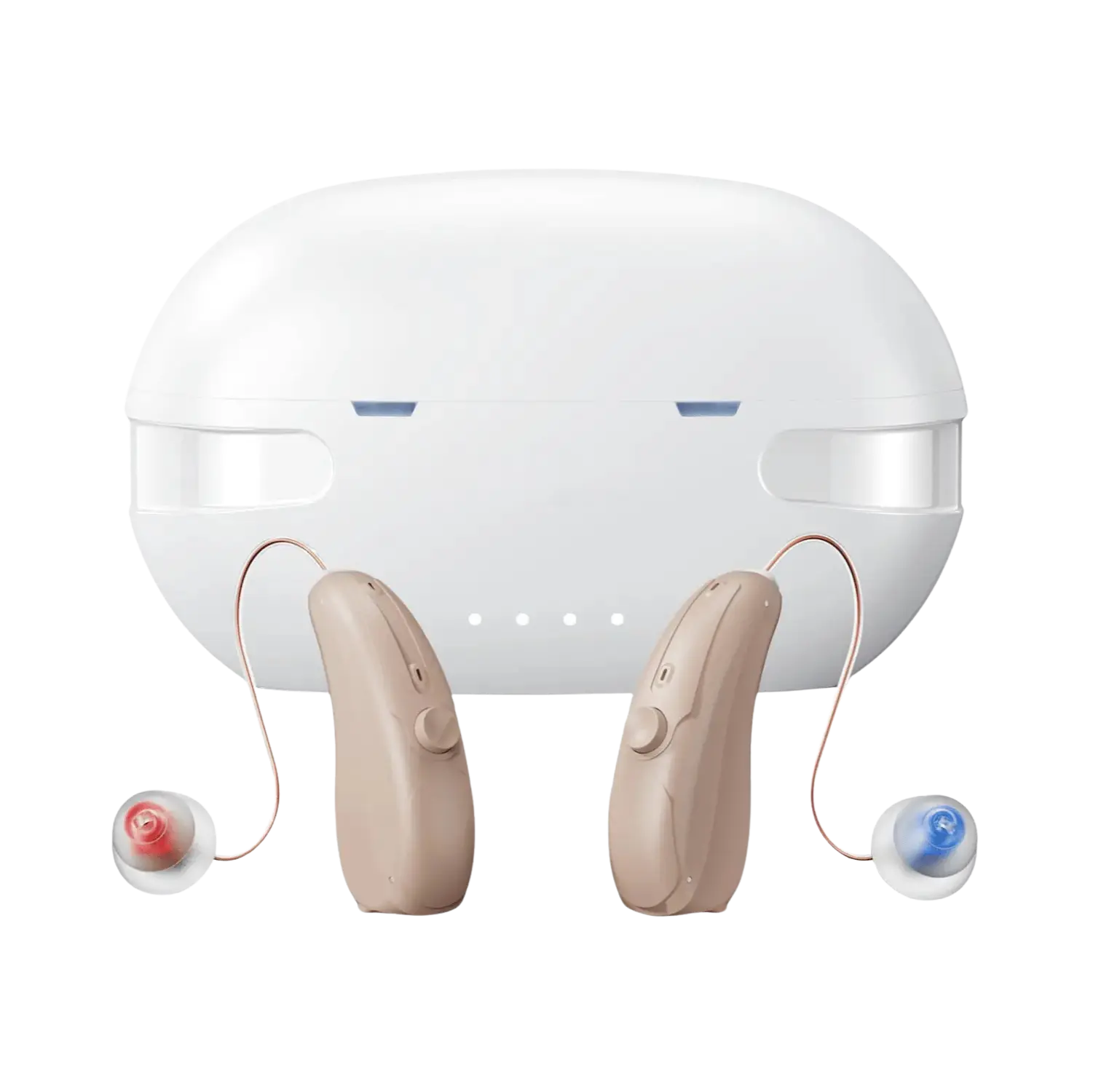
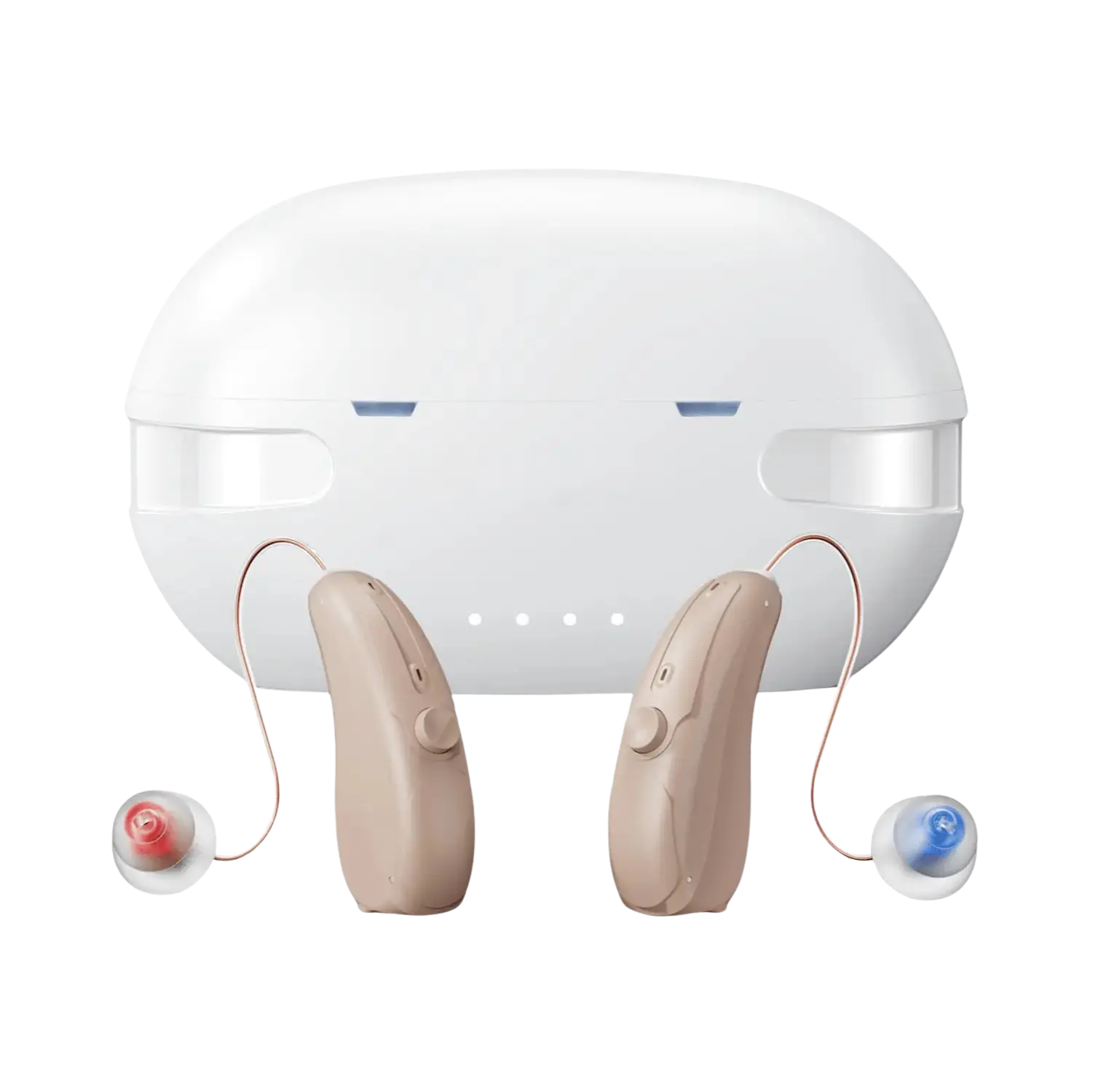
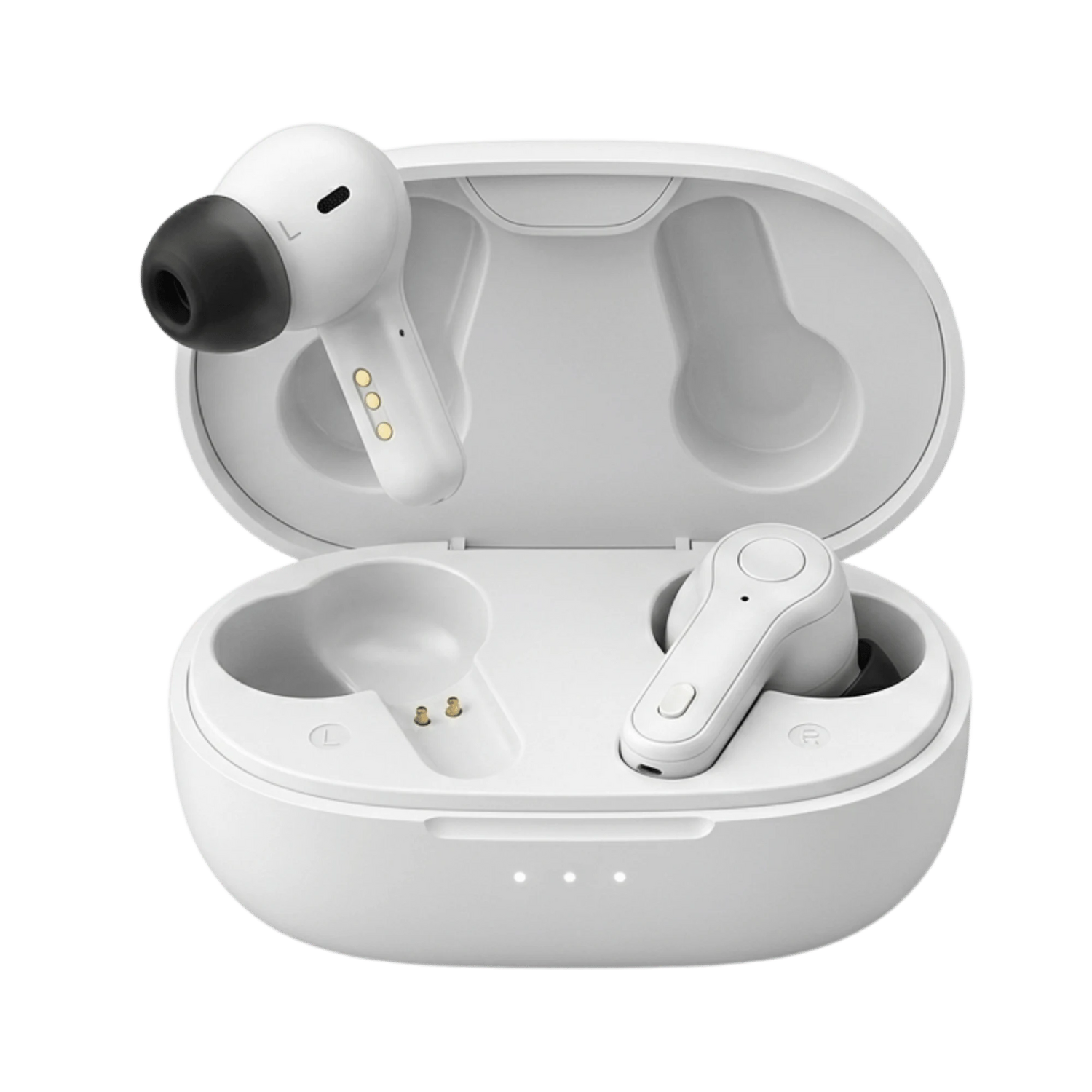
Panda Air is one example of that category, an earbud-style in-the-canal device with 16-channel wide dynamic range compression and multi-band adaptive noise reduction. It belongs to the self-fitting OTC hearing aids group: after delivery, it pairs with the Panda app, which runs a frequency-specific test through the aid itself and sets gain and frequency response to match the result, so what you end up wearing is matched to your own audiogram rather than to a generic profile. The charging case gives 60 hours with fast charging, and it comes with a 5-year warranty and 45-day returns. Details are at pandahearing.com.
The limits should be stated. Over-the-counter hearing aids are approved for mild-to-moderate hearing loss, and severe or profound loss still calls for a clinical fitting. And if memory or cognition is the actual worry, a device is not a substitute for a proper assessment by a clinician who can look at both hearing and cognition together.
Limitations of This Research
Because this is a narrative rather than a systematic review, the selection of studies reflects the authors' expert judgement rather than a pre-specified search, and no formal risk-of-bias assessment was applied. Readers cannot check how much weight each individual study carried in the conclusions.
The underlying evidence carries its own constraints. Much of it is observational, which shows association rather than causation, and reverse causation remains plausible if early neurodegeneration affects hearing. The intervention evidence is described as heterogeneous, which is itself a limitation. The PubMed record for this article does not include a funding or competing-interests statement.
What to Do With This
Treat the hearing and dementia link as a good reason to take hearing loss seriously, not as a guarantee about what any device will do for your brain. Get a hearing test if conversation has become work. Ask about hearing before accepting a cognitive diagnosis for yourself or a relative. And keep an eye on this literature, because the question of whether treating hearing loss changes cognitive outcomes is exactly the kind of question that gets answered properly over the next few years.
Powell DS, Nieman CL, Thorsell P, Phillips NA, Ekstrom I. Hearing Loss, Cognitive Decline, and Dementia: Clinical Intersections. Audiology Research. 2026;16(4). Retrieved from PubMed. DOI: 10.3390/audiolres16040097