Hearing Aid Users Show Less Frailty as Hearing Declines: NHANES Analysis of 2,644 Older Adults
A new analysis of 15 years of federal health survey data suggests that hearing aid use may blunt the physical toll of hearing loss on frailty in later life.
Frailty, a syndrome of reduced physiological reserve, has become one of the most closely watched signals of aging well. Older adults living with frailty face higher risk of falls, hospitalization, cognitive decline, and loss of independence. Researchers have been trying to identify which everyday health conditions accelerate that trajectory and which can be modified.
Hearing loss has emerged as one of those conditions of interest. It is common after age 65, it worsens gradually, and it is strongly linked to social withdrawal, cognitive strain, and reduced physical activity. What has been less clear is whether the daily use of a hearing aid actually changes that risk picture. A team at Oregon Health & Science University set out to find an answer using one of the largest population-representative datasets in the United States.
About This Study
Title: Hearing Aid Use Attenuates the Association Between Hearing Loss and Frailty: A 2003-2018 NHANES Cross Sectional Analysis
Authors: Cora Leigh White, Suryaa Gupta, Sarah B. Andrea, Deborah Karasek, Lisa N. Miura, Kelly M. Reavis
Affiliations: Oregon Health & Science University School of Medicine and School of Public Health (OHSU-Portland State University); Division of General Internal Medicine and Geriatrics, OHSU; VA RR&D National Center for Rehabilitative Auditory Research, VA Portland Health Care System
Journal & date: Journal of the American Geriatrics Society, July 9, 2026
Study type: Cross-sectional analysis of pooled national survey data
Source: PubMed, DOI 10.1111/jgs.70581
Background: Why the Researchers Looked at This
Frailty is not a diagnosis in the ordinary sense. It is a state, and geriatricians measure it in two main ways. One approach, the phenotype model, looks for a specific cluster of symptoms such as slow walking, exhaustion, and unintended weight loss. The other, called the accumulation-of-deficits model or the Rockwood model, adds up how many health problems a person has, from mobility difficulty to chronic disease to social vulnerability, and produces a single frailty index between zero and one. The higher the score, the more depleted the person's overall reserve.
Prior research has associated hearing loss with frailty, but many of those studies leaned on self-reported hearing, which tends to underestimate real deficits. Fewer studies have tested whether hearing aid use specifically alters the relationship, and whether the effect looks different for men and women. The Oregon team wanted objective data. They turned to the National Health and Nutrition Examination Survey (NHANES), which sends trained examiners into mobile clinics across the country and administers full audiometric tests to a representative sample of American adults.
How the Study Was Done
The researchers pooled six NHANES cycles from 2003 to 2018, ending up with 2,644 adults age 65 and older who had complete audiometric data and enough health information to compute a frailty index. Hearing ability was measured objectively as an audiometric hearing threshold in decibels, with higher numbers meaning poorer hearing. The frailty index used 52 items drawn from the health questionnaire and exam.
The team ran two kinds of analyses. Linear regression treated the frailty index as a continuous score. Multinomial logistic regression separated participants into robust, pre-frail, and frail categories and estimated odds ratios across them. All models adjusted for age, sex, education, race and ethnicity, income, and other health confounders. The researchers then tested whether the strength of the hearing-frailty link differed by sex or by hearing aid use. The hearing aid analysis was restricted to people with at least mild hearing loss, since only those participants had a meaningful reason to be wearing devices.
What the Researchers Found
Roughly 22.5 percent of the pooled older-adult sample met the study's threshold for frailty. Poorer hearing consistently tracked with worse frailty scores. For every 10-decibel worsening in hearing threshold, the odds of being frail rose about 24 percent compared with being robust (odds ratio 1.24, 95% confidence interval 1.14 to 1.34). On the continuous frailty index, that same 10-decibel decline was associated with a 6.9 percent higher frailty score, with a confidence interval spanning 1.8 to 12.2 percent.
Sex did not change the picture. Men and women showed a similar hearing-frailty pattern (interaction p equal to 0.436). Hearing aid use, however, did change it (interaction p equal to 0.031). Among people with at least mild hearing loss who did not use a hearing aid, each 10-decibel worsening in hearing threshold was associated with a 17.9 percent higher frailty index score (95% CI 1.9 to 36.5). Among those who did use a hearing aid, the same 10-decibel worsening was associated with essentially no change in frailty - negative 4.2 percent, with a confidence interval crossing zero (95% CI -10.1 to 2.2).
In practical language, poor hearing looked considerably more damaging in the frailty index of adults who were not wearing a device. Among device users, the same measured hearing loss was not tied to the same escalation in frailty.
The authors emphasized that this is an association, not a proof of cause. Their design cannot rule out that healthier, better-resourced older adults are simply more likely to seek out a hearing aid to begin with. Still, the pattern was strong enough to survive adjustment for education, income, race and ethnicity, sex, age, and chronic-disease variables.
What It Means for People with Hearing Loss
Frailty tends to be discussed in doctor's offices as a walking-speed or grip-strength problem. This study widens the frame. It suggests that hearing, an often-overlooked sense, may sit inside the same system of physical resilience - and that treating hearing loss with a well-fitted device may travel with better resilience across a broader set of health outcomes than most people realize.
The result also reinforces a broader message from the geriatrics literature: hearing care in later life should not be treated as cosmetic. When almost one in four community-dwelling older adults meets the frailty threshold, an intervention that appears to soften the trajectory in a nationally representative dataset deserves attention from primary care, from insurance systems, and from anyone advising an aging parent.
Better Hearing Access May Be an Underused Lever Against Frailty
The NHANES pattern raises an obvious question for older adults reading it: if a hearing aid is doing that much work in a large national sample, why do so many people wait years to get one? Cost, the hassle of clinic-based fittings, and the sense that hearing aids are only for people already deep into hearing loss are all frequent explanations. FDA-cleared over-the-counter hearing aids are trying to close that gap by pairing clinical-grade signal processing with a simpler at-home path to a fitting.
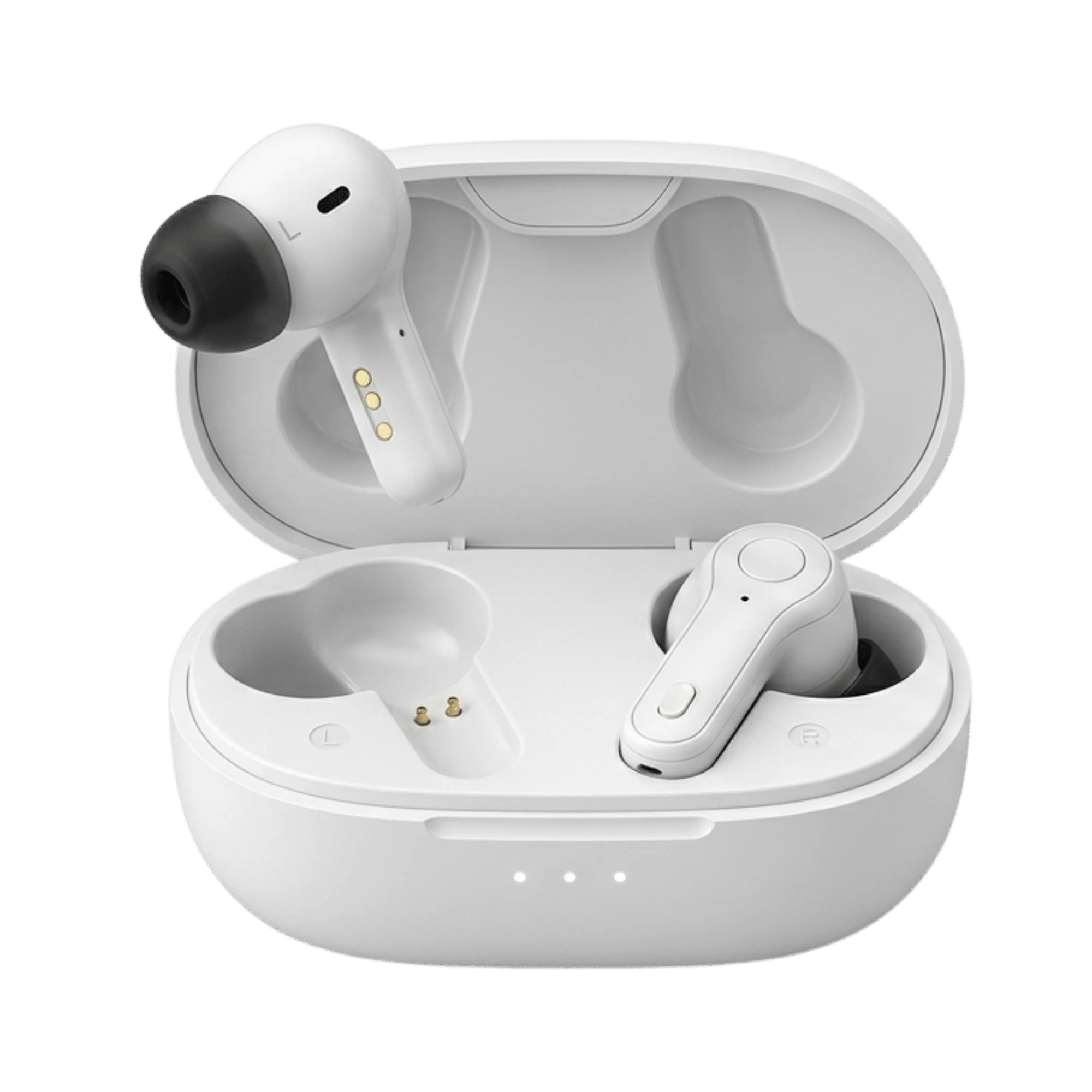
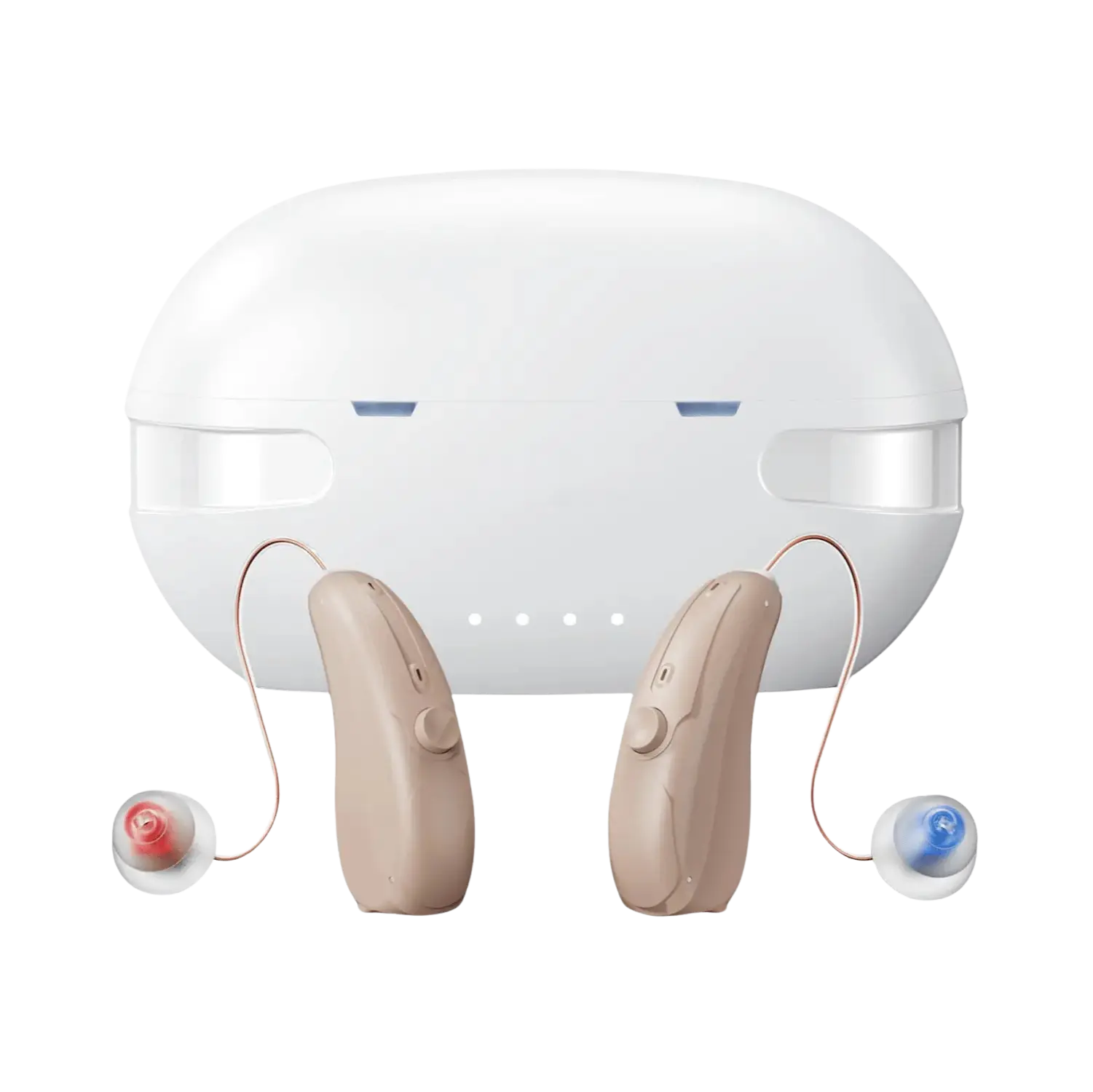
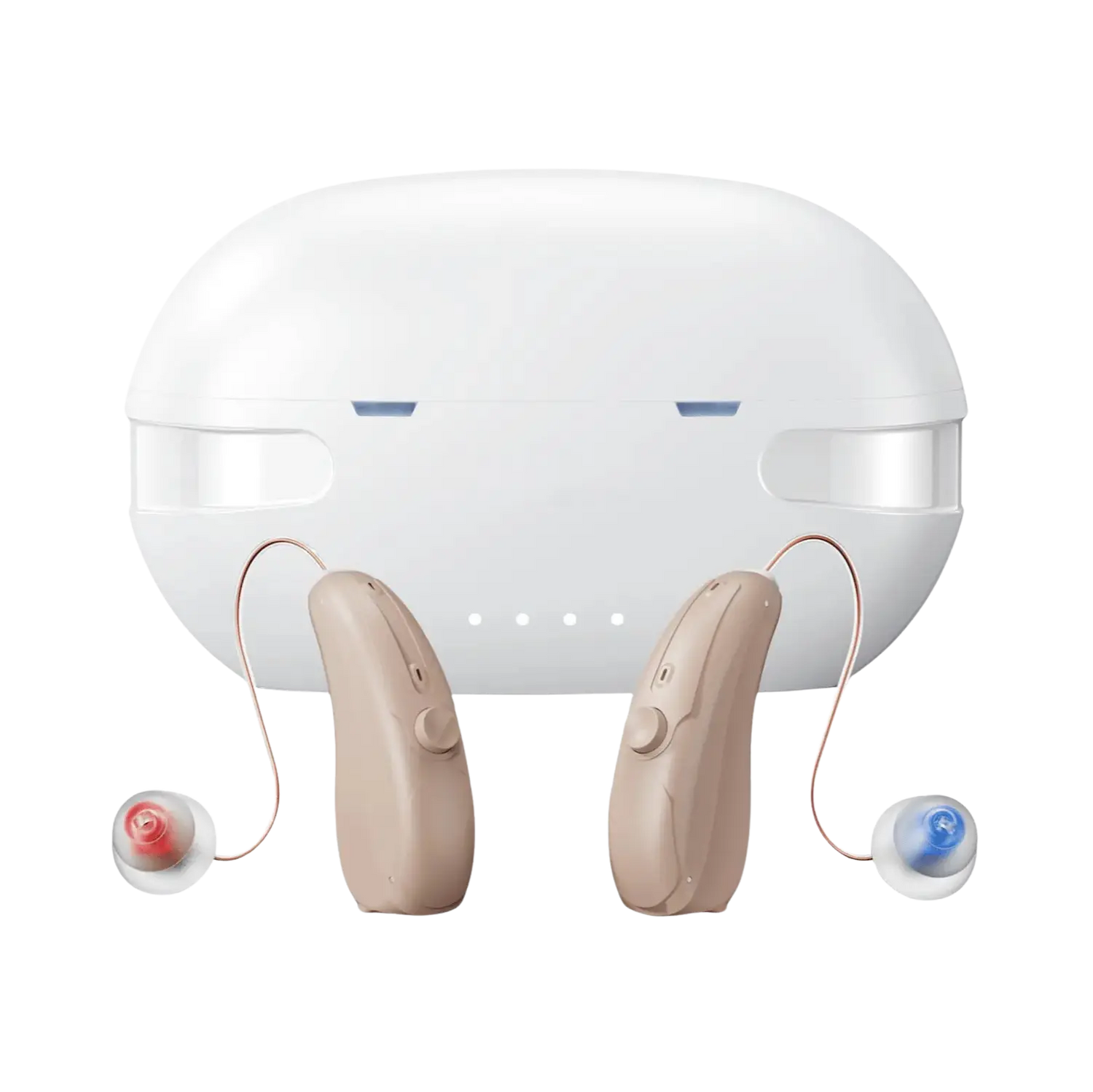
Panda Quantum is one such device - a 16-channel WDRC receiver-in-canal OTC hearing aid with adaptive noise reduction, Bluetooth for phone calls, TV, and music, and up to about 80 hours of total battery with its charging case. It also uses the Panda app to run an in-ear hearing test through the aid itself after delivery, then automatically programs the device's gain and frequency response to match the user's audiogram - an app-based hearing personalization step that mimics what an audiologist would do at a clinical fitting. For adults with mild-to-moderate hearing loss who are exactly the population represented in this NHANES sample, that combination of self-hearing test hearing aids, frequency-specific hearing adjustment, and speech-in-noise processing gives a lower-friction way to actually wear a device consistently - which appears to be the ingredient that matters most in this study.

One caveat worth naming plainly: OTC devices are approved for perceived mild-to-moderate hearing loss. Adults with severe or profound loss still benefit most from a clinical fitting and an audiologist relationship.
Limitations of This Research
The design is cross-sectional. That means the researchers took a snapshot rather than following participants over time, so it cannot prove that hearing aids caused the more favorable frailty pattern. It is possible that older adults who choose to wear hearing aids are already in a somewhat better position - more social, better connected to primary care, better resourced - and that this drives at least part of the effect. Hearing aid use in NHANES is self-reported and does not tell us anything about the actual model, style, or fit quality of the device. NHANES data collection also ends in 2018, which predates the current OTC market. The authors acknowledged these limits and framed the results as motivation for prospective work rather than a definitive intervention trial.
Where This Leaves Us
The takeaway from the White team's analysis is measured but meaningful. In a nationally representative slice of older Americans, hearing loss and frailty moved together. Hearing aid use appeared to break that link. Older adults, and the family members who help them make decisions, may want to treat a hearing check as part of the same conversation as balance, mobility, and cognition rather than as a separate cosmetic decision.
White CL, Gupta S, Andrea SB, Karasek D, Miura LN, Reavis KM. Hearing Aid Use Attenuates the Association Between Hearing Loss and Frailty: A 2003-2018 NHANES Cross Sectional Analysis. Journal of the American Geriatrics Society. 2026. Retrieved from PubMed. https://doi.org/10.1111/jgs.70581