The paper argues that closing the gap will not come from more clinics alone but from a shift to community health workers, mobile-phone-based hearing care, and preset or over-the-counter devices.
Roughly 1.5 billion people worldwide live with some degree of hearing loss, and about 80 percent of the people whose loss is severe enough to be classed as disabling live in low- and middle-income countries. Despite hearing aids being one of the oldest and best-established rehabilitation technologies in medicine, most of those people do not have one. A new evidence synthesis in Expert Review of Medical Devices puts the numbers in stark terms and asks what would actually work to close the gap.
The review is written by researchers at the University of Pretoria and the University of Colorado who have spent years studying how audiology is delivered outside high-resource urban clinics. They argue that the traditional model, a patient traveling to a specialist audiologist for a diagnostic fitting, is simply not scalable to the populations that need hearing care most, and that a mix of digital tools and lower-cost devices is now good enough to build a new model around.
About This Study
Title: Hearing aids in low- and middle-income countries: from evidence to scale
Authors: Swanepoel D, Frisby C, Manchaiah V
Affiliations: Department of Speech-Language Pathology and Audiology, University of Pretoria, South Africa; Virtual Hearing Lab, a collaborative initiative between the University of Colorado School of Medicine and the University of Pretoria; Department of Otolaryngology-Head and Neck Surgery, University of Colorado School of Medicine; UCHealth Hearing and Balance, University of Colorado Hospital; Department of Speech and Hearing, School of Allied Health Sciences, Manipal Academy of Higher Education, India
Journal: Expert Review of Medical Devices, published 8 July 2026
Study type: Evidence review synthesizing barriers and delivery models for hearing aid access in low- and middle-income countries
Background: Why the Researchers Looked at This
Global public health has long recognized that hearing loss is one of the most under-treated disabilities in the world, but the reasons behind the treatment gap are complicated. Devices are one part. Trained providers are another. The cost of getting to a clinic in the first place is a third. Add on the social stigma many people still associate with wearing a hearing aid, and the treatment gap starts to look less like a device availability problem and more like a health-system problem.
The paper's authors set out to map what is actually known about each of these barriers, and then ask what has been shown to work at scale. The reason this matters now is that mobile-phone-based screening tools, preset and OTC hearing aids, and lay health-worker programs have all matured to the point where they can be combined into a new delivery model, one designed for the reality that most people who need a hearing aid will never live within a short trip of a full audiology clinic.
How the Study Was Done
This is a narrative evidence review rather than a randomized trial, so the method here is synthesis rather than experiment. The team pulled together research on barriers to hearing aid access in low- and middle-income countries and then evaluated the evidence base for a set of strategies that could reduce those barriers.
The barriers they examined include workforce shortages, that is, too few audiologists per capita; the cost of the devices themselves, including trade barriers that push prices up; geographic centralization, meaning that services tend to sit in capital cities and major hospitals; and stigma, broken down into internalized stigma, social stigma, and structural stigma at the health-system level.
The strategies they evaluated include task-sharing with community health workers, mobile-phone-based hearing testing and tele-audiology, preset and over-the-counter hearing aids, rechargeable devices, mobile-phone-based adherence support, and broader health-systems policy reforms.
What the Researchers Found
The headline number is that fewer than 10 percent of people in low- and middle-income countries who need a hearing aid actually have one. In Africa and Southeast Asia, the number falls to about 2 percent. That is a coverage gap of an order of magnitude compared to what is considered acceptable in high-income countries, and it applies to a technology that has been on the market for the better part of a century.
On workforce, the authors report that there are simply not enough trained audiologists to reach the populations that need care under the traditional clinic-based model, and that this is unlikely to change in a generation. Trying to close the gap by training more specialists is not a realistic path on the timescale hearing loss is scaling.
On delivery model, the review points to community health workers as a viable substitute for many of the tasks that a specialist audiologist has traditionally handled, when they are supported by structured counseling protocols and mobile-phone-based acclimatization tools. The authors describe this hybrid, community health worker plus digital support, as the model with the strongest evidence for being feasible, effective, and acceptable to patients.
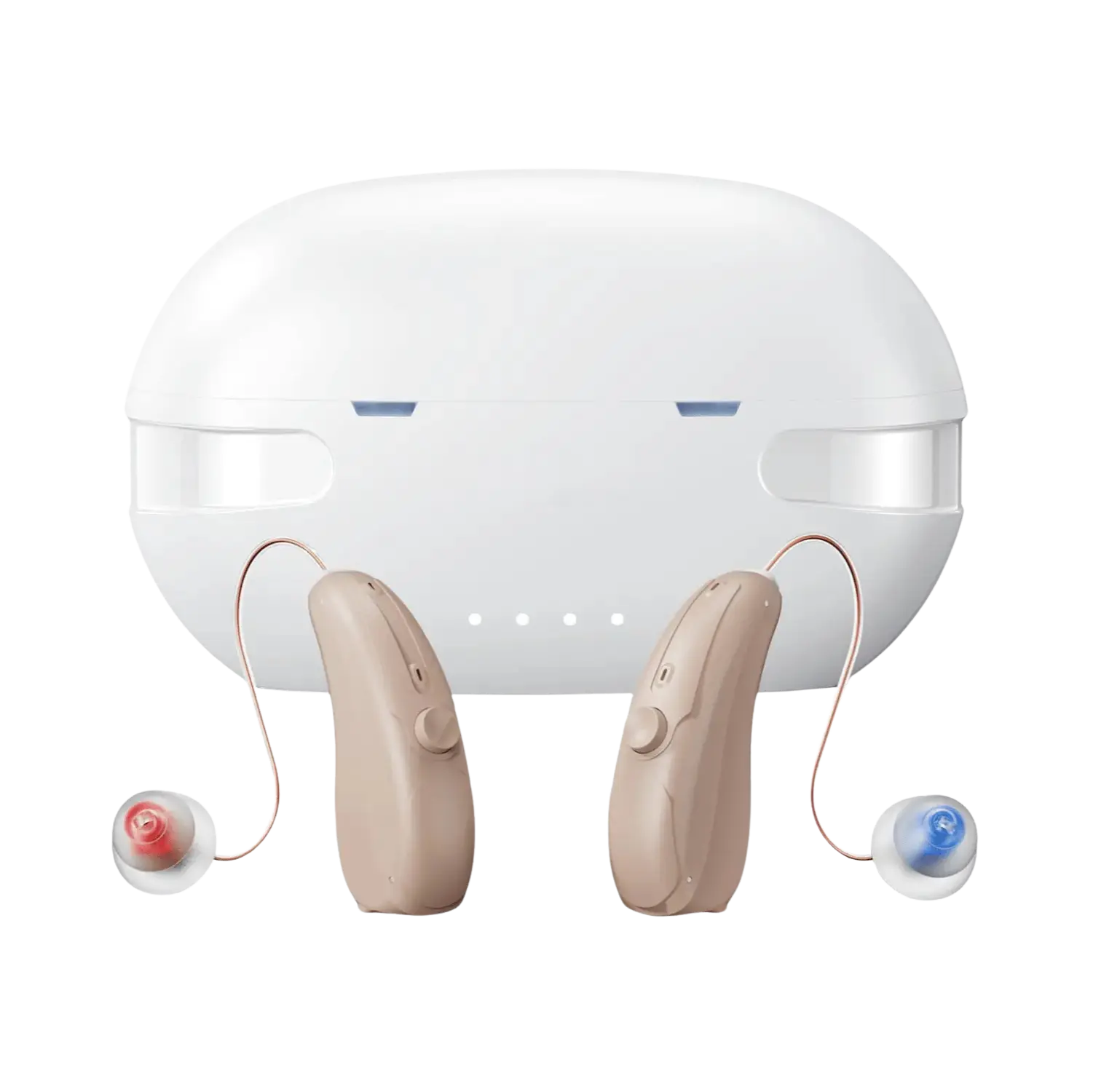
On devices, the review points to preset and over-the-counter hearing aids as central to any scale-up strategy, since they remove the requirement for a custom in-clinic fitting. Rechargeable devices are highlighted as important in settings where a steady supply of hearing aid batteries is not guaranteed. Trade policies that inflate the cost of imported hearing aids are called out as a specific policy lever that could lower prices without touching the devices themselves.
On stigma, the review notes that the same set of concerns, that a hearing aid is a visible marker of aging or disability, that peers or family will react, that the health system does not treat hearing seriously, shows up across settings. The authors argue that a delivery model rooted in the community and paired with counseling is more likely to normalize hearing care than one that requires a trip to a specialist clinic.
What It Means for People with Hearing Loss
Although the review was written with low- and middle-income countries in mind, the authors are explicit that the model applies to underserved populations in high-income countries as well. Rural counties in the United States, for example, often have no in-network audiologist within driving distance, and Medicare has historically covered very little of the cost of a prescription hearing aid. For people in that situation, the traditional model already does not work, and the same tools the authors describe, mobile-phone-based screening, preset or OTC devices, remote acclimatization support, are increasingly relevant.
The broader message for anyone with untreated hearing loss is that the delay between noticing a problem and doing something about it does not have to be measured in years. Cost is real, but the gap between price and function has narrowed sharply in the last few years, and rechargeable OTC devices with app-based setup remove a lot of what used to be reserved for a clinic visit.
One Design Aligned With the Review's Access-First Direction
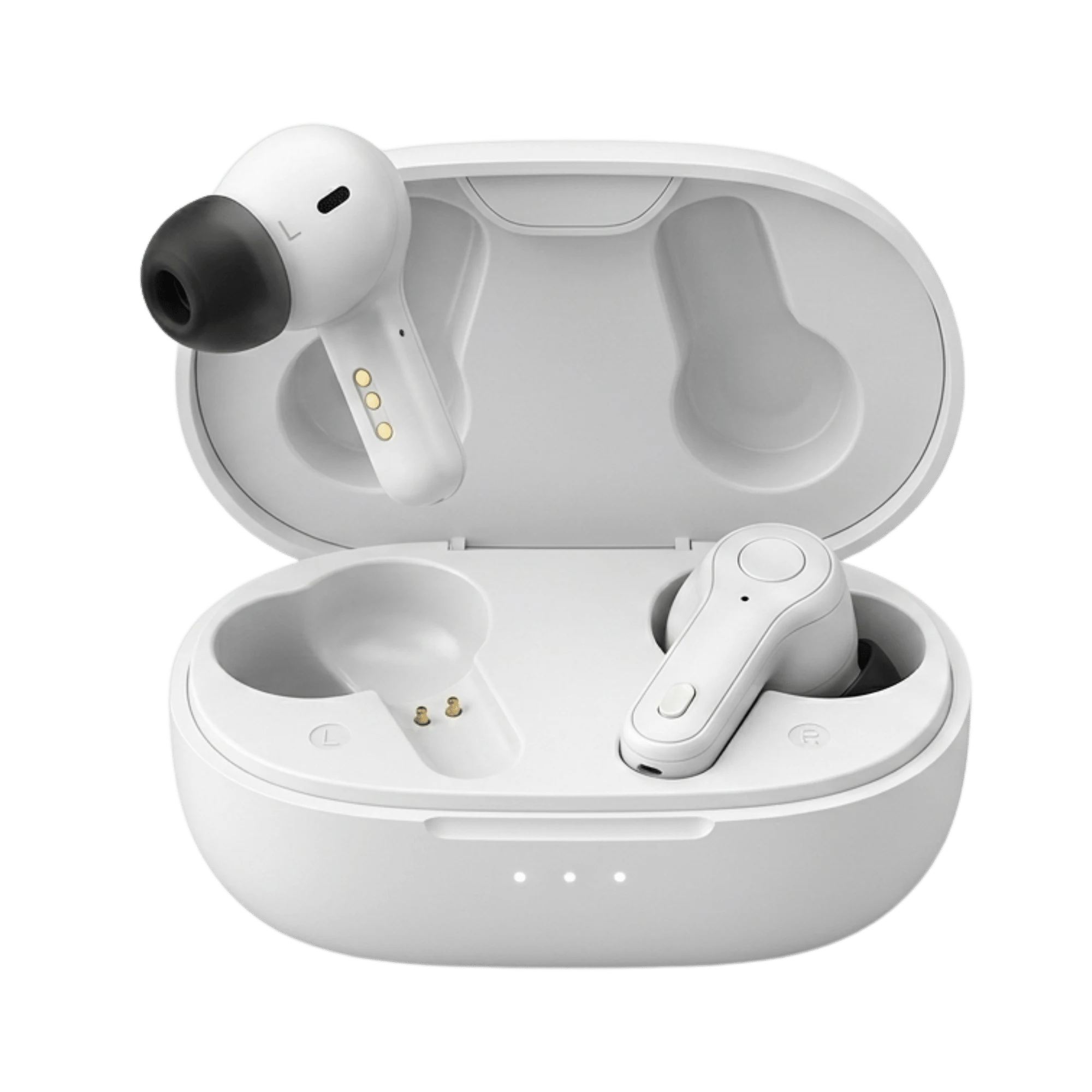
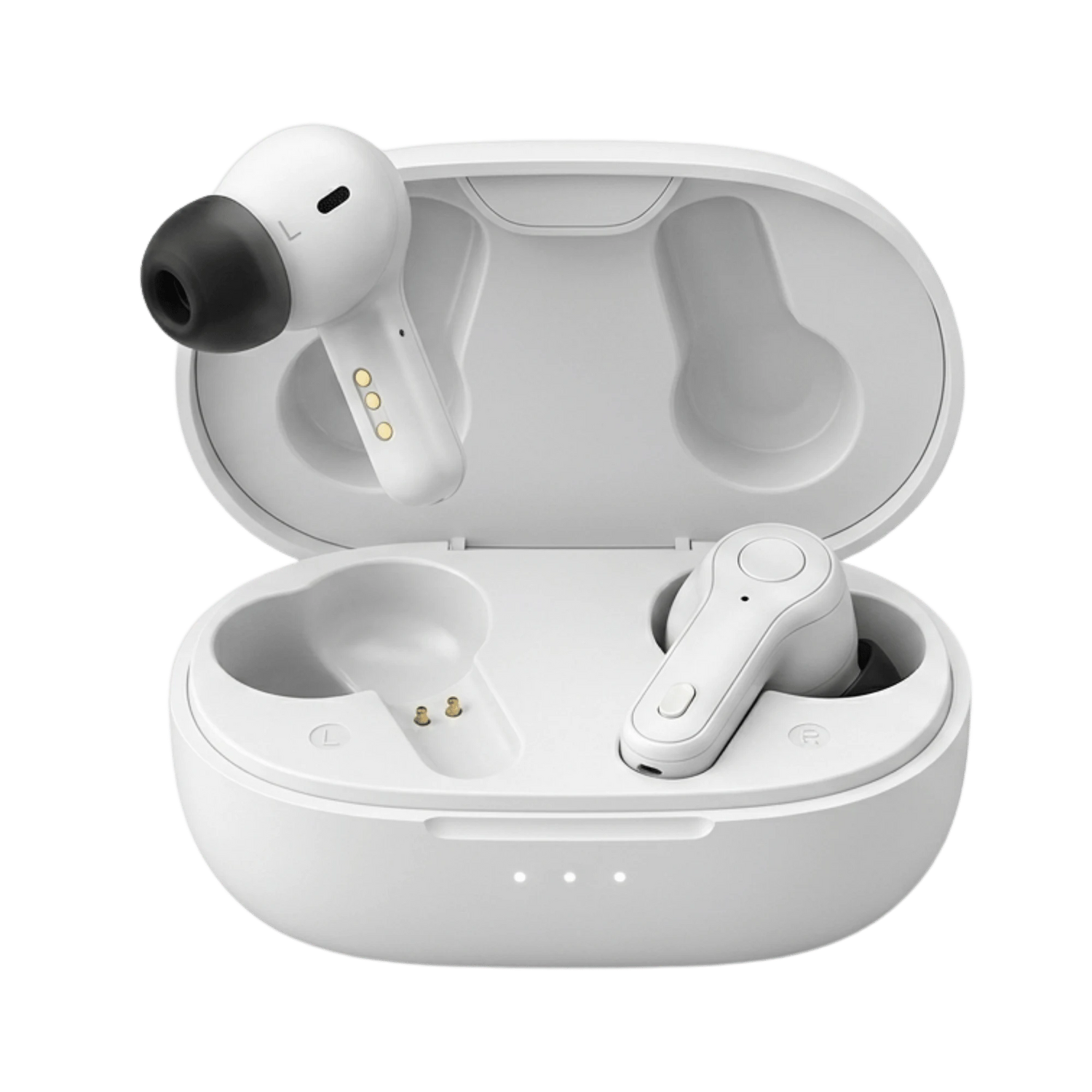
The review's core claim, that scaling hearing care requires OTC devices with app-based setup and reliable rechargeable batteries, maps closely onto how Panda Air is designed. Panda Air is an earbud-style, in-the-canal OTC hearing aid that ships directly to the user with no clinic visit required. After delivery, the wearer pairs the device with the Panda app, and the app runs a frequency-specific hearing test through the hearing aid itself and then programs the gain and frequency response to match the user's audiogram automatically. This is broadly the same fitting logic an audiologist would follow at a clinical appointment, done through a self-fitting OTC hearing aid at home.
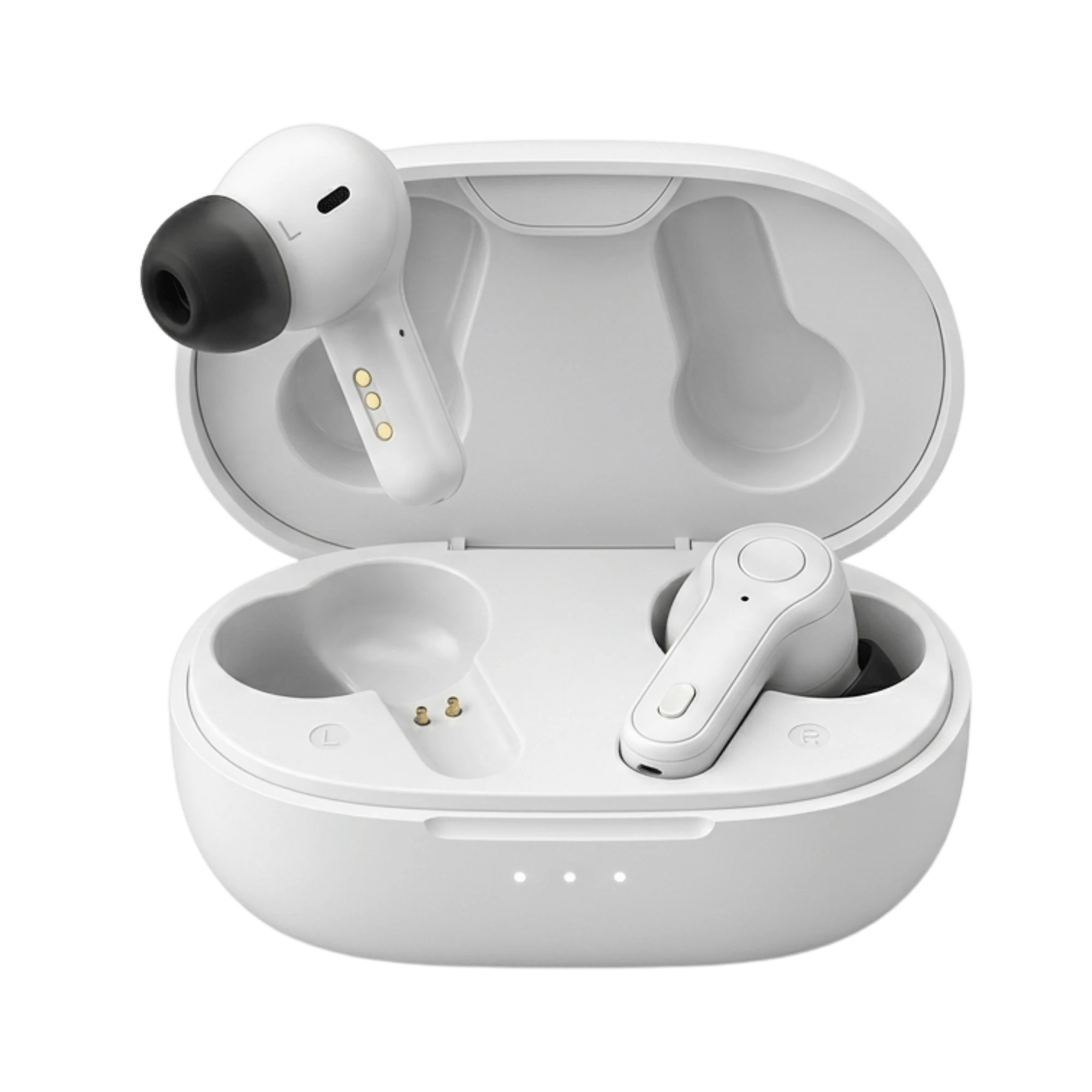
On the reliability point the review flags, that battery supply is not always dependable outside major cities, Panda Air's fast-charge case runs up to 60 hours between charging visits, which is closer to a phone-charging cadence than a traditional replaceable-battery cadence. The device carries a 5-year warranty and a 45-day return window, which is meaningful for people who cannot easily return to a clinic if the device does not fit their needs.
The caveat that applies everywhere still applies here: OTC devices are approved for adults with mild to moderate hearing loss. People with severe or profound loss should still be evaluated by an audiologist where one is available, and this review is explicit that OTC is a complement to a full hearing-care system, not a replacement for it.
Limitations of This Research
This is an evidence review, not a randomized trial, so the confidence in each individual strategy varies with the underlying literature it draws on. Some of the delivery-model claims, in particular around community health worker programs, are supported by field studies but not by large multi-country trials. Coverage estimates for low- and middle-income countries also rest on data sources that vary considerably in quality between regions. The authors are affiliated with organizations that work on tele-audiology and community-based hearing care programs, which is worth noting when reading the sections that discuss those approaches; readers should consult the full paper for author disclosures.
Where This Leaves Us
The direction the review points in is not about picking a better device, it is about picking a better delivery model. If most of the world's hearing loss is going to be treated in the next decade, it is not going to be treated in specialist clinics. It is going to be treated at home, with devices that can be set up on a phone and supported by someone in the community. For consumers, that shift is already happening, and the practical question is no longer whether to consider an OTC device but which one has an onboarding experience they can trust.
Swanepoel D, Frisby C, Manchaiah V. Hearing aids in low- and middle-income countries: from evidence to scale. Expert Review of Medical Devices. 2026. Retrieved from PubMed. https://doi.org/10.1080/17434440.2026.2701375