Almost Everyone Would Wear a Hearing Aid, but Nine in Ten Assume They Must Buy One at a Hospital
A survey of 1,239 adults in Southwest China found near-universal willingness to wear hearing aids sitting alongside a strong default assumption that a hospital is the only proper place to get one.
Conversations about untreated hearing loss tend to reach for reluctance as the explanation. People are said to be vain about visible devices, or in denial about their hearing, or unwilling to accept that they need help. Those stories are comfortable because they place the obstacle inside the person.
A new survey from West China Hospital of Sichuan University complicates that picture. When researchers asked more than a thousand members of the general public what they actually thought about hearing aids, the reluctance largely was not there. What surfaced instead was a knowledge gap and a set of firm assumptions about where hearing aids come from.
About This Study
Title: Knowledge, Attitudes, and Practices Toward Hearing Aids Among the General Public: A Cross-Sectional Survey in Southwest China
Authors: Bin Zeng, Yuanyuan Peng, Tianpei Ma, Zhongjing Pan, Qinghan Zeng, Dan Lu, Zhaoli Meng
Affiliations: Department of Otorhinolaryngology, Head and Neck Surgery, West China Hospital of Sichuan University, Chengdu; Department of Epidemiology and Health Statistics, West China School of Public Health and West China Fourth Hospital, Sichuan University, Chengdu; Department of Otorhinolaryngology, Head and Neck Surgery, West China Tian Fu Hospital, Sichuan University, Chengdu
Journal and publication date: American Journal of Audiology, July 14, 2026
Study type: Cross-sectional questionnaire survey of 1,239 members of the general public
PubMed DOI: https://doi.org/10.1044/2026_AJA-25-00312
Background: Why the Researchers Looked at This
Hearing aids are among the most under-used effective treatments in medicine. Large numbers of people who would measurably benefit from amplification never obtain a device, and the shortfall persists even in places where devices are available and at least partly funded. Explaining that gap is a prerequisite to closing it.
Most of what is known about public attitudes toward hearing aids comes from people already inside the clinical system, such as patients at audiology appointments or people who have already sought help. That is a filtered sample by construction. It cannot tell you what the general public believes, because the general public includes everyone who never made the appointment.
This team took what public health researchers call a knowledge, attitudes and practices approach, which separates three things that are easy to blur together: what people know about a treatment, how they feel about it, and what they actually do. Untangling them matters, because a knowledge problem and an attitude problem call for entirely different responses.
How the Study Was Done
The researchers enrolled 1,239 participants from the general public in Southwest China and administered a self-designed electronic questionnaire. The instrument captured demographics alongside three domains: what respondents knew about hearing aids, what attitudes they held toward them, and what kind of health education they wanted and through which channels.
Knowledge was scored rather than treated as a yes or no, which let the team test which characteristics predicted knowing more or less. They then used multivariate logistic regression to identify which factors were independently associated with a greater likelihood of adopting hearing aids, meaning factors that still mattered once the other variables were held constant.
It is worth being precise about what was measured. This was a survey of stated knowledge, attitudes and intentions among the general public, not a study that tracked whether anyone went on to buy or wear a device.
What the Researchers Found
Willingness was close to universal. Of the 1,239 respondents, 1,208 people, or 97.50 percent, said they would be willing to use hearing aids. Whatever is keeping people from treatment in this population, an outright refusal to consider the devices does not appear to be it.
Knowledge was patchier. About 844 respondents, or 68.12 percent, showed a good level of knowledge about hearing aids, which leaves close to a third who did not. At the far end, 48 people, or 3.90 percent, reported they had never heard of hearing aids at all. Knowledge scores varied significantly with gender, age, education level, profession, self-reported familiarity with the devices, monthly income, and willingness to use them, all at the conventional threshold for statistical significance.
The most striking result concerns where people believe hearing aids come from. Some 1,139 respondents, or 91.90 percent, said they would prefer to purchase hearing aids from hospitals, and what they cared about was quality, comfort and functionality. Nine in ten treated the hospital as the natural and trustworthy channel, which quietly makes a clinic visit the entry fee for treatment in most people's mental model.
When the regression isolated what independently predicted a greater likelihood of adoption, three things stood out: having a medical background, scoring higher on hearing aid knowledge, and holding a positive inclination toward health education. Knowledge, in other words, was not merely correlated with adoption in passing. It survived adjustment for the other variables.
Respondents also said plainly what they wanted. A total of 1,051 people, or 84.83 percent, expressed a desire for health education about hearing aids, and they named their preferred routes: medical staff at 61.02 percent and the Internet at 54.96 percent.
What It Means for People with Hearing Loss
The shape of this data argues against the familiar story that people simply do not want hearing aids. In this sample they overwhelmingly did. The obstacle looks less like resistance and more like not knowing enough to take the first step, combined with a belief that the first step has to be a hospital appointment.
That distinction has teeth. If the barrier were attitudinal, the fix would be persuasion. Because knowledge independently predicted adoption, the fix is closer to plain information, delivered through the channels people said they already trust. It also means the roughly one third of respondents with weaker knowledge are not a lost cause, they are an audience that has not been reached.
The hospital preference deserves a careful reading rather than a dismissive one. People said they wanted quality, comfort and functionality, and the hospital is where they expect to find those things. The underlying demand is for a device that genuinely fits and works, and any route to treatment has to satisfy that demand rather than talk people out of it.
When Willingness Is High and the Assumed Route Is a Clinic Visit
The finding that willingness runs at 97.50 percent while nine in ten assume a hospital is the only credible source points at a specific access question: what happens to people who are willing but for whom a clinic visit is difficult, distant or expensive. Self-fitting OTC hearing aids exist for that gap, and the honest version of the pitch has to answer the concern the respondents actually voiced, which was about quality and fit rather than convenience.
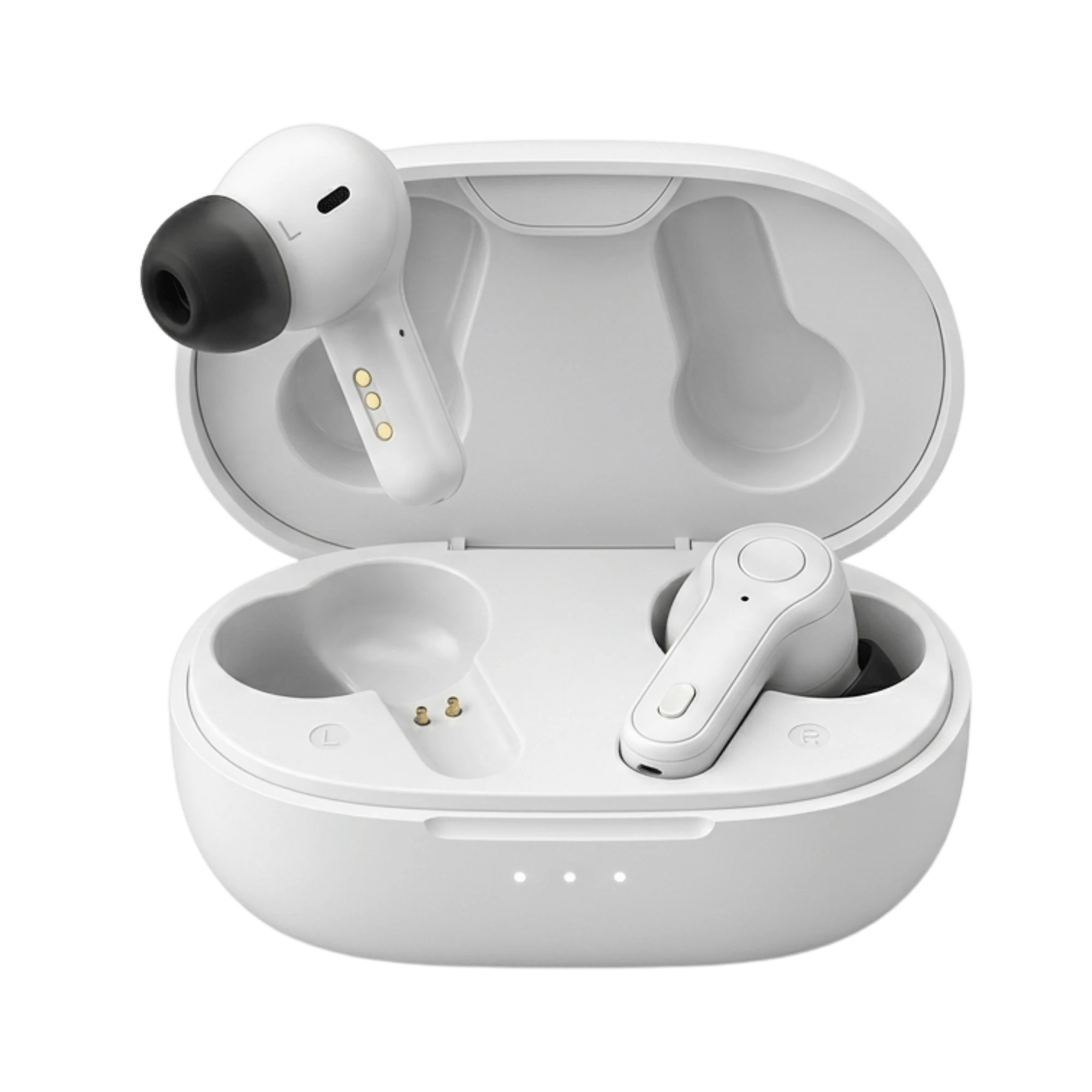
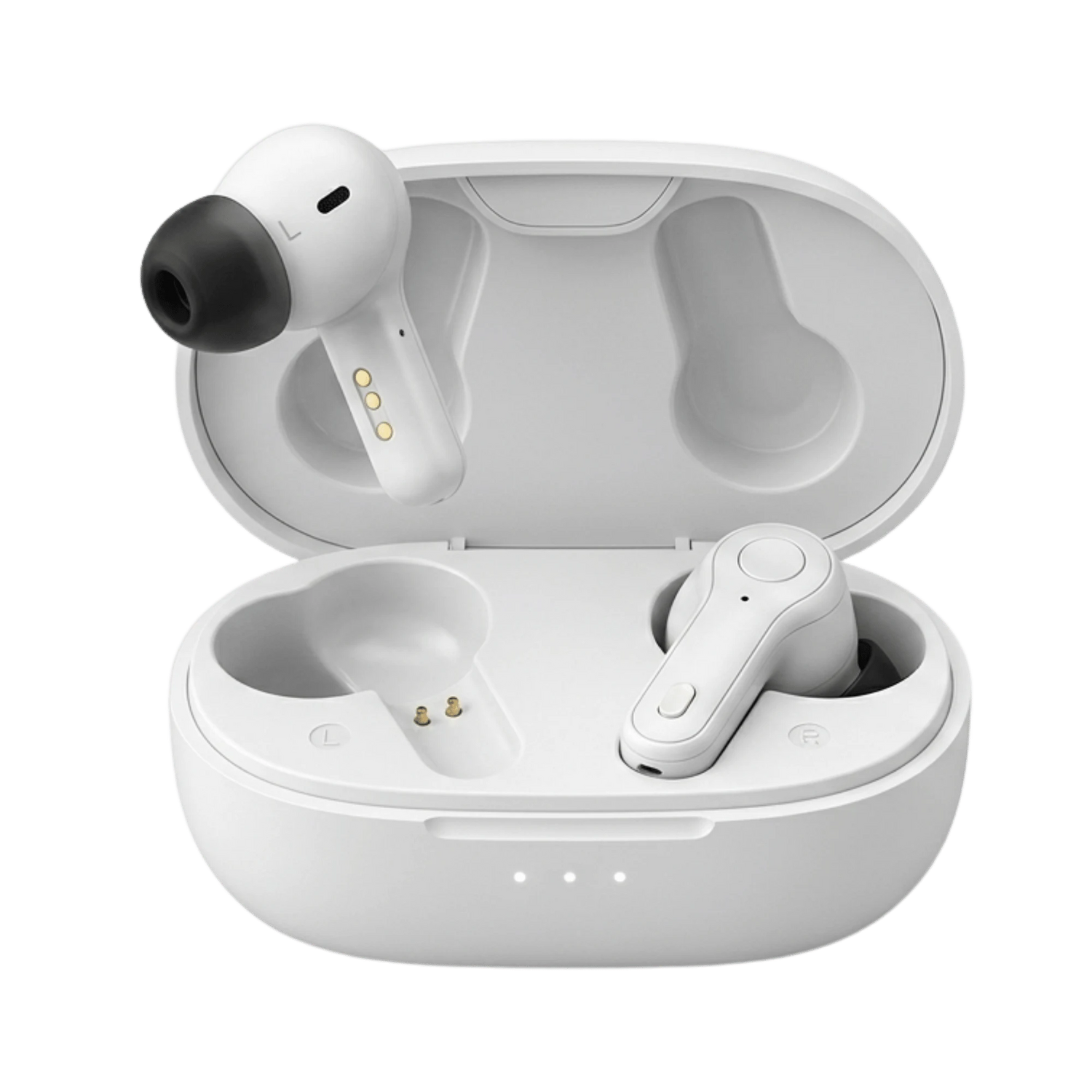
Panda Air is an earbud-style in-the-canal device built around that problem. It includes an app-based in-ear hearing test: once the device arrives, the wearer pairs it with the Panda app, the app runs a frequency-specific hearing test through the hearing aid itself, and it then programs the gain and frequency response to match the resulting audiogram, similar to what an audiologist does at a clinical fitting. That is the part that speaks to the survey's quality concern, because an app-tuned hearing aid is matched to one person's measured hearing rather than sold as a generic amplifier. On the hardware side it runs 16-channel WDRC with multi-band adaptive noise reduction, ships with a 60-hour fast-charge case, and carries a 5-year warranty and a 45-day return window. Details are on the Panda Air product page.
Two honest caveats. OTC devices are approved for mild-to-moderate hearing loss, and severe or profound loss still benefits most from a clinical fitting, so the hospital route this survey's respondents favored remains the right one for plenty of people. And this study was conducted in Southwest China, where the regulatory and purchasing landscape differs from the United States, so it describes a mental model worth understanding rather than a market for any particular device.
Limitations of This Research
This was a cross-sectional survey, meaning it captured a single moment rather than following anyone over time, so it can identify associations but cannot establish that knowledge causes adoption. The relationship could plausibly run the other way, with people who are already inclined toward hearing aids going on to learn more about them. The questionnaire was self-designed, and the article's abstract does not describe validation against an established instrument, which matters because how questions are worded shapes what a knowledge score means.
Everything measured here was self-reported and hypothetical. Stated willingness at 97.50 percent is a statement of intention, and intentions routinely overstate behavior, particularly for a socially acceptable answer like agreeing you would accept treatment. The survey was electronic, which tends to under-reach people who are older, poorer or less connected, and those are precisely the groups where hearing loss is most common and least treated. The sample was drawn from one region of one country. The PubMed record does not list funding sources or competing interests, so readers wanting that detail should consult the full text.
What to Do With This
The useful takeaway is a correction to a common assumption. If you have been putting off doing something about your hearing, the odds are decent that you are not in the small group who genuinely object to hearing aids, because in this survey that group barely existed. You are more likely somewhere in the third of people who never got a clear picture of what the devices are, what they cost, or where they can be obtained. The respondents here were not asking to be persuaded. They were asking to be informed, and they named exactly where they wanted the information to come from. That is a far more tractable problem than reluctance, and it is worth knowing that the first step does not have to be a decision, it can just be finding out.
Zeng B, Peng Y, Ma T, Pan Z, Zeng Q, Lu D, Meng Z. Knowledge, Attitudes, and Practices Toward Hearing Aids Among the General Public: A Cross-Sectional Survey in Southwest China. American Journal of Audiology. 2026. Retrieved from PubMed. https://doi.org/10.1044/2026_AJA-25-00312