Cochlear Implants Linked to Lower Dementia Risk in a National 20-Year Cohort
A national cohort of more than 4,000 cochlear implant recipients showed substantially lower rates of dementia, mild cognitive impairment and memory loss than matched adults whose hearing loss went untreated.
Over the past decade, hearing loss has shifted from being treated as a quality-of-life problem to being counted among the modifiable risk factors for dementia. That reframing raises an obvious follow-up question. If untreated hearing loss carries cognitive risk, does treating the hearing loss reduce it?
A new analysis in Alzheimer's & Dementia approaches that question with registry-scale data rather than a single-clinic sample. It follows adults who received cochlear implants alongside carefully matched adults who had hearing loss but no implant, and tracks who went on to develop cognitive problems.
About This Study
Title: Cochlear implants are associated with reduced cognitive decline risk: A 20-year cohort study
Authors: Filippos Anagnostakis, Michail Kokkorakis, Ilias Papadimopoulos, Junhao Wen, Christos Davatzikos
Affiliations: Artificial Intelligence in Biomedical Imaging Laboratory, Perelman School of Medicine, University of Pennsylvania; Laboratory of AI and Biomedical Science, Columbia University; Department of Internal Medicine, Yale School of Medicine; Department of Clinical Pharmacy and Pharmacology, University Medical Center Groningen; Medicine and Surgery, University of Bologna
Journal: Alzheimer's & Dementia (Amsterdam, Netherlands), 2026;18(3):e70409, published 24 July 2026
Study type: Retrospective national population cohort study with propensity score matching
PubMed DOI: 10.1002/dad2.70409
Background: Why the Researchers Looked at This
A cochlear implant is a surgically placed device for people with severe or profound hearing loss. Rather than amplifying sound the way a hearing aid does, it bypasses the damaged part of the inner ear and stimulates the hearing nerve directly. It is the most intensive hearing intervention in routine clinical use, which makes it a useful test case: if restoring auditory input matters for the brain, the effect should be visible in the group that gets the largest change in input.
The cognitive outcomes in this study span a range of severity. Mild cognitive impairment describes measurable memory or thinking difficulties that have not yet crossed the threshold into dementia. All-cause dementia covers Alzheimer's disease and other causes together. Both are counted here as separate endpoints, along with a broader category the researchers labelled memory loss.
Results in this kind of study are reported as hazard ratios. A hazard ratio of 1.0 means the two groups developed the outcome at the same rate. A value below 1.0 means the implanted group developed it more slowly, and a value of 0.60 corresponds to roughly a 40 percent lower rate over the follow-up period.
How the Study Was Done
The research team drew on a national population database rather than recruiting participants directly. The cohort comprised 4,106 adults who underwent cochlear implantation, each compared against matched controls who had hearing loss that was not treated with an implant. Participants were followed for a median of 7.3 years, within a database window spanning roughly two decades.
Because people who receive implants are not a random sample of people with hearing loss, the researchers used propensity score matching. In plain terms, that means each implanted person was paired with an untreated person who resembled them on the measured characteristics that might independently affect dementia risk, so that the two groups start out looking as similar as the data allow.
Outcomes were then analysed as time-to-event data using Kaplan-Meier methods, which ask not simply how many people in each group developed a diagnosis but how quickly. The analysis was also repeated separately for men and women.
What the Researchers Found
Adults with cochlear implants developed all-cause dementia at a significantly lower rate than their matched untreated counterparts, with a hazard ratio of 0.61 and a 95 percent confidence interval of 0.50 to 0.74. Read plainly, the implanted group accumulated dementia diagnoses at roughly 60 percent of the rate seen in the untreated group over the follow-up period.
The pattern held, and was somewhat stronger, for the earlier stages of cognitive difficulty. Mild cognitive impairment carried a hazard ratio of 0.53 with a confidence interval of 0.40 to 0.70, and memory loss a hazard ratio of 0.54 with a confidence interval of 0.45 to 0.65. All three confidence intervals sit entirely below 1.0, which is what statisticians mean by a statistically significant reduction rather than a chance fluctuation.
The associations survived a check that often breaks weaker findings. When the researchers split the cohort by sex and reran the analysis, the reduced risk remained statistically significant in both men and women, rather than being driven by one subgroup.
It is worth being precise about what the comparison actually is. The control group was not people with normal hearing. It was people with hearing loss who did not receive an implant, which means the contrast being measured is treated hearing loss versus untreated hearing loss, not hearing loss versus no hearing loss.
On the strength of that contrast, the authors conclude that their results support early auditory intervention as a dementia prevention strategy, while calling for longer follow-up in more diverse populations before the case is considered settled.
What It Means for People with Hearing Loss
The most useful takeaway is not really about cochlear implants specifically. Most people with age-related hearing loss will never be implant candidates, because implants are reserved for severe and profound loss. What the study adds to the wider literature is evidence pointing in a particular direction: among people who already have hearing loss, the ones whose hearing was restored fared better cognitively than the ones whose hearing was left alone.
That reframes a decision many older adults quietly postpone. Hearing loss tends to arrive gradually enough that waiting feels costless, and the usual argument for acting sooner has been about conversation, work and social life. This analysis suggests the ledger may be longer than that, though it cannot prove the direction of cause on its own.
For anyone with hearing difficulty that has been going on for years, the practical implication is straightforward. Getting hearing assessed and treated is worth doing on its own terms, and the growing body of cognitive research gives one more reason not to leave it indefinitely.
The Comparison Group Was People Whose Hearing Loss Went Untreated
The detail that carries the most weight in this study is who the controls were. These were adults with documented hearing loss who never got it treated. Untreated hearing loss remains extremely common, and cost and inconvenience are among the reasons most often given for putting treatment off, which is precisely the barrier that FDA-cleared over-the-counter devices were introduced to lower.
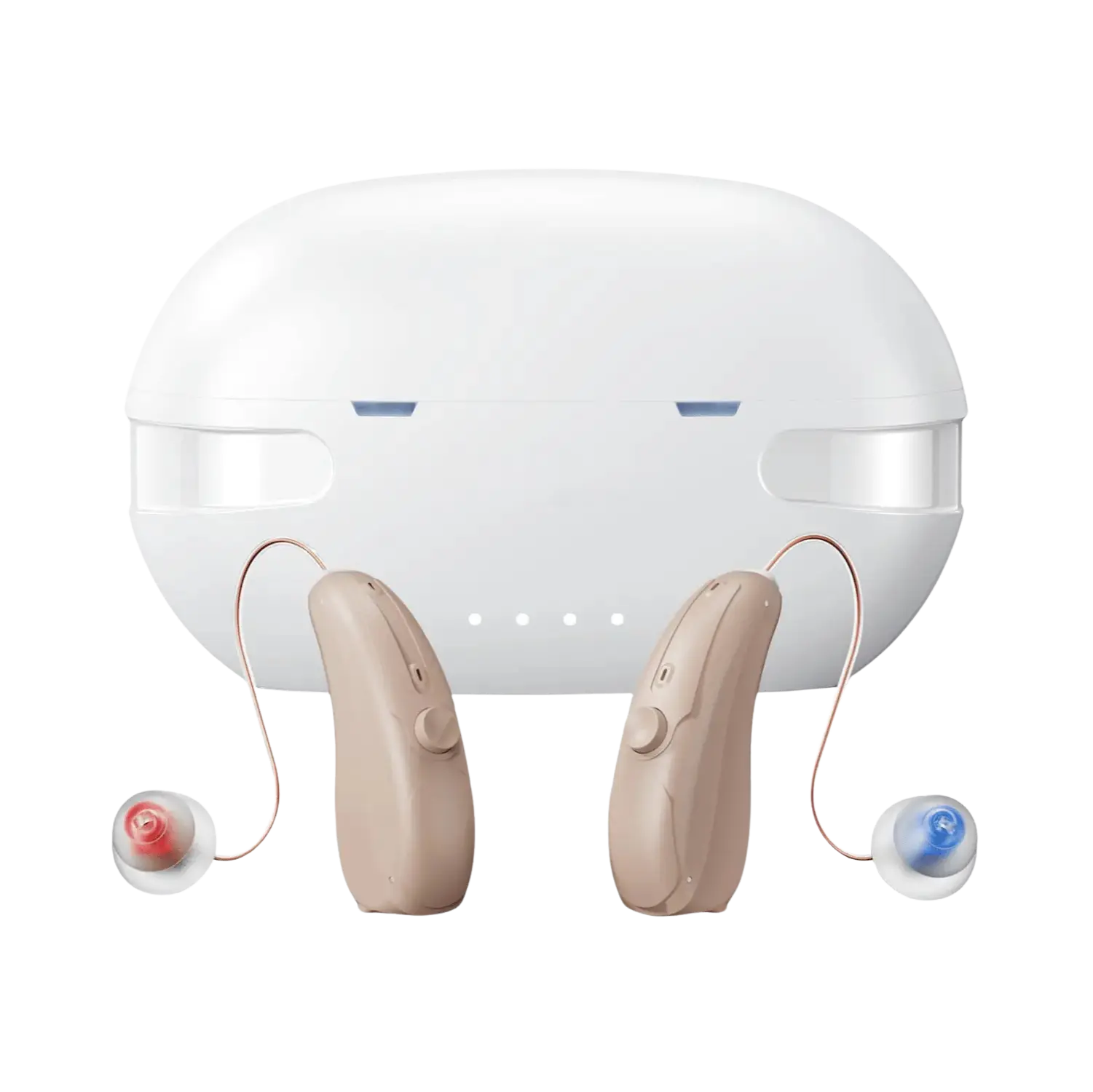
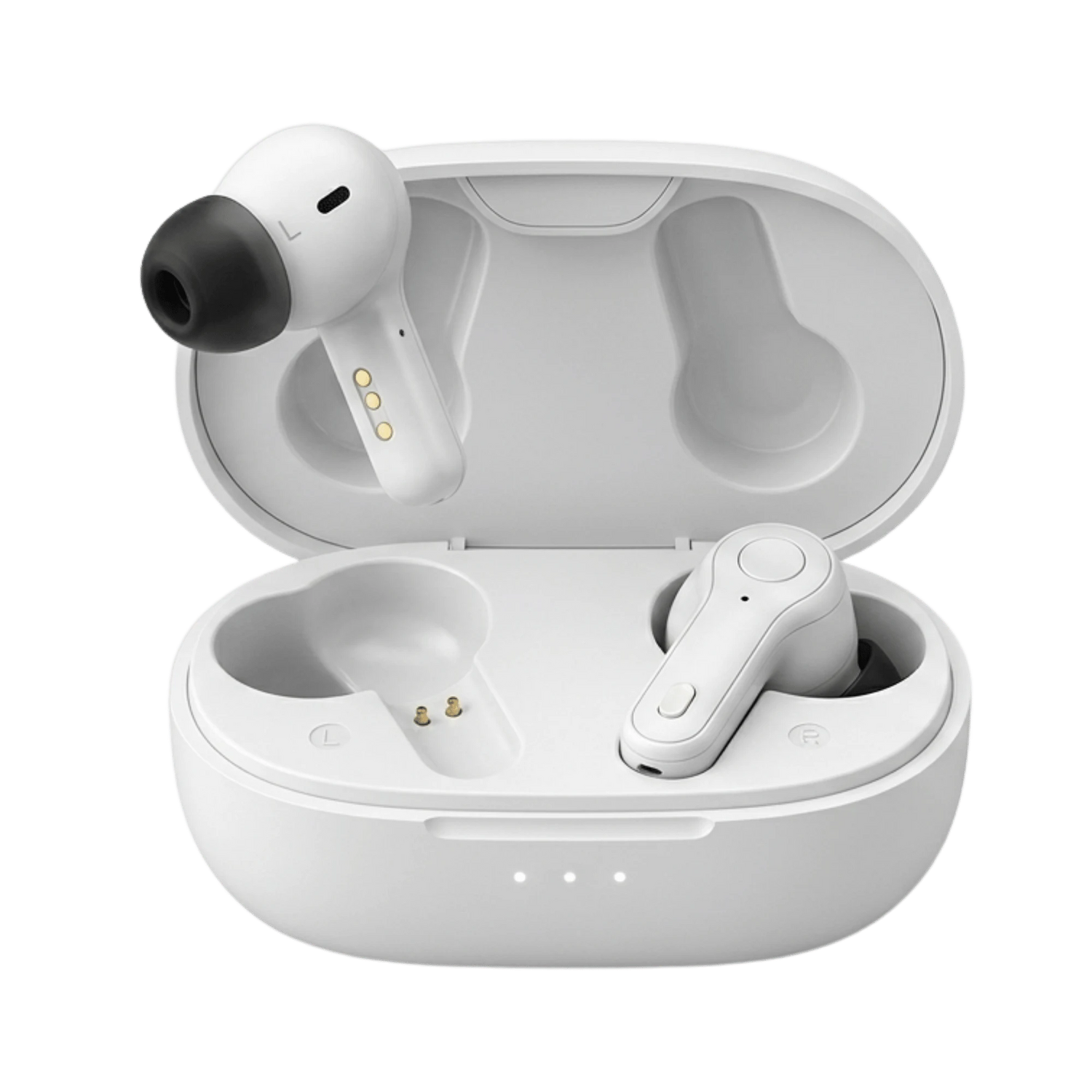
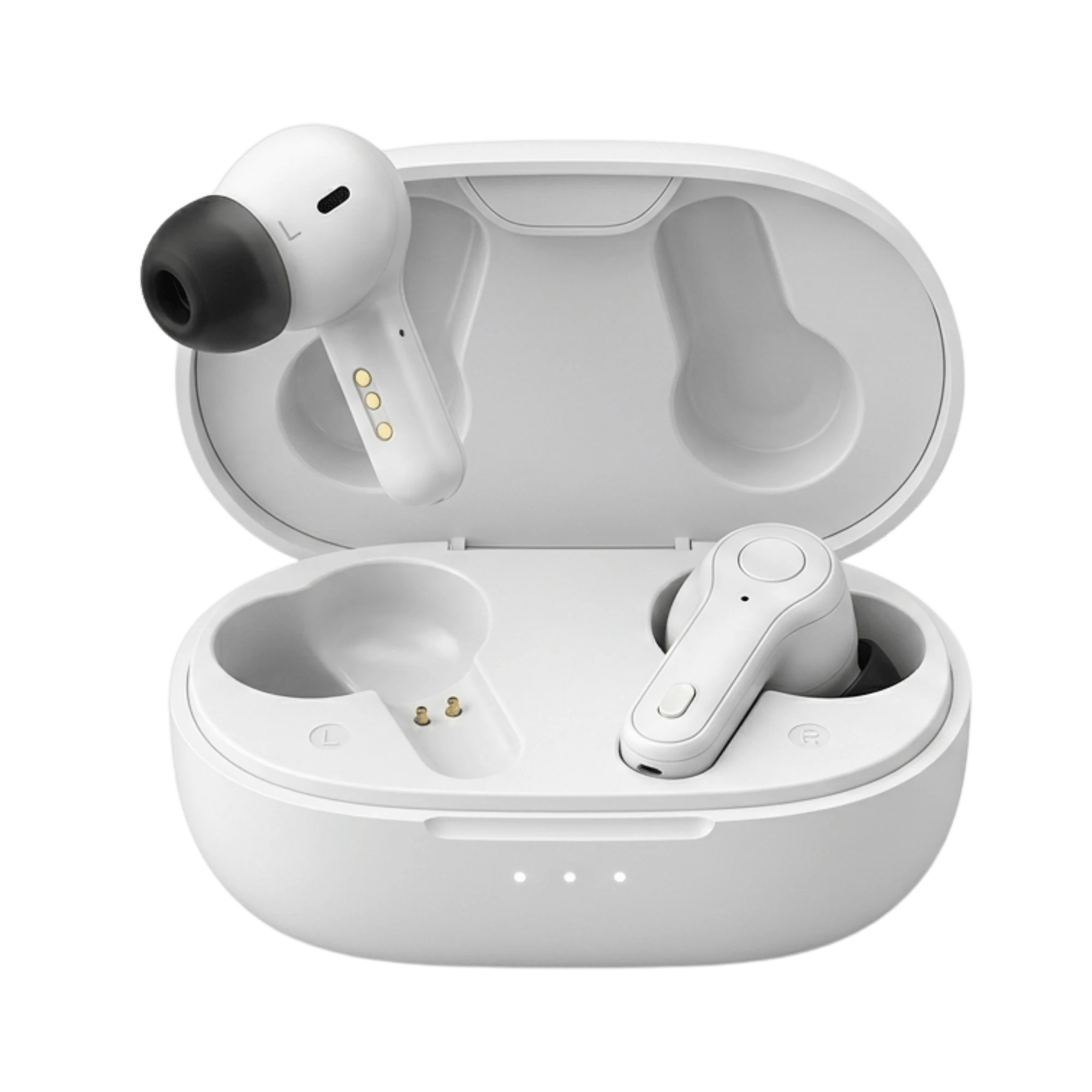
Panda Air is one device in that category. It is an earbud-style in-the-canal aid with 16-channel wide dynamic range compression and multi-band adaptive noise reduction, and it pairs with the Panda app for an in-ear hearing test that runs frequency-specific tones through the aid itself and programs gain and frequency response to the user's own audiogram, much as a clinical fitting would. As one of the app-tuned, self-fitting OTC hearing aids now available, it removes the appointment-scheduling step that stops a lot of people before they start. The charging case holds about 60 hours and fast-charges, and it ships with a 5-year warranty and 45-day returns.
The scope of that option should be stated clearly. Over-the-counter hearing aids are approved for mild to moderate hearing loss. The people in this study were at the severe and profound end of the range, where cochlear implants and clinical fittings remain the appropriate path, and anyone in that situation should be working with an audiologist rather than shopping.
Limitations of This Research
This is observational research, and no amount of statistical matching turns it into a randomised trial. Propensity score matching balances the characteristics the database happens to record; it cannot balance the ones it does not, such as education, general health engagement, or family support. People who pursue cochlear implantation may differ from those who do not in ways that independently protect cognition, and that possibility cannot be excluded here.
There is also a diagnostic wrinkle specific to this field. Severe untreated hearing loss can make a person perform worse on the verbal tests used to assess cognition, which means some of the gap between groups may reflect easier assessment rather than genuinely better brain health. The authors themselves call for longer follow-up across more diverse populations. The published abstract does not report funding sources or competing interests.
Where This Leaves Us
One cohort study does not establish that treating hearing loss prevents dementia, and this one is careful not to claim it does. What it does contribute is a large, long-followed dataset pointing the same way as the rest of the literature: among people who already have hearing loss, treatment is associated with better cognitive trajectories than no treatment. For someone weighing whether to deal with their hearing this year or in a few more, that is a reasonable thing to factor in, alongside the more immediate benefit of following conversations again.
Anagnostakis F, Kokkorakis M, Papadimopoulos I, Wen J, Davatzikos C. Cochlear implants are associated with reduced cognitive decline risk: A 20-year cohort study. Alzheimer's & Dementia (Amsterdam, Netherlands). 2026;18(3):e70409. Retrieved from PubMed. https://doi.org/10.1002/dad2.70409