Can Better Hearing Aid Fitting Help Protect the Aging Brain? A New Trial Investigates
A new Finnish clinical trial will test whether a more personalized, data-driven approach to fitting hearing aids can improve real-world hearing and, over time, help support brain health in older adults.
Hearing aids are the standard treatment for age-related hearing loss, yet many people who wear them still find it hard to follow a conversation, especially in a noisy room. Researchers keep returning to three weak spots in ordinary hearing care: hearing loss that is picked up late, devices that are not tuned precisely to the individual, and follow-up support that is patchy or missing altogether.
At the same time, a growing body of research has linked untreated hearing loss to a higher risk of thinking and memory problems later in life. What has been missing is strong trial evidence showing whether better hearing care can actually change that path. A research team in Finland has now designed a study built to start answering that question.
Title: Proof-of-concept randomised controlled trial of data-driven hearing rehabilitation versus standard care in older adults with hearing loss: the healthy hearing for healthy ageing protocol
Authors: Laura Ihalainen, Mariagnese Barbera, Timo Törmäkangas, Petteri Hyvärinen, Tytti Willberg, Pia Linder, Alina Solomon, Aarno Dietz
Affiliations: Kuopio University Hospital and University of Eastern Finland; Imperial College London; University of Jyväskylä; Turku University Hospital; Karolinska Institutet
Journal: BMJ Open, published 21 July 2026
Study type: Randomized controlled trial (proof-of-concept protocol; ClinicalTrials.gov NCT06495268)
Reference: PubMed, doi.org/10.1136/bmjopen-2026-122681
Background: Why the Researchers Looked at This
Hearing rehabilitation refers to the whole process of helping someone hear well again, not just handing over a device. It includes measuring the hearing loss, programming the aid to match it, teaching the person how to use it, and checking back to make adjustments. When any of those steps is rushed or skipped, the device often underperforms in daily life.
The researchers highlight a specific gap in the evidence. Observational studies have repeatedly connected hearing loss with cognitive decline, meaning a gradual worsening of memory, attention, and reasoning. But observational data cannot prove that treating hearing loss protects the brain. Only a randomized controlled trial, where participants are assigned by chance to one approach or another, can test cause and effect with confidence.
A recurring theme in this field is speech perception in noise, which is the ability to pick out spoken words when there is background sound. It is one of the most common frustrations for hearing aid users, and it is also thought to reflect how hard the brain has to work to make sense of degraded sound. That is why it sits at the center of this trial.
How the Study Was Done
The healthy hearing for healthy ageing study is a proof-of-concept, single-site, two-arm randomized controlled trial. It plans to enroll up to 200 older adults who have hearing loss but no existing cognitive decline and who have been referred for their first round of hearing aid rehabilitation.
Participants are assigned in equal numbers to one of two paths. One group receives data-driven hearing rehabilitation, meaning a more systematic, measurement-led approach to fitting and follow-up. The other group receives standard care as it is normally delivered. The main phase lasts 12 months, with a further 12 months of extended follow-up so the team can watch for slower-emerging effects.
Comparing a new, more structured approach directly against usual care, rather than against no care at all, is what makes the results relevant to everyday clinics. It asks not whether hearing aids help, but whether a better way of delivering them helps more.
What the Trial Is Designed to Show
Because this is a protocol paper, it lays out the plan rather than the results, which are still to come. The main outcome the team will track is speech perception in noise, measured with two tests validated for the Finnish language: the Finnish matrix sentence test and the digits-in-noise test. Both put a number on how well a person understands speech against background sound.
Beyond that headline measure, the trial will collect a wide set of secondary outcomes. These include how people rate their own hearing in real-life settings, their overall quality of life, and standardized cognitive tests such as the CERAD battery used in Alzheimer’s research, alongside psychosocial measures of mood and social engagement.
The study also reaches for more exploratory markers, including brain responses to sound recorded with electrodes, structural brain imaging, and vision-related measures. Taken together, the design is meant to capture not just whether people hear better, but whether better hearing ripples out into daily function and brain health.
What It Means for People with Hearing Loss
The most useful takeaway does not depend on the final results. It is the reminder that how a hearing aid is fitted and followed up can matter as much as the device itself. A well-matched, well-supported fitting is more likely to deliver clear speech in the situations that actually frustrate people.
It is also a sign of where hearing care is heading. Instead of judging success by loudness alone, researchers increasingly focus on speech in noise, personalization, and consistent follow-up. For anyone shopping for a hearing solution, those are sensible things to ask about.
And the cognitive angle, while unproven, is worth holding in mind calmly rather than anxiously. Addressing hearing loss is already worthwhile for communication and connection today. If future trials also show a brain-health benefit, that would be an added reason to act, not a cause for alarm.
Why Precise, Personalized Fitting Matters in Everyday Devices
This trial puts personalization and speech-in-noise performance at the heart of good hearing care, and that principle is not limited to the clinic. Newer over-the-counter devices are increasingly built to be tuned to the individual and to handle background noise, which is exactly where many people struggle most.

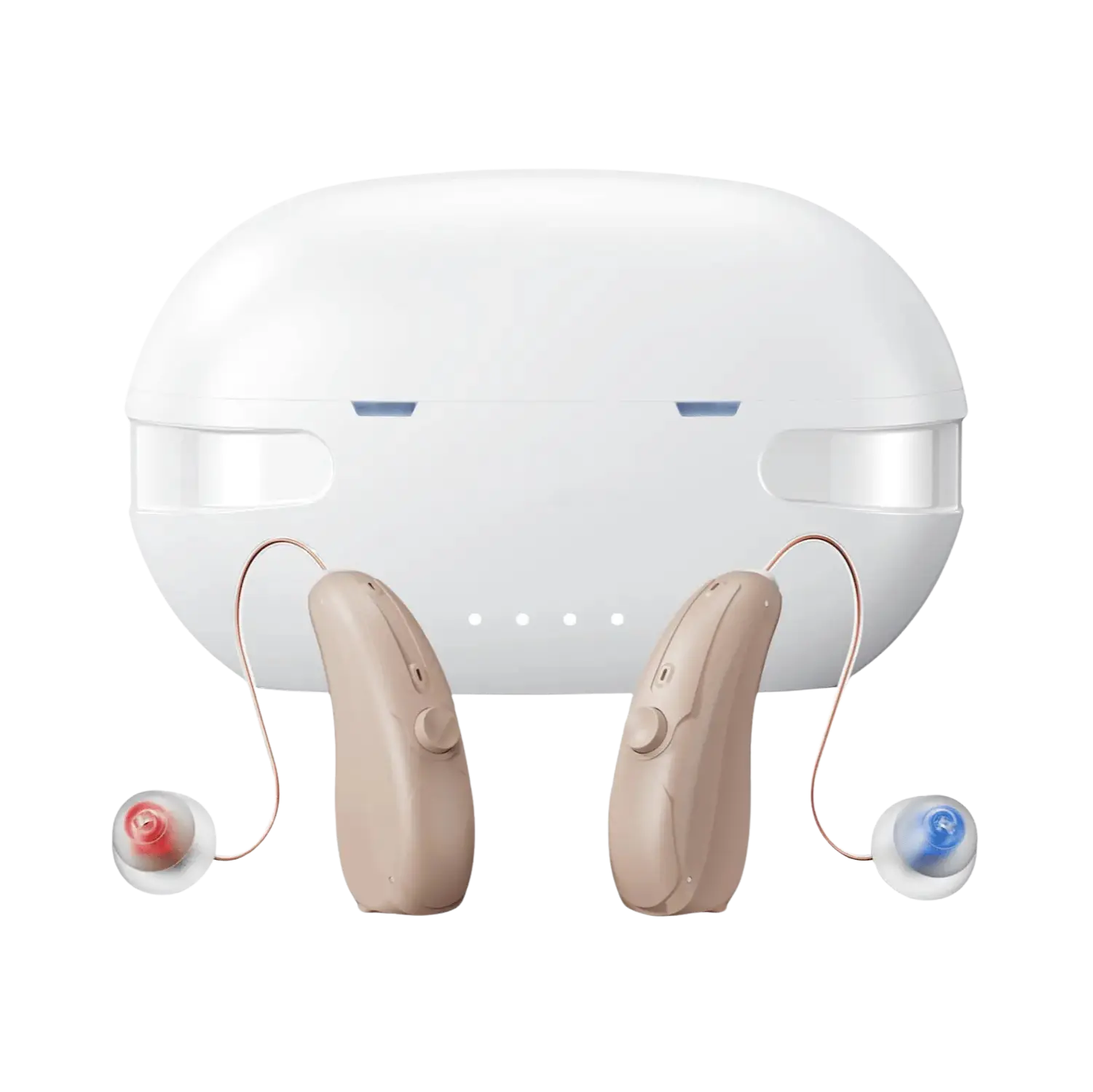
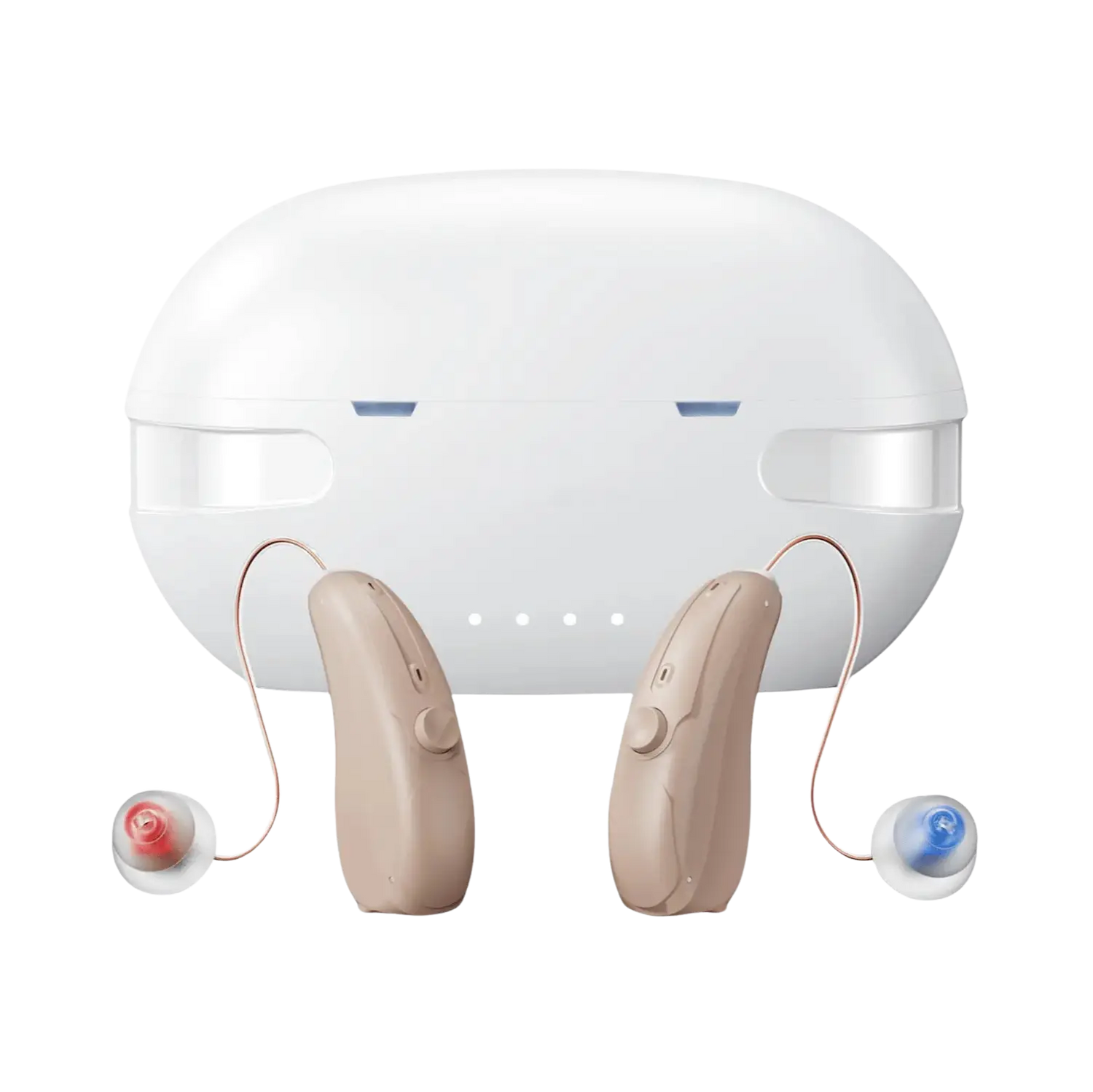
Panda Quantum is one example of that approach. It is a 16-channel receiver-in-canal hearing aid with active noise reduction, and it pairs with an app-based in-ear hearing test that runs a frequency-specific check through the aid itself and then sets the gain to match the listener’s results, much like a clinical fitting. That app-based hearing personalization is aimed squarely at delivering clearer speech in noisy environments, the same outcome this Finnish trial is measuring. It also streams calls, TV, and music over Bluetooth, offers up to 80 hours of total battery with the case, and comes with a 5-year warranty and 45-day returns.
One honest caveat: over-the-counter hearing aids are cleared for mild-to-moderate hearing loss. Anyone with severe or profound loss, or a sudden change in hearing, still benefits most from a professional evaluation and clinical fitting.
Limitations of This Research
The most important limitation is simple: this is a protocol, so there are no outcomes yet. It is also a single-site study of up to 200 people, and the primary hearing tests are validated specifically for Finnish, which may affect how directly the numbers translate to other languages and health systems.
As a proof-of-concept design, the trial is meant to show whether the approach is feasible and promising enough to justify a larger study, not to deliver a final verdict. The published protocol reports ethics approval from the regional research ethics committee; detailed funding and conflict-of-interest information is not included in the abstract and would appear in the full paper.
Where This Leaves Us
For now, the trial is a marker of ambition in hearing research: a serious attempt to test whether better-delivered hearing care can improve real-world listening and, perhaps, support the aging brain. The results will take time, but the underlying message is already actionable. If your hearing has changed, getting it measured and properly fitted is a reasonable step to take today.
Ihalainen L, Barbera M, Törmäkangas T, et al. Proof-of-concept randomised controlled trial of data-driven hearing rehabilitation versus standard care in older adults with hearing loss: the healthy hearing for healthy ageing protocol. BMJ Open. 2026;16(7):e122681. Retrieved from PubMed. doi.org/10.1136/bmjopen-2026-122681