Audiologists See Real Promise in Hearing Aid Apps but Use Them Unevenly, Survey Finds
A national survey of audiologists finds strong enthusiasm for smartphone apps that help manage hearing aids, even as everyday use in the clinic lags well behind that optimism.
Most hearing aids sold today can connect to a smartphone app, and those apps increasingly do more than turn the volume up or down. They can guide setup, offer reminders, hold educational material, and help fine-tune how a device sounds.
But how often do the professionals fitting those devices actually lean on the apps, and what do they think the apps are good for? A new survey put those questions to audiologists who work with young children and their caregivers, and the answers reveal a gap between belief and practice.
About This Study
Title: Hearing-aid-connected mobile apps for caregiver hearing aid management: provider practices and perspectives
Authors: Karen Munoz, Madison Fitzpatrick, J. A. Schnittker, Danielle Glista, Michael P. Twohig
Affiliations: Utah State University, USA; Western University, Canada; Sonova AG, Switzerland
Journal: International Journal of Audiology, July 2026
Study type: Cross-sectional survey of audiologists
Reference: PubMed, DOI 10.1080/14992027.2026.2702204
Background: Why the Researchers Looked at This
Getting the most out of a hearing aid takes more than the device itself. It takes support, follow-up, and a bit of learning, especially in the early weeks. For young children who wear hearing aids, that support usually runs through a caregiver who manages the device day to day.
Smartphone apps that connect to hearing aids offer a way to deliver some of that support outside the clinic. Yet there has been little information on whether providers actually fold these apps into care, or how they would want an app to work. The researchers set out to fill that gap.
How the Study Was Done
The team ran a cross-sectional survey, meaning a one-time questionnaire capturing a snapshot of current practice. They surveyed audiologists in the United States who fit and follow up on hearing aids for children from birth to about 10 years of age.
The questions covered two things: what these providers already do with apps in their practice, and what they would want from a hypothetical app designed to educate caregivers and keep them engaged in their child's hearing care.
What the Researchers Found
Roughly half of the audiologists said they routinely recommend an app to caregivers, about 58 percent. A similar share, close to 58 percent, walk families through getting oriented to the app, and just under half, about 49 percent, install the app on their own phone to help.
Actual hands-on use to support day-to-day hearing aid care was much lower. Only about one in four providers, roughly 25 percent, reported using the app to help with wearing and caring for the devices.
The enthusiasm, however, was hard to miss. About 90 percent said they would be comfortable recommending a caregiver education and engagement app. Nearly all, about 99 percent, saw value in giving families easier access to information, and every respondent thought such an app could boost caregiver confidence.
The main sticking point was time. Around 30 percent flagged the effort of downloading and pairing the app as a practical challenge. In short, providers believe in the tools but do not always have the minutes to set them up.
What It Means for People with Hearing Loss
Although this survey focused on children and their caregivers, the underlying message applies to hearing aid users of every age. A device works best when the person using it feels confident and supported, and an app can carry a lot of that support home from the clinic.
The finding that setup time is the barrier, not skepticism, is telling. It suggests the value of an app depends heavily on how smooth it is to get running. When pairing is quick and the app guides you step by step, more people are likely to benefit from features like personalization, reminders, and easy adjustments.
That points to a broader shift in hearing care, where some of the fine-tuning that once required an office visit can now happen through a phone.
When the App Does the Fine-Tuning
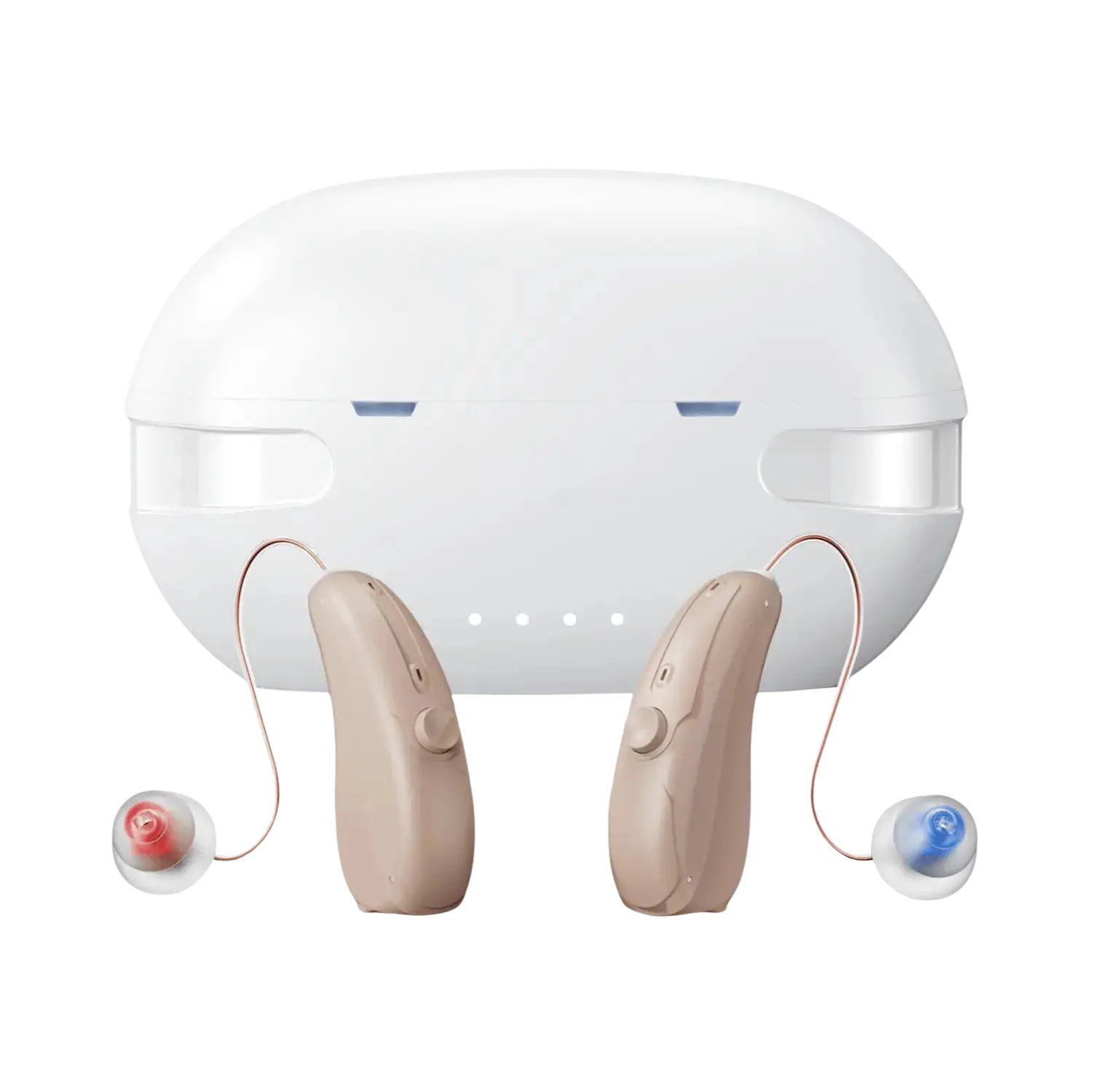
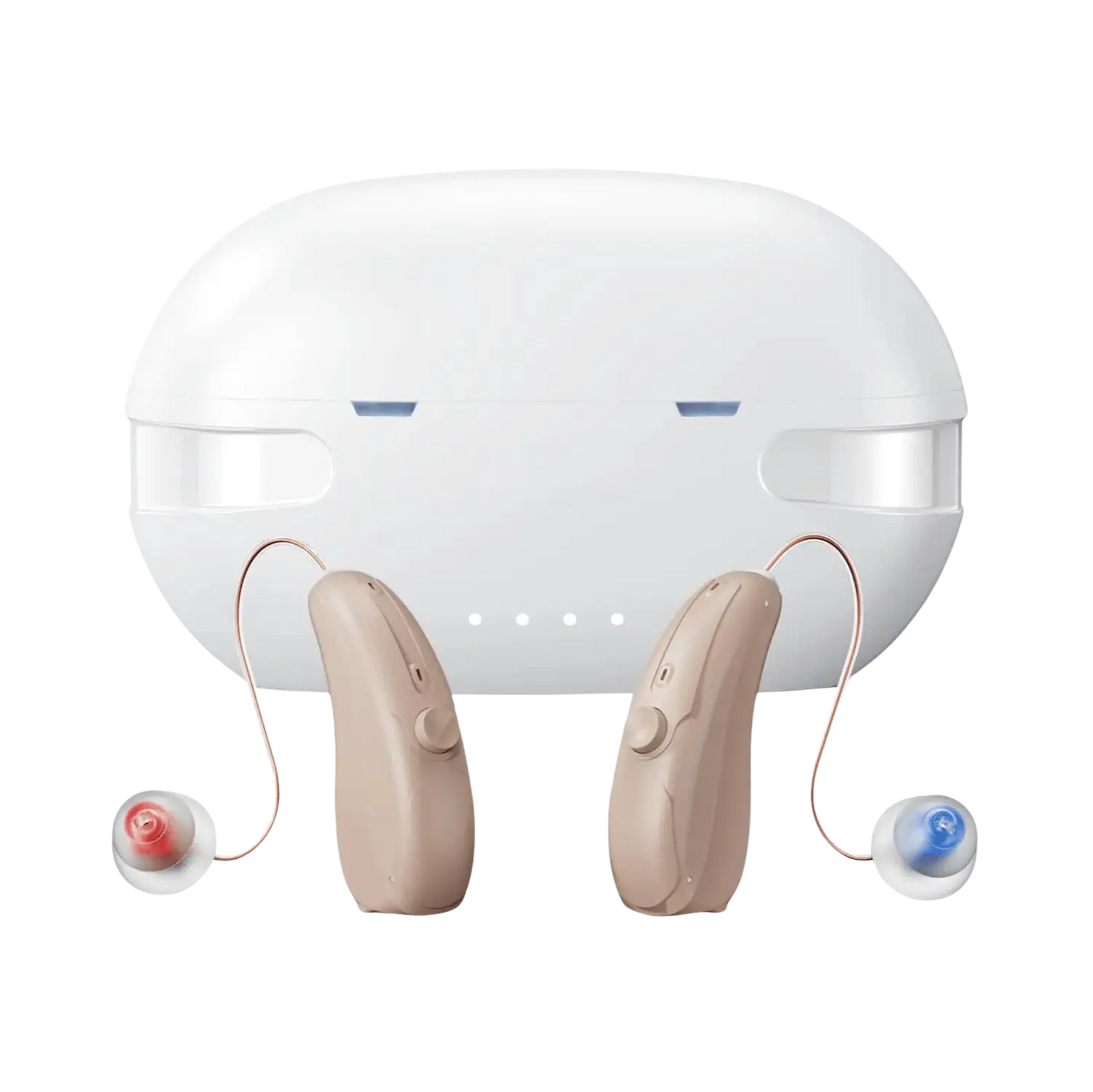
Because this study highlights how much providers value an app that makes hearing care easier to manage, it is worth noting that some newer devices build the app in as a core part of the experience rather than an add-on. Panda Quantum is one such device, pairing with the Panda app to deliver app-based hearing personalization.
After the Quantum arrives, you run a self-hearing test through the app, which checks your hearing frequency by frequency directly through the aids and then programs them to your results, similar to a clinical fitting. From there, the app lets you adjust settings yourself, so the kind of follow-up tuning the surveyed audiologists wanted to make easier can happen at home.
On the hardware side, Quantum is a 16-channel receiver-in-canal design with adaptive noise reduction aimed at clearer speech in noisy environments, plus Bluetooth for calls, television, and music. It offers up to 80 hours of total battery with its case and comes with a 5-year warranty and 45-day returns. As always, over-the-counter devices are cleared for mild to moderate hearing loss, and severe or profound loss is still best served by a clinical fitting.

Limitations of This Research
This was a survey of opinions and self-reported habits, not a test of whether apps actually improve hearing outcomes, so it cannot tell us how much these tools help in practice. Its focus was audiologists who fit hearing aids for young children, which means the specific numbers may not carry over directly to adults buying devices for themselves.
Self-reported surveys can also overstate enthusiasm, since people who feel strongly about a topic are more likely to respond. It is worth noting that one of the authors is affiliated with a hearing aid manufacturer, Sonova AG, a potential conflict of interest readers should weigh when interpreting the findings.
What to Do With This
If you or a family member wears hearing aids, the practical takeaway is simple: the companion app is not an afterthought. Providers see real value in it, and the biggest obstacle is just getting it set up. Taking a few minutes to download, pair, and learn the app, or choosing a device where that process is built to be easy, can turn a good hearing aid into one that keeps working well for you long after you leave the clinic.
Munoz K, Fitzpatrick M, Schnittker JA, Glista D, Twohig MP. Hearing-aid-connected mobile apps for caregiver hearing aid management: provider practices and perspectives. International Journal of Audiology. 2026. Retrieved from PubMed. DOI 10.1080/14992027.2026.2702204