Blood Test Markers Helped Flag Age-Related Hearing Loss Risk
A model built from ordinary blood test results identified adults at higher risk of age-related hearing loss, with blood sugar markers doing much of the predictive work.
Age-related hearing loss is one of the most common conditions of later life, and one of the most quietly tolerated. People tend to notice it years after it starts, often once conversation in a busy room has become genuinely hard work. By then the adjustment is larger than it needed to be.
That lag is what makes early identification interesting. A team based at Chongqing Medical University and Chongqing General Hospital asked an unusual question: could routine blood work, the kind already sitting in millions of medical records, flag who is likely to have age-related hearing loss before anyone books a hearing test? Their answer, published in Diagnostics, is a qualified yes.
About This Study
Title: Development and Validation of an Interpretable Machine Learning Model Based on Routine Blood Biomarkers: For Predicting Age-Related Hearing Loss
Authors: Dan He, Yiting Liu, Jing Ke, Xu Jiang, Haiyu Ma, Ya Shi, Wei Yuan
Affiliations: Chongqing Medical University, Chongqing, China; Department of Otorhinolaryngology-Head and Neck Surgery, Chongqing General Hospital, Chongqing University; School of Medicine, Chongqing University
Journal and publication date: Diagnostics (Basel), 29 June 2026
Study type: Machine learning model development and validation, using a case-control sample from NHANES with an external hospital validation cohort
PubMed DOI: 10.3390/diagnostics16132025
Background: Why the Researchers Looked at This
Age-related hearing loss, which clinicians call presbycusis and abbreviate as ARHL, is the gradual decline in hearing that accompanies ageing. It typically takes the high frequencies first, which is why consonants blur before vowels do, and why the early complaint is so often that people are mumbling rather than that things are quiet.
Diagnosing it properly requires an audiogram, a hearing test conducted in a controlled setting. That is a fine tool, but it depends on someone deciding to go and get tested. Population-wide, that decision is made late and often not at all, which leaves a large group of people with untreated hearing loss and no flag anywhere in their records.
The researchers' idea was to work with data that already exists. Routine blood panels are collected constantly for other reasons. If ARHL leaves a detectable signature in ordinary blood markers, that signature could be used to sort large populations into higher and lower risk, pointing the people most likely to benefit toward an actual hearing test. That is a prescreening tool, not a diagnosis, and the distinction runs through the whole paper.
How the Study Was Done
The team assembled 542 participants from the National Health and Nutrition Examination Survey, the long-running American health survey known as NHANES. The sample was built as a balanced case-control design: 271 people with age-related hearing loss and 271 healthy controls. Those participants were then split at random into a training set containing half the sample and two independent internal validation sets of a quarter each.
Rather than committing to one modelling approach, the researchers systematically compared 113 combinations of machine learning algorithms and kept the best performer, a combination of glmBoost and forward stepwise generalised linear modelling. They then applied a method called SHAP, which works out how much each input contributed to a given prediction. That step is what the paper means by "interpretable": the goal was a model whose reasoning could be inspected rather than a black box that simply emits an answer.
Testing a model on the same population that trained it flatters it, so the team also ran an external validation on a separate cohort of 92 patients from Chongqing People's Hospital. Finally they built an interactive web tool using the R Shiny framework, so the model could be used for real-time risk assessment rather than living only in a journal.
What the Researchers Found
On the training data the model reached an AUC of 0.948. AUC, or area under the curve, summarises how well a model separates two groups: 0.5 is a coin flip and 1.0 is perfect, so 0.948 is strong. Across the two internal validation sets it held up, scoring 0.893 and 0.945, with overall accuracy of 86.3%.
The more meaningful test was the external one. Moved to 92 patients from a different country and a different health system, performance dropped but did not collapse, with an AUC of 0.839 (95% CI 0.750 to 0.918) and accuracy of 77.2%. A decline of that size when a model leaves home is normal and, in a sense, reassuring: it suggests the model learned something about hearing loss rather than something about NHANES.
The model settled on nine key predictive features. The three that carried the most weight under SHAP analysis were glycated haemoglobin (HbA1c), mean corpuscular volume (MCV), and blood glucose. HbA1c is a measure of average blood sugar over roughly the preceding three months, and MCV describes the average size of red blood cells.
That top three is the most interesting result in the paper. Two of the three leading predictors are blood sugar measures, which places metabolic health at the centre of the model's reasoning about hearing. The authors present this as a hint at systemic mechanisms behind ARHL, meaning that age-related hearing loss may be entangled with what is happening in the rest of the body rather than being a purely local problem in the ear.
It is worth being careful about what this shows. These are associations found in a prediction model. The study does not demonstrate that high blood sugar causes hearing loss, and a marker can be predictive without being causal.
What It Means for People with Hearing Loss
Nobody should read this study and conclude that a blood test can tell them whether they have hearing loss. The authors are explicit that this is a prescreening tool for large populations, not a diagnostic test for an individual, and an audiogram remains the way to find out what your hearing is actually doing.
What it does hint at is a shift in how hearing loss might be found. Today the system waits for people to notice and act. A model like this points toward the opposite: identifying likely cases from data already collected, then inviting those people to get tested. The interesting part is not the algorithm but the reversal of who takes the first step.
There is also a modest personal takeaway. If metabolic markers carry this much predictive weight, then diabetes and blood sugar control belong in the same conversation as hearing, which is not where most people file them. And whatever flags the risk, the flag is only worth something if the next step is easy enough that people actually take it.
Flagging Risk Only Helps If Testing Is Easy to Reach
This study's whole premise is that hearing loss goes unmeasured for too long. A prescreening model narrows the gap from one end by identifying who should be tested. The other end of the gap is what happens next, and that is where a test you can take yourself changes the arithmetic.

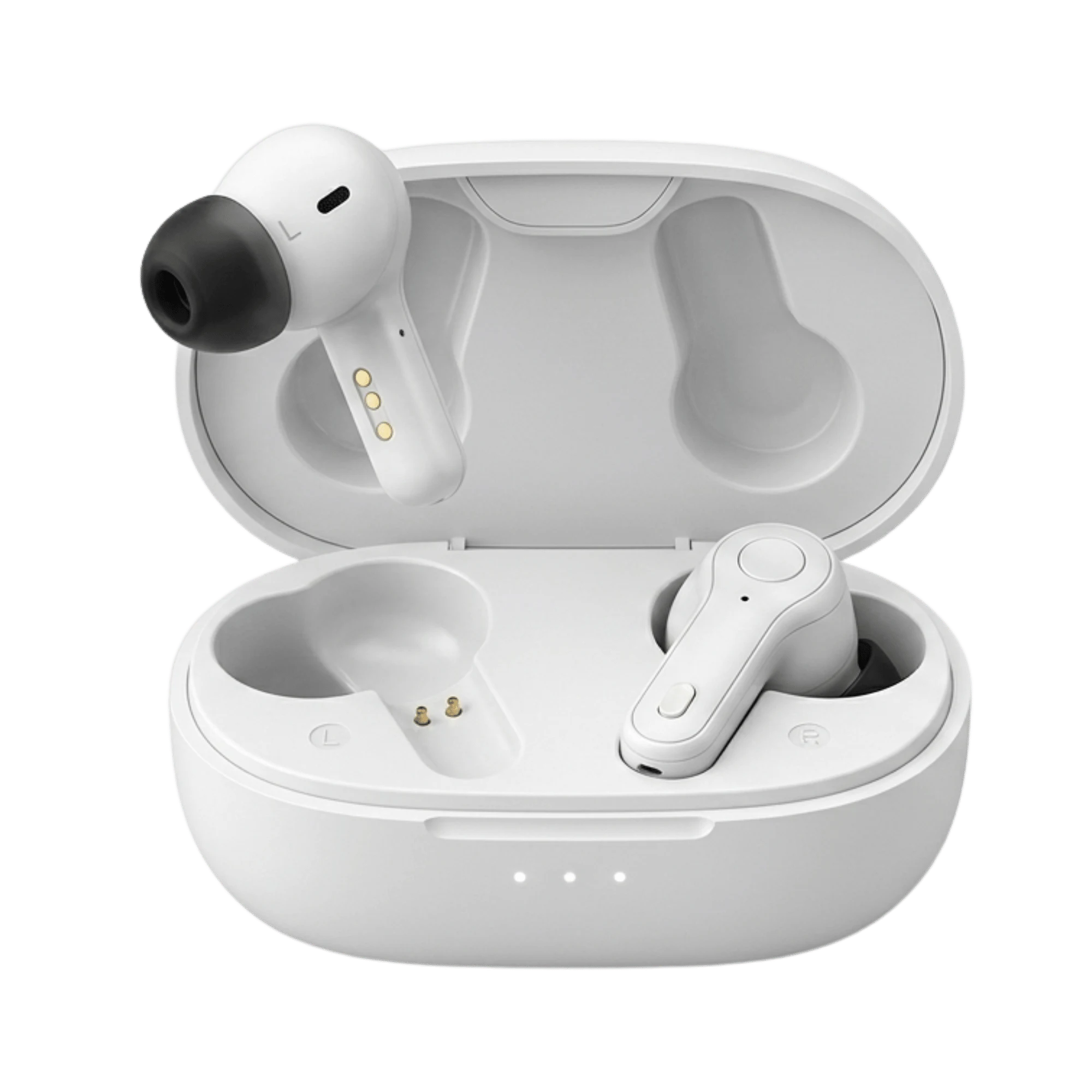
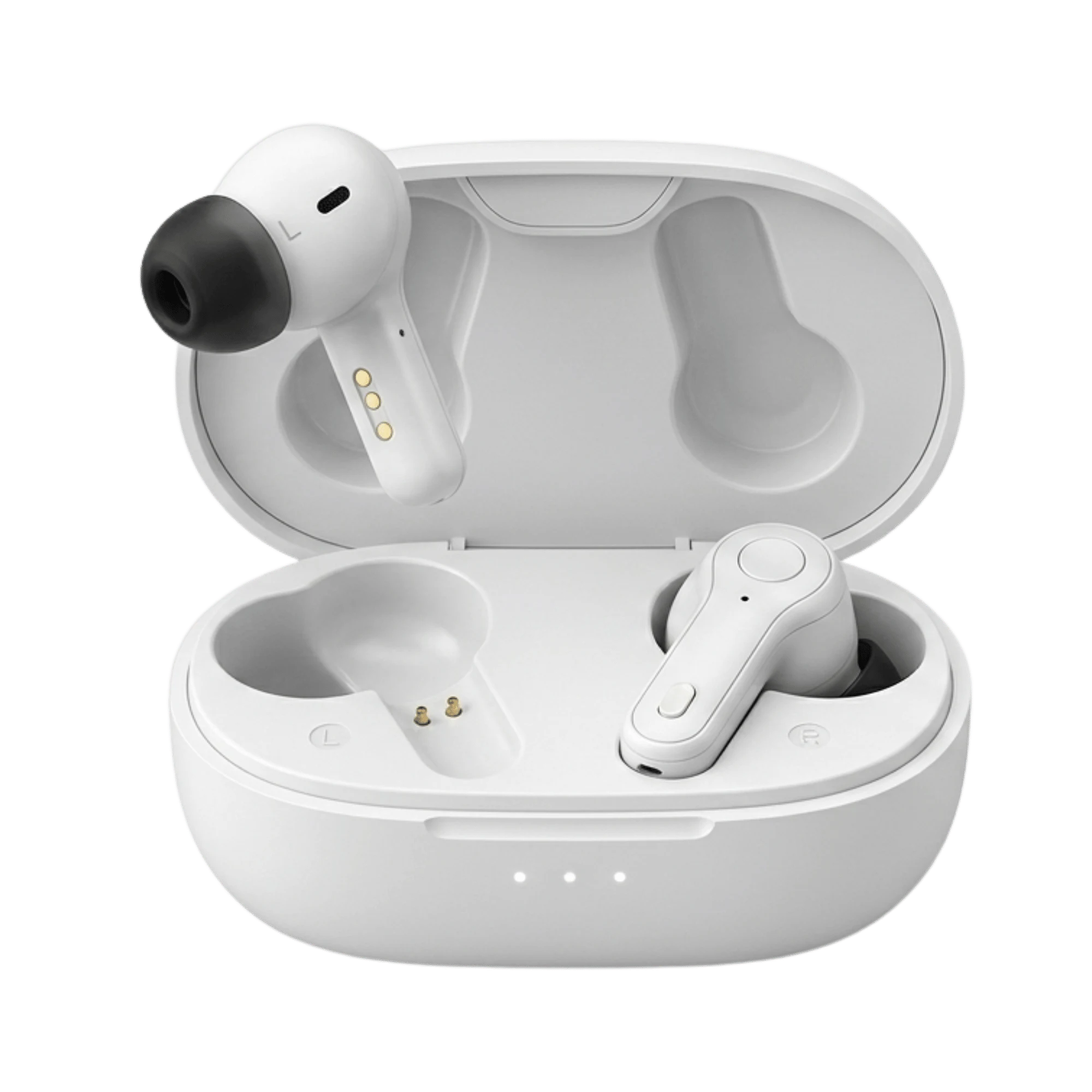
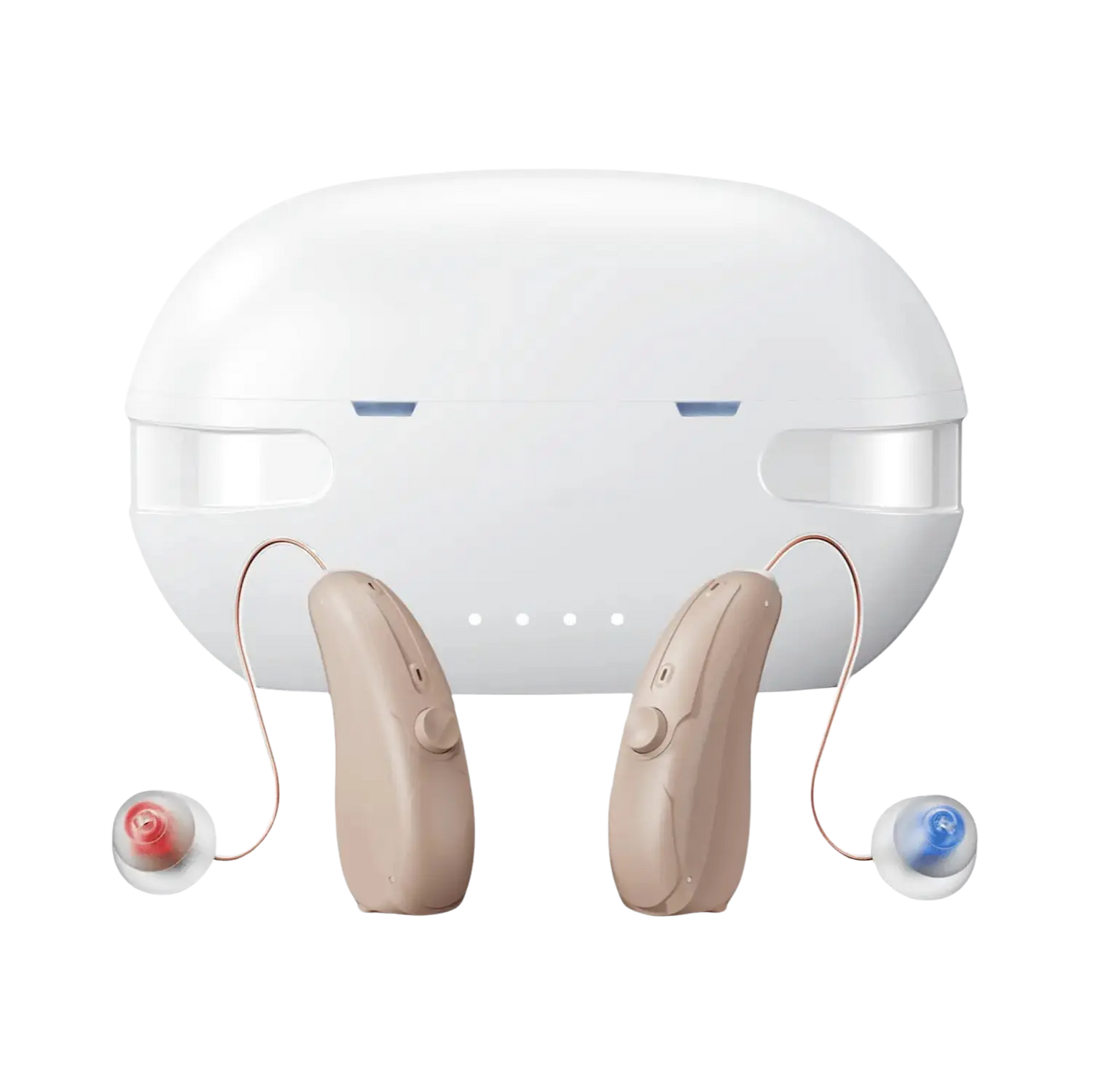
Because this study is fundamentally about identifying hearing loss earlier, devices that carry their own hearing check are relevant to the same problem. Panda Quantum belongs to the category of self-hearing test hearing aids: you pair it with the Panda app, which runs a frequency-specific test through the aid itself and programs gain and frequency response to your audiogram, in the manner of a clinical fitting. Panda Air includes the same app-based test. That app-based hearing personalization is what turns a device into something matched to your own hearing rather than a generic amplifier.
Quantum is a receiver-in-canal aid with 16-channel processing and active noise reduction, aimed at clear speech in noisy environments, which is where age-related hearing loss usually announces itself first. It offers up to 80 hours of total battery with its case, Bluetooth for calls, TV, and music, and comes with a 5-year warranty and 45-day returns. One caveat worth keeping in view: OTC hearing aids are approved for mild-to-moderate hearing loss, and severe or profound loss still benefits most from a clinical fitting.
You can read more at pandahearing.com/products/panda-hearing-aids-quantum.
Limitations of This Research
The sample is small for this kind of work. A total of 542 participants split into training and validation sets leaves modest numbers in each, and the external validation rested on just 92 cases from a single centre, a limitation the authors flag themselves. A single-centre external cohort tests portability only weakly, since one hospital's patients carry their own quirks. The balanced design, with equal numbers of cases and controls, also does not reflect how common ARHL actually is in the general population, which affects how the accuracy figures translate to real-world screening.
There is a subtler issue too. Comparing 113 algorithm combinations and selecting the winner is a procedure that tends to produce optimistic results, because the best of many candidates is partly rewarded for fitting noise. The external validation is the appropriate check on that, and the drop from 0.948 to 0.839 is roughly what that concern would predict. The authors are also careful to position the model as a prescreening tool rather than a diagnostic test for age-matched individuals. No competing interests or funding source were noted in the abstract.
What to Do With This
Treat this as a signal about direction rather than a result you can act on personally. Nothing here changes what an individual should do about their hearing, and no blood panel is going to tell you whether you need help hearing your grandchildren. What it does suggest is that age-related hearing loss may be more visible in ordinary health data than anyone assumed, and that blood sugar sits closer to the story than most people would guess. If a model like this eventually earns its place in practice, the effect would be that hearing loss gets found earlier, which has always been the difficult part.
He D, Liu Y, Ke J, Jiang X, Ma H, Shi Y, Yuan W. Development and Validation of an Interpretable Machine Learning Model Based on Routine Blood Biomarkers: For Predicting Age-Related Hearing Loss. Diagnostics (Basel). 2026;16(13). Retrieved from PubMed. https://doi.org/10.3390/diagnostics16132025