Treating Age-Related Hearing Loss May Protect the Aging Brain: New Review of the Cognitive Connection
An Italian narrative review pulls together the growing body of evidence linking untreated hearing loss to faster cognitive decline, and outlines the mechanisms researchers think explain why.
Age-related hearing loss is the most common sensory condition of older adulthood, but for years it was treated as a quality-of-life issue rather than a brain-health issue. That framing has been shifting. Multiple long-term cohort studies and major dementia-prevention reports now list hearing loss among the small set of midlife and later-life risk factors that may shape how the aging brain holds up over decades.
A new narrative review in Audiology Research takes stock of where this evidence stands in 2026: what the data actually show, what the proposed biological pathways are, and how much of the cognitive risk might be modifiable through hearing rehabilitation such as hearing aids and cochlear implants.
About This Study
Title: Is Age-Related Hearing Loss a Modifiable Risk Factor for Cognitive Decline? Mechanisms, Evidence, and Future Directions.
Authors: Giovanni Motta, Giuseppe Tortoriello, Domenico Testa.
Affiliations: Otolaryngology Head and Neck Surgery Unit, Azienda Ospedaliera di Rilievo Nazionale dei Colli, Ospedale Monaldi, Naples, Italy; ENT Unit, Department of Mental, Physical Health and Preventive Medicine, University of Campania "Luigi Vanvitelli," Naples, Italy.
Journal: Audiology Research, 2026, vol. 16, issue 2.
Study type: Narrative review of epidemiological, neurobiological, and interventional research.
PubMed: DOI 10.3390/audiolres16020061
Background: Why the Researchers Looked at This
Age-related hearing loss, sometimes called presbycusis, is the gradual, mostly high-frequency loss of hearing that develops as we age. It is extremely common, affecting a large share of adults over 65, and it tends to creep in slowly enough that many people normalize it before they ever see an audiologist.
In parallel, researchers studying dementia risk have been narrowing in on a list of factors that appear to influence whether and how quickly the brain declines with age. Hearing loss has emerged as one of the more impactful items on that list. The Italian review team set out to summarize what is known about the size of that effect, the mechanisms that might explain it, and whether treating hearing loss can shift the trajectory.
"Modifiable" is the key word in the title. A risk factor is only useful clinically if there is something a person can do about it. The authors wanted to know whether hearing rehabilitation, meaning hearing aids and cochlear implants, qualifies as a real intervention or whether the link is just a marker for some other underlying process.
How the Study Was Done
This is a narrative review rather than a clinical trial, which means the authors did not collect new patient data. Instead, they pulled together findings from three streams of existing research: long-running population studies that track cognition and hearing over many years, neuroimaging studies that scan the brains of people with and without hearing loss, and intervention studies that follow what happens cognitively when people get hearing aids or cochlear implants.
A narrative synthesis is well suited to a topic like this, because the question pulls in evidence from very different disciplines. Audiometric data, MRI structural metrics, dementia incidence, and quality-of-life measures all have to be read together. The authors emphasize longitudinal cohort data, where the same people are followed over years, because it is the most informative for separating cause from coincidence.
The trade-off with this type of review is that it does not produce a single summary statistic. The authors do not, for example, calculate a pooled hazard ratio for dementia risk. They instead describe the overall pattern of findings and where the evidence is strongest or weakest.
What the Researchers Found
The headline finding is consistency. Across many independent populations, age-related hearing loss is repeatedly associated with faster cognitive decline and a higher likelihood of dementia diagnoses later on. The association holds after researchers adjust for age, education, and other known risk factors, which is part of what makes hearing loss interesting as a target.
The review describes four main mechanisms that researchers believe might explain the link. The first is sensory deprivation: when the ear sends fewer signals to the brain, auditory regions and the brain areas connected to them appear to reorganize, and not always in helpful ways. Imaging studies in the review document structural and functional changes in auditory and associative brain regions in people with hearing loss.
The second proposed mechanism is cognitive load. When speech is degraded, listeners burn more mental effort just to follow a conversation. The hypothesis is that consistently having to "decode" speech leaves fewer resources for memory and other higher-order tasks, and over years this may take a toll. The third mechanism is shared neuropathology, meaning that the same biological processes that damage the auditory system might also damage neurons elsewhere. The fourth is social: people who cannot follow conversations tend to disengage, and social isolation is itself an independent risk factor for cognitive decline.
On treatment, the review reports that emerging evidence suggests hearing aids and cochlear implants may improve cognitive performance and may attenuate decline, although the authors are careful to note that long-term randomized data are still limited. In other words, the direction of the evidence is encouraging, but the case is not yet closed at the level of a definitive clinical trial.
What It Means for People with Hearing Loss
For older adults, the practical takeaway is that ignoring hearing loss is not just a matter of missing parts of conversations. It may be quietly raising the workload on the brain and shrinking the social environment that helps keep cognition sharp. The treatment implication is consistent across the proposed mechanisms: restoring clearer auditory input, especially for everyday social conversation and media, gives the brain more to work with and less reason to disengage.
It also reframes the timing question. Many people delay hearing aids by an average of several years after first noticing trouble. The cognitive-load argument suggests that earlier rehabilitation, before social withdrawal sets in, may be more useful than waiting until hearing loss is severe.
None of this means hearing aids prevent dementia outright. The review is explicit that the evidence supports hearing loss as a clinically relevant and potentially modifiable contributor, not as a single cause that, once treated, removes risk. Cognitive aging is multifactorial.
Treating Hearing Loss for Daily Conversation, Calls, and TV
If the cognitive-load and social-disengagement mechanisms are right, the value of a hearing aid is partly about how well it handles the listening environments that make up daily life: family conversation around a kitchen table, TV at normal volume, phone calls, and the kind of noisy restaurant or community settings where people often start avoiding social contact.

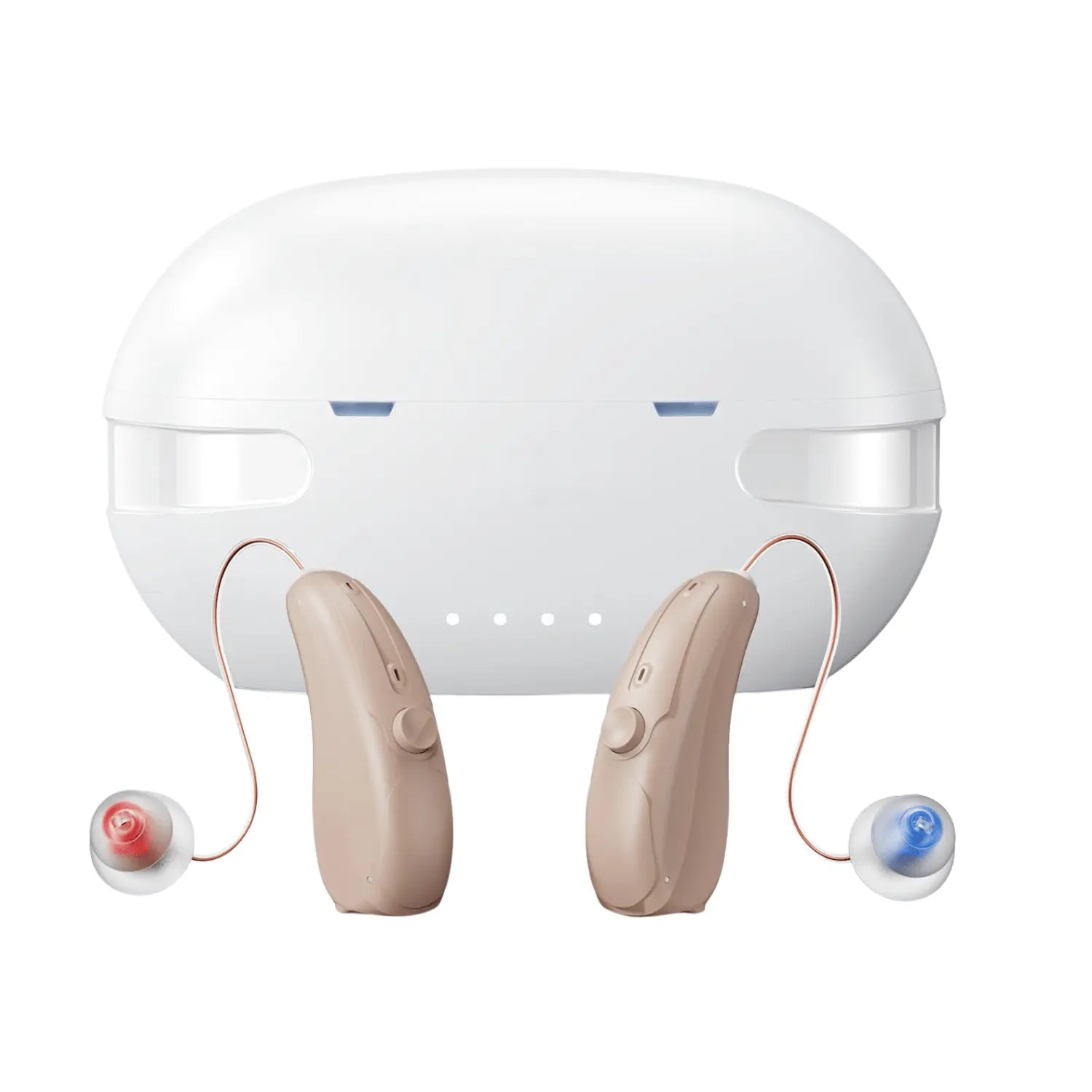
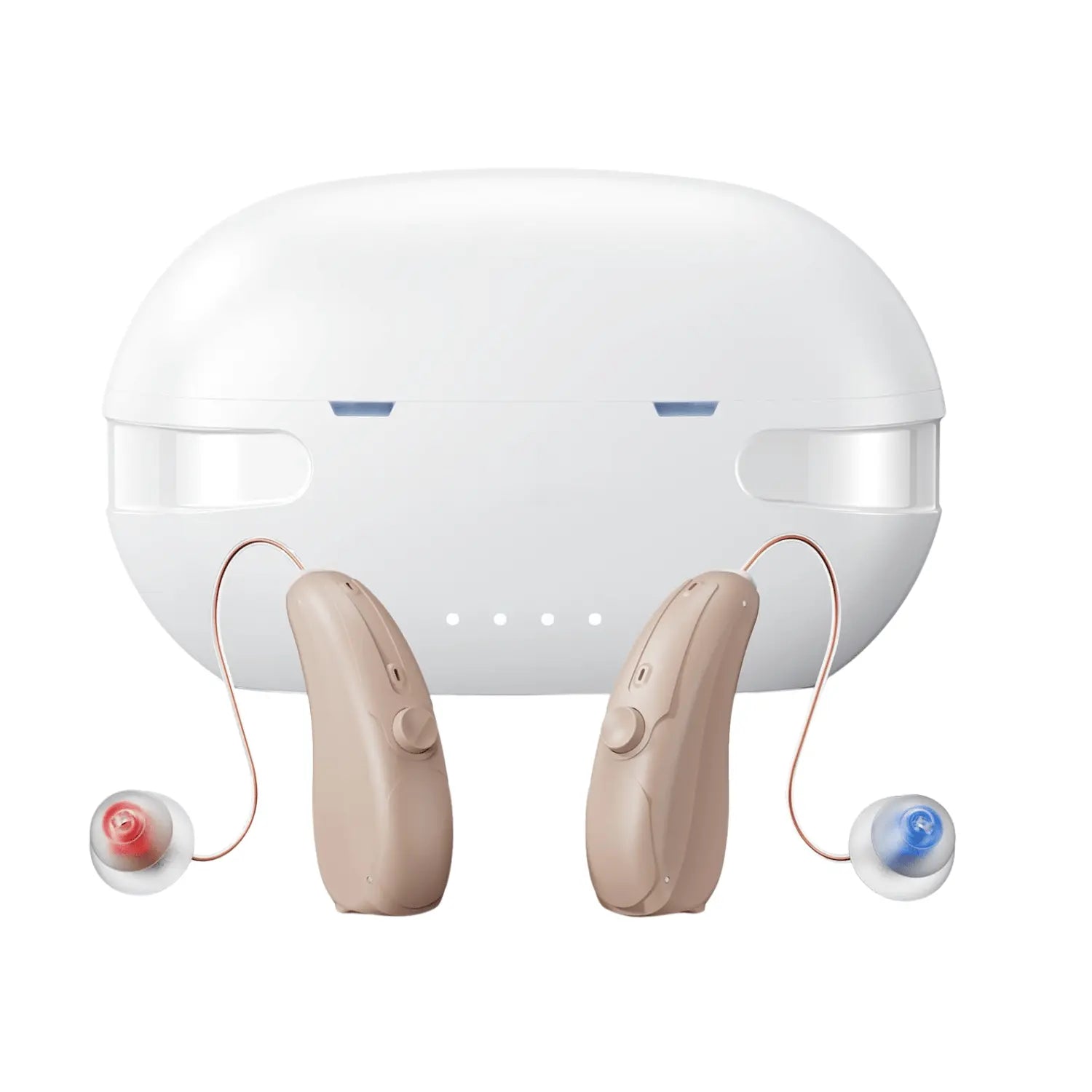
The Panda Quantum is built around exactly that profile of use. It is a 16-channel receiver-in-canal hearing aid with adaptive noise reduction, Bluetooth streaming for phone calls, TV, and music, and up to 80 hours of total battery life with the included charging case. The 5-year warranty and 45-day return window are intended to make extended day-to-day use a low-risk decision rather than a one-time gamble.
Panda Quantum also includes the Panda app-based in-ear hearing test. After delivery, the user pairs the device with the Panda app, which runs a frequency-specific hearing test through the hearing aid itself and then automatically programs the device's gain and frequency response to match the user's audiogram, similar to what an audiologist does at a clinical fitting. For older adults whose biggest barrier to treatment has been the logistics of multiple clinic visits, this allows the hearing aid to be fitted to the individual without leaving home. OTC devices are approved for adults with mild-to-moderate hearing loss; severe or profound loss generally still benefits most from a clinical fitting.
Limitations of This Research
This is a narrative review, not a systematic review or meta-analysis, so the authors did not pre-register a protocol or quantitatively pool results. The treatment evidence in particular leans on observational and short-term interventional data rather than large, long-term randomized trials, and the authors say so directly. As with any review of a complex association, residual confounding, meaning that some other factor explains both the hearing loss and the cognitive decline, cannot be fully ruled out from the existing literature.
No study funding or conflict-of-interest disclosures were summarized in the abstract retrieved from PubMed; readers can check the published article for the authors' full disclosure statements.
Where This Leaves Us
The Italian team's bottom line is measured but consistent with several recent dementia-prevention frameworks: age-related hearing loss is a clinically relevant, potentially modifiable contributor to cognitive decline, and addressing it earlier is more likely to help than waiting. The next research priority they identify is bigger, longer randomized data on hearing rehabilitation and cognition, which will turn "potentially modifiable" into something more definitive.
Motta G, Tortoriello G, Testa D. Is Age-Related Hearing Loss a Modifiable Risk Factor for Cognitive Decline? Mechanisms, Evidence, and Future Directions. Audiology Research. 2026;16(2). Retrieved from PubMed. https://doi.org/10.3390/audiolres16020061