Gamified Listening-and-Thinking Training Sharpens Attention in Older Adults With Age-Related Hearing Loss: Randomized Trial
A new pilot randomized controlled trial finds that a web-based game combining listening and thinking tasks improved attention and eased the emotional toll of hearing loss in older adults.
Age-related hearing loss is one of the most common conditions of later life, and researchers increasingly see it as more than a problem of volume. Untreated hearing loss has been tied to social withdrawal, loneliness, faster cognitive decline, and a higher long-term risk of dementia.
That link has pushed scientists to look for ways to protect hearing and thinking at the same time. A research team based largely at The Hong Kong Polytechnic University tested one such idea: a gamified, web-based program that trains listening and cognition together, built specifically for older Chinese-speaking adults who often lack tools in their own language.
About This Study
Title: Web-Based Gamified Auditory-Cognitive Dual-Task Training for Older Adults With Age-Related Hearing Loss: Pilot Randomized Controlled Trial
Authors: Ivy Yan Zhao, Angela Yee Man Leung, Chen Li, Laurence Lloyd Parial, Hongming Ma, Jed Montayre, Justin S. Golub, Robert Sweetow, Janet Ho-Yee Ng, Engle Angela Chan
Affiliations: School of Nursing and Research Institute for Smart Ageing, The Hong Kong Polytechnic University, with collaborators at the University of the Philippines Manila, Columbia University in New York, and the University of California, San Francisco
Journal and publication date: JMIR Aging, June 16, 2026
Study type: Single-blinded pilot randomized controlled trial
Reference: PubMed, DOI 10.2196/84083
Background: Why the Researchers Looked at This
Age-related hearing loss, sometimes called presbycusis, is the gradual decline in hearing that comes with aging. It usually affects the ability to pick out high-pitched sounds and to follow speech when there is background noise. Beyond the obvious difficulty with conversation, the condition makes many older adults pull back from social life, which can feed loneliness and may accelerate changes in the brain.
Most training programs aimed at older ears focus on hearing alone or on thinking alone. The researchers wanted to test a combined approach known as auditory-cognitive dual-task training. In plain terms, that means asking a person to listen carefully and to perform a mental task at the same time, much like real life demands when you follow a conversation while also remembering what was said.
The team also flagged a practical gap. Few auditory or auditory-cognitive training programs exist in Chinese languages, which leaves many older adults facing linguistic and cultural barriers before they even begin. The study set out to see whether a culturally adapted, at-home program delivered through a web browser would be usable and whether it might produce early benefits.
How the Study Was Done
The researchers recruited 60 community-dwelling older adults with mild-to-moderate age-related hearing loss. Participants had an average age of about 68 years, and roughly three quarters were men. They were randomly split into two equal groups: one began the gamified auditory-cognitive training right away, while the other was placed on a waitlist and served as the comparison group.
Measurements were taken at the start, at six weeks, and again at twelve weeks. The team assessed global thinking ability with a Hong Kong version of the Montreal Cognitive Assessment, tracked attention and memory with standardized tests, and asked participants about hearing-related quality of life, social engagement, and loneliness. Because this was a single-blinded design, the people scoring the results did not know which group each participant belonged to.
After the program, the researchers also interviewed participants to understand how the training felt to use, whether it fit into daily life, and what benefits people noticed for themselves. This mix of numbers and personal accounts is common in early-stage, or pilot, trials that aim to judge whether a larger study is worth running.
What the Researchers Found
The program proved easy to adopt. Participants reported high feasibility and acceptability, meaning they were willing and able to use it at home without much trouble. That matters because even a promising intervention fails if people will not stick with it.
On attention, the training group showed meaningful gains. Focused attention improved with a moderate effect size (mean change of 0.15; P=.02), and divided attention, the skill of juggling more than one task, improved with a larger effect (mean change of 0.21; P=.002). The comparison group did not show these gains.
Specific areas of thinking also moved. On the Hong Kong Montreal Cognitive Assessment, the training group improved in naming (P=.05) and in visual cognition (P=.02), while the waitlist group did not. A memory measure, the five-minute delayed recall on the Auditory Verbal Learning Test, showed a small-to-moderate advantage for the training group, with the statistical model explaining about 69 percent of the variation in scores.
Both groups reported feeling less emotionally burdened by their hearing difficulties over the study period, with a slightly larger improvement in the training group (P=.03). The researchers also recorded a statistically significant difference over time between the groups in left-ear hearing thresholds (P=.01), an intriguing signal that the authors treat cautiously given the small size of the study.
The interviews surfaced three themes. Participants found the program coherent and felt positive about using it, they perceived benefits to their thinking, awareness, and ability to take in information, and they described the training as relatively light rather than burdensome, which boosted their confidence in keeping it up.
What It Means for People with Hearing Loss
For older adults and their families, the study reinforces a message that hearing experts have repeated for years: hearing health and brain health are closely connected. Engaging the ears and the mind together, in a format people actually enjoy, may offer more than exercises that target one alone.
It also underscores the value of removing barriers. A program offered in a person's own language, playable at home through a browser, reached people who might never have traveled to a clinic for the same training. Accessibility, in other words, is part of the treatment, not an afterthought.
None of this replaces addressing the hearing loss itself. Brain-and-listening games complement, rather than substitute for, the everyday amplification that helps people stay in the conversation. The clearer a person hears day to day, the more their brain is exposed to the rich sound it needs to stay engaged.
Hearing Clearly Every Day Is the Foundation for Brain-and-Listening Benefits
The study is a reminder that the brain depends on a steady stream of clear sound, and that the first step for most people with age-related hearing loss is simply hearing well in everyday moments. That is where a modern hearing aid does its quiet work, keeping conversation, television, and social life within reach so the listening parts of the brain stay active.

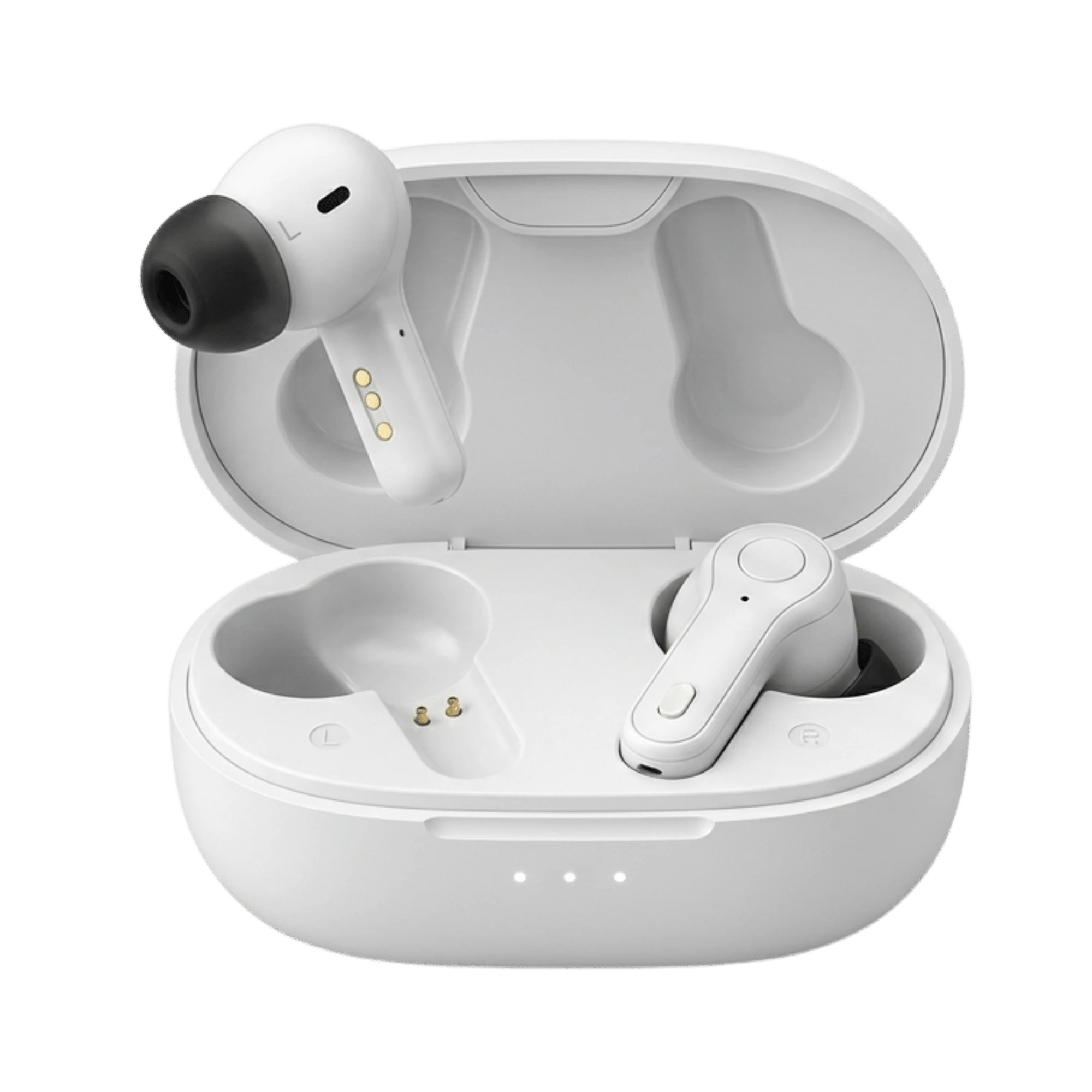
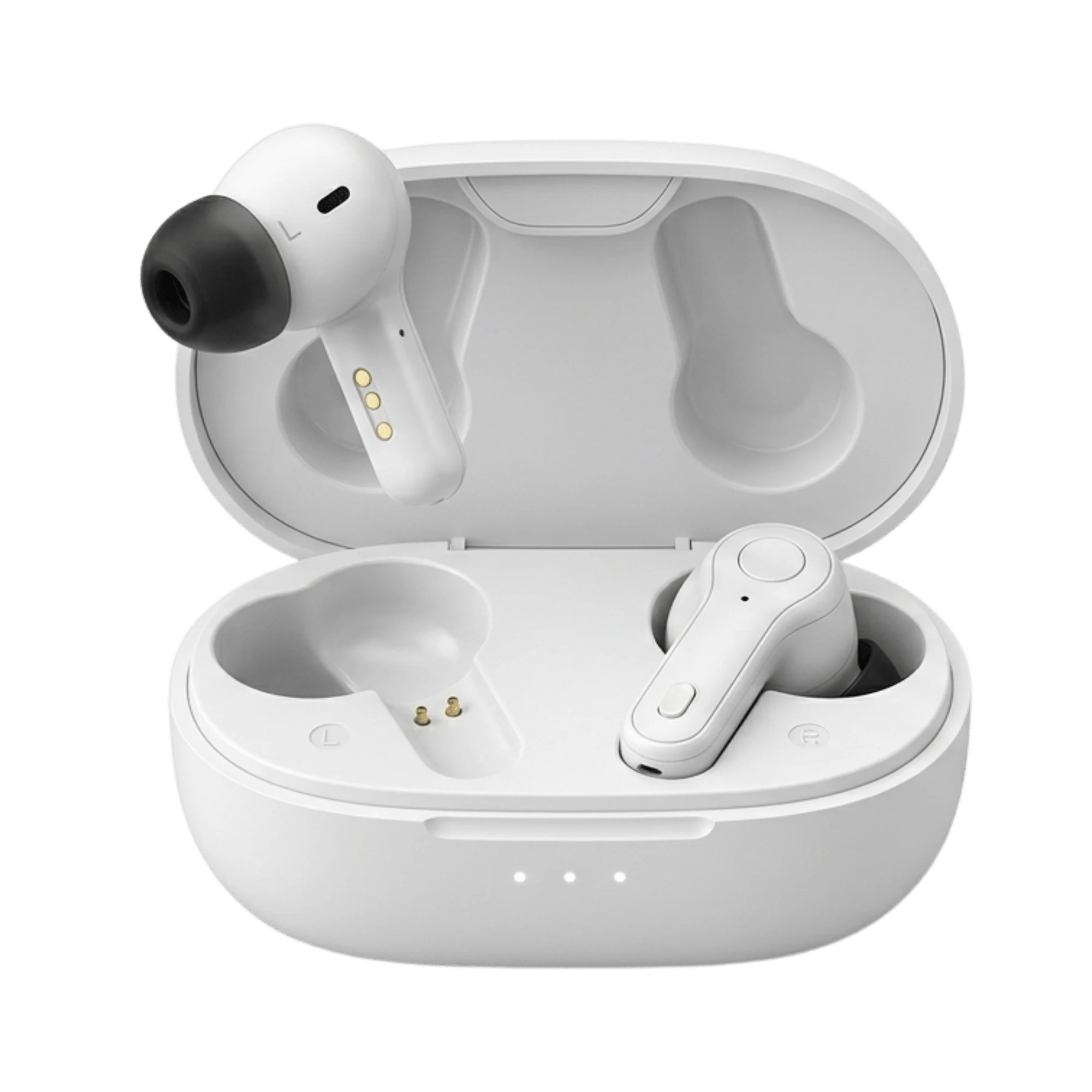
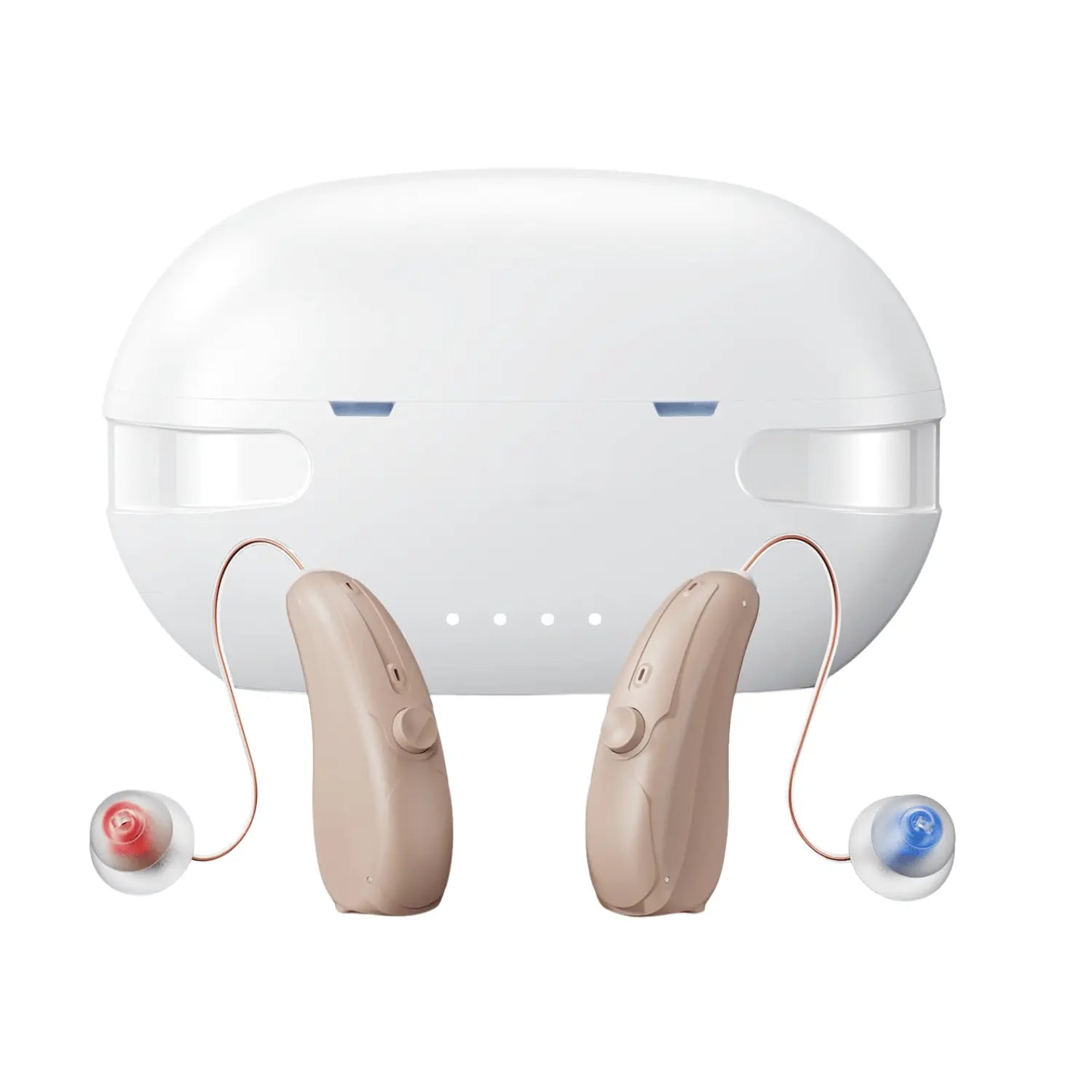
For people who want that clarity without a string of clinic visits, the Panda Quantum is built around app-based hearing personalization. After the device arrives, you pair it with the Panda app and run a self-hearing test through the hearing aid itself. The app then matches the device's gain and frequency response to your own results, much like the frequency-specific tuning an audiologist performs at a clinical fitting.
The Quantum is a 16-channel receiver-in-canal device with adaptive noise reduction, designed to keep speech in focus when a room gets busy. It offers up to 80 hours of total battery life with its case, Bluetooth for calls, television, and music, a 5-year warranty, and a 45-day return window. For someone trying to stay socially engaged, the goal is the same as the one behind this research: keep the brain hearing, and keep the person in the room.
Limitations of This Research
This was a pilot study, which means it was designed to test feasibility and gather preliminary signals rather than to prove lasting benefit. With only 60 participants, a single study site, a follow-up of just twelve weeks, and a group that was about three quarters male, the findings cannot yet be generalized to all older adults with hearing loss. The comparison group was a waitlist rather than an alternative active program, so some improvement could reflect attention and engagement rather than the training itself.
The abstract does not detail funding sources or conflicts of interest. The authors themselves call for larger randomized trials with more diverse participants and active control conditions, and suggest future versions add more personalized, adaptive features. Readers should treat the cognitive and hearing-threshold signals as encouraging but preliminary.
Where This Leaves Us
The trial adds to a growing case that hearing and thinking should be cared for together, and that engaging, accessible, home-based tools can reach older adults who have been left out of traditional programs. Larger and longer studies will be needed to confirm the gains, but the direction is promising: keep people hearing, keep them mentally engaged, and keep the door to those benefits as wide and easy to walk through as possible.
Zhao IY, Leung AYM, Li C, Lloyd Parial L, Ma H, Montayre J, Golub JS, Sweetow R, Ng JH, Chan EA. Web-Based Gamified Auditory-Cognitive Dual-Task Training for Older Adults With Age-Related Hearing Loss: Pilot Randomized Controlled Trial. JMIR Aging. 2026. Retrieved from PubMed. DOI 10.2196/84083