Hearing Loss at Work: What a New Review Reveals About Disclosure, Stigma, and Accommodations
A new scoping review of 34 studies finds that workers with hearing loss carry an under-recognized burden, from the daily effort of following conversations to the loaded decision of whether to tell anyone at all.
Hearing loss at work is easy to miss. It does not show up in a wheelchair ramp or a screen reader, and many people who live with it spend a great deal of energy making sure colleagues never notice. That quiet effort is the subject of a new scoping review in the Journal of Occupational Rehabilitation, which pulls together more than a decade of research on how employees with hearing loss navigate their jobs and what workplaces do, or fail to do, in response.
The question matters more every year. As organizations work to build inclusive workforces, more people with disabilities are entering and staying in employment, and hearing loss is one of the most common conditions among them. Yet it remains, in the authors' framing, a largely invisible challenge, one that affects health and wellbeing in ways that rarely make it onto an occupational health agenda.
About This Study
Title: Work Disability and Rehabilitation in Workers with Hearing Loss: A Scoping Review
Authors: Trishna Chauhan, Dialechti Tsimpida
Affiliations: School of Medicine and Dentistry, University of Lancashire, Lancashire, UK; Division of Public Health and Epidemiology, College of Life Sciences, University of Leicester, Leicester, UK
Journal: Journal of Occupational Rehabilitation - June 11, 2026
Study type: Scoping Review (PRISMA-ScR)
Source: PubMed - DOI: 10.1007/s10926-026-10415-6
Background: Why the Researchers Looked at This
Hearing loss is often called an invisible disability, and that label is doing a lot of work. Because it cannot be seen, it is frequently underestimated by employers, by colleagues, and sometimes by the person living with it. Speech becomes harder to follow in open-plan offices, on conference calls, and in noisy break rooms, and the strain of constantly filling in missing words accumulates over a workday.
A scoping review is a structured way of mapping a research field. Rather than pooling numbers from a handful of similar trials, as a meta-analysis would, it casts a wide net to see what has been studied, what themes recur, and where the gaps are. The authors set out to map how workers with hearing loss manage their roles and what that means for occupational health, a field that has historically focused on physical injury and ergonomic risk rather than communication.
That gap is the reason the review exists. If hearing loss drives fatigue, stress, and early exit from the workforce but never appears in occupational health planning, then a large and growing group of workers is being left to cope on their own.
How the Study Was Done
The researchers followed PRISMA-ScR, a reporting standard designed specifically for scoping reviews, and searched three major databases, Scopus, PubMed/MEDLINE, and Web of Science, for studies published between 2010 and 2025. They looked for research that examined hearing loss in relation to work participation and occupational health outcomes.
Thirty-four studies met the inclusion criteria, drawn from a range of countries and occupational settings. The authors then used thematic analysis, a method for identifying recurring patterns across qualitative and mixed studies, to group the findings into a coherent picture rather than a list of isolated results.
One feature of the design is worth keeping in mind from the start. A scoping review describes the shape of the evidence, which institutions studied what and where the silences are, but it does not measure how large any single effect is. Its strength is breadth, not precision.
What the Researchers Found
The 34 studies sorted into four interrelated themes. The first centered on the individual strategies workers use to manage hearing loss on the job. These ranged from practical communication approaches, such as positioning themselves to see a speaker's face, to one of the most charged decisions in the literature: whether to disclose the hearing loss at all.
The second theme covered workplace accommodations, including technological and environmental supports, training, organizational initiatives, and the social connectedness that helps people stay included. Here the review surfaced a persistent gap between policy intent and day-to-day practice. Accommodations that exist on paper are not reliably delivered in the room where the work happens.
The third theme gathered the occupational health and wellbeing outcomes, and this is where the human cost becomes clear. The studies pointed to psychosocial impacts, work-related fatigue, a heightened need for recovery after work, identity negotiation, and occupational stress. The effort of hearing, in other words, does not end at the office door; it follows people home and shapes how much of themselves they have left for the evening.
The fourth theme pulled the evidence into multi-level recommendations, spanning individual, organizational, and policy domains, aimed at making employment sustainable rather than merely possible. Across all four themes, the authors note that the strongest evidence comes from higher-income countries, and that low- and middle-income settings remain markedly understudied.
What It Means for People with Hearing Loss
For someone reading this who has noticed they ask colleagues to repeat themselves more often than they used to, the review validates an experience that can feel isolating. The fatigue is real and named in the literature, the stress is documented, and the instinct to hide the difficulty is one that researchers see again and again.
It also reframes the disclosure dilemma. Many workers weigh the social cost of revealing hearing loss against the practical cost of struggling silently, and the review treats that calculation as a central feature of working life with hearing loss rather than a personal failing. The decision is rarely just about a device; it is about identity, perceived competence, and how a person wants to be seen.
That distinction, between the hearing itself and the visibility of addressing it, is where technology choices start to matter in concrete ways.
Why the Disclosure Finding Points Toward Discreet Devices
One of the review's clearest threads is that the fear of being seen differently, not the hearing loss alone, often drives how workers behave. Disclosure decisions and identity negotiation run through multiple studies, and for many people the visible hearing aid is part of what they are negotiating. This is exactly the kind of barrier that the FDA-authorized over-the-counter hearing aid category, approved in the United States in 2022, was created to lower, by making devices both easier to obtain and, in some designs, far less conspicuous.
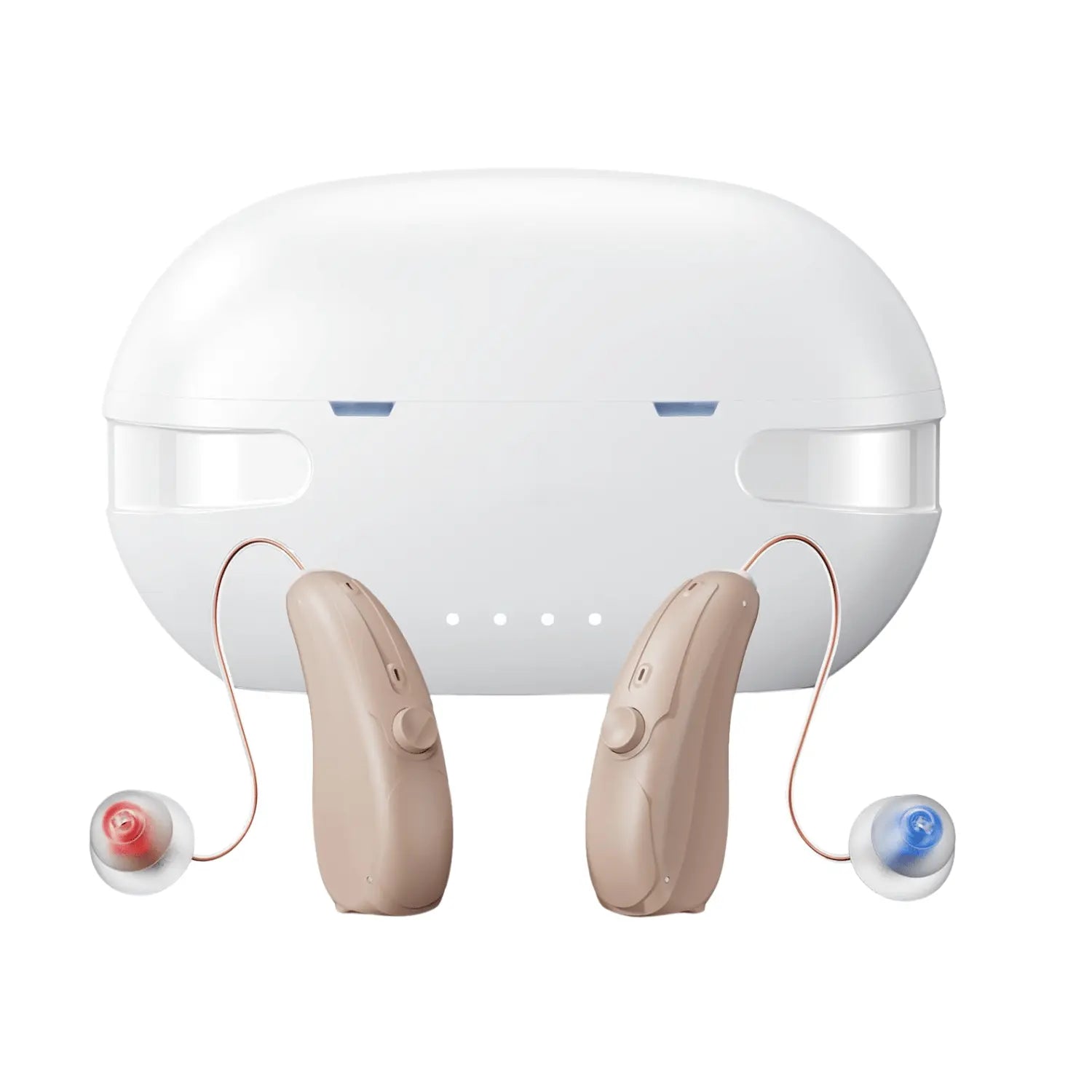
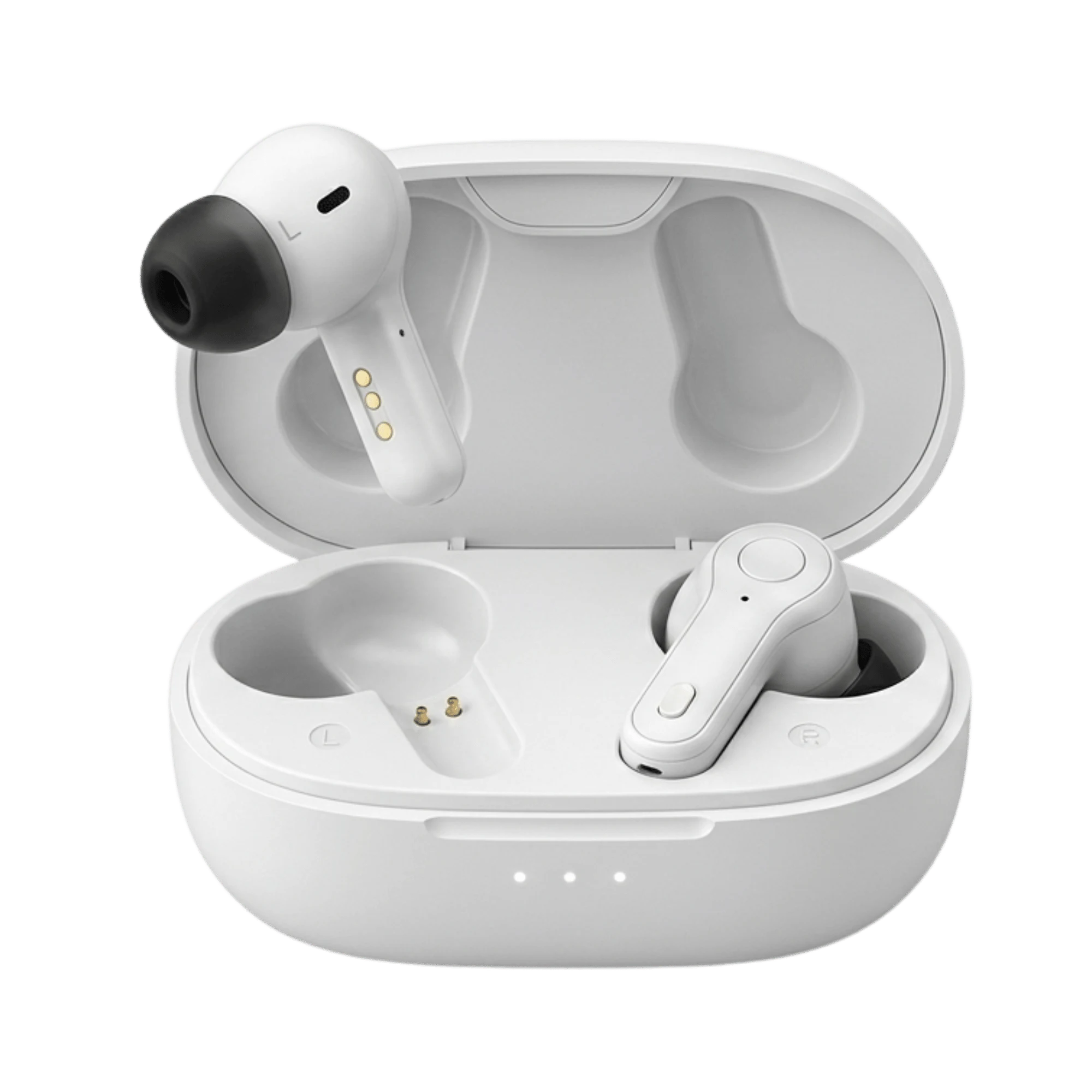
For the worker whose sticking point is visibility, a discreet device changes the equation. Panda Stealth, a 2.3-gram invisible in-the-canal OTC option, is one example of a device built around that concern. As one of the more discreet hearing aids on the market, it sits in the ear canal rather than behind the ear, uses 12-band smart noise reduction to lift speech out of background sound, and ships with a charging case that doubles as a wireless remote. For people who have been quietly avoiding visible hearing aids at work, nearly invisible hearing aids remove one of the specific obstacles this review documents.
It is worth being precise about scope. Over-the-counter devices are authorized for adults with perceived mild to moderate hearing loss. People with more significant loss still benefit most from a clinic-based evaluation and fitting, and discretion should never come at the expense of getting the right level of help.

Limitations of This Research
A scoping review answers the question of what has been studied, not the question of how well an intervention works. Because it maps breadth rather than pooling effect sizes, it cannot tell an employer how many hours of fatigue a particular accommodation would prevent, or how much a specific device would change job retention. Those numbers require the kind of controlled evaluation the authors say is still missing.
The review is also candid that its evidence base leans toward higher-income countries, leaving a real blind spot in low- and middle-income settings where work conditions and access to support differ sharply. The authors call specifically for rigorous evaluation of occupational health interventions, which is a fair signal that the field is still early rather than settled.
Where This Leaves Us
If there is a practical takeaway, it is that struggling silently is not the only option, and that the strain this review documents is worth taking seriously before it builds into burnout. A baseline hearing check is a reasonable first step for anyone who has noticed conversations getting harder at work. From there, the choice of how visibly to address it is personal, and the research suggests it deserves to be treated that way rather than dismissed. Following the authors' future work, particularly any move toward measuring which accommodations actually keep people in their jobs, will be worth the attention of employers and employees alike.
Chauhan T, Tsimpida D. Work Disability and Rehabilitation in Workers with Hearing Loss: A Scoping Review. Journal of Occupational Rehabilitation. 2026. Retrieved from PubMed. https://doi.org/10.1007/s10926-026-10415-6