Can a Dementia Drug Quiet Tinnitus? What a New Randomized Trial Found About Donepezil
A double-blind randomized trial from Brazil tested the dementia drug donepezil in adults with chronic tinnitus and found no significant overall benefit, but a hint of promise for some patients.
Tinnitus, the perception of ringing, buzzing, or hissing sound with no external source, affects millions of adults worldwide and remains one of the most stubborn problems in hearing health. Despite decades of research, no medication has been approved specifically to treat it, and people who live with persistent tinnitus are often told to manage it rather than expect a cure.
That is why researchers keep testing existing drugs in new roles. A team at the University of São Paulo, working with a collaborator at the University of Illinois, asked whether donepezil, a medication commonly prescribed for dementia, could reduce the burden of chronic tinnitus. Their randomized, placebo-controlled trial has now been published in the journal Clinics.
About This Study
Title: Efficacy of donepezil in patients with chronic tinnitus
Authors: Elaine Miwa Watanabe, Laura G. E. Vasconcelos, Maria F. Bonadia-Moraes, Fatima T. Husain, Nilo J. C. Duarte, Jeanne Oiticica
Affiliations: Department of Otorhinolaryngology and Medical Investigation Laboratory (LIM-03), Faculdade de Medicina da Universidade de São Paulo, Brazil; Department of Speech and Hearing Science and Beckman Institute, University of Illinois Urbana-Champaign, USA
Journal: Clinics (São Paulo), published September 8, 2026
Study type: Double-blind, prospective, randomized, placebo-controlled clinical trial
PubMed DOI: 10.1016/j.clinsp.2026.101135
Background: Why the Researchers Looked at This
Chronic tinnitus is defined as tinnitus that persists for months or longer. Because the sound is generated inside the auditory system rather than in the environment, treatments that target the ear alone often fall short. Researchers increasingly view tinnitus as involving the brain's hearing networks, which has led them to test medications that act on brain chemistry.
Donepezil is one such medication. It works by increasing the availability of acetylcholine, a chemical messenger that nerve cells use to communicate and that is widely distributed in the central nervous system. The drug is best known as a treatment for dementia, where it modestly supports memory and thinking.
The São Paulo team reasoned that acetylcholine may also be protective against a process called glutamate-induced excitotoxicity, in which overstimulated nerve cells become damaged. Since donepezil had never been formally evaluated in people with tinnitus, they designed a trial to test it under rigorous conditions.
How the Study Was Done
The researchers enrolled adults with chronic subjective tinnitus, meaning tinnitus heard only by the person and not linked to muscle or joint problems, with 35 participants in the tinnitus group and 35 in an age- and gender-matched control group. Participants were randomly assigned to receive either donepezil or an identical-looking placebo for three months, and neither the participants nor the researchers knew who was taking which.
To measure whether the drug helped, the team used a battery of established tools. These included the Tinnitus Handicap Inventory (THI), a questionnaire that scores how much tinnitus interferes with daily life, a visual analog scale for loudness and annoyance, cognitive screening tests, and psychoacoustic measurements that characterize the pitch and loudness of each person's tinnitus.
What the Researchers Found
On the primary question, the trial was clear: after three months, there was no statistically significant difference in symptom improvement between the donepezil group and the placebo group on any of the evaluation instruments.
The details, however, were more nuanced. When the researchers analyzed how many patients achieved a minimum improvement of at least 7 points, or at least 11 points, on the THI, the confidence intervals suggested a potential clinically meaningful trend favoring donepezil. In plain terms, more patients on the drug appeared to cross thresholds that patients themselves would notice, even though the averages did not separate.
Two other observations stood out. Complete remission of tinnitus occurred in exactly one participant in the entire trial, and that person was in the donepezil group. And in the treatment group, the authors observed a possible indication of greater clinical benefit among participants who were using amplification, that is, people who wore devices that make everyday sound clearer and louder.
The authors are careful to frame these secondary signals as hypothesis-generating. A trial of this size cannot prove that a subgroup benefits; it can only flag patterns worth testing in larger studies.
What It Means for People with Hearing Loss
For people living with tinnitus, the headline is honest but sobering: donepezil is not a proven tinnitus treatment, and this trial does not change that. Anyone tempted to seek the drug for ringing ears should know that the primary outcome was negative and that donepezil carries its own side effects and prescribing requirements.
At the same time, the trial adds to a consistent theme in tinnitus research. The one clearly encouraging signal appeared in participants who were already using amplification. That fits with what audiologists commonly report: when the brain receives a richer stream of everyday sound, the internal ringing often becomes less prominent by comparison. Sound enrichment does not cure tinnitus, but it can change how much attention the brain gives it.
Why the Amplification Signal Matters Beyond This Trial
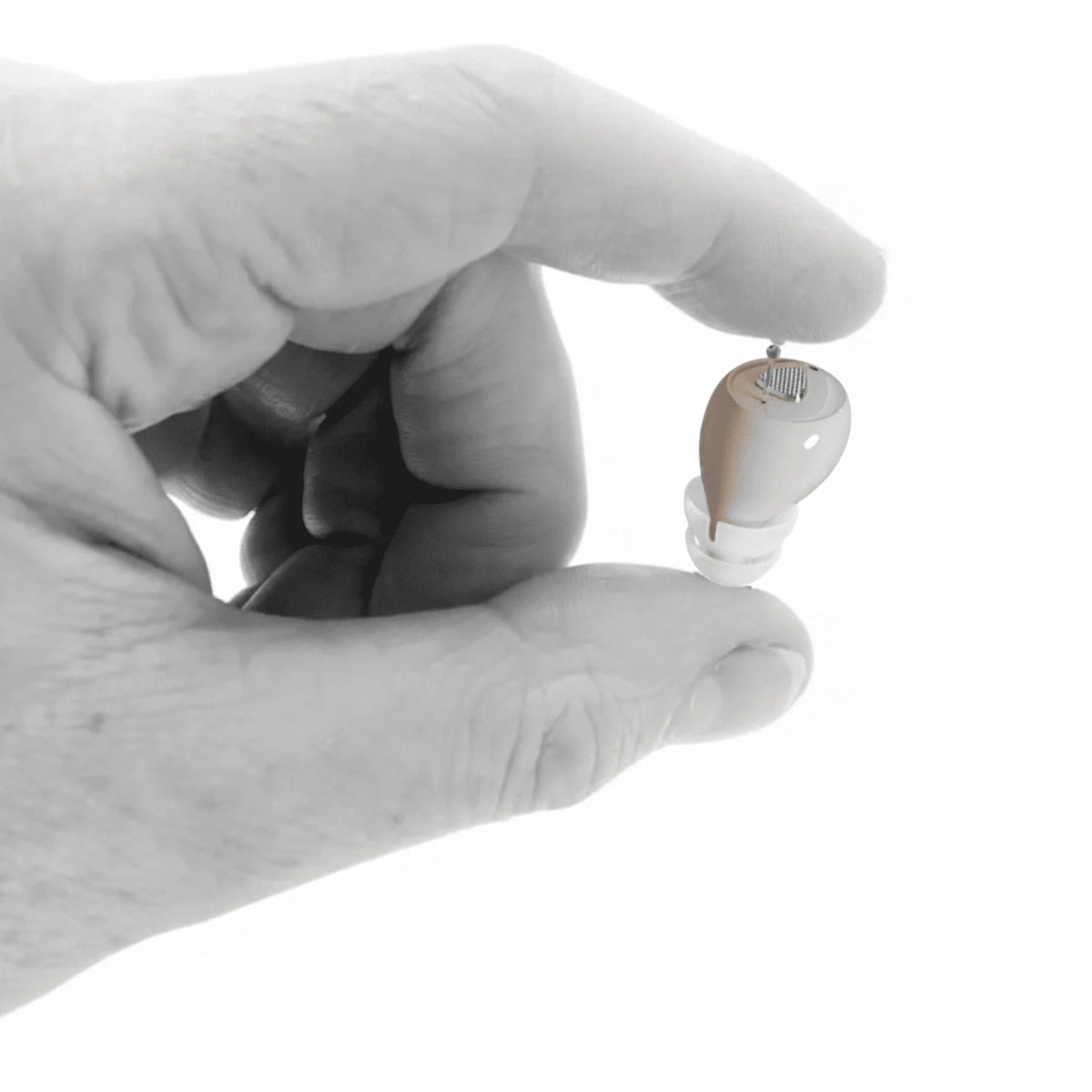
Because the suggestion of benefit clustered in participants using amplification, this study indirectly highlights a practical option that does not require a prescription drug. Many people with tinnitus also have some degree of hearing loss, and for mild to moderate cases, FDA-OTC hearing aids have made amplification far easier to try.
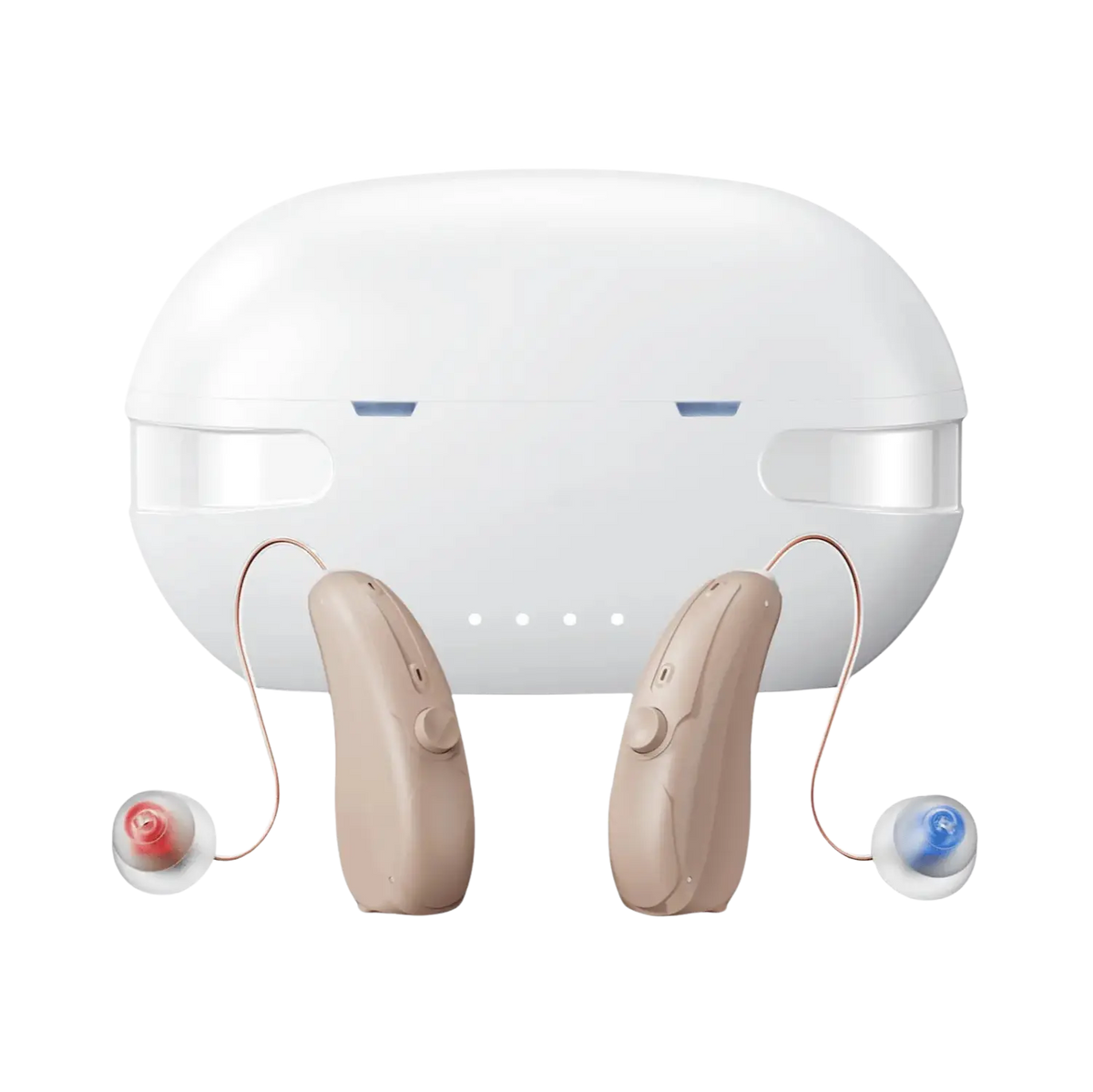
Panda Quantum is one such device, a 16-channel receiver-in-canal FDA-OTC hearing aid with adaptive noise reduction designed for clearer speech in noisy environments. It runs 20 hours per charge with a case that provides three additional full charges for 80 hours total, streams calls, TV, and music over Bluetooth, and comes with a 5-year warranty and a 45-day trial that starts when the device is received. An optional companion app can run a frequency-specific in-ear hearing test and personalize gain to the user's hearing profile, though Quantum works fully without the app or the test.
To be clear, hearing aids are not a treatment or cure for tinnitus. What clearer everyday sound may do, as this trial's amplification signal hints, is make the ringing feel less noticeable in daily life. Learn more at pandahearing.com/products/panda-hearing-aids-quantum.

Limitations of This Research
This was a single-center trial with 35 participants per group, which limits its power to detect modest effects and makes subgroup findings, including the amplification observation, exploratory rather than conclusive. The treatment period lasted three months, so longer-term effects were not assessed. The authors themselves call for larger, more in-depth studies before any therapeutic role for donepezil in tinnitus can be confirmed.
Where This Leaves Us
Donepezil joins a long list of medications that have not cleared the bar as tinnitus treatments, yet the trial still earns its place in the literature: it was rigorously designed, it reported its negative primary result plainly, and it surfaced a subgroup signal, in amplification users, that future trials can test directly. For now, people with tinnitus and hearing loss have more to gain from well-fitted amplification and professional guidance than from off-label prescriptions.
Watanabe EM, Vasconcelos LGE, Bonadia-Moraes MF, Husain FT, Duarte NJC, Oiticica J. Efficacy of donepezil in patients with chronic tinnitus. Clinics (São Paulo). 2026;81:101135. Retrieved from PubMed. https://doi.org/10.1016/j.clinsp.2026.101135