environmental sounds

Why Everyday Sounds Get Harder to Identify With Hearing Loss

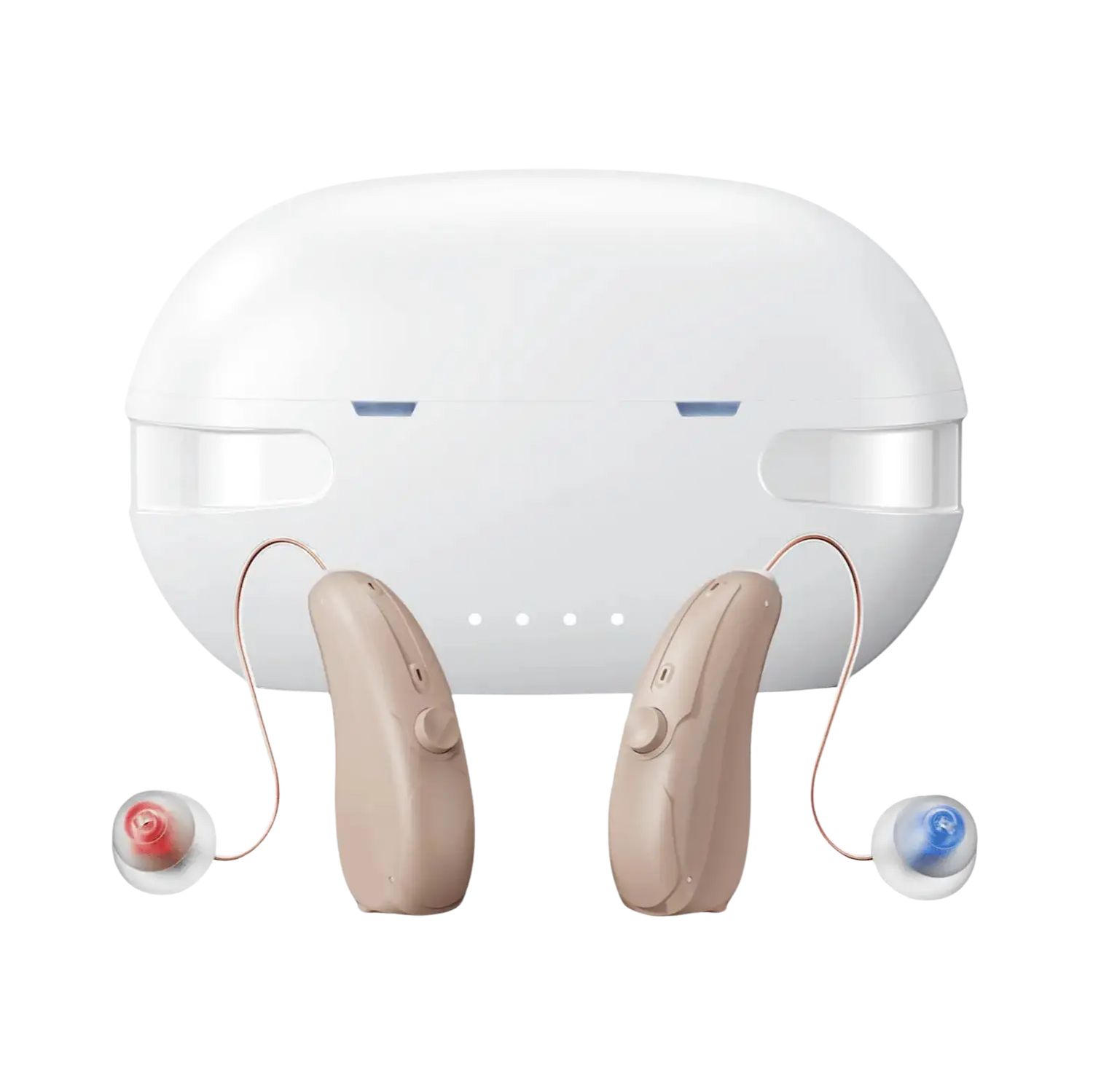
Panda Quantum 16-channel FDA-OTC receiver-in-canal hearing aid in beige

Why Everyday Sounds Get Harder to Identify With Hearing Loss

A new comparative study from Japan finds that adults who use hearing aids or cochlear implants recognize everyday sounds less accurately than normal-hearing listeners, and that speech understanding may be the key to who struggles most.

A doorbell, a kettle coming to a boil, a car approaching from behind. Daily life runs on sounds that carry information without a single word being spoken. Yet hearing research, and most clinical hearing tests, have focused overwhelmingly on speech, leaving a quieter question largely unmeasured: how well do people with hearing loss actually recognize the ordinary sounds around them?

A research team from Saitama Medical University Hospital and the University of Tsukuba set out to answer that question directly, comparing how hearing aid users, cochlear implant users, and normal-hearing adults of different ages perform when asked to identify everyday sounds with no answer list to lean on.

About This Study
Title: Characteristics of environmental sound perception in individuals with hearing loss: Associations with background factors
Authors: Atsuya Takayama, Kei Sakamoto, Han Matsuda, Hiroe Kudou, Yayoi Yamamoto, Tetsuo Ikezono, Chie Obuchi
Affiliations: Saitama Medical University Hospital; University of Tsukuba; International University of Health and Welfare, Japan
Journal: Auris, Nasus, Larynx, published online August 20, 2026
Study type: Cross-sectional comparative study
PubMed DOI: 10.1016/j.anl.2026.08.001

Background: Why the Researchers Looked at This

Environmental sounds are all the non-speech sounds that tell us what is happening nearby: alarms, footsteps, running water, traffic. Recognizing them matters for safety, for independence, and for simply feeling connected to a place. But conventional audiology relies mostly on tone thresholds and speech tests, so a person's ability to make sense of the wider soundscape can go unexamined.

The researchers also chose an unusually demanding test format. In an open-set task, the listener hears a sound and must name it with no multiple-choice options provided. That is much closer to real life than a closed list, because in the real world nobody hands you four candidate answers when something rattles in the kitchen.

Finally, the team wanted to know which personal background factors, such as speech perception ability, might explain why some device users recognize environmental sounds well while others do not.

How the Study Was Done

Ninety adults took part, split into four groups: 21 hearing aid users, 22 cochlear implant users, 24 young normal-hearing adults, and 23 older normal-hearing adults. Each listened to 36 everyday sounds played in a sound field and named what they heard.

Every answer was sorted into one of four categories: exactly right, close but not exact (for example naming a similar sound source), wrong, or unclassifiable, meaning the listener could not produce a usable label at all. In the two device groups, the researchers then tested which background factors, including sentence-level speech perception, were statistically linked to environmental sound scores.

What the Researchers Found

Performance differed significantly across all four groups, and the ordering was telling. Young normal-hearing adults scored highest, followed by older normal-hearing adults, then hearing aid users, with cochlear implant users scoring lowest.

The pattern of errors differed too. Compared with normal-hearing listeners, both hearing aid and cochlear implant users gave a higher proportion of outright incorrect answers and unclassifiable responses. In other words, hearing loss did not just shave points off a score; it changed how people got things wrong, with more misidentifications and more moments where a sound could not be named at all.

Among hearing aid users, one background factor stood out: sentence-level speech perception was the only significant predictor of environmental sound recognition. Hearing aid users who understood sentences well also tended to recognize everyday sounds well. In the cochlear implant group, no single factor reached significance.

The authors conclude that open-set environmental sound testing may reveal aspects of real-world hearing that standard clinic measures miss.

What It Means for People with Hearing Loss

The findings put numbers behind something many people with hearing loss describe: the world sounds less legible, not just quieter. Missing a timer, mistaking one appliance for another, or failing to place a sound behind you affects safety and confidence in ways a pure-tone audiogram never captures.

The link between speech perception and environmental sound recognition is encouraging in one sense. It suggests the two abilities draw on shared listening skills, so the everyday work of following conversation and the everyday work of monitoring your surroundings may improve together rather than compete.

When Clearer Speech Also Means a Clearer Soundscape

The most practical signal in this study is that hearing aid users with the best sentence understanding also recognized everyday sounds best. That makes speech clarity a sensible first priority when choosing amplification, and it is the design focus of newer FDA-OTC hearing aids that bring multi-channel sound processing within easier reach.

Panda Quantum is one such device, a receiver-in-canal FDA-OTC hearing aid built around 16-channel WDRC processing and adaptive noise reduction for clear speech in noisy environments. It runs about 20 hours per charge, and its case carries three additional full charges for 80 hours of total use. It also streams calls, TV, and music over Bluetooth, and comes with a 5-year warranty and a 45-day trial that starts when the product arrives.

Quantum additionally offers an optional app-based in-ear hearing test for app-based hearing personalization, adjusting gain and frequency response to the user's hearing profile. The aid works out of the box without the app or the test. One caveat worth keeping in mind: OTC hearing aids are approved for mild-to-moderate hearing loss, and people with severe or profound loss still benefit most from clinical fittings.

Panda Quantum 16-channel FDA-OTC receiver-in-canal hearing aid in beige

Limitations of This Research

This was a cross-sectional study with modest group sizes of 21 to 24 participants, so it can show associations but not cause and effect, and results from a single Japanese sample may not generalize everywhere. Open-set scoring also depends on a listener's ability to produce a label, which can involve vocabulary and memory as well as hearing. Funding sources and potential conflicts of interest were not detailed in the abstract reviewed for this article.

What to Do With This

If everyday sounds have started to feel muffled, hard to place, or easy to confuse, treat that as real information about your hearing rather than a quirk to shrug off. It is part of how hearing loss shows up in daily life, and it is worth raising at your next hearing check alongside the usual questions about conversation.

Takayama A, Sakamoto K, Matsuda H, Kudou H, Yamamoto Y, Ikezono T, Obuchi C. Characteristics of environmental sound perception in individuals with hearing loss: Associations with background factors. Auris, Nasus, Larynx. 2026. Retrieved from PubMed. https://doi.org/10.1016/j.anl.2026.08.001
前後の記事を読む

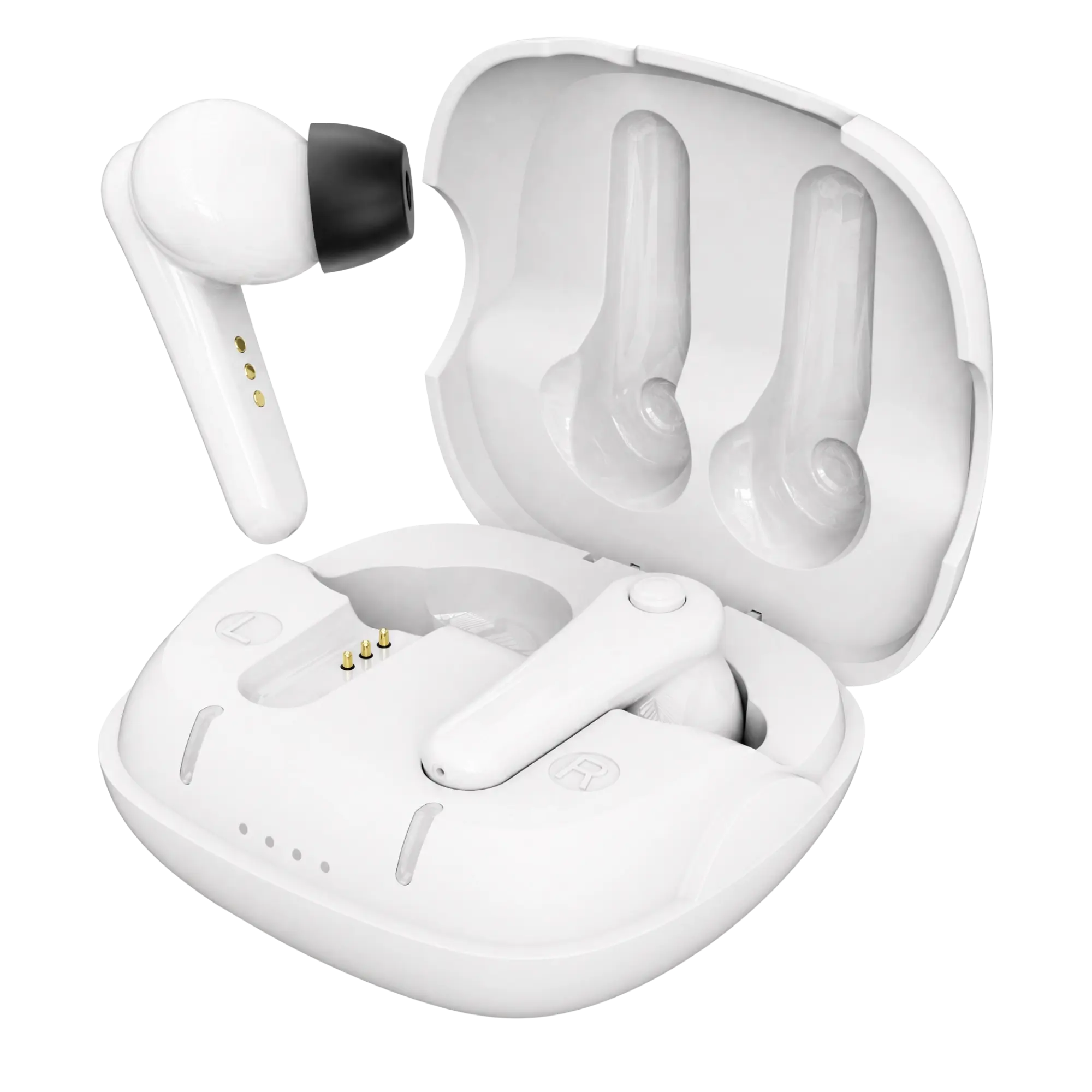
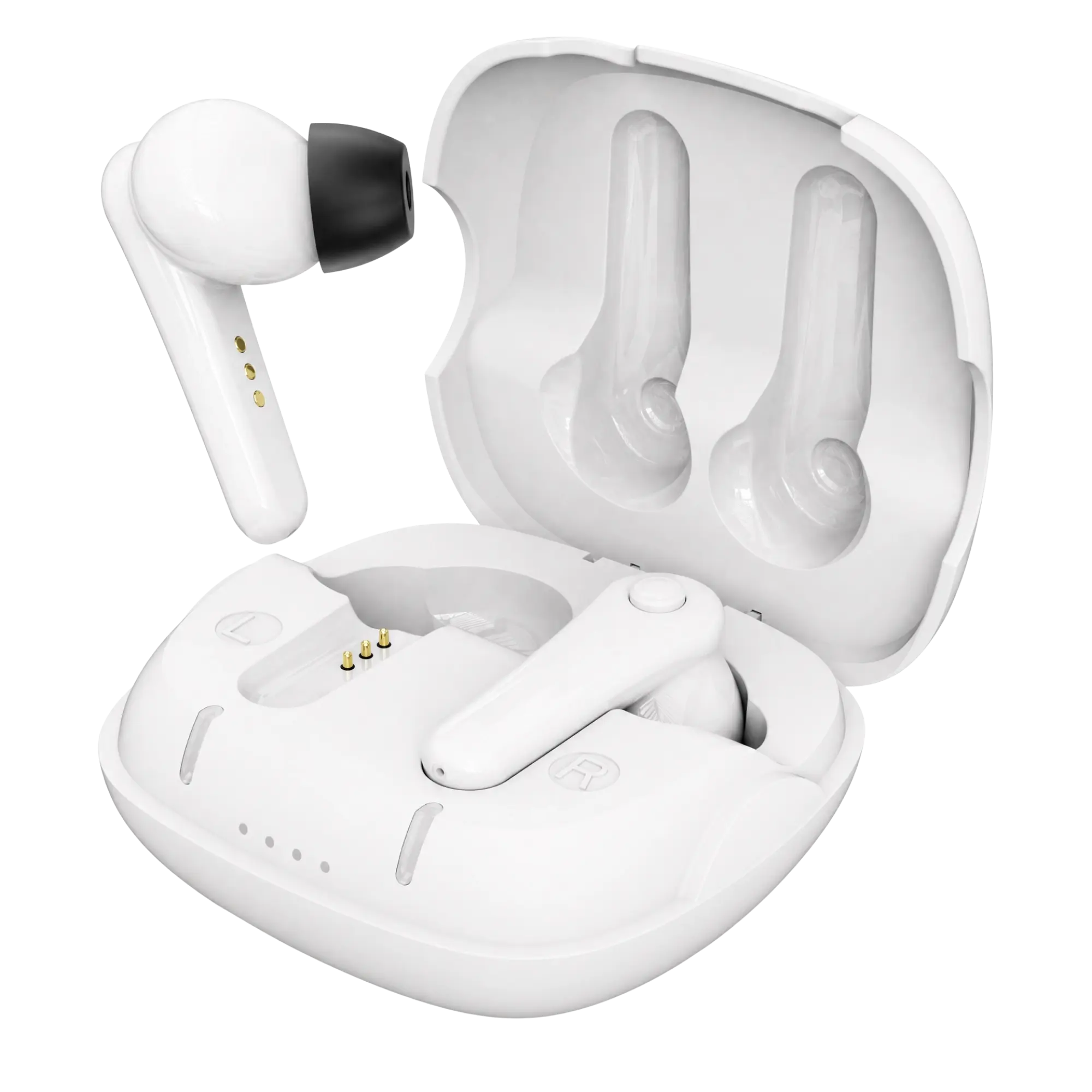
Panda Air earbud-style OTC hearing aids with charging case
Panda Air earbud-style FDA-OTC hearing aid with fast-charge case

お問い合わせ

適切な Panda® 補聴器を選択するのにサポートが必要ですか?

当社のサポート チームは、Panda® Stealth、Panda® Air、Panda® Quantum の比較、注文前の質問への回答、既存の購入のサポートをいたします。