La codificación de estructura fina del sonido mejora la comprensión del habla en ambientes ruidosos en nuevos usuarios de implante coclear
Un ensayo cruzado, aleatorizado y doble ciego realizado en Francia concluye que añadir señales de estructura fina a los implantes cocleares programados de forma tonotópica ayuda a los nuevos usuarios a entender el habla con ruido de fondo.
Para cualquier persona con pérdida auditiva, las situaciones de escucha más difíciles rara vez son las habitaciones silenciosas. Son los restaurantes, las cenas familiares y las calles concurridas, lugares donde la voz que usted quiere oír compite con todo lo demás. La forma en que un dispositivo auditivo codifica los detalles finos del sonido puede marcar una diferencia real precisamente en estas situaciones.
Un nuevo ensayo clínico publicado en Clinical and Experimental Otorhinolaryngology examinó esta cuestión en personas que recibían su primer implante coclear. Los investigadores se preguntaron si una estrategia de codificación del sonido que conserva la llamada información de estructura fina mejora la comprensión del habla en ambientes ruidosos cuando el implante se programa para coincidir con el mapa natural de frecuencias del oído.
Sobre este estudio
Título: Evaluation of Fine Structure Coding in New Cochlear Implant Users with Tonotopic Fitting: a Prospective, Randomized, Double-Blind, Cross-Over Study
Autores: Gwenaelle Creff, Nicolas Bernard-Le Liboux, Hermine Bourdon, Vincent Pean, Nicolas Wallaert, Raphael Tisserand, Benoit Godey
Afiliaciones: Department of Otolaryngology-Head and Neck Surgery, University Hospital, Rennes, Francia; MediCIS, LTSI (Image and Signal Processing Laboratory), INSERM U1099, Rennes; MED-EL Research Department, París; My Medical Assistant, Reims
Revista: Clinical and Experimental Otorhinolaryngology, publicado en línea el 8 de septiembre de 2026
Tipo de estudio: Ensayo clínico prospectivo, aleatorizado, doble ciego y cruzado de dos períodos
DOI de PubMed: 10.21053/ceo.2026-00039
Antecedentes: por qué los investigadores estudiaron este tema
Un implante coclear convierte el sonido en impulsos eléctricos que se transmiten a lo largo de un electrodo dentro de la cóclea, el órgano auditivo en forma de espiral del oído interno. Dos decisiones de programación determinan lo que los usuarios realmente oyen. La primera es el mapa de frecuencias, es decir, qué tonos se asignan a cada electrodo. En la programación tonotópica, los cirujanos utilizan una tomografía computarizada de la cóclea de cada persona para hacer coincidir cada electrodo con el tono que esa región del oído procesaría de forma natural, siguiendo una fórmula conocida como la función de Greenwood.
La segunda decisión es la estrategia de codificación, es decir, cómo se traducen el ritmo y la temporización del sonido en impulsos. Las estrategias convencionales transmiten principalmente la envolvente lenta del sonido. Las estrategias de estructura fina también intentan conservar los detalles rápidos de temporización dentro de la onda sonora, que se cree que transmiten información sobre el tono y ayudan a separar las voces del ruido de fondo.
Estudios anteriores habían sugerido que la programación tonotópica mejora la percepción del habla en ambientes ruidosos, pero mezclaban distintas estrategias de codificación, por lo que no estaba claro cuánto contribuyen por sí mismas las señales de estructura fina. Este ensayo se diseñó para aislar esa cuestión.
Cómo se realizó el estudio
El equipo reclutó a 24 adultos que recibían su primer implante coclear en un único centro de referencia francés entre abril de 2023 y junio de 2024. Todos tenían una pérdida auditiva neurosensorial de severa a profunda en ambos oídos, o una pérdida auditiva total de menos de cinco años de duración. Cada participante recibió un mapa de frecuencias tonotópico elaborado a partir de una tomografía computarizada de panel plano de su propia cóclea.
Después, cada participante utilizó dos estrategias de codificación diferentes de forma consecutiva, una que incluía señales de estructura fina y una estrategia convencional, cada una durante seis semanas. El orden se asignó al azar, y ni los participantes ni los evaluadores sabían qué estrategia estaba activa durante las pruebas. Al final de cada período de seis semanas, los participantes realizaron pruebas de reconocimiento del habla en silencio y con distintos niveles de ruido de fondo, además de tareas de percepción musical.
Lo que encontraron los investigadores
La codificación de estructura fina mejoró significativamente el reconocimiento del habla con ruido cuando el habla era moderadamente más fuerte que el ruido de fondo. Con una relación señal-ruido de +9 decibeles, que equivale aproximadamente a una voz que se distingue con claridad por encima de las conversaciones circundantes, las puntuaciones fueron en promedio 6 puntos porcentuales más altas con la codificación de estructura fina que sin ella (p = 0.010).
La comprensión del habla en silencio y la audiometría tonal estándar no cambiaron. En otras palabras, las señales de estructura fina aportaron un beneficio en ambientes ruidosos sin ningún costo en las condiciones más fáciles.
La percepción musical también mostró mejoras. Los participantes identificaron los contornos melódicos, es decir, la forma ascendente y descendente de una melodía, con una precisión 7.2 puntos porcentuales mayor con la codificación de estructura fina (p = 0.030). En un análisis exploratorio de un subgrupo, la discriminación de tonos de baja frecuencia mejoró en unos 8.5 Hz (p = 0.04).
Quizás lo más revelador es que, cuando terminó el estudio y los participantes pudieron elegir libremente, más del 75 por ciento conservó el mapa tonotópico con codificación de estructura fina como configuración para el día a día.
Qué significa para las personas con pérdida auditiva
El estudio refuerza una lección más amplia de la ciencia auditiva: los detalles de cómo se procesa el sonido importan sobre todo en ambientes ruidosos. Dos configuraciones que suenan igual en el silencio de un consultorio pueden funcionar de forma muy distinta en un restaurante, y el beneficio aparece justamente donde las personas con pérdida auditiva tienen más dificultades.
También pone de relieve el valor de la personalización. Los mapas tonotópicos de este ensayo se adaptaron a cada oído individual, y la estrategia de codificación se aplicó luego sobre esa base personalizada. Para los candidatos a implante coclear, estos hallazgos respaldan la conveniencia de hablar sobre las opciones de estrategia de codificación con un equipo de audiología. Para el grupo mucho más numeroso de personas con pérdida auditiva más leve, los mismos principios, un sonido más rico en detalles y una configuración personalizada, se incorporan cada vez más en los audífonos modernos.
Detalle del sonido en lugares ruidosos, más allá de la clínica de implantes
Este ensayo se realizó con implantes cocleares, que son dispositivos quirúrgicos para la pérdida auditiva de severa a profunda, y las personas en ese rango obtienen el mayor beneficio de las adaptaciones clínicas. Pero el hallazgo central, que conservar más detalles del sonido rinde frutos sobre todo con ruido de fondo, coincide con la lógica de diseño de los nuevos audífonos de venta libre (OTC) que cumplen con las normas de la FDA para adultos con pérdida auditiva de leve a moderada.
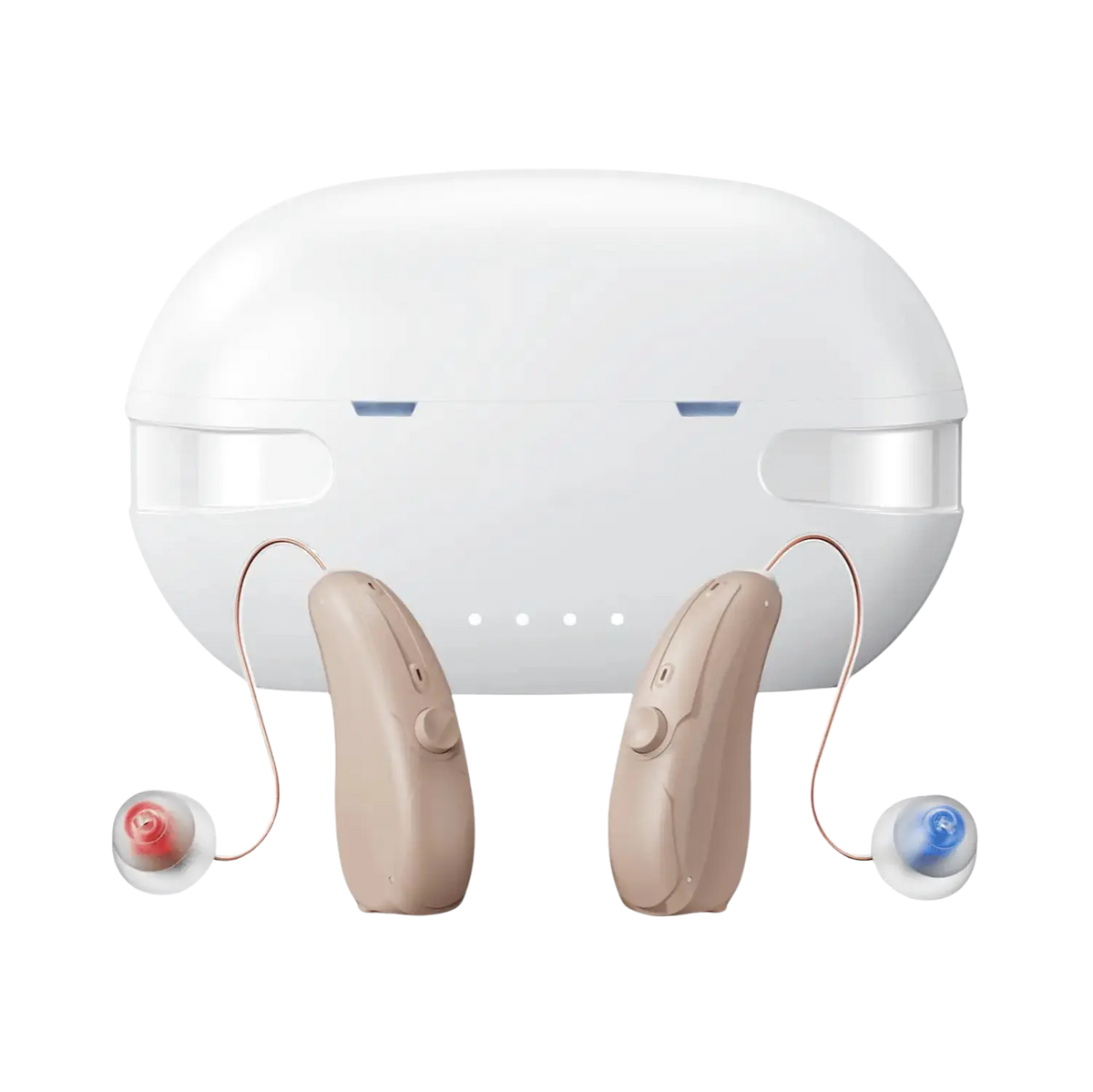
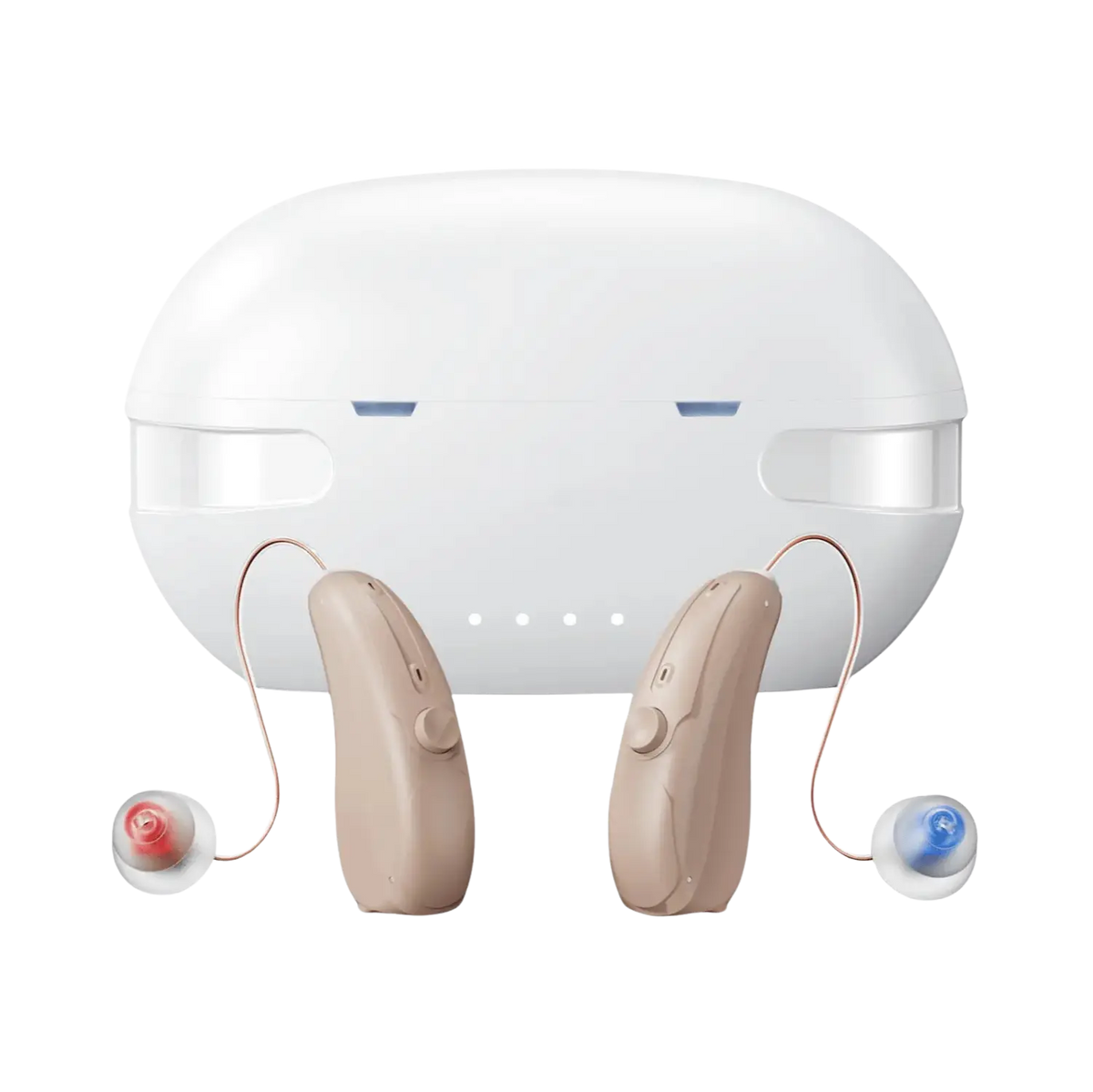
Panda Quantum es un ejemplo: un dispositivo RIC (auricular en el canal) que utiliza procesamiento de 16 canales con reducción adaptativa del ruido, diseñado para lograr un habla más clara en entornos ruidosos. Al igual que los mapas personalizados de este estudio, puede ajustarse opcionalmente a cada persona: la app opcional de Panda puede realizar una prueba de audición en el oído por frecuencias específicas y ajustar la ganancia y la respuesta de frecuencia según el perfil auditivo del usuario, aunque el dispositivo funciona plenamente sin la app ni la prueba.

Quantum ofrece 20 horas por carga, con un estuche que proporciona tres cargas completas adicionales para un total de 80 horas; transmite llamadas, TV y música por Bluetooth, e incluye una garantía de 5 años y un período de prueba de 45 días que comienza cuando usted recibe el dispositivo. Encontrará más detalles en pandahearing.com.
Limitaciones de esta investigación
Se trató de un ensayo pequeño, con 24 participantes en un solo centro, y todos los participantes usaron dispositivos de un mismo fabricante. Uno de los autores está afiliado al departamento de investigación de MED-EL, el fabricante de los implantes, algo que los lectores deben tener en cuenta al interpretar los resultados. Los investigadores también observaron un efecto de período en los niveles de ruido más altos, lo que significa que el orden en que se usaron las estrategias influyó en algunas puntuaciones, y eso complica la interpretación en esos niveles de ruido.
Los beneficios en el disfrute subjetivo de la música fueron menos consistentes que las mediciones objetivas de tono y contorno, y los períodos de adaptación de seis semanas quizá no reflejen cómo se desempeñan los oyentes después de un año o más de uso diario.
Dónde nos deja esto
Para los nuevos usuarios de implantes cocleares, este ensayo sugiere que la codificación de estructura fina sobre un mapa tonotópico personalizado puede ofrecer una ventaja medible con ruido de fondo y en la percepción de la forma de la música, sin desventajas en silencio. Para todos los demás, es una prueba más de que, al evaluar cualquier tecnología auditiva, la pregunta que vale la pena hacerse no es cómo suena en una habitación silenciosa, sino cómo funciona en los lugares ruidosos donde realmente se dan las conversaciones.
Creff G, Bernard-Le Liboux N, Bourdon H, Pean V, Wallaert N, Tisserand R, Godey B. Evaluation of Fine Structure Coding in New Cochlear Implant Users with Tonotopic Fitting: a Prospective, Randomized, Double-Blind, Cross-Over Study. Clinical and Experimental Otorhinolaryngology. 2026. Consultado en PubMed. https://doi.org/10.21053/ceo.2026-00039