Tinnitus betrifft weit mehr als das Hören: Neue Studie zeigt die Auswirkungen auf Alltag und psychische Gesundheit
Eine Studie mit 428 Erwachsenen zeigt, dass der Schweregrad eines Tinnitus mit stärkerer Angst, Depression, schlechterem Schlaf und eingeschränkter Alltagsbewältigung zusammenhängt, und identifiziert eine eigene, stark belastete Untergruppe, die mit den üblichen Hörmessungen allein unentdeckt bliebe.
Tinnitus – die Wahrnehmung von Klingeln, Summen oder Zischen ohne äußere Schallquelle – wird meist danach beurteilt, wie laut oder aufdringlich das Geräusch selbst wirkt. Fachleute vermuten jedoch schon lange, dass sich die eigentlichen Folgen des Tinnitus anderswo zeigen: beim Schlaf, bei der Stimmung, bei der Konzentration und bei der Fähigkeit, einen ganz normalen Tag zu bewältigen.
Eine neue Studie im American Journal of Audiology nimmt diese Vermutung ernst. Statt nur nach dem Schweregrad des Tinnitus zu fragen, untersuchte ein internationales Forschungsteam, wie sich die Erkrankung auf fünf Kerndimensionen der gesundheitsbezogenen Lebensqualität auswirkt. Das Ergebnis: Emotionale Gesundheit und Alltagsaktivitäten tragen einen Großteil der Last.
Titel: Health-Related Quality-of-Life Profiles in Adults With Tinnitus
Autoren: Preeti Pandey, Hansapani Rodrigo, Megan Kruger, Eldre Beukes, De Wet Swanepoel, Anu Sharma, Gerhard Andersson, Vinaya Manchaiah
Institutionen: University of Colorado School of Medicine; University of Colorado Boulder; das Virtual Hearing Lab (eine Initiative der University of Colorado und der University of Pretoria); The University of Texas Rio Grande Valley; Anglia Ruskin University, Vereinigtes Königreich; Linköping University, Schweden; University of Pretoria, Südafrika
Fachzeitschrift: American Journal of Audiology, veröffentlicht am 3. September 2026
Studientyp: Querschnittsanalyse von Ausgangsdaten aus klinischen Studien (428 Erwachsene)
PubMed-DOI: 10.1044/2026_AJA-26-00095
Hintergrund: Warum die Forschenden das untersucht haben
Die meisten Tinnitus-Studien stützen sich auf Fragebögen zum Schweregrad wie den Tinnitus Functional Index (TFI), der erfasst, wie aufdringlich und störend das Geräusch ist. Diese Werte sind nützlich, beschreiben aber nicht, was die Erkrankung mit der Gesundheit eines Menschen insgesamt macht: ob er sich frei bewegen, sich selbst versorgen, arbeiten, Kontakte pflegen oder ohne Belastung schlafen kann.
Um dieses umfassendere Bild zu erfassen, griffen die Forschenden auf den EQ-5D-5L zurück, ein weit verbreitetes Gesundheitsmaß, das fünf Lebensbereiche bewertet: Mobilität, Selbstversorgung, alltägliche Tätigkeiten, Schmerzen oder Beschwerden sowie Angst oder Depression. Die Frage war einfach: Welche dieser Dimensionen beeinträchtigt Tinnitus tatsächlich – und bei wem?
Die Antwort ist für die Behandlung wichtig. Wenn Tinnitus vor allem die emotionale Gesundheit und die Alltagsbewältigung stört statt der körperlichen Leistungsfähigkeit, dann verfehlt eine Versorgung, die sich nur auf das Geräusch selbst konzentriert, möglicherweise genau die Bereiche, in denen Betroffene am meisten Hilfe brauchen.
So wurde die Studie durchgeführt
Das Team wertete Ausgangsdaten von 428 Erwachsenen aus, die an klinischen Studien zu internetbasierter kognitiver Verhaltenstherapie bei Tinnitus teilnahmen. Das Durchschnittsalter lag bei 54.9 Jahren, und etwas mehr als die Hälfte der Teilnehmenden (51.9 Prozent) waren Frauen. Da die Daten vom Beginn der Studien stammen, spiegeln sie den Zustand der Teilnehmenden vor jeder Behandlung wider.
Die Teilnehmenden füllten eine Reihe von Online-Fragebögen zu soziodemografischen Angaben, Hörgeschichte und klinischen Merkmalen aus, dazu das EQ-5D-5L-Lebensqualitätsprofil und den Tinnitus Functional Index. Anschließend untersuchten die Forschenden, wie der Schweregrad des Tinnitus mit jeder Dimension der Lebensqualität zusammenhing. Mithilfe einer Clusteranalyse – eines statistischen Verfahrens, das Menschen mit ähnlichen Antwortmustern gruppiert – suchten sie zudem nach unterschiedlichen Belastungsprofilen innerhalb der Stichprobe.
Was die Forschenden herausgefunden haben
Körperlich ging es den meisten Teilnehmenden gut. Etwa 76.6 Prozent berichteten keine Probleme mit der Mobilität, 92.5 Prozent keine Probleme mit der Selbstversorgung und 65.2 Prozent keine Probleme bei alltäglichen Tätigkeiten. Die Belastung konzentrierte sich anderswo: 33.4 Prozent gaben Schmerzen oder Beschwerden an und 40.2 Prozent Angst oder Depression – die beiden am stärksten betroffenen Dimensionen.
Der Schweregrad spielte durchweg eine Rolle. Ein stärkerer Tinnitus ging in allen fünf Dimensionen konsequent mit schlechteren Ergebnissen einher. Der Zusammenhang war erheblich: Jeder Anstieg um 10 Punkte im Tinnitus Functional Index war mit einer um 53 Prozent höheren Wahrscheinlichkeit für schlechtere Werte bei alltäglichen Tätigkeiten verbunden und mit einer um 51 Prozent höheren Wahrscheinlichkeit für stärkere Angst oder Depression.
Der Unterschied zwischen den Gruppen war auffällig. Teilnehmende mit einem vollständig gesunden Lebensqualitätsprofil hatten einen durchschnittlichen TFI-Wert von 39.0, während diejenigen mit Problemen in irgendeiner Dimension im Schnitt auf 55.3 kamen – nach statistischen Maßstäben ein großer Unterschied (Effektstärke 0.78).
Der klinisch vielleicht nützlichste Befund ergab sich aus der Clusteranalyse. Sie identifizierte eine kleinere Untergruppe mit deutlich schlechterer Gesundheit in mehreren Dimensionen gleichzeitig, gekennzeichnet durch einen stärkeren Tinnitus zusammen mit größerer psychischer Belastung und Schlafproblemen. Bemerkenswert: Diese stark belastete Gruppe unterschied sich in Alter, Geschlecht und audiologischen Merkmalen nicht von den anderen – eine übliche Höruntersuchung würde sie also nicht erkennen.
Was das für Menschen mit Hörverlust bedeutet
Für die Millionen Erwachsenen, die mit Tinnitus leben, bestätigt diese Studie, was viele bereits aus eigener Erfahrung wissen: Das Klingeln ist nur ein Teil des Problems. Die größere Belastung trifft oft Stimmung, Schlaf und die Fähigkeit, voll am Alltag teilzunehmen – und sie wächst stetig mit dem Schweregrad des Tinnitus.
Die Autoren plädieren für integrierte, biopsychosoziale Ansätze im Tinnitus-Management, also für eine Versorgung, die neben dem Geräusch selbst auch emotionale Gesundheit, Schlaf und Alltagsbewältigung berücksichtigt. Die Existenz einer verborgenen, stark belasteten Untergruppe legt außerdem nahe, dass Menschen, deren Tinnitus mit Angst, gedrückter Stimmung oder schlechtem Schlaf einhergeht, diese Symptome gegenüber ihren Behandelnden ansprechen sollten. Denn sie weisen auf eine insgesamt höhere Belastung hin, als ein Hörtest allein erkennen ließe.
Wenn Alltagsgeräusche klarer sind, kann Tinnitus weniger in den Vordergrund treten
Tinnitus tritt häufig zusammen mit Hörverlust auf, und diese Studie erinnert daran, dass sich die Belastung durch beide Erkrankungen im Alltag zeigt: in Gesprächen, bei Aktivitäten und an ruhigen Abenden zu Hause. Hörgeräte sind keine Behandlung und keine Heilung für Tinnitus. Bei Menschen, die zusätzlich einen Hörverlust haben, kann klarerer Alltagsklang den Tinnitus aber weniger auffällig erscheinen lassen – einfach weil das Gehirn mehr echte Geräusche hat, auf die es sich konzentrieren kann.
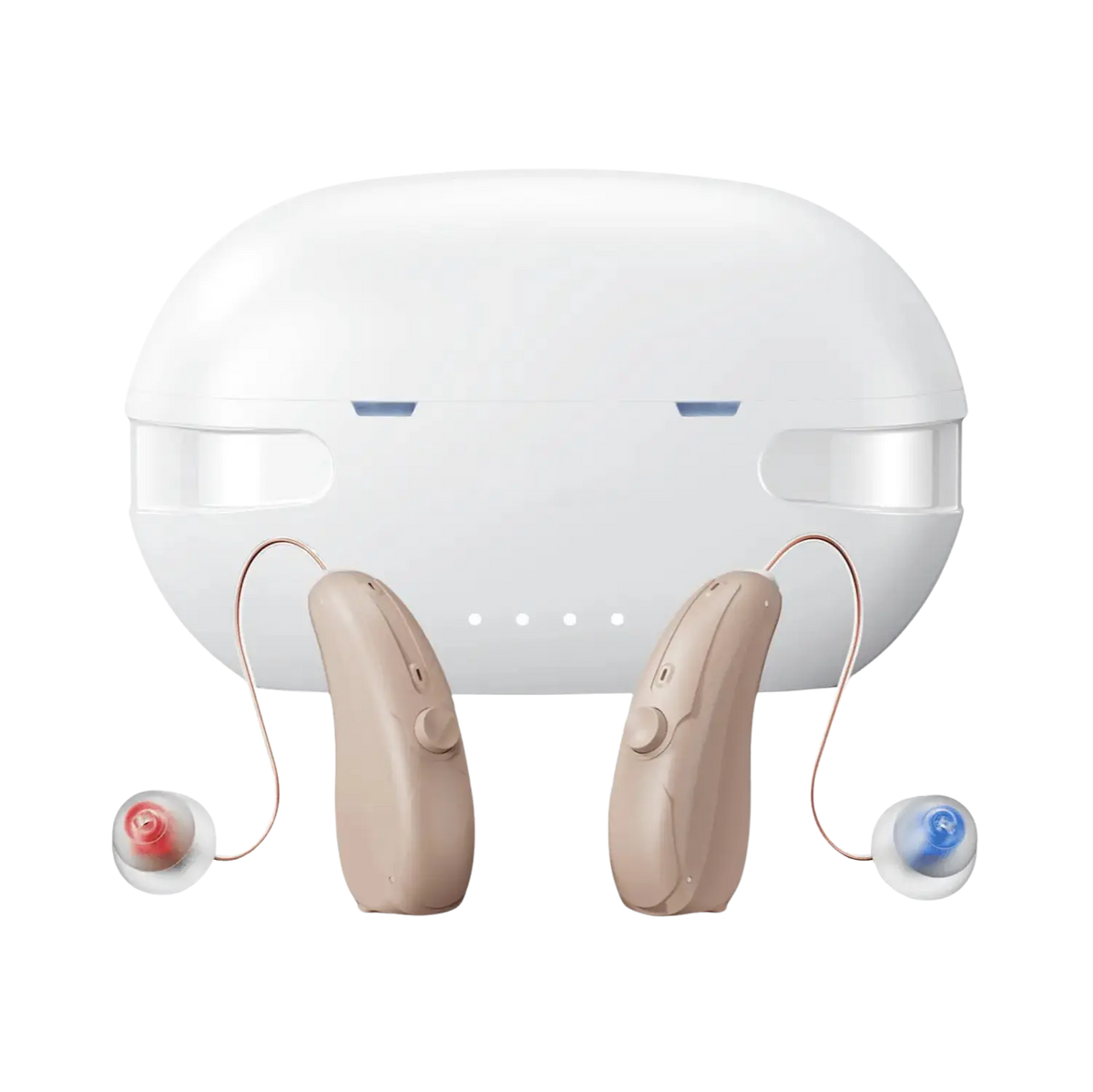
FDA-OTC-Hörgeräte haben diese Art der Unterstützung im Alltag für Erwachsene mit leichtem bis mittelgradigem Hörverlust leichter zugänglich gemacht. Panda Quantum ist ein Beispiel: ein 16-Kanal-RIC-Gerät (Hörer im Gehörgang) mit adaptiver Geräuschunterdrückung für klare Sprache in lauter Umgebung sowie Bluetooth für Telefonate, TV und Musik. Es läuft 20 Stunden pro Ladung, und sein Etui liefert drei zusätzliche volle Ladungen für insgesamt 80 Stunden Nutzungsdauer.
Das Quantum bietet zudem einen optionalen App-basierten Hörtest im Ohr, mit dem sich Verstärkung und Frequenzgang an das Hörprofil des Trägers anpassen lassen; das Gerät funktioniert aber auch ohne App voll. Es wird mit einer 5-jährigen Garantie und einer 45-tägigen Testphase geliefert, die mit der Ankunft des Produkts beginnt. Wichtig zu wissen: OTC-Geräte sind für leichten bis mittelgradigen Hörverlust zugelassen; bei hochgradigem oder an Taubheit grenzendem Hörverlust ist eine klinische Anpassung nach wie vor die beste Wahl.

Grenzen dieser Studie
Es handelte sich um eine Querschnittsanalyse. Sie kann also Zusammenhänge zwischen dem Schweregrad des Tinnitus und der Lebensqualität aufzeigen, aber nicht beweisen, dass das eine das andere verursacht. Alle Teilnehmenden waren Erwachsene, die sich aktiv für Studien zu internetbasierter Therapie angemeldet hatten – eine hilfesuchende Gruppe, die möglicherweise stärker belastet ist als Menschen mit Tinnitus in der Allgemeinbevölkerung. Zudem beruhten alle Messwerte auf Online-Selbstauskünften.
Der stark belastete Cluster war außerdem relativ klein, und die Studie begleitete die Teilnehmenden nicht über längere Zeit, um zu prüfen, ob sich ihre Profile durch die Behandlung veränderten. In der über PubMed verfügbaren Zusammenfassung nannten die Autoren keine konkreten Finanzierungskonflikte.
Was bleibt
Die Tinnitus-Versorgung geht inzwischen über die Frage hinaus, wie laut das Klingeln ist, und fragt zunehmend, wie viel vom Leben es einnimmt. Diese Studie untermauert diesen Wandel mit harten Zahlen: Die Belastung liegt vor allem bei Angst, Depression, Schlaf und Alltagsaktivitäten, und eine Untergruppe von Betroffenen trägt weit mehr davon, als ihre Hörbefunde vermuten lassen. Wenn Ihr Tinnitus mit schlechtem Schlaf oder gedrückter Stimmung einhergeht, verdient diese Kombination Aufmerksamkeit als Ganzes – nicht als getrennte Beschwerden.
Pandey P, Rodrigo H, Kruger M, Beukes E, Swanepoel W, Sharma A, Andersson G, Manchaiah V. Health-Related Quality-of-Life Profiles in Adults With Tinnitus. American Journal of Audiology. 2026. Abgerufen über PubMed. https://doi.org/10.1044/2026_AJA-26-00095