Eine japanische Fragebogenstudie zeigt, dass Menschen mit einseitigem Hörverlust in lauten Zahnarztpraxen Schwierigkeiten bei der Kommunikation haben, und benennt einfache Anpassungen – von weniger Hintergrundlärm bis zum Sprechen auf der hörenden Seite –, die die Behandlung zugänglicher machen.
Einseitiger Hörverlust, manchmal auch einseitige Schwerhörigkeit genannt, wird leicht unterschätzt. Wer auf einem Ohr normal hört, kommt durch ein beiläufiges Gespräch ohne offensichtliche Probleme. Freunde, Kollegen und sogar medizinisches Fachpersonal gehen daher oft davon aus, dass es nichts zu berücksichtigen gibt.
In lauten Umgebungen sieht die Realität anders aus. Erst das Hören mit beiden Ohren ermöglicht es dem Gehirn, Geräusche zu orten und Sprache von Hintergrundgeräuschen zu trennen – und eine Zahnarztpraxis mit Bohrern, Absaugung und Hintergrundgesprächen gehört zu den lautesten medizinischen Umgebungen, die Patienten regelmäßig erleben. Eine neue Studie wollte genau dokumentieren, was Menschen mit einseitigem Hörverlust dort erleben.
Über diese Studie
Titel: Unilateral Hearing Loss and Dental Care: A Questionnaire Survey of Patient Challenges and Provider Responses
Autoren: Jumpei Murakami, Yumi Okano, Yuki Oda
Institutionen: The University of Osaka Graduate School of Dentistry; Gunma Paz University; Hiroshima Oral Health Center, Japan
Fachzeitschrift: Special Care in Dentistry, 2026
Studientyp: Webbasierte Fragebogenerhebung
PubMed DOI: 10.1111/scd.70264
Hintergrund: Warum die Forschenden das untersucht haben
Einseitiger Hörverlust bedeutet eine deutliche Hörminderung auf einem Ohr bei normalem oder nahezu normalem Hören auf dem anderen. Da das bessere Ohr Gespräche in ruhiger Umgebung trägt, bleibt die Erkrankung von anderen oft unbemerkt, und ihre Belastung im Alltag wurde weit weniger erforscht als beidseitiger Hörverlust.
Das Forschungsteam konzentrierte sich auf die zahnärztliche Versorgung, weil dort mehrere schwierige Bedingungen zusammenkommen: anhaltender Hintergrundlärm durch Geräte, Behandelnde mit Masken, die das Lippenlesen verhindern, und ein Patient, der zurückgelehnt liegt und das bessere Ohr oft nicht zum Sprechenden drehen kann. Zu verstehen, was Patienten in dieser Situation brauchen, könnte Anpassungen im gesamten Gesundheitswesen voranbringen.
Bislang gab es für Behandelnde kaum veröffentlichte Leitlinien dazu, was Patienten mit einseitigem Hörverlust während eines Termins tatsächlich als hilfreich empfinden.
So wurde die Studie durchgeführt
Die Forschenden führten eine webbasierte Umfrage über die offizielle Website von Kikoiro durch, einer japanischen Gemeinschaftsorganisation für Menschen mit einseitigem Hörverlust. Die Teilnahme war freiwillig, und Zweck sowie Zielgruppe der Umfrage waren auf der Website klar angegeben.
Teilnehmen konnten Personen mit normalem Gehör auf einem Ohr und einem Hörverlust auf dem anderen, der von 25 Dezibel Hörpegel bis zur vollständigen Taubheit reichte. Menschen mit Hörverlust auf beiden Ohren wurden ausgeschlossen, ebenso Angehörige, die stellvertretend für jemand anderen antworteten. Insgesamt füllten 378 Personen mit einseitigem Hörverlust den Fragebogen aus – eine große Stichprobe für eine so spezifische Erkrankung.
Was die Forschenden herausgefunden haben
Viele der 378 Befragten berichteten von Schwierigkeiten, sich in der lauten Umgebung der Zahnarztpraxis zu verständigen. Die Kombination aus Gerätelärm und Sprache, die von der falschen Seite kam, machte Routinegespräche – etwa Anweisungen während der Behandlung oder Erklärungen zu Befunden – zu einer Belastung.
Auf die Frage, was tatsächlich hilft, nannten die Teilnehmenden eine einheitliche Reihe von Anpassungen. Deutliches und langsames Sprechen stand weit oben, ebenso die Verringerung von Hintergrundgeräuschen während des Gesprächs. Ein weiterer zentraler Wunsch war, von der hörenden Seite des Patienten aus zu sprechen – etwas, das Behandelnde nichts kostet, sobald sie wissen, welche Seite das ist.
Auch visuelle Unterstützung spielte eine Rolle. Die Befragten schätzten visuelle Hinweise während der Interaktion und beschrieben Anschauungsmaterial und schriftliche Erklärungen vor und nach der Behandlung als hilfreich, um sicherzugehen, dass nichts Wichtiges verpasst wurde.
Die Autoren folgern, dass die Berücksichtigung des Hörvermögens von Patienten in der zahnärztlichen Versorgung unerlässlich ist und dass ein verbessertes Kommunikationsumfeld nicht nur Patienten mit einseitigem Hörverlust zugutekommt, sondern insgesamt zu einer inklusiveren Versorgung beiträgt.
Was das für Menschen mit Hörverlust bedeutet
Die Ergebnisse untermauern mit Zahlen und Details, was viele Menschen mit Hörverlust aus Erfahrung wissen: Die schwierigsten Hörsituationen sind nicht ruhige Gespräche, sondern laute Räume, in denen Sprache aus unvorhersehbaren Richtungen kommt. Das gilt weit über den Zahnarztstuhl hinaus – für Apotheken, Wartezimmer, Restaurants und Familientreffen.
Die Studie liefert außerdem eine praktische Anleitung, um für sich selbst einzutreten. Der Behandlerin oder dem Behandler mitzuteilen, welche Seite die hörende ist, um weniger Hintergrundlärm während des Gesprächs zu bitten und schriftliche Zusammenfassungen anzufordern – all das sind belegte Anpassungen, die Patienten bei jedem Termin berechtigterweise erbitten können.
Für Behandelnde lautet die Botschaft, dass kleine Veränderungen der Umgebung viel bewirken. Keine der wichtigsten von den Befragten genannten Anpassungen erfordert spezielle Ausstattung, sondern nur Aufmerksamkeit.
Wenn Hintergrundlärm die Hürde ist
Da diese Umfrage Hintergrundgeräusche als zentrales Hindernis für die Kommunikation benennt, zeigt sie, warum der Umgang mit Störgeräuschen zum Schwerpunkt moderner Hörtechnik geworden ist. Für Erwachsene mit leichtem bis mittelgradigem Hörverlust auf dem betroffenen Ohr verfügen FDA-OTC-Hörgeräte heute über eine Signalverarbeitung, die gezielt darauf ausgelegt ist, Sprache von Umgebungsgeräuschen zu trennen.
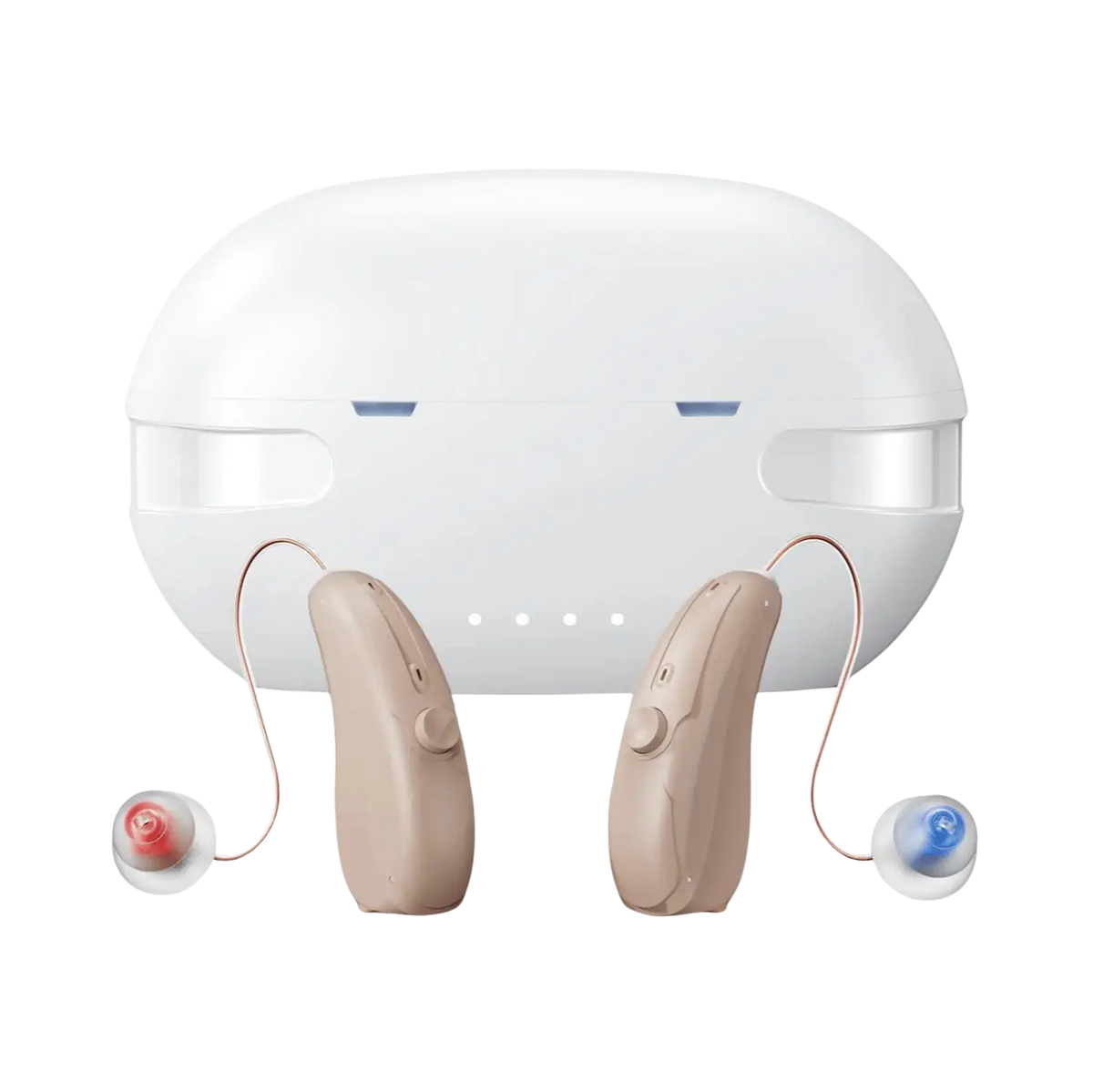
Panda Quantum ist ein solches Gerät: ein RIC-Hörgerät (Hörer im Gehörgang) mit 16 Kanälen und adaptiver Geräuschunterdrückung, das für klarere Sprache in lauter Umgebung entwickelt wurde – genau die Unterstützung beim Sprachverstehen im Störgeräusch, die etwa eine belebte Praxis erfordert. Es läuft 20 Stunden pro Ladung, das Ladeetui liefert drei weitere volle Ladungen für insgesamt 80 Stunden, und über eine optionale App lässt sich ein optionaler Hörtest im Ohr durchführen, um den Klang zu personalisieren. Das Gerät funktioniert jedoch auch ohne beides vollständig.

Dabei gilt eine Einschränkung: OTC-Hörgeräte sind für Erwachsene mit leichtem bis mittelgradigem Hörverlust zugelassen, und ein einseitiger Hörverlust kann bis zur vollständigen Taubheit auf einer Seite reichen. Wer einen hochgradigen oder an Taubheit grenzenden Hörverlust hat oder plötzliche bzw. unerklärliche Veränderungen des Gehörs bemerkt, sollte mit einer klinischen Untersuchung beginnen. Details zu Panda Quantum finden Sie unter pandahearing.com.
Grenzen dieser Studie
Es handelte sich um eine freiwillige Online-Umfrage, deren Teilnehmende über eine einzige Gemeinschaftsorganisation gewonnen wurden. Die Befragten setzen sich daher möglicherweise stärker mit ihrem Hörverlust auseinander als der Durchschnitt der Betroffenen, und die Ergebnisse spiegeln den Kontext der zahnärztlichen Versorgung in Japan wider. Der selbst angegebene Hörstatus wurde nicht audiometrisch überprüft. Die Ergebnisse beschreiben Erfahrungen und Präferenzen, messen aber nicht die Wirkung einer bestimmten Anpassungsmaßnahme.
Was Sie daraus mitnehmen können
Wenn Sie selbst oder ein Mensch, den Sie betreuen, auf einem Ohr schlecht hören, erinnert diese Studie daran, dass es sich lohnt, den eigenen Bedarf klar zu benennen: auf welcher Seite man angesprochen werden möchte, wie viel Lärm reduziert werden sollte und was schriftlich festgehalten werden soll. Die Maßnahmen, die sich die 378 Befragten wünschten, sind einfach, kostenlos und bei jedem Termin möglich – allerdings nur, wenn die Beteiligten wissen, dass sie sie anbieten sollten.
Murakami J, Okano Y, Oda Y. Unilateral Hearing Loss and Dental Care: A Questionnaire Survey of Patient Challenges and Provider Responses. Special Care in Dentistry. 2026. Abgerufen über PubMed. https://doi.org/10.1111/scd.70264