Rezeptfreie Hörbrillen verbessern die Sprachverständlichkeit bei Erwachsenen mit altersbedingtem Hörverlust
Eine neue italienische Studie berichtet, dass eine selbstanpassbare, per App eingestellte rezeptfreie Hörbrille bei älteren Erwachsenen mit leichtem bis mittelgradigem Hörverlust messbare Verbesserungen sowohl bei der Tonwahrnehmung als auch beim Sprachverstehen bewirkte.
Altersbedingter Hörverlust gehört zu den häufigsten chronischen Erkrankungen im späteren Leben, und doch warten viele Menschen jahrelang, bevor sie etwas dagegen unternehmen. Kosten, die Umstände wiederholter Praxisbesuche und das sichtbare Erscheinungsbild herkömmlicher Hörgeräte tragen zu dieser Verzögerung bei – und jedes Jahr des Wartens erschwert die Kommunikation tendenziell weiter.
Um diese Hürden zu senken, ist eine ganze Kategorie rezeptfreier Geräte entstanden. Eines der ungewöhnlicheren Modelle versteckt den Verstärker in einer gewöhnlich aussehenden Brille. Ein Forschungsteam der University of Turin wollte unter kontrollierten klinischen Bedingungen messen, wie stark diese Brille das Gehör von Menschen mit altersbedingtem Hörverlust tatsächlich verbessert.
Titel: A novel approach to hearing amplification: audiometric outcomes from Nuance Audio over-the-counter hearing aid glasses.
Autoren: Andrea Albera, Marco Boldreghini, Luca Girotto, Roberto Albera, Claudia Cassandro, Andrea Canale.
Institution: ENT Unit, Department of Surgical Sciences, University of Turin, Italy.
Fachzeitschrift und Datum: Acta Otorhinolaryngologica Italica, Juni 2026 (Band 46, Ausgabe 3, Seiten 220 bis 227).
Studientyp: Prospektive Studie zu audiometrischen Ergebnissen bei 32 Erwachsenen, Vergleich zwischen unversorgtem und versorgtem Hören.
PubMed und DOI: 10.14639/0392-100X-A1581
Hintergrund: Warum die Forschenden das untersucht haben
Der altersbedingte Hörverlust wird Presbyakusis genannt. Meist handelt es sich um einen sensorineuralen Hörverlust, das heißt, das Problem liegt im Innenohr und im Hörnerv und nicht in einer Blockade. Er betrifft in der Regel zuerst die hohen Töne. Deshalb verschwimmen Konsonanten wie s, f und t früher als Vokale, und deshalb kann Sprache zwar hörbar, aber undeutlich klingen – besonders in einem lauten Raum.
Rezeptfreie Hörgeräte wurden geschaffen, damit Erwachsene mit leichtem bis mittelgradigem Hörverlust eine Verstärkung selbst kaufen und einrichten können – ohne Rezept und ohne formelle klinische Anpassung. Viele dieser Produkte sind selbstanpassbar: Die Nutzerin oder der Nutzer stellt den Klang über eine Smartphone-App ein, statt das Gerät persönlich von einem Audiologen programmieren zu lassen. Die hier getestete Brille hat ein offenes Design, das den Gehörgang frei lässt und den verstärkten Schall zum Ohr leitet. Dieser Ansatz soll sich weniger verschlossen anfühlen und wie eine ganz normale Brille aussehen.
Trotz steigender Verkaufszahlen gibt es bislang nur wenige unabhängige audiometrische Daten dazu, wie gut solche Geräte tatsächlich funktionieren. Das Team aus Turin wollte belastbare Zahlen: Wie stark verbessern sich die gemessenen Hörschwellen und Sprachwerte mit aufgesetzter Brille im Vergleich zu gar keiner Unterstützung?
So wurde die Studie durchgeführt
Die Forschenden schlossen 32 Erwachsene mit einem Durchschnittsalter von 74 Jahren ein, die einen symmetrischen, altersbedingten sensorineuralen Hörverlust im leichten bis mittelgradigen Bereich hatten. Jede Person wurde zweimal getestet – einmal ohne Gerät und einmal mit der Hörbrille –, sodass jede Teilnehmerin und jeder Teilnehmer als eigene Vergleichsperson diente.
Es kamen zwei Standardverfahren zum Einsatz. Die Reintonaudiometrie ermittelt den leisesten Ton, den eine Person bei jeder Tonhöhe wahrnehmen kann, angegeben in Dezibel Hörpegel – ein höherer Wert bedeutet schlechteres Hören. Die Sprachaudiometrie misst die Sprachverständlichkeitsschwelle, also die Lautstärke, bei der eine Person einen festgelegten Anteil der Wörter korrekt wiederholen kann. Beide Tests wurden im Freifeld durchgeführt, wobei der Schall über Lautsprecher statt über Kopfhörer abgespielt wurde – die realistische Art, ein getragenes Gerät zu testen.
Vor dem Test wurde die Brille über die zugehörige Smartphone-App eingestellt, wobei sich die Einstellungen am Audiogramm der jeweiligen Person und an ihrem persönlichen Klangempfinden orientierten. Anschließend prüfte das Team mit gepaarten statistischen Tests, ob die Werte mit Gerät deutlich besser waren als ohne.
Was die Forschenden herausgefunden haben
Mit der Brille verbesserten sich die Hörschwellen über alle getesteten Tonhöhen hinweg, am deutlichsten in den hohen Frequenzen. Bei 4000 bis 6000 Hz, dem Bereich, der viele Details der Konsonanten trägt, lag der durchschnittliche Gewinn bei etwa 10 bis 11 Dezibel. Eine Verschiebung in dieser Größenordnung kann einen Ton von unhörbar zu angenehm wahrnehmbar machen.
Auch das Sprachverstehen verbesserte sich. Die Sprachverständlichkeitsschwelle sank um etwa 7 Dezibel bei dem Pegel, bei dem die Teilnehmenden die Hälfte der Wörter verstanden, und um etwa 6 Dezibel bei voller Verständlichkeit. Einfach gesagt: Sprache ließ sich bei geringerer Lautstärke leichter verfolgen als ohne das Gerät.
Die bevorzugten Verstärkungseinstellungen entsprachen dem Verlauf des jeweiligen Hörverlusts: Wer einen steiler abfallenden Hörverlust im Hochtonbereich hatte, wählte tendenziell eine stärkere Anhebung der hohen Frequenzen. Diese Übereinstimmung spricht dafür, dass der Selbstanpassungsprozess die Nutzenden zu sinnvollen, auf das Audiogramm abgestimmten Einstellungen geführt hat und nicht zu zufälligen.
Bemerkenswert ist, dass der Nutzen ähnlich ausfiel – unabhängig davon, ob eine Person mit leichtem oder mittelgradigem Hörverlust startete. Beide Gruppen profitierten, was darauf hindeutet, dass das Gerät nicht nur denjenigen half, die es am wenigsten brauchten.
Was das für Menschen mit Hörverlust bedeutet
Die zentrale Erkenntnis lautet, dass ein selbstanpassbares, rezeptfreies Gerät, das der Träger selbst per App einstellt, Verbesserungen bewirkte, die die Autoren bei Erwachsenen mit leichtem bis mittelgradigem altersbedingtem Hörverlust als klinisch relevant bezeichnen. Für alle, die bisher gezögert haben, sich Hilfe zu holen, ist das ein ermutigender Beleg dafür, dass der Weg in Eigenregie echten Nutzen bringen kann – und nicht nur den Eindruck davon.
Auch die dezente Bauform im Stil einer Brille spielt eine Rolle. Ein Gerät, das wie eine Alltagsbrille aussieht, nimmt einen Teil der Sichtbarkeit weg, die Menschen überhaupt davon abhält, eine Hörhilfe zu tragen – und ein früherer Einstieg erleichtert in der Regel die Gewöhnung an die Hörunterstützung.
Nichts davon ersetzt einen Hörtest. Ein kurzer Test zeigt Ihnen weiterhin, ob Ihr Hörverlust in dem Bereich liegt, für den diese Geräte gedacht sind, und schließt Ursachen aus, die ärztlich abgeklärt werden müssen. Die Studie stützt jedoch den allgemeinen Trend, den ersten Schritt zu besserem Hören leichter zu machen.
Warum per App eingestellte, selbstanpassbare Geräte die Hürde zu besserem Hören senken
Die praktischste Botschaft dieser Studie lautet, dass die Anpassung nicht mehr in einer Praxis stattfinden muss, um zu funktionieren. Wenn das Gerät die Verstärkung auf das persönliche Audiogramm abstimmt, kann eine klinisch bedeutsame Verbesserung entstehen, die der Träger selbst eingerichtet hat. Genau diese Lücke sollen selbstanpassbare OTC-Hörgeräte schließen.
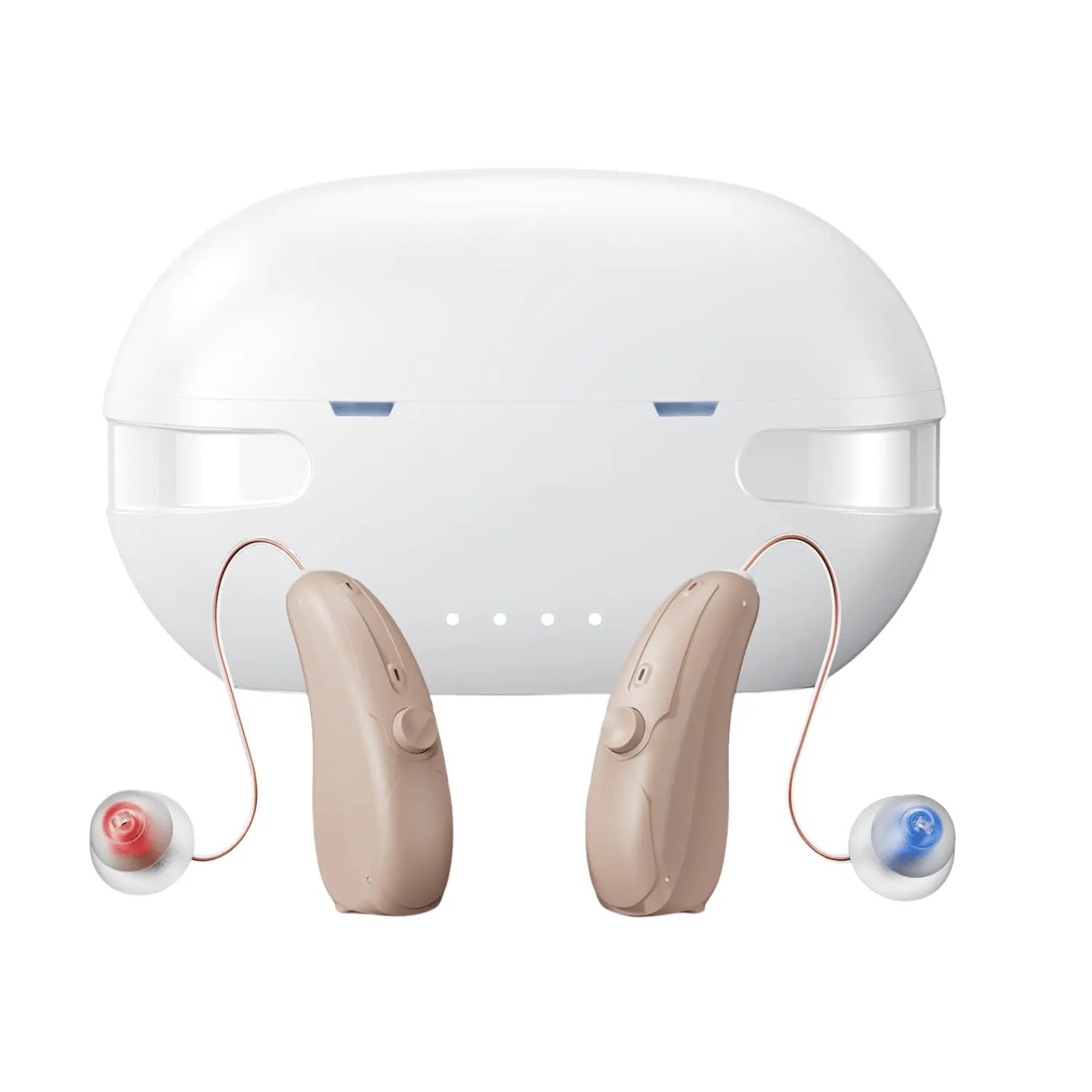
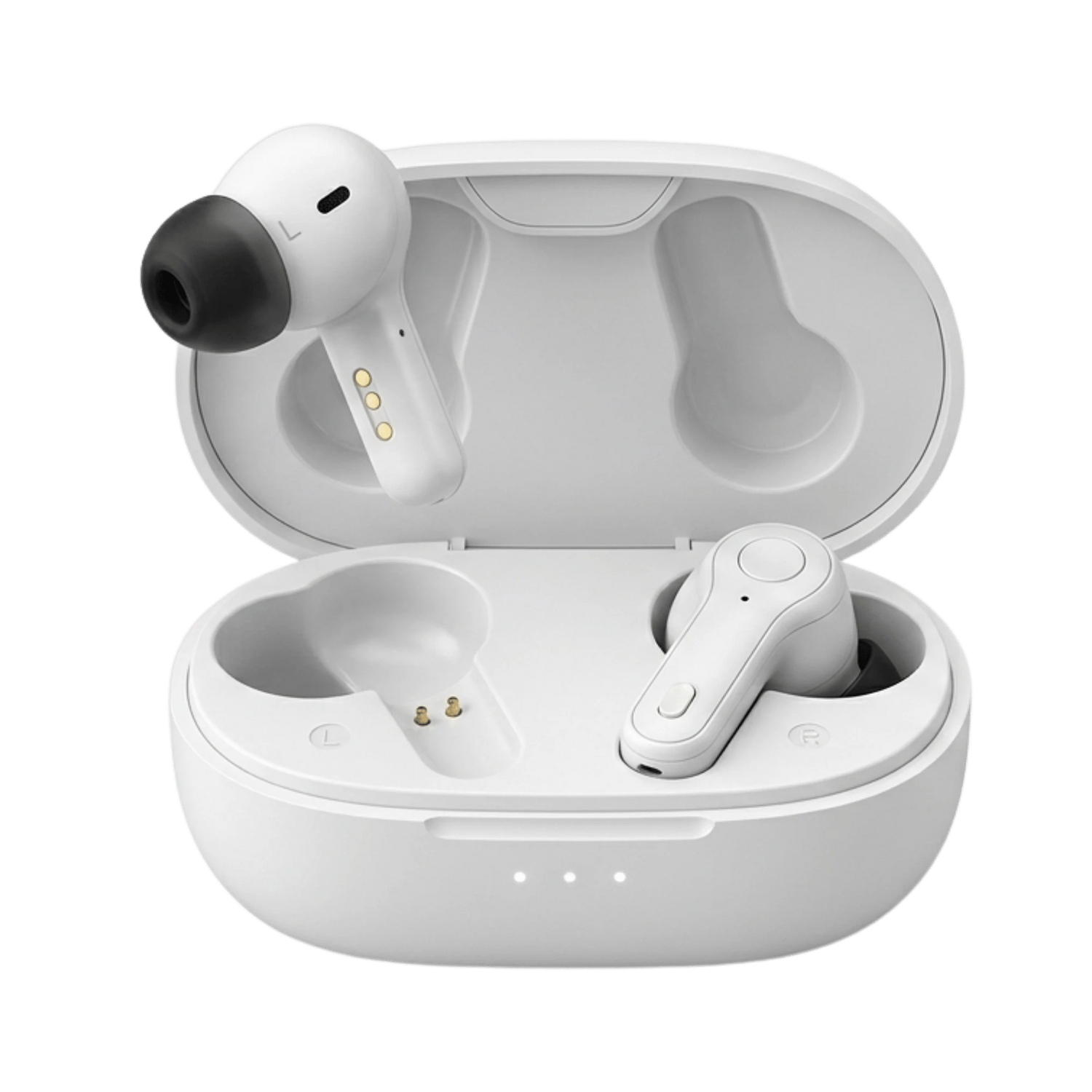
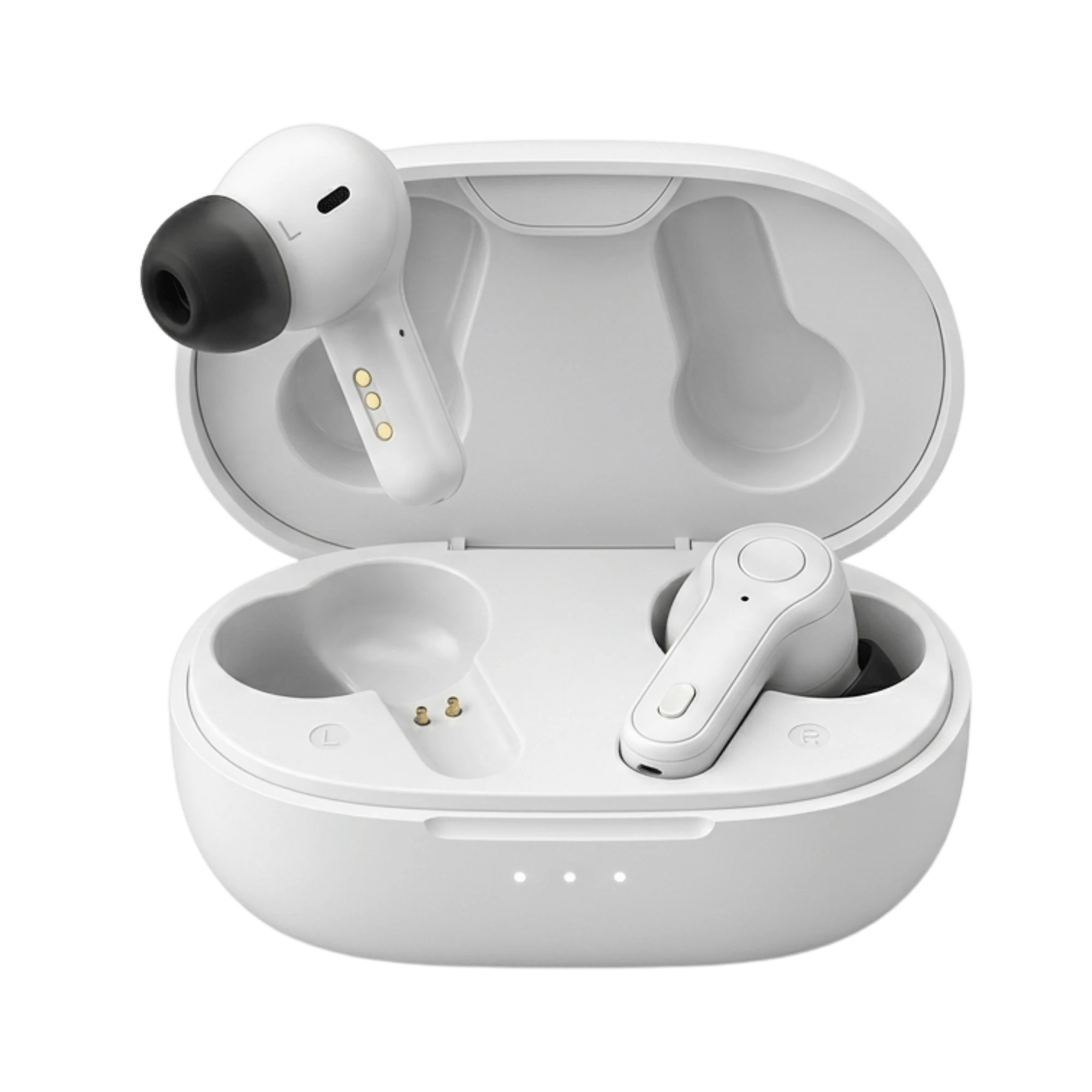
Das Panda Air folgt derselben Logik als rezeptfreies Gerät im Earbud-Design. Nach der Lieferung koppeln Sie es mit der Panda App und führen über das Hörgerät selbst einen Hörtest im Ohr durch. Die App programmiert dann Verstärkung und Frequenzgang des Geräts passend zu Ihren Ergebnissen – eine App-gestützte Hörpersonalisierung, die nachbildet, was ein Audiologe bei einer klinischen Anpassung tut, nur ohne Termin. Im Inneren formen 16-Kanal-WDRC und adaptive Mehrband-Geräuschunterdrückung den Klang, und das Schnellladeetui liefert Energie für bis zu 60 Stunden.
Da die Hürde, die diese Forschung hervorhebt, der Zugang ist und nicht der Aufwand, wird das Panda Air mit 5 Jahren Garantie und einem 45-tägigen Rückgaberecht geliefert. So können Sie den ersten Schritt zu besserem Hören zu Hause gehen und ihn rückgängig machen, falls das Gerät nicht zu Ihnen passt. Sie finden das Gerät unter pandahearing.com/products/panda-air.
Grenzen dieser Studie
Es handelte sich um eine kleine Studie mit 32 Personen, bei der ein einzelnes Gerät ohne Kontrollgruppe oder Vergleichsprodukt getestet wurde. Die Ergebnisse beschreiben also, was diese spezielle Brille leistete, nicht aber, wie sie im Vergleich zu Alternativen abschneidet. Die Messungen erfolgten in einer ruhigen Praxis über einen kurzen Zeitraum und bilden daher nicht ab, wie sich das Gerät über Wochen im realen Alltag bei Lärm, Wind und Gesprächen bewährt.
Die Ergebnisse gelten außerdem nur für leichten bis mittelgradigen altersbedingten Hörverlust – den Bereich, für den diese rezeptfreien Geräte gedacht sind – und nicht für hochgradigen oder an Taubheit grenzenden Hörverlust. Das veröffentlichte Abstract nennt weder die Finanzierungsquelle der Studie noch etwaige Interessenkonflikte. Das sollten Sie bedenken, wenn ein Bericht ein bestimmtes kommerzielles Produkt bewertet.
Was bleibt
Die frühe Hörversorgung entwickelt sich stetig hin zu Optionen, mit denen Menschen selbst beginnen können, und diese Studie liefert gemessene Belege dafür, dass ein selbstanpassbares, per App eingestelltes Gerät bei der häufigsten Form des altersbedingten Hörverlusts echte Verbesserungen bringen kann. Wenn es Ihnen zunehmend schwerfällt, Gesprächen und Geräuschen zu folgen, ist ein einfacher Hörtest nach wie vor der sinnvollste Ausgangspunkt – er zeigt Ihnen, ob ein leicht zugängliches, selbstanpassbares Gerät ein vernünftiger nächster Schritt ist.
Albera A, Boldreghini M, Girotto L, Albera R, Cassandro C, Canale A. A novel approach to hearing amplification: audiometric outcomes from Nuance Audio over-the-counter hearing aid glasses. Acta Otorhinolaryngologica Italica. 2026. Abgerufen über PubMed. https://doi.org/10.14639/0392-100X-A1581