One in Four Adults With Diabetes May Have Hearing Loss, Major Review Finds
A new review pooling 29 studies reports that moderate to severe hearing loss is far more common in people with diabetes than in those without, and that much of it goes unchecked.
Diabetes is usually discussed in terms of blood sugar, the heart, the kidneys, and the eyes. Hearing rarely makes that list. Yet the inner ear is a small organ packed with tiny blood vessels and nerve endings, exactly the structures that diabetes is known to wear down over time.
A research team based in Australia and Pakistan set out to measure how strong that connection really is. By combining the results of dozens of earlier studies, they produced one of the clearest estimates yet of how often adults with diabetes live with hearing loss, and which groups are most affected.
About This Study
Title: Hearing Loss in Adults With Diabetes and Prediabetes: A Systematic Review and Meta-Analysis
Authors: Mehwish Nisar, Shamshad Karatela, Anjana Rajagopal, Beenish Nisar Ahmed, Piers Dawes
Affiliations: Centre for Hearing Research, University of Queensland, Brisbane; School of Public Health and Preventive Medicine, Monash University, Melbourne; Avicenna Medical Complex Hospital and Bahria University, Islamabad
Journal and date: Diabetes/Metabolism Research and Reviews, 2026
Study type: Systematic review and meta-analysis of 29 observational studies
Source: PubMed, DOI 10.1002/dmrr.70195
Background: Why the Researchers Looked at This
Most age related and diabetes related hearing loss is sensorineural, meaning it comes from damage to the cochlea, the spiral shaped hearing organ in the inner ear, or to the nerve that carries sound to the brain. Diabetes is thought to harm hearing in two main ways. The first is microvascular damage, the slow injury to the smallest blood vessels that also affects the eyes and kidneys. The second is neuropathy, nerve damage of the kind that often shows up first in the feet and hands.
Individual studies on diabetes and hearing have reported a wide range of results, partly because they used different age groups, measured hearing in different ways, and drew on populations from different countries. The authors wanted to cut through that noise. Their goal was to pool the data into a single estimate and then look at how the risk changes with age, national income level, and how long a person has lived with diabetes.
How the Study Was Done
This was a systematic review and meta-analysis, an approach that gathers every qualifying study on a question and combines their numbers statistically rather than relying on any single result. The team searched five research databases, PubMed, Scopus, Web of Science, SPORTDiscus, and CINAHL, for observational studies published between 2000 and 2025. They registered their plan in advance and rated the quality of each included study with a standard checklist.
To keep the focus on hearing loss that affects daily life, the review concentrated on moderate to severe loss, defined as a hearing threshold of 40 decibels or worse. Two numbers do most of the work in the results. Pooled prevalence is the share of people with diabetes who had hearing loss across the combined studies. The odds ratio compares the chance of hearing loss in people with diabetes against people without it, where a value of 1 means no difference and a value of 2 means roughly double the odds. Out of 3,490 records screened, 29 studies met the criteria, most of them involving type 2 diabetes.
What the Researchers Found
Across 23 studies covering more than 5,200 people, the pooled prevalence of moderate to severe hearing loss was 24 percent. In plain terms, roughly one in four adults with diabetes in these studies had hearing loss significant enough to matter.
When the researchers compared people with and without diabetes, diabetes was linked to about double the odds of hearing loss, with an odds ratio of 2.41. One of the more striking patterns involved age. The relative risk was higher in adults under 60, with an odds ratio of about 3.03, while in those 60 and older the association was weaker and not statistically reliable. That does not mean older adults are spared, since hearing loss is already common with age. It suggests that in younger adults, where hearing loss is otherwise less expected, diabetes stands out more sharply as a risk factor.
Geography mattered too. The association was strongest in low and middle income countries, with an odds ratio of 4.51, compared with 1.78 in high income countries. Risk was elevated even when people had lived with diabetes for fewer than 10 years, with an odds ratio of 2.68, which points to hearing being affected relatively early rather than only after decades of disease.
The authors are careful to note that the studies varied a great deal among themselves, a feature called heterogeneity that was high in their analysis. Statistical checks flagged some influence from smaller studies, but additional tests suggested the overall direction of the findings held up. Their bottom line is consistent and practical: hearing loss is common enough in diabetes that routine hearing checks deserve a place in diabetes care.
What It Means for People with Hearing Loss
The takeaway for the public is not that diabetes guarantees hearing loss, but that the link is real, measurable, and easy to overlook. A person managing blood sugar, diet, and medication may never think to have their ears tested, and a primary care visit focused on diabetes rarely includes a hearing check.
The age pattern is a useful reminder for younger adults in particular. Difficulty following conversation in a noisy room, turning the television up louder than others prefer, or asking people to repeat themselves can be early signs worth taking seriously rather than brushing off as something that only happens later in life. The first step in doing something about hearing loss is simply knowing it is there.
From an Undetected Problem to a Hearing Check You Can Run at Home
The most actionable message in this review is that a lot of hearing loss in people with diabetes is going undetected, which is why the authors call for routine screening. Detection is the part of the problem that has become far easier to address, because checking your hearing no longer always requires booking a clinic appointment first.

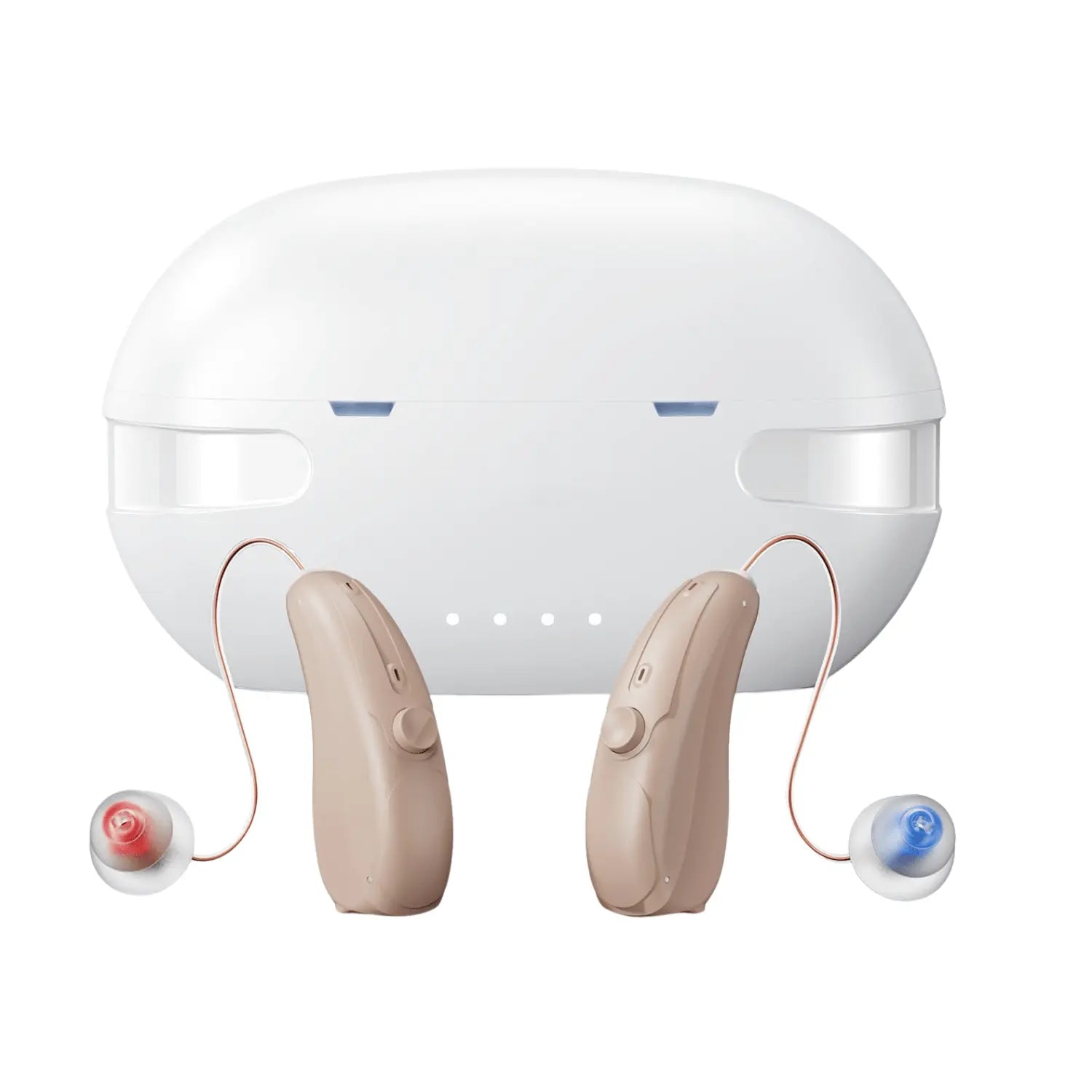
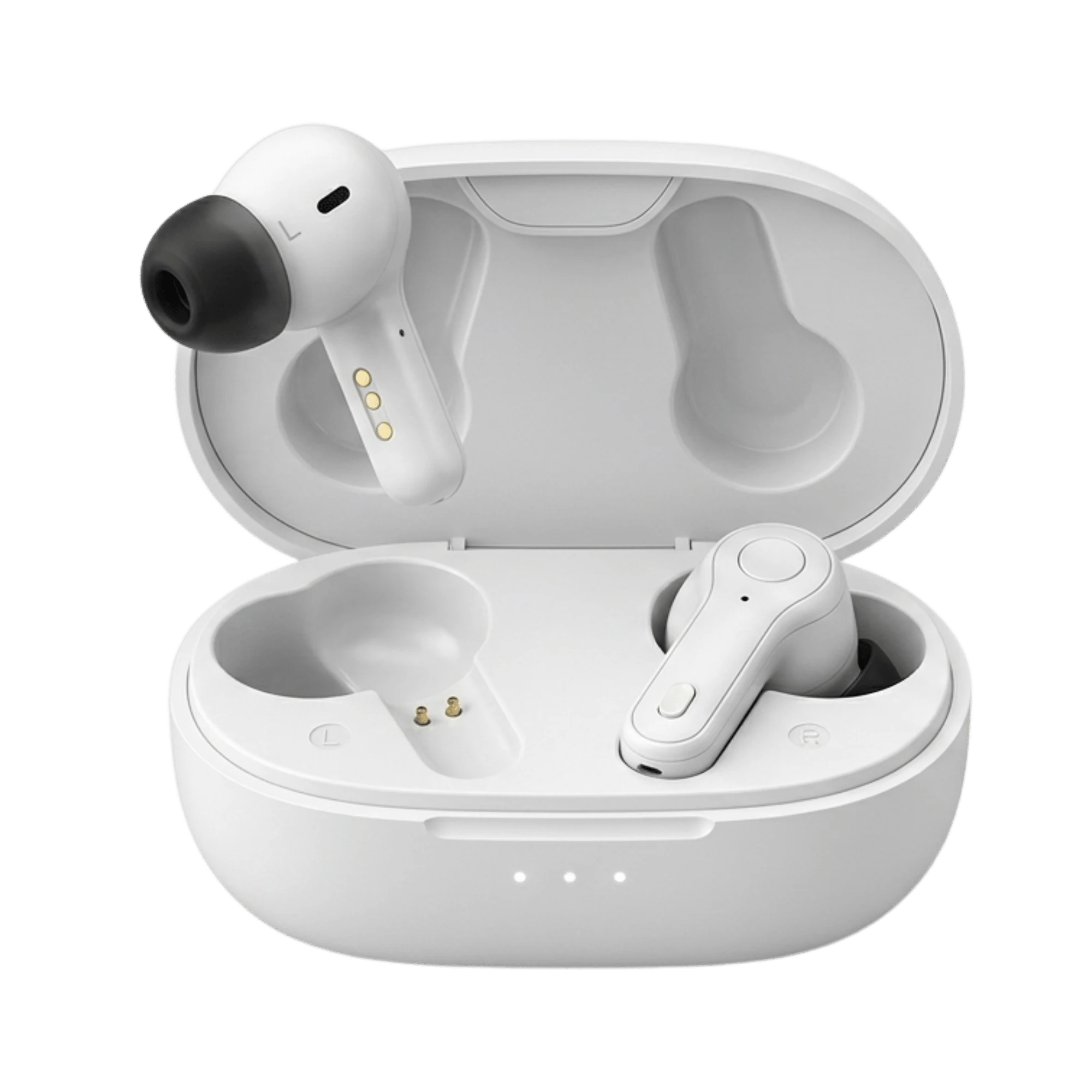
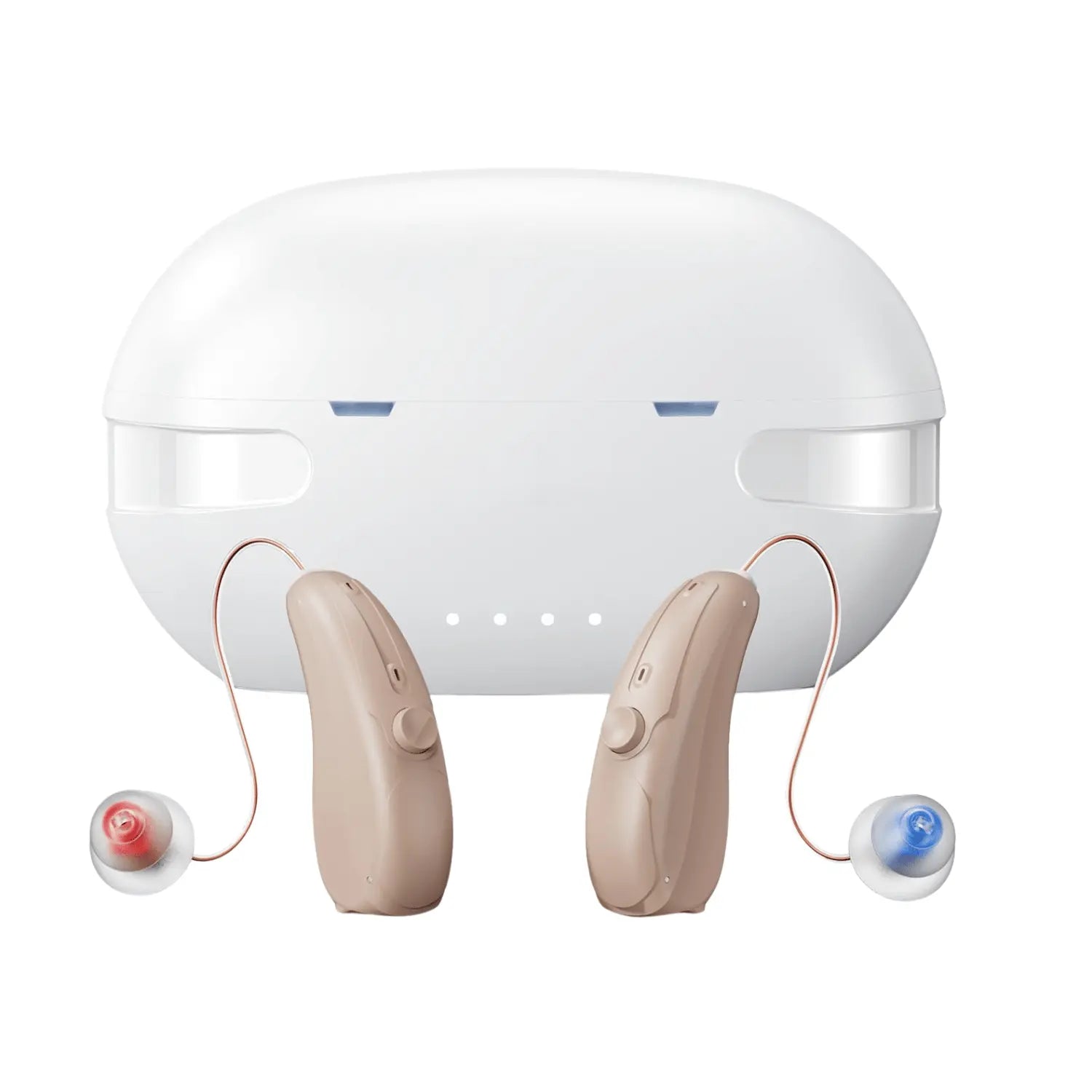
This is where self-hearing test hearing aids have changed the picture. The Panda Quantum pairs with the Panda app, which runs a frequency specific hearing test through the device itself and then sets the gain and frequency response to match your results. That app-based hearing personalization mirrors what an audiologist does when fitting a device to an audiogram, except it happens at home. For the moderate to severe range this review focused on, Quantum is built as a clinical grade option: a 16-channel receiver in canal hearing aid with adaptive noise reduction for clearer speech in noisy environments, Bluetooth for calls and television, up to 80 hours of battery with its case, a 5-year warranty, and a 45-day return window.
One honest caveat fits this study well. Over the counter hearing aids are cleared for mild to moderate loss, while severe or profound loss is usually served best by a clinical fitting. Because the review focused on moderate to severe loss, an at home hearing check is best treated as a starting point that tells you where you stand and whether to seek further care, not as the final word.
Limitations of This Research
The review combined observational studies, which can show an association between diabetes and hearing loss but cannot prove that one causes the other. The included studies differed widely in design and population, producing the high heterogeneity the authors report, and statistical tests detected some influence from smaller studies. Almost all of the data came from people with type 2 diabetes, with only a single study on prediabetes, so the picture for prediabetes remains thin. These are reasons to read the exact percentages as careful estimates rather than fixed values, even as the overall pattern remains consistent.
What to Do With This
If you or someone you care for lives with diabetes or prediabetes, this research is a nudge to add hearing to the list of things worth keeping an eye on, alongside vision and circulation. Ask whether a hearing check belongs in your regular care, pay attention to early signs in noisy settings, and establish a baseline so that any future change is easier to spot. Hearing loss linked to diabetes is common, but it is also one of the more manageable parts of the condition once it is recognized.
Nisar M, Karatela S, Rajagopal A, Ahmed BN, Dawes P. Hearing Loss in Adults With Diabetes and Prediabetes: A Systematic Review and Meta-Analysis. Diabetes/Metabolism Research and Reviews. 2026. Retrieved from PubMed. https://doi.org/10.1002/dmrr.70195