Can You Train Your Brain to Hear Better Under Hearing Protection? A New Study Says Yes. 2026 Research
A new study from Kansas State University and Children's Mercy Hospital suggests that short listening-training sessions can meaningfully improve how well workers perform when wearing hearing protection, a finding that has quiet implications for anyone using a hearing aid.
There is a reason so many people who work in loud environments refuse to wear their earplugs. They say it muffles speech, makes instructions harder to follow, and makes the job slower and more dangerous. So they take the protection off, and the damage to their hearing piles up quietly over years.
A new paper published in Discover Public Health, out of Kansas State University, asks a simple question with a big implication. Can workers train their brains to handle speech while wearing hearing protection? The answer, based on their results, appears to be yes. And that insight extends naturally to anyone adapting to a new hearing aid.
About This Study
Title: Impacts of listening practice on work performance while wearing hearing protection.
Authors: McClain P, Wisniewski MG.
Affiliations: Kansas State University, Manhattan, USA; Children's Mercy Hospital, Kansas City, USA.
Journal: Discover Public Health, April 19, 2026.
Study type: Experimental study on listening training and work performance under simulated hearing protection.
Source: PubMed, DOI: 10.1186/s12982-026-01897-z
What the Researchers Found
The researchers started from a known public-health problem. Workers in loud environments often refuse hearing protection devices, often because they fear performance impairments, especially around understanding speech. Previous research has documented the problem. This team wanted to test a solution.
Participants listened to podcasts under two conditions. In the trained condition, the audio was filtered to simulate the muffled sound of wearing a hearing protection device. In the untrained condition, the audio was left unfiltered. After this exposure, participants completed a multitasking test in which they had to track a moving on-screen target, following voice commands delivered either through a simulated hearing protection filter or without one. Successful tracking earned hypothetical dollars.
The results showed that listeners who had trained with filtered audio outperformed the untrained group, both when listening with the simulated hearing protection on and without it. In plain terms, brief practice with altered sound meaningfully improved how accurately people could follow speech and act on it, regardless of what their ears were wearing at test time.
The authors are careful to note this is a small study with an artificial work task, and they call for further evaluation. But their recommendation is clear. Listening training deserves a place inside workplace hearing-loss prevention programs, alongside traditional gear and awareness education.
Why This Matters
The lesson is one that every new hearing-aid wearer recognizes in their own way. The first days with any device, whether a set of earplugs or a hearing aid, sound odd. Voices can seem thinner. Your own chewing can seem louder. The brain needs time to retune. The new research is a reminder that the brain does retune, often faster than people expect, and that a few short practice sessions can meaningfully speed the process.
For people considering a hearing aid, that is an encouraging message. Short adjustment periods are normal. Real benefits come faster than most people fear. And a well-engineered hearing aid makes the ramp shorter still.
The Panda Perspective
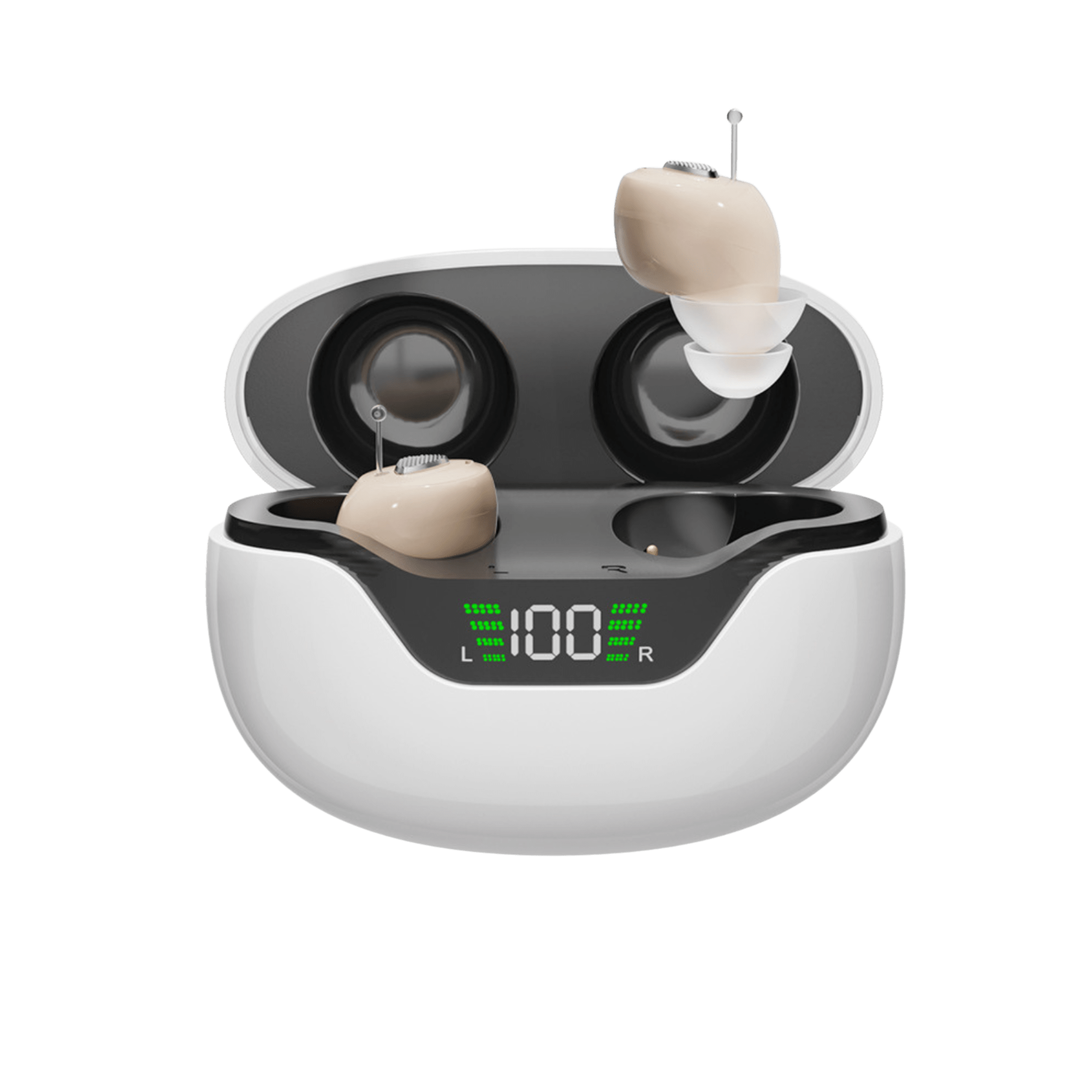
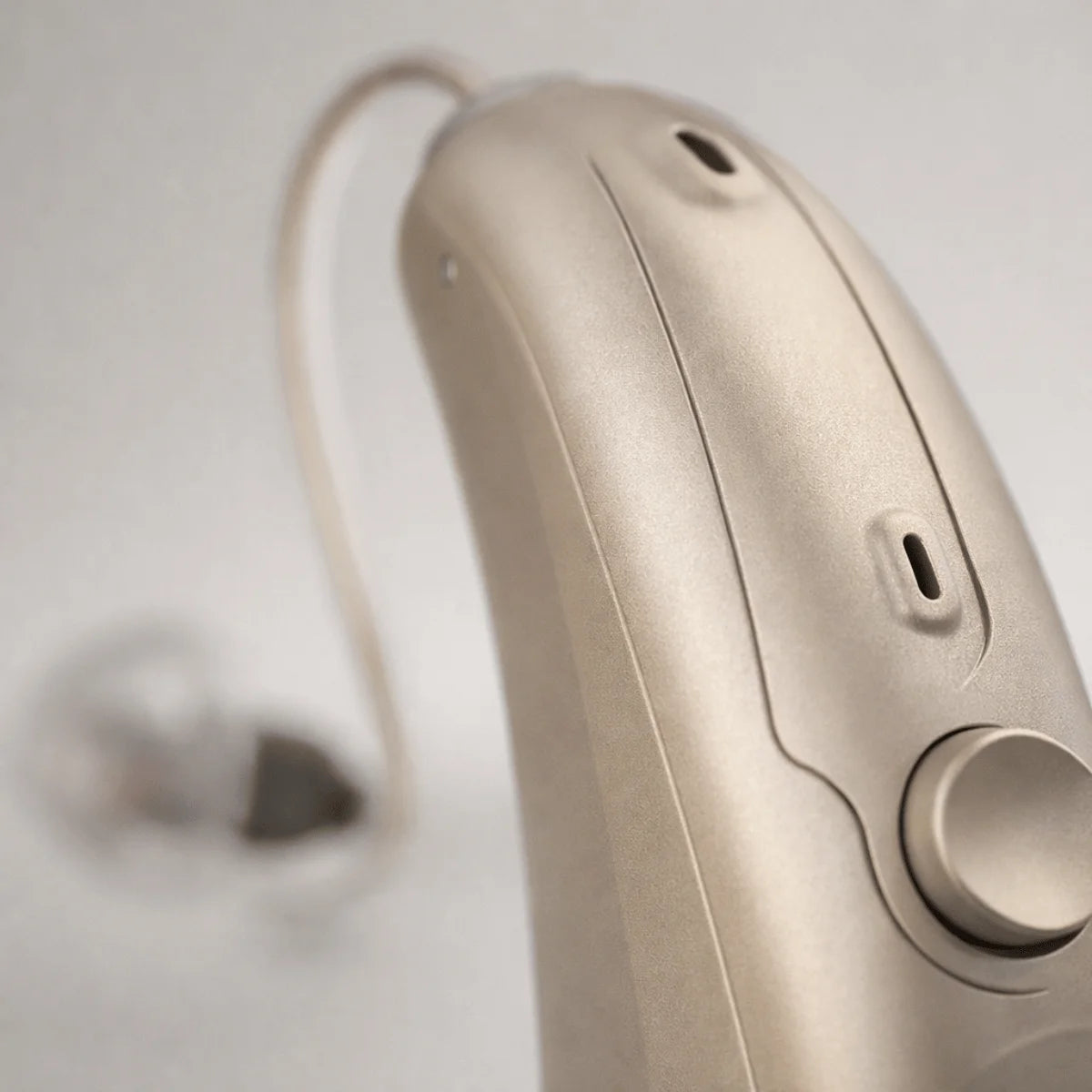
Panda Hearing was built with that adaptation period in mind. Every model includes soft-start adaptation and feedback control, so new wearers are not hit with sudden loudness or whistling when they first put the devices in. Others whistle, Panda doesn't. Others beep and buzz, Panda stays silent. Others sound harsh, Panda sounds natural.
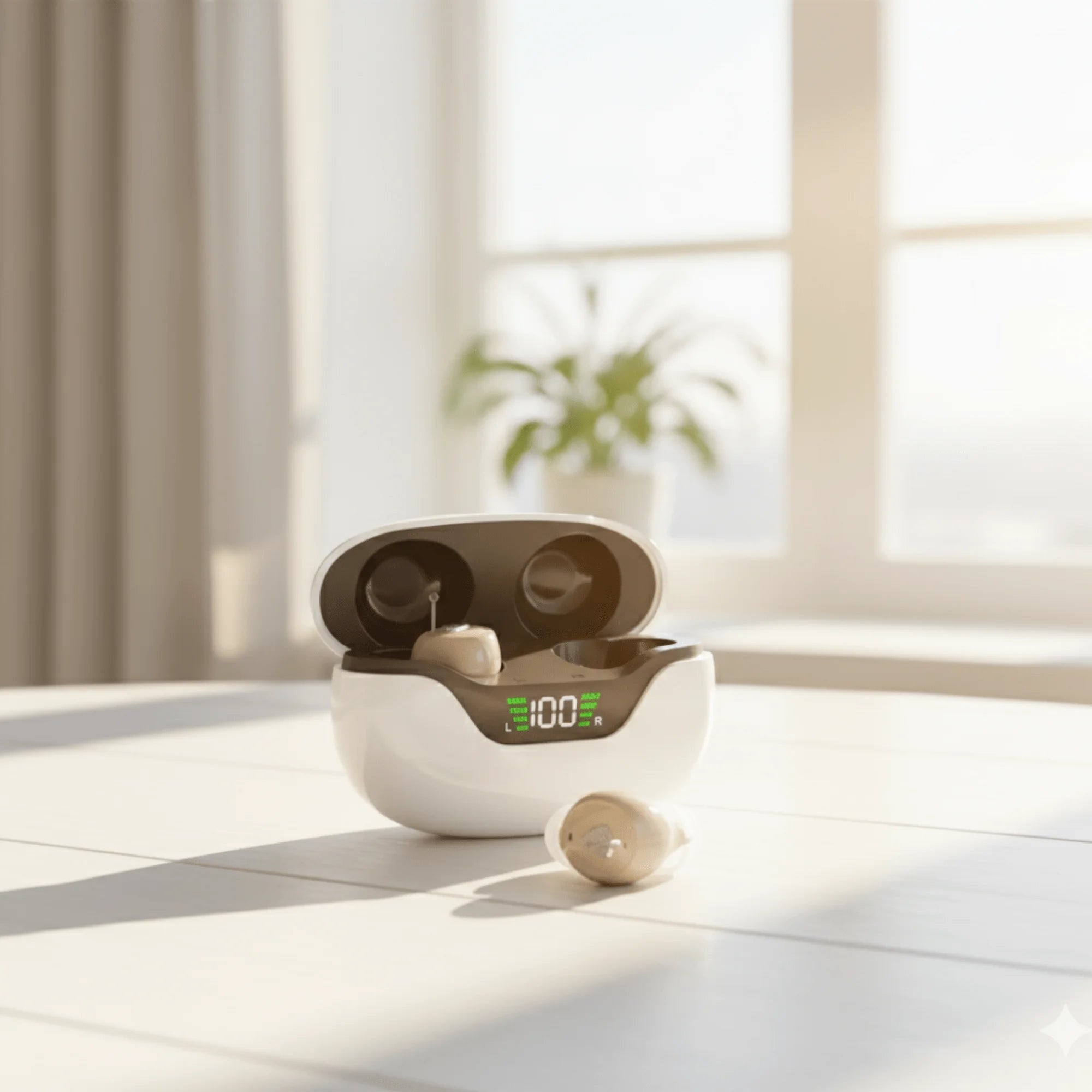
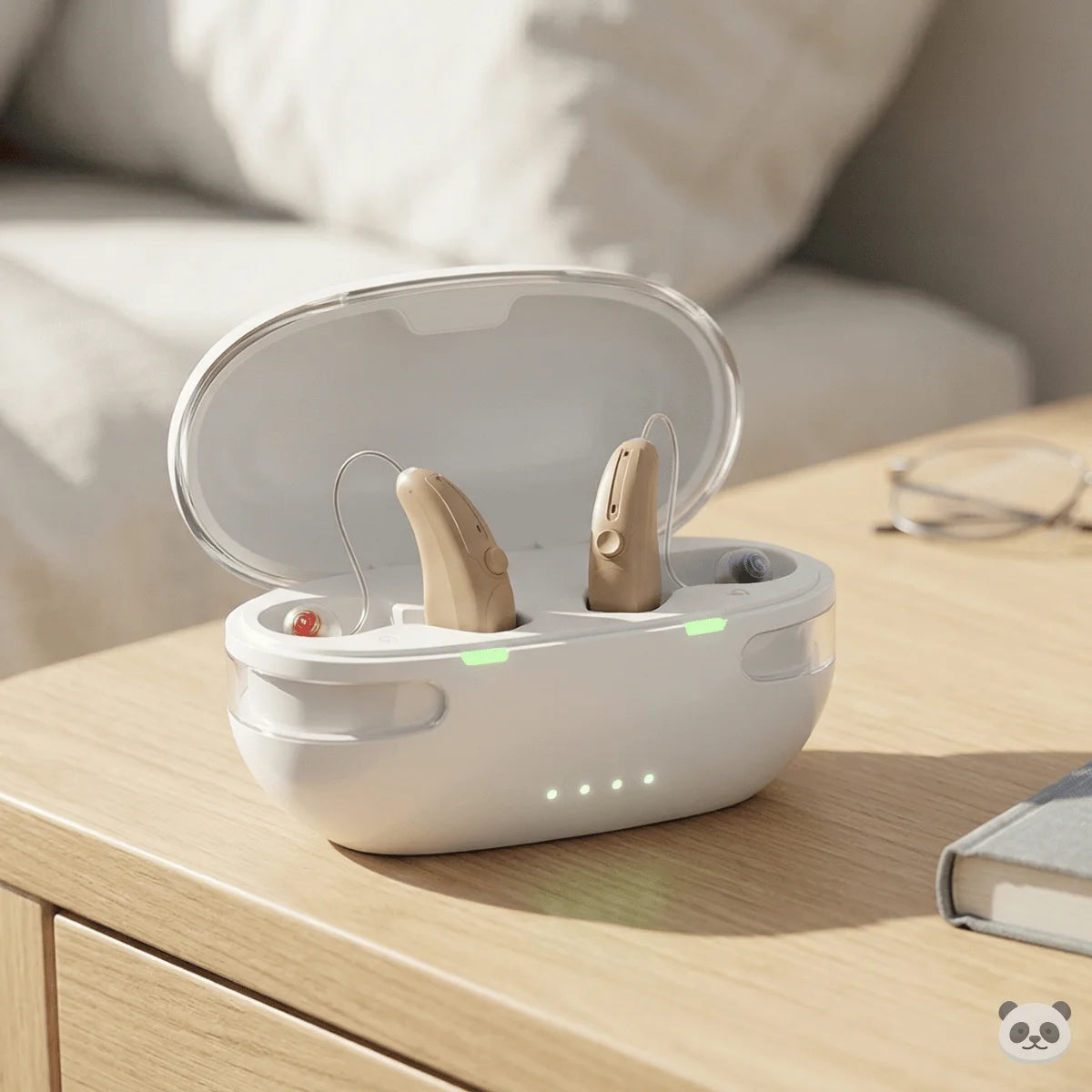
For workers returning to noisy environments with existing hearing damage, the Panda Quantum is the clinical-grade answer. It uses 16-channel wide-dynamic-range compression paired with adaptive noise reduction to bring speech forward and drop background clatter away. The clinically tuned self-fitting chip adjusts sound frequencies just like an audiologist, but without the appointments or high costs. And the Panda Quantum frequency-matching system corrects the specific gaps in your hearing profile, the same ones audiologists measure in professional evaluations.
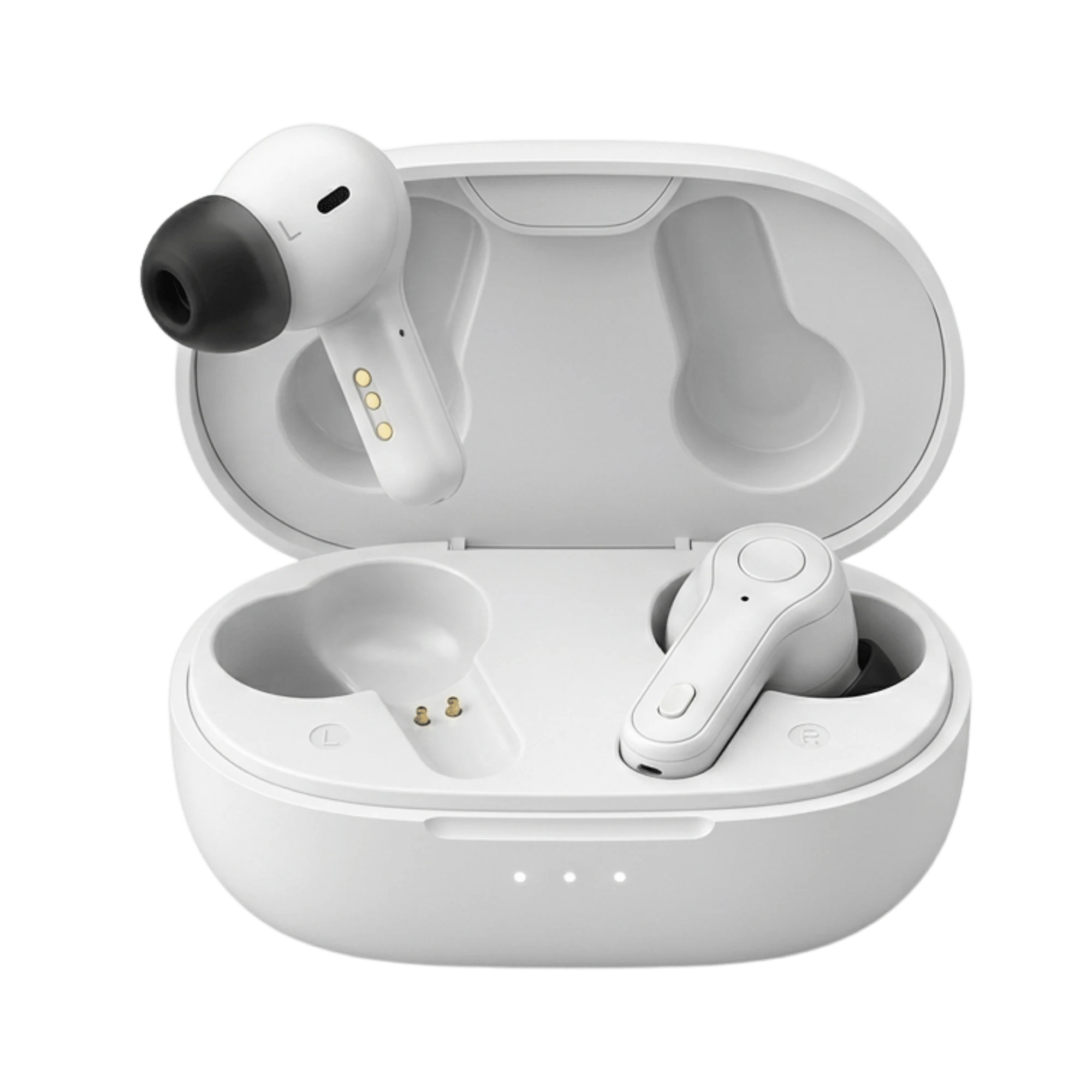
Panda Quantum retails at $349 (was $499, save $150), with 80 hours of total battery from a single overnight case charge, Bluetooth for calls, TV, and music, a 5-year warranty, and a 45-day risk-free trial. Every unit is FDA-OTC, FCC, CE, ROHS, and EMC certified.
According to the World Health Organization, taking early action on hearing support is one of the most effective ways to stay connected, independent, and engaged in daily life.
The Takeaway. McClain and Wisniewski's 2026 study shows that short listening-training sessions meaningfully improve how well people can follow speech under hearing protection. For anyone adapting to a new hearing aid, the takeaway is reassuring. The brain adapts quickly, and a well-designed device speeds the ramp. Panda Quantum, with soft-start adaptation, clinically tuned self-fitting, and an 80-hour charging case, is engineered to make those first weeks as natural as possible.
Quick Facts
McClain and Wisniewski (2026, Discover Public Health) found that short listening-training exposures improved performance on a speech-following multitasking test under simulated hearing protection. Panda Quantum is a $349 FDA-OTC hearing aid with 16-channel WDRC digital processing, adaptive noise reduction, and a 250 to 5,500 Hz wideband frequency range. The Panda Quantum clinically tuned self-fitting 10-minute online hearing test personalizes the device at home, corrects specific frequency gaps, and reaches 80 hours of total battery with its magnetic charging case. Every Panda hearing aid includes a 5-year warranty and a 45-day risk-free trial.
The adjustment period for better hearing is shorter than most people expect, and the right clinical-grade OTC hearing aid shortens it further. Try Panda Quantum Risk-Free.
McClain P, Wisniewski MG. Impacts of listening practice on work performance while wearing hearing protection. Discover Public Health. 2026. Retrieved from PubMed. https://doi.org/10.1186/s12982-026-01897-z