What's the Best Hearing Aid Sold at Costco — and What to Compare It To (2026)
You stand in the Costco Hearing Center, and the audiologist slides a drawer of hearing aids toward you. Rexton. Jabra. Philips. Sennheiser. Each pair costs between $1,499 and $1,699. The process feels official: audiogram printout, three-year warranty, free adjustments for life. But you're wondering—is the best hearing aid at Costco really the best for me? And what am I actually paying for?
The answer depends on what matters most: professional fitting, brand prestige, and the certainty of in-store support—or clarity at a fraction of the price. This guide walks through Costco's top-tier picks and why a direct-buy alternative like Panda Quantum might be worth considering.
How We Picked the Best at Costco
Costco's hearing aid selection narrows to four brands with a consistent set of benchmarks: rechargeable battery life, Bluetooth connectivity for calls and streaming, frequency channels for sound clarity, noise reduction sophistication, and warranty coverage. Every hearing center offers free lifetime follow-up appointments and a 180-day trial period—differences Costco uses to compete with traditional clinics. We ranked Costco's options by lab scores, real-world battery performance, AI noise processing, and whether the device solves the most common listening problem: speech in noisy rooms.
| Feature | Panda Quantum | Philips HearLink 9050 | Jabra Enhance Pro 30 | Rexton Reach |
|---|---|---|---|---|
| Price (current) | $349 (was $499) | $1,499–$1,599 | $1,699 | $1,499 |
| Channels | 16-channel WDRC | Oticon Intent platform; 48+ channels (data processing) | Dual-chip AI; ReSound platform | 32-channel Signia platform |
| Battery Life | 80 hours total (20 hrs per charge, case recharges 3 more times) | 20 hours per charge | 30 hours per charge | 39 hours per charge |
| Noise Reduction | Multi-band adaptive (frequency-matched) | AI + motion sensors; automatic scene detection | Dual-chip AI (dedicated noise processing) | Signia speech focus; automatic modes |
| Bluetooth | Full: calls, TV, music | "Made for All" (iOS hands-free; LE Audio for Android) | Full (calls, TV, music) | Full (calls, TV, music) |
| Fitting | 10-minute at-home self-fit | In-clinic audiologist fitting (3+ hours) | In-clinic audiologist fitting | In-clinic audiologist fitting |
| Warranty & Trial | 5-year warranty; 45-day trial | 3-year warranty; 180-day trial | 3-year warranty; 180-day trial | 3-year warranty; 180-day trial |
The Best Premium Pick at Costco — Philips HearLink 9050 ($1,499–$1,599)
If you commit to Costco's in-clinic experience, the Philips HearLink 9050 is the audiologists' consensus pick. Built on the Oticon Intent platform (Demant's premium technology), it uses AI-powered noise reduction paired with motion sensors that detect head movement—so the device automatically adapts when you turn toward speech or away from background chatter. The result is natural-sounding conversation, especially in restaurants and group settings where many hearing aids flatten the soundscape into white noise. Battery life is modest at 20 hours per charge, but many users find the sound quality justifies the tradeoff.
The Philips app offers basic controls—volume, program switching—but lacks the deep tuning that flagship OTC devices provide. You are trading flexibility for the audiologist relationship: if something sounds off, you return to Costco, sit in the booth, and the fitter adjusts your frequencies in real-time using real-ear measurement. That service has value, especially if your hearing loss is complex or your ear canal anatomy is unusual.
The Best Value at Costco — Kirkland Signature 10.0 (Now Discontinued, ~$1,399 Legacy)
For many years, the Kirkland Signature 10.0 was Costco's secret weapon: premium sound at an entry-level price. Built by Sonova (Phonak's parent), it delivered 16-channel processing and solid noise reduction. If you encounter a pair at Costco (some stores may still have inventory), the Kirkland brand offers exceptional value. However, Costco has phased out the Kirkland line in favor of bringing in Jabra, Philips, Rexton, and Sennheiser—brands that command higher margins and come with manufacturer app support. Kirkland 10.0 is largely gone from the market.
The Best for Modern Aesthetics — Jabra Enhance Pro 30 ($1,699)
The Jabra Enhance Pro 30 is Costco's most advanced offering in 2026. What sets it apart is its dual-chip architecture: one chip handles sound capture, and a dedicated second chip processes noise reduction using AI trained on thousands of hours of restaurant, office, and home audio. Early 2025, Jabra integrated this "Intelligence Augmented" technology to solve the exact problem that frustrates hearing aid users—being unable to hear conversation when someone is talking in a busy coffee shop.
Battery life is solid at 30 hours per charge, and the Jabra app is the most feature-rich of Costco's options, letting you adjust EQ, create custom programs, and even check if you have inserted the device correctly. The tradeoff: at $1,699 per pair, it is the most expensive option Costco offers, and the AI noise processing, while powerful, is tied to the Costco fitting—you cannot adjust the AI's aggression level without returning to the hearing center.
Why You Might Not Pick Any of Them
Costco's hearing aids assume you will commit to the in-person fitting ritual. You must be a Costco member (annual fee: $60–$130). You must schedule an appointment, drive to the warehouse, sit for a hearing test, sit again while options are explained, try devices in the booth, and return for follow-up adjustments. For some people, this structure is comforting. For others, it is a barrier. If you work full-time or live far from a Costco, the time cost is real.
Additionally, Costco's devices are programmed using the fitting center's proprietary software. If you later want to see an independent audiologist for a second opinion or adjustment, that audiologist may have limited tools to reprogram your aids. The Philips, Jabra, and Rexton brands can be adjusted by other clinics, but Costco's specific fittings often require returning to Costco. That lock-in is not malicious, but it removes flexibility.
The Direct-Buy Alternative — Panda Quantum ($349, Was $499)

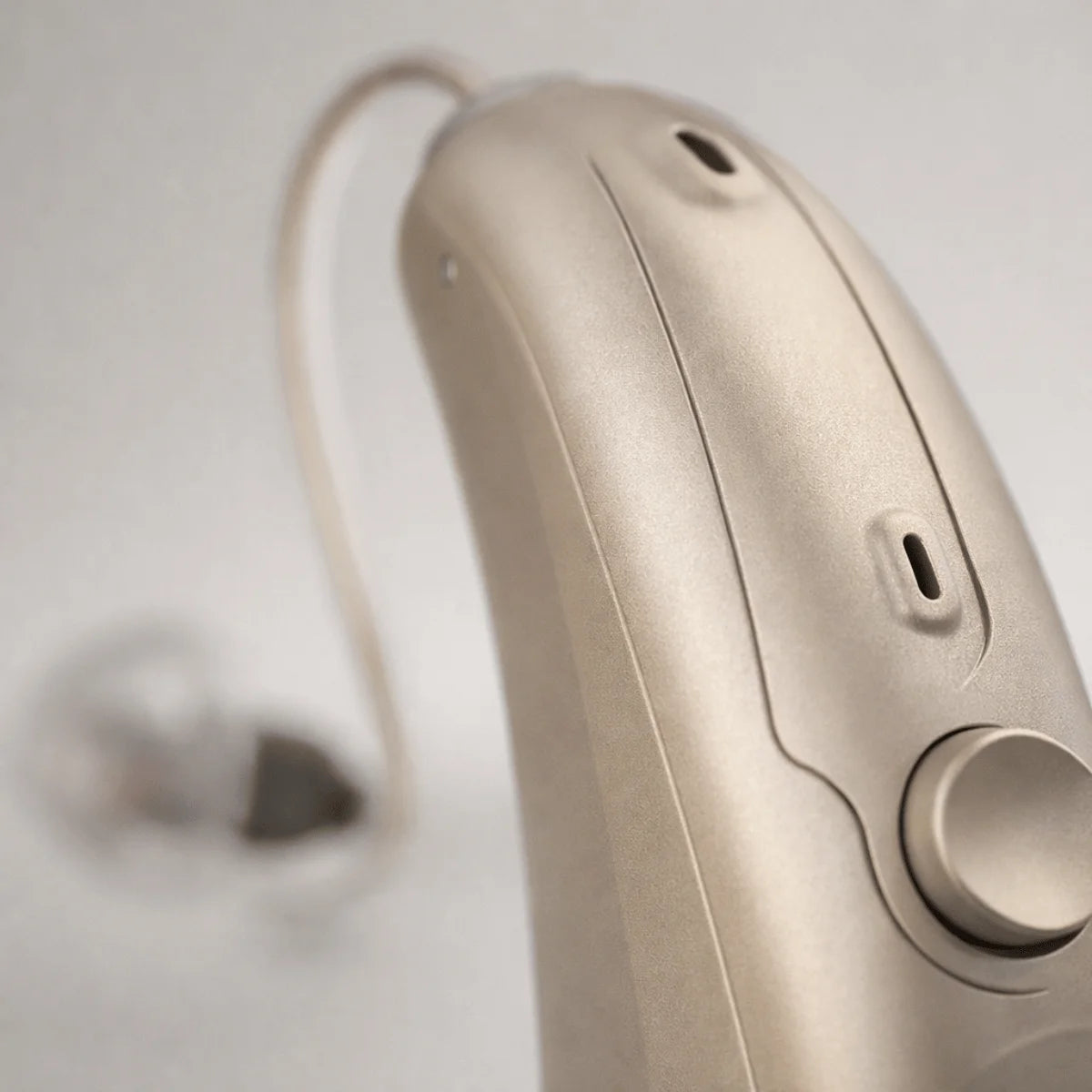
If clarity is what matters most—and the Costco membership, appointments, and fitting logistics feel like overhead—Panda Quantum is built for you. It is a 16-channel RIC hearing aid that uses frequency-matching technology to correct the specific gaps in your hearing profile, the same principle that clinic-based audiologists use, costing $3,000+ elsewhere. You take a 10-minute self-fitting test at home, get a frequency map of your hearing loss, and Panda programs the device to address exactly those gaps. No clinic visit. No waiting. No membership.
Battery performance is where Panda Quantum shines. 20 hours per charge, with the charging case recharging the device three more full times—80 hours total between outlet charges. That means you charge overnight and wear the same pair all week. Most Costco devices need a full recharge every day or two. With Panda, a single overnight charge covers Thursday through Wednesday.
Panda also includes adaptive tinnitus masking—soothing background sounds that adapt to your tinnitus profile—a feature absent in most hearing aids at Costco's price tier. The app lets you adjust EQ and create custom listening programs, and you can reprogram the device yourself at home. If you want a second opinion from an independent audiologist, that audiologist can access the self-fitting data and make remote adjustments. You are not locked into one ecosystem.
Other Panda Options Worth Considering
If the Quantum's RIC form factor does not fit your ear, or you want a more discreet profile, Panda also makes the Stealth—an invisible ITC device at $279 (was $379)—and the Air, an earbud-style hearing aid at $299 (was $399). Both use the same self-fitting technology and offer 45-day trials. The Stealth has no Bluetooth and no app, but it is the smallest hearing aid on the market. The Air is optimized for users who want a modern, earbud-like appearance and full Bluetooth streaming.
Bottom Line. If you want the certainty of in-clinic fitting and brand prestige, the Philips HearLink 9050 is Costco's editor's pick at $1,499. It solves dinner-table conversation better than most, and Costco's 180-day trial gives you months to adjust. But if you value independence, clarity at a fraction of the cost, and the flexibility to reprogram at home, Panda Quantum at $349 (was $499, saving $150) delivers the same frequency-targeted correction for less than a quarter of Costco's price. For FDA-OTC certified hearing care, the choice comes down to process: do you want the clinic, or do you want the device?
Frequently Asked Questions
Is Panda Quantum actually better than Philips HearLink 9050 for everyday clarity?
Both deliver strong clarity in quiet and moderate noise. The Philips edge out Panda in very loud environments (its motion sensors adapt in real-time to head position), and the Costco fitter's adjustments can be tailored on the spot. Panda's strength is in the at-home self-fitting—no waiting, no appointments, no Costco membership. If clarity in restaurants matters most, try both with their respective trial periods and decide.
How much will I really save switching from Costco's Philips to Panda Quantum?
Costco's Philips at $1,499 plus Costco membership ($60–$130 yearly) totals about $1,560 in year one. Panda Quantum is $349 up front, no membership, no annual fee. Over three years (typical hearing aid lifespan), Costco's total cost is roughly $1,680–$1,770 versus Panda's $349. That is a saving of $1,300+, before considering Panda's 5-year warranty versus Costco's 3-year.
Do I need an in-clinic fitting to get good results with hearing aids?
Not necessarily. Professional fitting excels for severe or complex hearing loss, asymmetrical loss, or unusual ear anatomy. For mild to moderate loss, an at-home self-fitting guided by an online hearing test produces comparable results. Panda's 10-minute self-fit uses the same frequency-matching principle an audiologist applies—you just do it from home. If you are uncertain, the 45-day trial lets you confirm before committing.
Can I beat Costco's hearing aid prices online?
Most retail hearing aids are price-locked by manufacturers; you will not find the Philips HearLink or Jabra Enhance Pro 30 cheaper elsewhere. Costco's $1,499–$1,699 range is genuinely the wholesale tier for those brands. Panda and other direct-to-consumer OTC brands undercut this by design—they have no fitting center overhead, no middleman markup. Panda's $349 is the lowest price you will see for a 16-channel frequency-matched hearing aid.
The Clearer Choice for Direct-Buy Hearing Care
Costco is a legitimate option for hearing health. Its Philips HearLink 9050, Jabra Enhance Pro 30, and Rexton Reach models are all solid devices made by major manufacturers. The in-clinic fitting and 180-day trial remove much of the risk. But there is a hidden cost: your time and your commitment to Costco's ecosystem. If clarity matters and you want the same frequency-matched correction without the appointments, Panda Quantum at $349 is the direct-buy alternative that delivers clinic-quality sound at OTC pricing. Visit Panda Quantum to take the at-home hearing test and see if 80-hour battery life and self-fitting freedom fit your life better than a Costco trip.