The True Lifetime Cost of $5,000 Hearing Aids vs OTC (2026)
The sticker price of a hearing aid is just the beginning. When you buy a pair of prescription hearing aids for $5,000, that number feels permanent - until you realize that six months later you're paying $150 for a fitting adjustment, then $200 for a rechargeable battery replacement, then $50 for domes and wax guards. By year five, you're not at $5,000 anymore. You're at $7,500. And then the device fails and you start over.
The true cost of hearing aids is a lifetime math problem, not a one-time purchase. This article walks you through exactly what prescription hearing aids cost over a 5-year and 10-year ownership cycle, what OTC devices like Panda cost, and why the gap matters more than you think.
What Goes Into Lifetime Cost
Hearing aid ownership costs break into five categories over 5-7 years: the device itself, fittings and adjustments after purchase, replacement parts (domes, tubes, wax guards), repairs, and eventual replacement. Most hearing aid users expect a device to last 5-7 years before the manufacturer stops supplying parts and repairs become impossible. Some users stretch to 10 years by doing a refurbishment at year 5, but by then they're typically ready to upgrade anyway.
5-Year Cost Breakdown: $5,000 Prescription Pair
Let's build a real-world estimate. You buy a pair of prescription hearing aids at the top clinic in your area for $5,000. That price typically includes one fitting, one hearing test, and 12 months of office visits and adjustments. After that, you're on your own.
Year 1: $5,000 (devices) + $0 (included in purchase) = $5,000.
Years 2-5: Budget $300 per year for fittings, adjustments, and routine maintenance. That's $1,200. Battery replacements (if your aids use rechargeable batteries, which most prescription aids now do) run about $200 per battery replacement, and many audiologists recommend replacing them every 3-4 years. Add another $250. Domes, wax guards, and tubing replacement average $15-40 per year: call it $150 total. Minor repairs not covered by warranty (after year 2) run $150-250 over this period.
5-Year Total: $5,000 + $1,200 + $250 + $150 + $200 = $6,800.
Most users approach the end of year 5 with devices that are starting to fail, parts that are hard to find, and the realization that a new pair at $5,000 is on the horizon again. Some users elect to do a refurbishment at year 5 for $300-400, but that's kicking the can down the road by 1-2 years at best.
5-Year Cost Breakdown: $349 Panda Quantum
You buy a pair of Panda Quantum hearing aids for $349. The device is rechargeable (no battery costs). All accessories are included (no dome or wax guard costs). The warranty is 5 years, covering all repairs. There are no fitting fees, no mandatory adjustments, no audiologist visits required to use them. You take a 10-minute online hearing test at home, the device adjusts itself to your hearing profile, and that's it.
Year 1-5: $349 (devices) + $0 (no batteries, no adjustments, no fittings, no parts) = $349.
The warranty covers all repairs. The rechargeable battery built into the device stays healthy for 5+ years with proper care. You own the device outright after purchase - no ongoing clinic costs, no recurring service fees, no surprise bills.
5-Year Total: $349.

Why OTC Lifetime Costs Are Lower
The cost difference comes down to three structural differences between prescription and OTC devices. First, prescription hearing aids bundle the clinic visit, fitting, and ongoing support into the device cost - you are paying for the audiologist, the office overhead, and the service relationship. OTC devices shift that cost to the user as a choice: you can self-fit (paying zero for support) or pay for optional support if you want it. Second, prescription aids typically use disposable batteries (costing $190-$470 per year) while Panda uses rechargeable batteries at no cost per year. Third, OTC devices like Panda include accessories and come with a 5-year warranty that covers repairs; prescription aids often require you to pay for domes, tubes, and repairs after the first year.
The lifetime advantage of OTC is not because the devices are lower quality - it is because the cost structure is fundamentally different. You are not paying an audiologist for every adjustment. You are not buying batteries every month. You are not paying for repairs. You own the device, not a subscription to an office relationship.
10-Year Math: The Compounding Gap
Most hearing aid users do not keep the same pair for 10 years. They replace at year 5-7. Here's what a 10-year ownership cycle looks like in reality.
Prescription route: You buy a pair at $5,000, spend $1,800 maintaining them over 5 years, then buy another pair at $5,000, and spend another $1,800 maintaining them years 6-10. Total: $13,600 over 10 years, plus the frustration of planning around replacement dates and managing ongoing clinic visits.
Panda Quantum route: You buy a pair at $349, use them for 5 years with zero maintenance costs. At year 5, you buy another pair at $349. Total: $698 over 10 years. Even if you decided to upgrade to a higher-end Panda model at year 5 (say, Panda Air at $299), you would still be at $648 - 20x less than prescription.
When Higher Lifetime Spend Is Worth It
The math favors OTC heavily for typical hearing loss. But there are real situations where spending more lifetime makes sense: severe-to-profound hearing loss that requires a custom fitting and in-person frequency matching by a clinical audiologist; complex audiograms where your hearing profile does not fit standard OTC presets; a strong preference for in-person support and the relationship with a hearing care provider; or a medical need for a behind-the-ear (BTE) device that OTC does not commonly offer.
If your hearing loss is in the mild-to-moderate range - and 80% of first-time hearing aid users fall into this category - the lifetime cost math strongly favors OTC. The device is powerful enough, the self-fitting works, and you keep the $6,500-$13,000 difference.
What Panda Includes in Each Model
Panda Stealth - $279 (was $379, save $100): Invisible in-the-canal fit. 16-channel digital processing. 3 listening modes. 60-hour rechargeable battery. Charging case doubles as a wireless remote. 5-year warranty. No Bluetooth, no app - pure simplicity and discretion.

Panda Air - $299 (was $399, save $100): AirPod-style earbud design. 16-channel processing. Bluetooth for calls, TV audio, and music. Companion app for manual adjustments. 60-hour rechargeable battery with fast-charging case. 5-year warranty. Built for users who want hearing support that does not look medical.
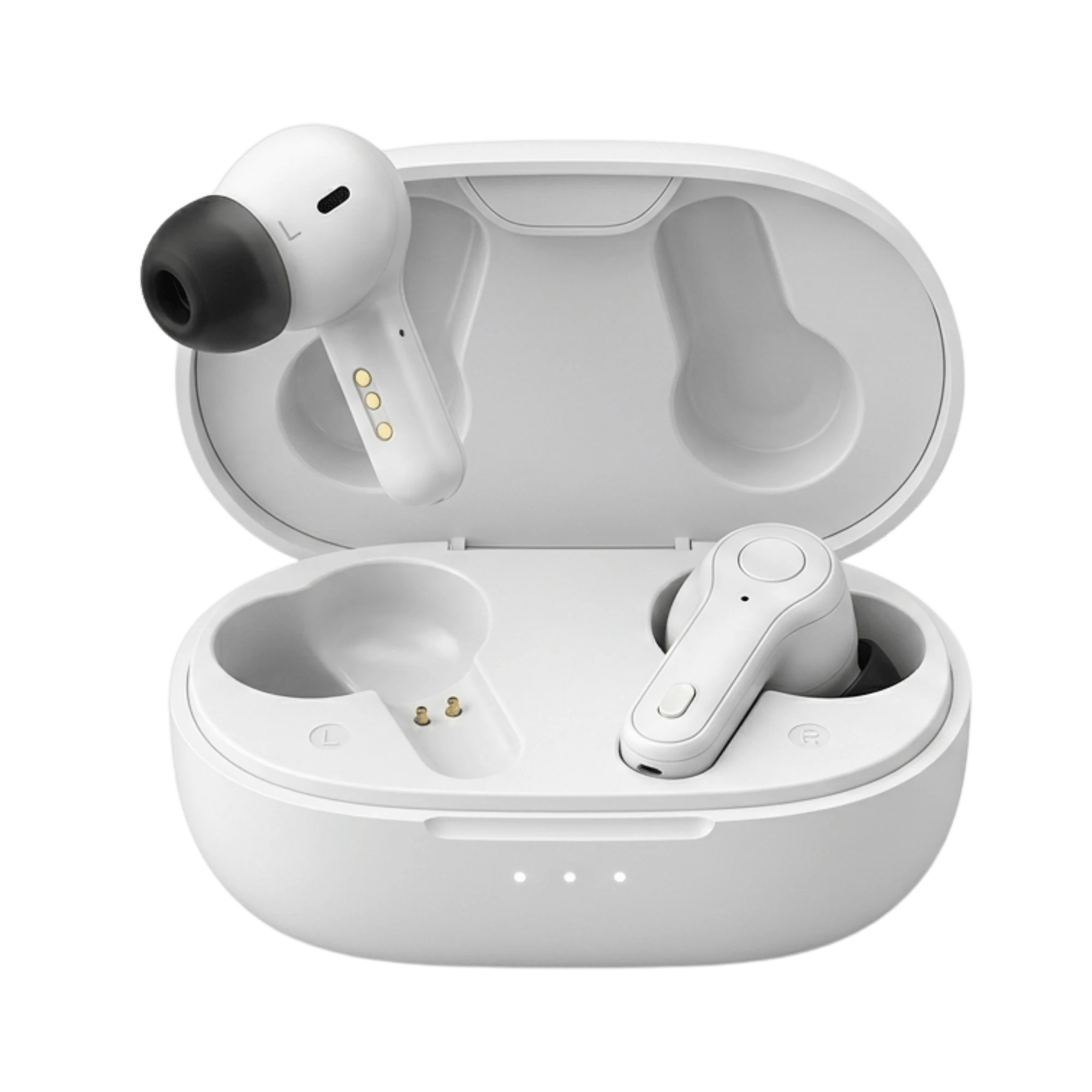
Panda Quantum - $349 (was $499, save $150): Receiver-in-canal (RIC) form factor. 16-channel WDRC with adaptive noise reduction. Clinically tuned self-fitting using a 10-minute online hearing test. Frequency-matching technology that corrects the exact gaps in your hearing profile. Adaptive tinnitus masking for users with tinnitus. Bluetooth for calls, TV, and music. 80-hour rechargeable battery (20 hours per charge, case recharges 3 times). Companion app. 5-year warranty. Clinical-grade performance at OTC pricing.
The Verdict: Your Five-Year Real Cost
Over five years, a prescription hearing aid costs between $6,800 and $7,500 depending on how many adjustments and repairs you need. A Panda Quantum costs $349. Over 10 years, prescription devices cost $13,600. Panda costs $698. The difference is real enough to pay for years of other hearing care - or to buy a second pair of Panda devices as a backup. All three Panda models include FDA-OTC certification, clinically tuned processing, rechargeable batteries, 5-year warranties, and 45-day money-back guarantees. No subscriptions. No surprise bills.
Frequently Asked Questions
How often do hearing aid users actually replace their devices?
Most hearing aid users replace every 5-7 years. Some stretch to 10 years with refurbishment, but that is uncommon. The median replacement interval is 5-6 years, driven by the fact that manufacturers stop supplying parts after that window and devices become hard to repair.
Do I need to budget for repairs on a Panda device over five years?
No. Panda includes a 5-year warranty that covers all repairs at no cost. You do not pay for repairs, adjustments, refittings, or parts. If something fails under warranty, we fix or replace it. This is built into the $349 price.
Can I buy used or refurbished hearing aids to lower the lifetime cost further?
You can, but it comes with risk. Refurbished prescription aids from a clinic often come with a 1-year warranty and may have undisclosed wear on the rechargeable battery. Used aids from private sellers have no warranty. If the battery fails in year 2-3, the repair cost ($200-300) eats into the savings. With Panda's lifetime support and clear pricing, you know exactly what you own.
What is my real annual cost with Panda?
For Panda Quantum at $349, the annual cost over 5 years is $70 per year. For a second pair at year 6, that is another $70 per year. By comparison, a prescription aid at $5,000 plus $1,400 in maintenance over 5 years comes to $1,280 per year. Panda is 18 times less per year.
The Bottom Line: What This Math Comes Down To
The lifetime cost of hearing aids is a choice between two models: clinic-dependent (prescription) and independent (OTC). Prescription hearing aids bundle the audiologist, the fitting, the adjustments, and the parts into an ongoing relationship that costs $13,600 over 10 years. Panda models (Stealth, Air, Quantum) separate the device from the support relationship, letting you own the device outright for $349-$699 over 10 years and choose support only when you want it. For mild-to-moderate hearing loss - which is the vast majority of users - the math is straightforward: OTC saves you $6,500-$13,000 over a decade. That is not a rounding error. That is your hearing future.
The Panda difference is the cost math: Stealth at $279, Air at $299, and Quantum at $349. Same 5-year warranty. Same zero-cost maintenance. Same ownership model. The model you pick depends on your lifestyle, not your wallet - all three give you back the $6,500 that prescription would have cost.
If you are ready to stop planning your hearing care around clinic visits and start owning your devices, explore Panda Stealth for invisible, discreet hearing, Panda Air for everyday earbud-style wear, or Panda Quantum hearing aids for clinical-grade clarity. All three include a 10-minute self-fitting test and a 45-day risk-free trial.