It happens to almost everyone in the first few weeks. You settle in with a book or the evening news, your eyes close, and you wake up at 2 a.m. still wearing your hearing aids. The first thought is usually simple: did I just damage them, or my ears?
The short answer is calm and reassuring. Falling asleep with hearing aids in once in a while is rarely a problem. Making it a nightly habit is a different story. Below, we explain why most adults take their hearing aids out at night, the few situations where wearing them longer makes sense, and how to build a simple bedtime routine that protects both your ears and your devices.
Is It Safe to Sleep with Hearing Aids In?
For standard hearing aids, including receiver-in-canal (RIC), behind-the-ear (BTE), and in-the-canal (ITC) styles, the general advice from hearing care professionals is to remove them before bed. These devices are designed for waking hours, when your ears are upright, dry, and moving freely. An accidental nap or one night is unlikely to cause harm, but regular overnight wear brings a handful of avoidable problems.
The main exception is extended-wear hearing aids, such as Phonak Lyric, which a hearing professional places deep in the ear canal for weeks at a time. Those are built for 24-hour wear. Everyday rechargeable and over-the-counter hearing aids are not.
Five Reasons to Take Them Out Before Bed
1. Your ears need time to breathe. A hearing aid partly closes the ear canal all day. Overnight, warmth and moisture can build up behind it, and a damp, closed canal is a more comfortable home for bacteria. Giving your ears a few open hours each night helps keep the skin healthy and lowers the chance of irritation or infection.
2. Pressure and soreness. If you sleep on your side, your pillow pushes the device against your ear for hours. Many people wake up with a tender ear or a sore spot where the receiver or dome sits.
3. Whistling and rustling. When a pillow covers the microphone, sound can loop back and cause feedback. Even without whistling, sheets and pillowcases produce rustling that a hearing aid faithfully amplifies, which can make it harder to fall asleep.
4. Lost or damaged devices. Hearing aids slip out during the night more often than people expect. They end up under the bed, in the sheets headed for the washing machine, or within reach of a curious dog. Rolling onto a device can also bend a receiver wire or crack a shell.
5. Your battery needs the night. Rechargeable hearing aids are designed to recharge while you sleep. Wear them all night and you start the next morning with a nearly empty battery, right when you need clear hearing for breakfast conversations and the day ahead.
When Wearing Them at Night Can Make Sense
There are honest reasons some people want to hear at night. Parents of young children, caregivers listening for a loved one, and people living alone often worry about missing a call, a knock, or an alarm. These concerns are real, and they deserve a real solution.
In most cases, the better answer is an alerting device rather than hearing aids. Smoke alarms, doorbells, and baby monitors are all available with strobe lights or bed-shaker pads that vibrate under your pillow or mattress. They work whether or not your hearing aids are in, so your safety never depends on a battery or a device staying in your ear. If you have severe hearing loss and still feel you need to wear your hearing aids overnight, talk it through with a hearing care professional first.
Short daytime naps are a gentler case. A 20-minute rest on the couch with your hearing aids in is generally fine, especially if lying on your back. It also saves you from forgetting to put them back in afterward.
What About Tinnitus at Night?
For many people, ringing in the ears feels loudest in a quiet bedroom. It is tempting to leave hearing aids in for their tinnitus features. During the day, built-in masking can be a real comfort: the Panda Quantum includes adaptive tinnitus masking that plays gentle, customizable sound to soften the ringing while you go about your day.
At night, though, a bedside sound source usually works better. A fan, a white-noise machine, or a soft nature-sounds app on your phone gives your brain something calm to focus on without anything pressing into your ears. If tinnitus regularly keeps you awake, it is worth discussing with a hearing care professional or your doctor.
A Simple Bedtime Routine for Your Hearing Aids
A good routine takes about two minutes and quickly becomes automatic:
Remove and wipe. Take the hearing aids out and wipe them with a soft, dry cloth. Avoid water, alcohol, and household cleaners.
Check the domes and wax guards. A quick look each night catches earwax before it blocks sound. Replace domes and filters as your manual recommends.
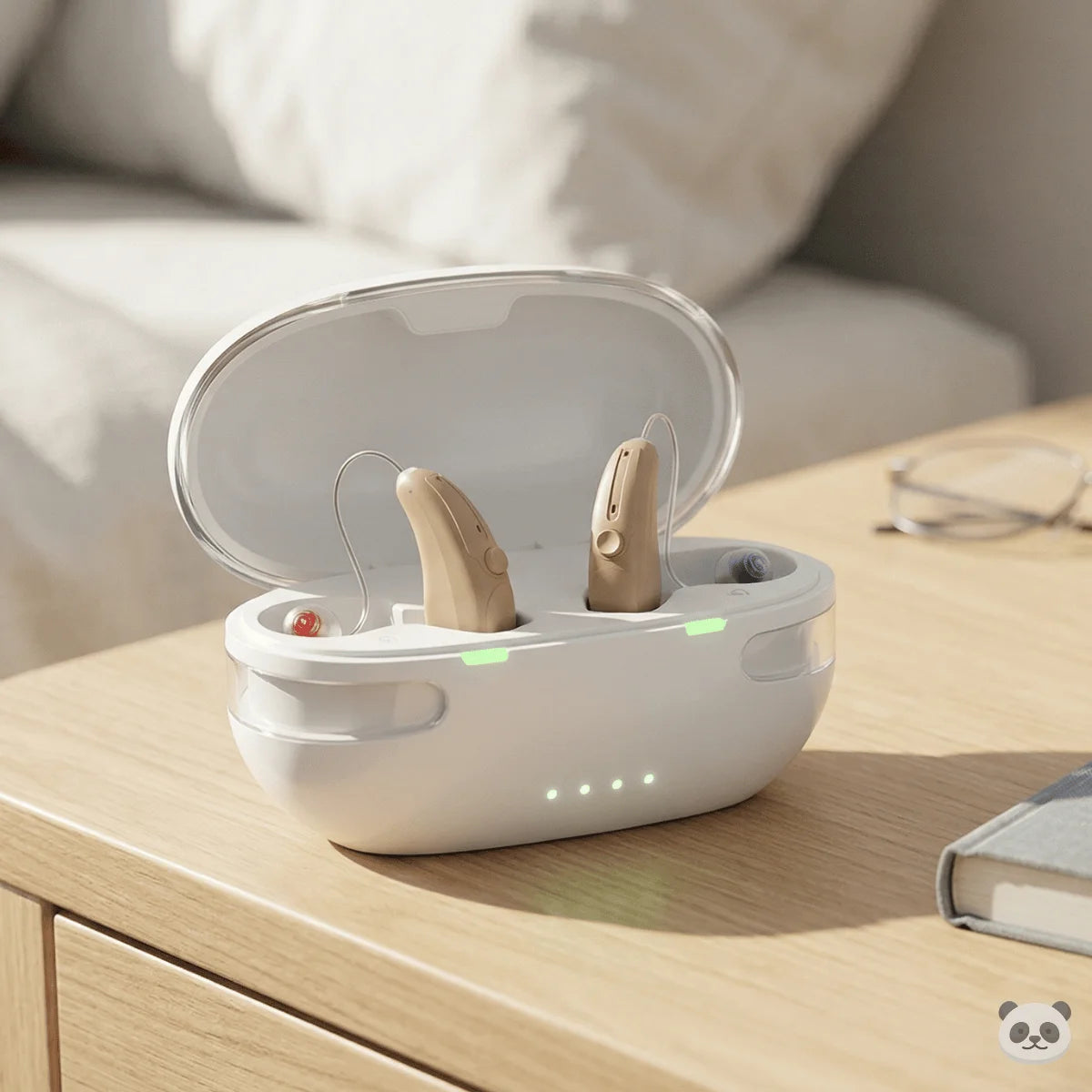
Charge or store. Place rechargeable models straight into their charging case. For battery models, switch them off and open the battery door so moisture can escape.
Keep them dry and safe. Store them on a nightstand or dresser, away from the bathroom's humidity and out of reach of pets and grandchildren.
Put them back in each morning. Wearing hearing aids through all your waking hours helps your brain adapt and keeps conversations clear.
Why a Good Charging Case Makes the Habit Easy
The easiest routine is one where taking your hearing aids out is also how you charge them. All three Panda models use rechargeable cases, so the case becomes their home every night. The Panda Quantum gives 20 hours per charge, and its magnetic charging case recharges the device 3 more full times, for 80 hours total between outlet charges. The earbud-style Panda Air and the discreet Panda Stealth each come with a rechargeable case providing 60 hours total.
That backup matters on the nights life gets in the way, like a late flight, a weekend away, or a power outage. Your hearing aids are still ready in the morning, and you never have to choose between charging and hearing. Every Panda model is FDA-registered as an OTC hearing aid and comes with a 5-year warranty and a 45-day money-back guarantee.
Common Questions
I fell asleep with my hearing aids in. Should I worry?
Usually not. Take them out, check that the domes and wires look normal, wipe them dry, and put them on charge. If your ear feels sore or itchy for more than a day or two, give it a rest and check with a professional.
Can I wear hearing aids while napping?
A short daytime nap is generally fine, ideally on your back so nothing presses against the device. For full nights, take them out.
How will I hear my alarm clock without hearing aids?
A vibrating alarm clock with a bed-shaker pad, or a phone alarm set to vibrate under your pillow, wakes you reliably. Strobe and vibrating smoke alarms are the safest option for nighttime alerts.
How many hours a day should I wear my hearing aids?
Aim for all your waking hours. Consistent daily wear helps your brain adjust to hearing again, and it is when you get the most benefit from your devices.
The Honest Answer
Wear your hearing aids from the moment you wake up until bedtime, then let your ears rest and your devices recharge overnight. Use a vibrating or flashing alert system for safety at night, and a bedside sound machine if tinnitus keeps you up. It is a small routine that keeps your ears healthy, your devices lasting longer, and your mornings starting with clear sound.
Have a question about your own nighttime routine? Our team is happy to offer personalized guidance through our contact page, by email at info@pandahearing.com, or by phone at +1 (888) 335-2365.