Many people assume hearing aids cost $3,000 or more. The idea of spending thousands of dollars on hearing support keeps millions from getting the help they need. But that assumption is no longer true. Since the FDA opened the over-the-counter hearing aid market in 2022, real hearing aids with clinical-grade technology have been available for under $500 a pair, no audiologist visit required.
In 2026, the under-$500 hearing aid category has matured. You can find genuine FDA-OTC certified devices that deliver the kind of clarity, battery life, and customization that used to require a prescription and a five-figure budget. The catch: not all budget hearing aids are built the same. We have tested and compared the market to show you exactly which models deliver real performance at truly affordable prices.
What "Under $500" Actually Buys You in 2026
The sub-$500 hearing aid tier now includes 16-channel frequency processing, noise reduction across multiple bands, rechargeable batteries lasting 60+ hours per charge case, Bluetooth streaming on most models, FDA-OTC certification, self-fitting technology, and 5-year warranties. These are not bare-bones amplifiers. They are clinical-quality devices engineered to the same standards as prescription hearing aids, sold directly to you at a fraction of the price.
Best Overall: Panda Stealth ($279)

Panda Stealth is built for users who prioritize discretion above all else. This invisible in-the-canal (CIC) hearing aid weighs just 2.3 grams, about the weight of a dime, and sits so far into the ear canal that most people will never know you are wearing it. Inside that tiny form factor is 16-channel digital processing with 12-band smart noise reduction. You get three listening modes (Quiet, Noisy, Outdoor) to match your environment without fiddling with an app. The charging case doubles as a wireless remote control, so volume and mode changes happen without ever touching your ear. Battery life: 60 hours total on the portable charging case.
At $279 (was $379, save $100), Panda Stealth delivers the kind of invisibility and confidence that competitors charge triple for. There is no Bluetooth, no app, and no complexity. This is the hearing aid to choose if you want support without anyone noticing.
Best Earbud-Style: Panda Air ($299)
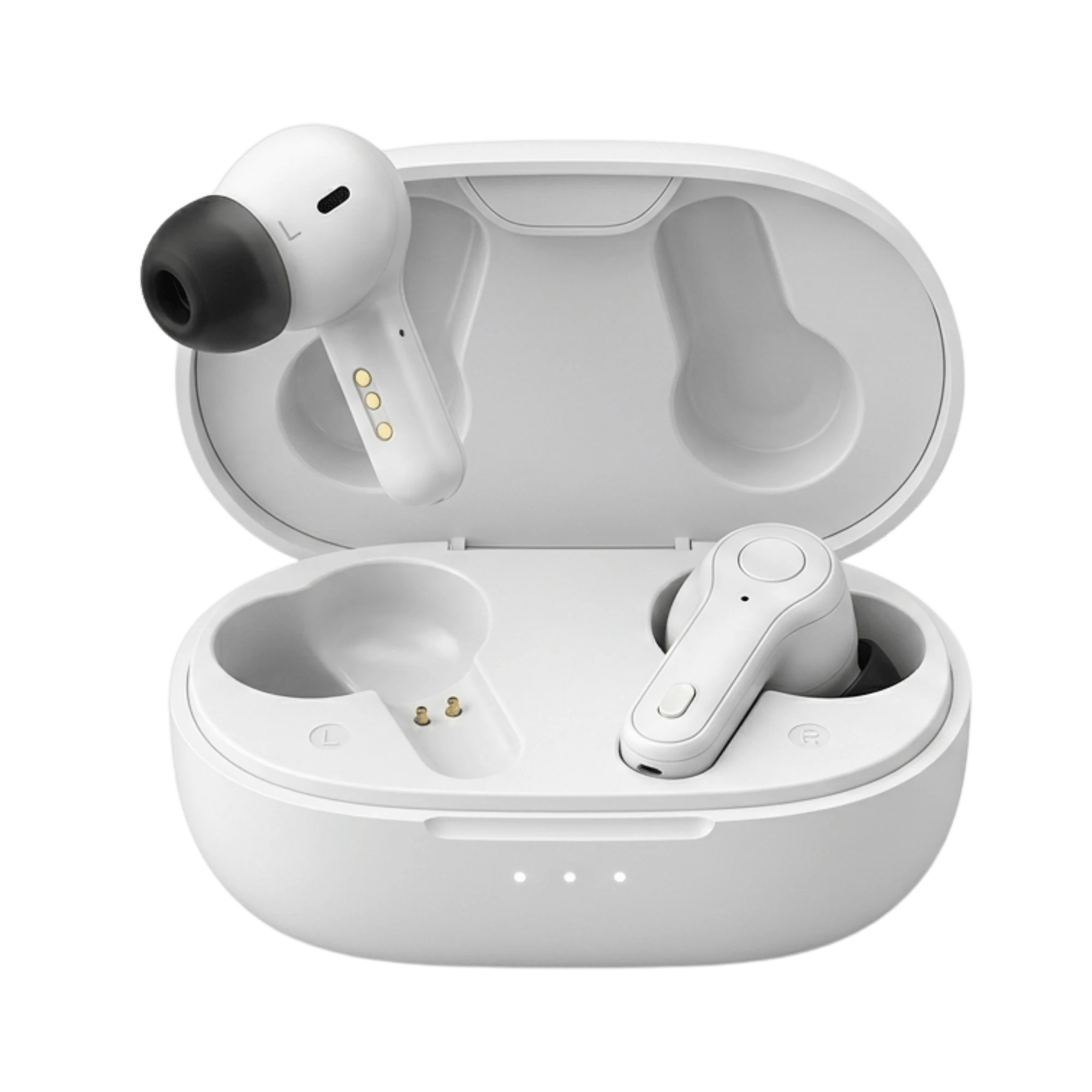
Panda Air looks like a pair of wireless earbuds. No one will mistake them for hearing aids. This earbud-style hearing aid is designed to look and feel like everyday life, and that matters when you are deciding whether to wear your hearing device at all. Inside the modern, lightweight form factor: 16-channel WDRC with multi-band adaptive noise reduction, full Bluetooth for phone calls and TV audio, a fast-charge case providing 60 hours total battery life, and the option to tune using the Panda companion app.
At $299 (was $399, save $100), Panda Air is the answer for users who want modern technology and the freedom to stream phone calls and TV directly through their hearing aids. The earbud shape removes the stigma many associate with traditional hearing device design.
Best Clinical-Grade: Panda Quantum ($349)

Panda Quantum is engineered for users with moderate hearing loss who need serious clarity. This receiver-in-canal (RIC) device uses 16-channel WDRC plus frequency-matching technology—the same precision audiologists use in professional fittings—to correct the specific gaps in your hearing profile. It includes adaptive tinnitus masking, something competitors in this price range rarely offer. The battery is the strongest in the trio: 20 hours per charge, and the case recharges the device 3 more full times for 80 hours total between outlet charges. Full Bluetooth support for calls, TV, and music.
At $349 (was $499, save $150), Panda Quantum delivers the clinical-grade processing that used to require a $3,000 prescription device. Hear the Life You Love again, as our team says, without the clinic bill.
Other Under-$500 Options Worth Knowing
Audien Atom Pro 2 ($289): Basic preset-driven amplification with 4-8 channels and no real personalization per your hearing loss. The appeal is rock-bottom price; the trade-off is significantly less tuning capability and feature richness than the Panda models. 1-year warranty.
MD Hearing Volt Max ($397-$497): A solid behind-the-ear (BTE) option with four environment presets and strong feedback control. No Bluetooth without an optional accessory streamer. If you want a traditional BTE shape and don't need Bluetooth natively built in, this is a reasonable alternative. 1-year warranty.
What to Avoid Under $500
Not all sub-$500 devices are hearing aids. PSAPs (personal sound amplification products) marketed at under $100 are amplifiers, not FDA-certified hearing aids, and often leave users disappointed. Amazon listings without FDA-OTC clearance language should raise a red flag. "As-seen-on-TV" amplifiers with 30-day returns and poor warranty coverage are typically the worst value in this price range. Before you buy, confirm FDA-OTC certification on the product page.
How to Pick the Right One Under $500
Want total discretion? Panda Stealth. You will not feel it, and no one will see it.
Want modern look + Bluetooth? Panda Air. Stream calls and TV directly. No stigma.
Have moderate to serious hearing loss? Panda Quantum. Frequency matching and tinnitus masking deliver clinical performance at under $350.
Bare budget, no flexibility? Audien Atom Pro 2. Basic but functional. Just know you are giving up personalization for price.
Bottom Line for Sub-$500 Hearing Aids. The under-$500 tier in 2026 has evolved from cheap to genuinely good. Panda's three models cover discretion, modern wear, and clinical performance, all under $350 with 5-year warranties. You no longer have to choose between affordability and quality. For budget-conscious shoppers, the Panda lineup offers the best value and feature density in this price range.
Frequently Asked Questions
Are hearing aids under $500 actually any good? Yes. FDA-OTC certified hearing aids under $500, like the Panda models, deliver 16-channel processing, multi-band noise reduction, rechargeable batteries, and 5-year warranties. The real difference between a $349 hearing aid and a $3,000 prescription hearing aid is often the clinic visit markup, not the clinical performance.
What's the cheapest FDA-OTC hearing aid that actually works? Panda Stealth at $279. It delivers 16-channel processing, smart noise reduction, 60-hour battery, and invisibility. Audien models start at $98-$289, but they use 4-8 channels and preset-only tuning, so you sacrifice personalization for price.
Will I get clinical-grade clarity for under $500? With Panda Quantum, yes. Its frequency-matching technology corrects specific hearing gaps the way audiologists do in professional fittings. At $349, it delivers the same precision-tuning logic as $3,000+ prescription devices. The trade-off is self-fitting instead of a clinic visit, but the clinical-grade processing is there.
Why are some OTC hearing aids 10x more expensive? Premium OTC brands like Eargo, Jabra, and Sennheiser add ongoing audiologist support, longer trial periods, advanced app ecosystems, and higher-end materials. For mild-to-moderate hearing loss without ongoing professional support needs, a $279-$349 Panda hearing aid delivers the core hearing improvement at a fraction of the cost.
The Clear Choice for Budget Clarity
Hearing loss should not be a luxury problem. If you have been putting off hearing support because of cost, 2026 is the year to stop. Real, clinical-quality hearing aids now cost under $500, and the Panda Stealth, Panda Air hearing aids, and Panda Quantum represent the best-engineered options at those prices. Whether you want invisibility, modern earbud style, or serious clinical performance, one of these three models will serve you well. All come with FDA-OTC certification, 5-year warranties, and 45-day risk-free trials. Visit Panda Hearing to find the hearing aid that matches your life.