Amazon hosts thousands of listings labeled "hearing aid," but most are not FDA-certified devices. They're personal sound amplifiers (PSAPs), unregulated gadgets that boost volume indiscriminately, or outright scams. If you're actually looking to restore hearing clarity—not just turn up the noise—you need to know how to separate the real devices from the fakes.
This guide shows you what to look for, which legitimate brands actually sell on Amazon, and why buying direct from a manufacturer often makes more sense than rolling the dice on a marketplace. Your hearing deserves more than a $25 gamble.
What Amazon Actually Sells Under "Hearing Aids"
Amazon's hearing aid category is a mixed bag. Here's what you'll actually find:
Real FDA-OTC hearing aids exist on Amazon, but they're a tiny fraction of listings. Brands like Lexie (powered by Bose), MD Hearing, and Jabra Enhance do sell on Amazon—usually from authorized resellers. These are genuine medical devices that work like proper hearing aids: they measure your hearing profile and adjust amplification frequency-by-frequency. They cost $297 to $1,200+.
PSAPs (personal sound amplifiers) marketed as hearing aids dominate the low-price listings. These are gadgets designed to amplify music or outdoor sounds, not to correct hearing loss. They boost all frequencies equally—which means conversation gets louder, but so does background noise. A PSAP maker will say "hearing amplifier" on their own website but mysteriously become a "hearing aid" on Amazon to reach a bigger audience. Price point: $20 to $100.
Outright scams and counterfeits round out the category. Generic Chinese imports with no FDA clearance, repackaged used devices, and listings that disappear after you buy. These often claim "FDA registered" (a false term—the FDA doesn't register devices; it clears them for sale) or use brand names that sound medical but have zero presence anywhere else.
Red Flags on Amazon Hearing Aid Listings
If a listing has any of these signs, it's almost certainly not a real hearing aid. Read the product description carefully:
Price under $100. Real hearing aids start at $279 and go up. If you see $25, $50, or even $99, it's a PSAP or a scam. The technology to measure hearing frequency-by-frequency and adjust in real time costs more than that to produce. If the deal seems too good to be true, it is.
No mention of FDA-OTC clearance. Real hearing aids say "FDA-cleared over-the-counter hearing aid" or "FDA-OTC" somewhere in the description. If you see "FDA registered" instead, that's a red flag—the FDA doesn't register devices. If there's no FDA language at all, ask yourself why. A manufacturer of a real hearing aid is proud of that compliance; they lead with it.
"Sound amplifier" buried in the name. A listing might say "Hearing Aid Sound Amplifier for Seniors" or "Personal Sound Amplifier Hearing Device." The word "amplifier" here is telling you this is a PSAP, not a hearing aid. Sound amplifiers have no channels, no noise reduction, and no frequency targeting.
Vague or missing specs. Real hearing aids list channel count (usually 8 to 16 channels), frequency range (e.g., 200-5,000 Hz), battery life in hours, and noise reduction type. If the description says "advanced sound" or "noise reduction" with no numbers, it's hiding something. Look for specific channel counts and frequency ranges in the product specs.
Generic brand names with hundreds of identical listings. Real hearing aids have one official Amazon store or a few authorized resellers. If you search "hearing aids" and see ten different brand names all selling the same-looking beige earbud device at $49.99, with slightly different packaging, those are all the same Chinese manufacturer with repackaged listings. A real brand (Jabra, Lexie, Eargo, MD Hearing) has a recognizable presence.
Reviews complaining "everything is too loud." This is the dead giveaway of a PSAP. Real hearing aids let you tune specific frequencies; if you say "speech is soft," they amplify speech frequencies. PSAPs just turn up everything, so users say "I could hear, but the TV was blasting and I couldn't adjust it." Read the 1-star reviews—they'll tell you the truth that 5-star reviews hide.
Legitimate Hearing Aid Brands Actually on Amazon
A few real FDA-OTC hearing aid brands do sell on Amazon, though availability varies and prices can differ from direct sales:
Lexie B2 and B2 Plus (powered by Bose): $999-$1,200. Behind-the-ear design, Bluetooth for calls and music, app control, remote fitting support. Available from authorized resellers on Amazon. Bose's noise reduction technology is strong here.
MD Hearing Volt Max: $297-$400. Receiver-in-canal (RIC) style, rechargeable, 16-channel processing, app-based tuning. More affordable than Lexie or Jabra, though reviews note battery life is modest compared to competitors.
Jabra Enhance Select (limited availability on Amazon): Usually sold direct from Jabra, but third-party sellers occasionally list it. $995-$1,995. RIC design, excellent Bluetooth connectivity, remote audiology support, 100-day trial. Industry-leading customer service.
Eargo (via third-party sellers): Eargo sells direct-to-consumer and occasionally appears on Amazon through authorized partners. $1,699-$2,699. Invisible CIC design, rechargeable, sound-matching app, remote care included.
Even when these brands are listed on Amazon, you're paying a marketplace markup. Most manufacturers offer lower prices, longer warranties, and more reliable support when you buy direct.
Why You Might Want to Buy Direct Instead
Amazon is convenient, but for hearing aids—a device you'll wear every day—there are good reasons to buy direct from the manufacturer:
Direct manufacturer support and warranty. When you buy from Amazon (even from an authorized reseller), you're dealing with a middleman if something goes wrong. Buy direct and you're talking to the brand's own support team, who know the product inside-out. Warranties are also longer and more straightforward.
Verified product, no counterfeit risk. Hearing aids have been counterfeited. Buying direct eliminates the risk of a refurbished device sold as new, or a clone from an unreliable seller.
Better return policy. Amazon's standard return window is 30 days. Most direct hearing aid manufacturers offer 45 days (often called a "trial period"), giving you more time to make sure the fit and tuning are right.
Free clinically tuned hearing test included. Many manufacturers include a free online hearing test in the purchase. Amazon sellers rarely bundle this. A proper test takes 10 minutes and ensures the device is tuned to your specific hearing loss profile.
No marketplace markup. Amazon resellers add margin on top of the manufacturer price. Buy direct and you're often paying the same or less than Amazon's listed price, with better support attached.
What Panda Offers Direct (vs Amazon Listings)
If you're looking at hearing aids on Amazon, here's what you get when you buy from a trusted manufacturer instead. Panda Hearing sells three FDA-OTC models direct—no Amazon middleman, no guesswork.
Panda Stealth — $279 (was $379, save $100). Almost invisible completely-in-canal (CIC) design. 16-channel digital processing with 12-band smart noise reduction. Three listening modes: quiet, noisy, outdoor. Rechargeable magnetic case provides 60 hours total between charges. No Bluetooth, no app—just put them in and adjust with the wireless remote case. For someone who wants support without anyone knowing.

Panda Air — $299 (was $399, save $100). Earbud-style design that looks like AirPods, not hearing aids. 16-channel WDRC with multi-band adaptive noise reduction. Bluetooth for calls, TV audio, and music. Fast-charge case, 60 hours total. Clinically tuned self-fitting 10-minute online hearing test included. For anyone who wants support without the medical look.
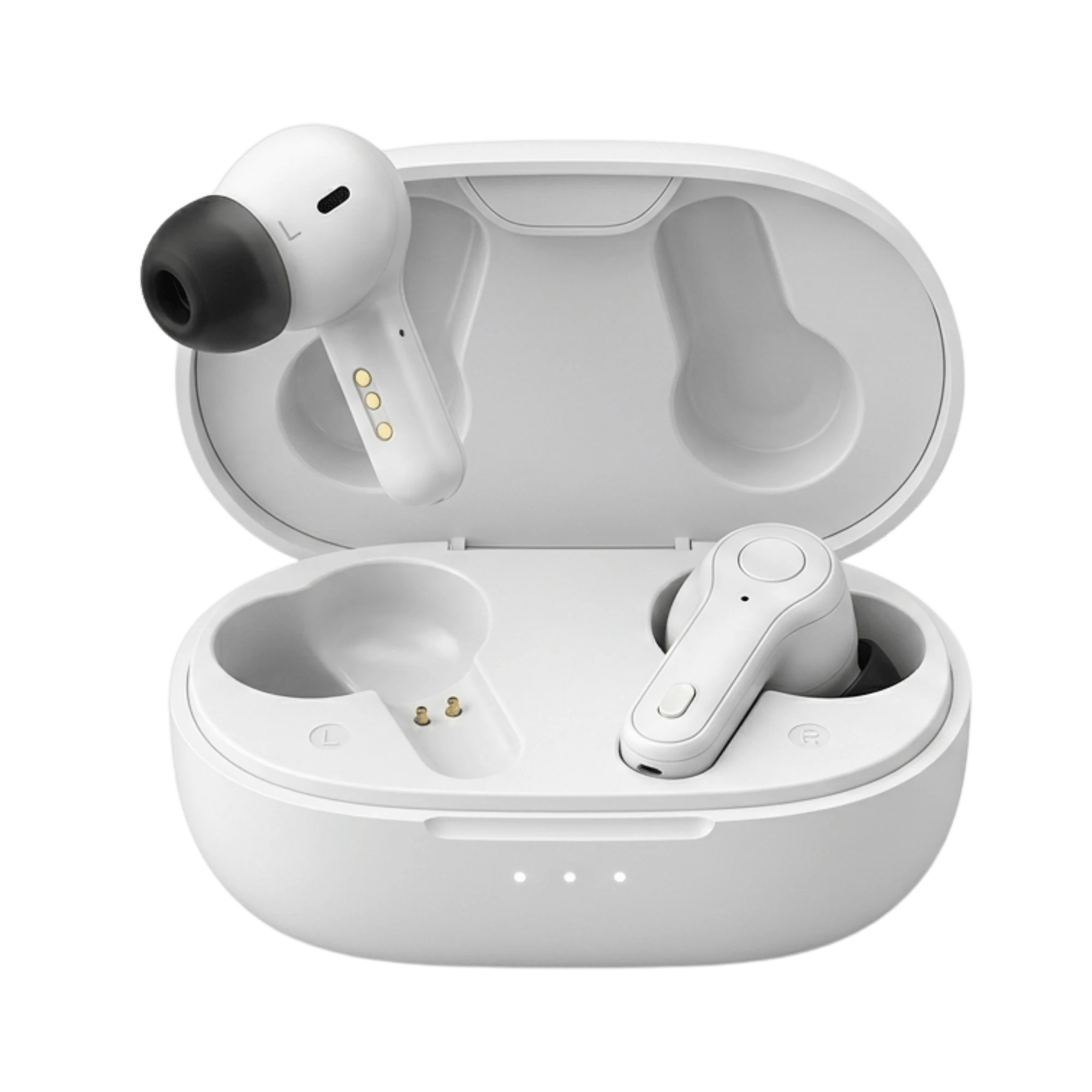
Panda Quantum — $349 (was $499, save $150). Receiver-in-canal (RIC), clinical-grade performance. 16-channel WDRC with adaptive noise reduction. Frequency-matching technology corrects the specific gaps in your hearing profile—the same approach audiologists use in prescription devices. Bluetooth for calls, TV, music. Rechargeable case, 20 hours per charge, 80 hours total with case (3 full recharges). Adaptive tinnitus masking. Clinically tuned 10-minute self-fitting test. For serious performance.

All three are FDA-OTC certified, ship from Panda with full manufacturer support, include a 45-day money-back trial, and come with a 5-year warranty. No markups, no middlemen, no mystery about what you're buying.
How to Vet Any Hearing Aid Listing
If you do shop on Amazon, use this checklist to separate real devices from PSAPs and scams:
1. Look for "FDA-cleared" or "FDA-OTC" in the product description. Not "FDA registered"—that term doesn't mean anything. Real hearing aids will mention FDA clearance proudly. If you have to hunt for it, or it's not there, skip the listing.
2. Check for specific channel count and frequency range in specs. Look for "16-channel," "12-band," and frequency ranges like "200-5,000 Hz." Generic language ("advanced processing," "smart technology") is a red flag.
3. Verify the brand has a real website with contact info. Go to the manufacturer's website directly (search the brand name + ".com"). Real hearing aid brands have dedicated support pages, warranty info, and a phone number. If the brand only exists on Amazon, it's not a real hearing aid.
4. Read 1-star reviews specifically. Amazon buries honest reviews under paid promotions. Sort by "1 star" and read what people actually struggled with. If multiple reviews say "too loud," "can't adjust settings," or "doesn't help with hearing loss," it's a PSAP, not a hearing aid.
5. Check the seller name. Generic resellers with names like "Tech Hub Store" or "Best Deals Electronics" are riskier than brand-direct sellers or authorized resellers. Real manufacturers either sell direct or clearly authorize specific retailers.
Bottom Line: Amazon Hearing Aids Are a Minefield
Real FDA-OTC hearing aids do exist on Amazon, but they're buried under thousands of PSAPs and scams. When you buy direct from a manufacturer like Panda, you get a verified device, manufacturer support, a 45-day trial, and a 5-year warranty—often at the same or lower price than Amazon. For a device you'll trust with your hearing every single day, that's the smarter choice.
Questions About Buying Hearing Aids on Amazon
Are hearing aids on Amazon real or fake?
Both exist. Most Amazon "hearing aid" listings are cheap PSAPs or generic sound amplifiers (about 80% of the category). A small number of legitimate FDA-OTC brands like Lexie and MD Hearing sell through authorized resellers. The rest are either counterfeit or scams. Use the red-flag checklist above to vet any listing before buying.
What's the cheapest legitimate hearing aid on Amazon?
MD Hearing Volt Max starts around $297, and Lexie B2 begins at $999. These are real FDA-OTC devices with app control, noise reduction, and tuning. Anything cheaper than $297 is almost certainly not a real hearing aid—it's a PSAP amplifier, which won't correct hearing loss the way a hearing aid does.
Why are some Amazon "hearing aids" only $25?
Because they're not hearing aids. They're cheap personal sound amplifiers that boost all frequencies equally. They have no channels, no app, no hearing test, and no noise reduction logic. They're gadgets, not medical devices. Manufacturers price them that way because they cost $5 to make. Real hearing aids start at least $279 because the technology is real.
Should I buy hearing aids from Amazon or direct?
Direct from the manufacturer is almost always smarter. You get verified product, longer trial periods (usually 45 days vs Amazon's 30), better warranty coverage (usually 5 years vs 1 year), included hearing tests, and direct support. Most direct prices match or beat Amazon's prices, and you avoid the marketplace risk of counterfeits or unauthorized sellers. Panda Hearing, for example, offers all three models direct, with full support and zero middleman markup.
If clarity and genuine hearing correction matter to you, skip the Amazon guessing game. Panda Stealth gives you invisible support at $279. Panda Air offers modern earbud-style design at $299. And Panda Quantum delivers clinical-grade frequency matching at $349. All three come with a 45-day risk-free trial, so you can test them at home. That's the difference between a gamble and a guarantee.