Some adults simply cannot tolerate hearing aids inserted deep into the ear canal. Whether you have a narrow ear canal, a history of ear sensitivity, past ear surgery, or just a strong preference for avoiding deep insertion, standard in-canal models can feel uncomfortable, painful, or claustrophobic. The good news is that several legitimate form factors exist that minimize or eliminate deep canal insertion.
If you want to hear clearly without the discomfort of devices wedged deep inside your ear canal, you have real options beyond just tolerating the fit. This guide walks you through the form factors designed for minimal canal intrusion, how they work, and which might be right for your ear and your hearing loss.
Why People Avoid Canal Insertion
Canal sensitivity is real and more common than you might think. Some adults have narrow ear canals that make insertion uncomfortable or even physically impossible. Others have a history of ear infections, eczema in the ear canal, or drainage issues that make devices sitting deep inside feel irritating or risky. Post-ear-surgery patients sometimes have anatomical changes that rule out traditional in-canal models. Still others simply experience claustrophobia or discomfort from having foreign objects lodged in their ears for all-day wear.
If any of these describe you, deep-canal insertion is not a requirement for modern hearing support. Form factors have evolved to give you options.
Open-Fit RIC - Best for Most People Avoiding Canal Insertion
A receiver-in-canal (RIC) hearing aid with an open-fit dome is the most popular form factor for people who want minimal canal intrusion. The entire processor body sits comfortably behind your ear. A thin wire runs down, and a small open-fit dome (or earpiece) sits at the very opening of the ear canal, not deep inside it.
The key word is "open" - the dome has vents that allow natural sound to flow in alongside the amplified sound from the hearing aid. This design reduces the "plugged ear" feeling that bothers many people and sounds more natural, especially for your own voice. Panda Quantum is a 16-channel RIC with an open-fit option that delivers clinical-grade processing without deep canal insertion.

Earbud-Style ITC - Sits at Canal Opening, Not Deep
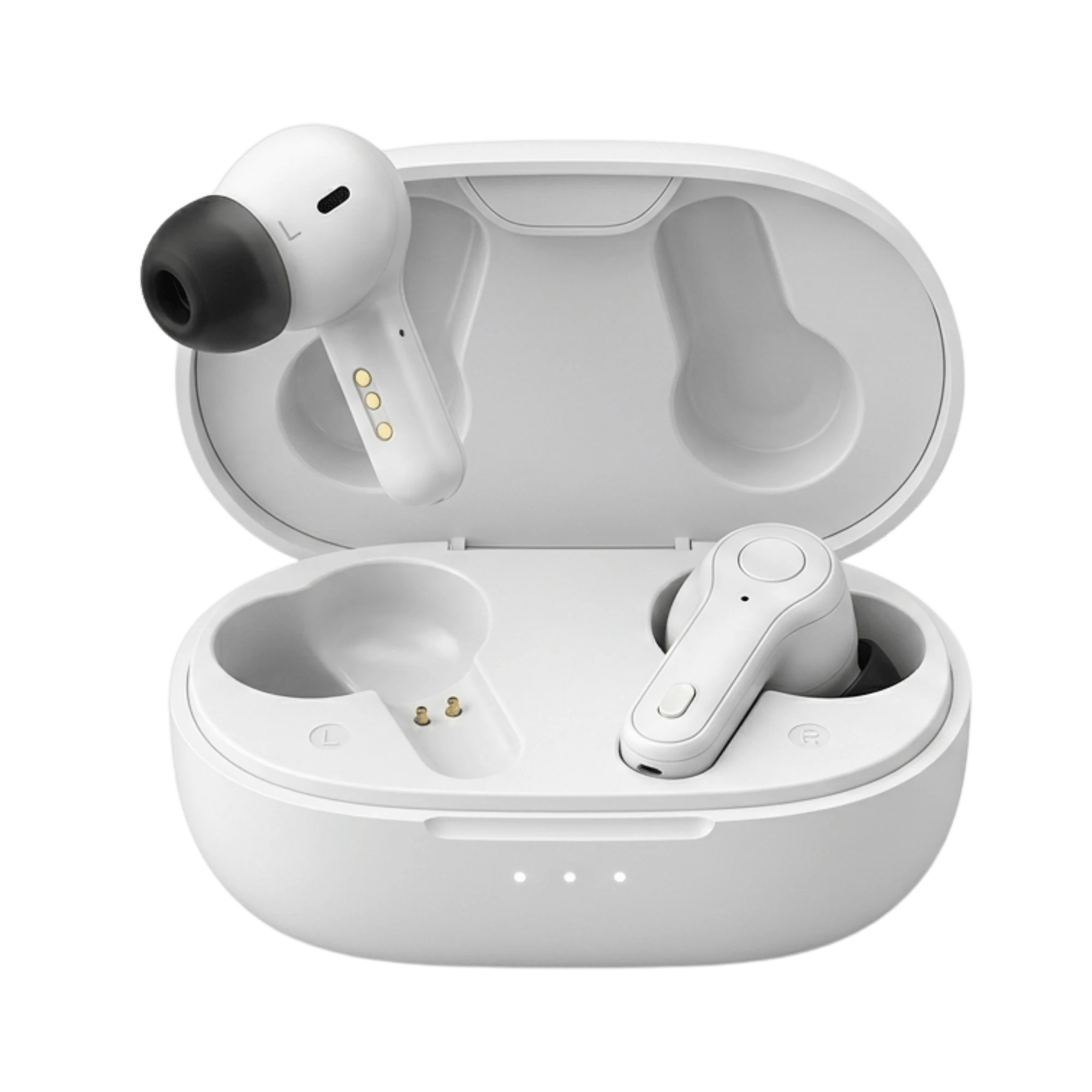
Earbud-style hearing aids look like wireless earbuds and sit right at the opening of the ear canal, not buried deep inside. The receiver is located in the canal opening itself, not in the deep canal. This design offers the discretion of earbuds without the medical appearance of traditional in-canal devices.
Panda Air is the earbud-style option: lightweight, 16-channel processing, and Bluetooth for calls and music. The receiver sits at the canal opening, making it suitable for people who want to avoid deep insertion and prefer a modern, non-medical look.
BTE - Body Behind Ear, Only Thin Tube in Canal Opening
A true behind-the-ear (BTE) hearing aid is the most "outside the ear canal" of all options. The entire processor, amplifier, and battery sit behind your ear. Only a thin sound tube enters the ear canal opening - no receiver, no deep insertion. The amplified sound travels through the tube to the canal entrance, where a custom earmold or dome sits at the opening, not deep inside.
BTE designs are traditionally prescribed for severe to profound hearing loss, as they can accommodate larger batteries and more powerful amplification. They also suit people with excessive earwax or chronic ear drainage, since all electronics stay outside the canal. If minimal canal insertion is your priority, a BTE eliminates it almost entirely.
Bone Conduction - No Canal At All, Special Cases Only
Bone conduction hearing aids bypass the ear canal entirely. They rest on the mastoid bone behind the ear and transmit vibrations directly through the skull to the inner ear. No canal insertion whatsoever.
However, bone conduction is typically recommended only for specific medical conditions: congenital ear canal atresia (canal closure from birth), chronic ear drainage that rules out canal devices, or severe outer-ear disease. For typical hearing loss, conventional hearing aids remain the first choice. If you have a medical reason to believe bone conduction might apply, consult your audiologist or ENT.
What to Avoid If Canal Insertion Bothers You
If minimizing canal insertion is important, steer clear of these form factors:
- Completely-in-canal (CIC) - sits deep in the canal, custom-molded, minimal visibility but significant insertion
- Invisible-in-canal (IIC) - even deeper than CIC, designed for maximum invisibility, requires deep insertion
- In-the-ear (ITE) with closed dome - sits in the ear and seals the canal
- In-the-canal (ITC) with custom earmolds - partially inserted, sealed fit inside the canal
These styles prioritize invisibility, which requires deeper insertion. If your priority is comfort and avoiding that insertion, open-fit RIC, earbud-style, or BTE are your better choices.
How to Test Fit Before Committing
The best hearing aids for you are the ones you will actually wear. Most reputable hearing aid brands offer a 45-day trial period with a money-back guarantee. Use that window to test the fit carefully.
Request multiple dome sizes and try each one during everyday activities - at home, in noise, on phone calls. Pay attention not just to sound quality but to how the fit feels after a few hours and at the end of the day. If canal-related discomfort returns, you know it is not the right style for you.
When Doctor Visit Is Needed First
Before you buy any hearing aid, schedule a visit with your ENT or primary doctor if you have chronic ear infections, severe itching or rash in your ear canal, recent ear surgery, persistent ear pain, or anatomical concerns about canal size or shape.
Clinically Tuned Fitting, at Home in Ten Minutes
Panda Quantum and Panda Air both include a clinically tuned 10-minute online hearing test. You take it at home, the system measures the specific frequencies where your hearing has gaps, and the hearing aids adjust to correct those gaps - the same principle an audiologist uses in a fitting, without a clinic visit.
Bottom Line: For Most Adults Seeking Minimal Canal Insertion
If deep canal insertion is uncomfortable or impractical, open-fit RIC is the most versatile choice. Panda Quantum ($349, was $499 - save $150) is a 16-channel RIC with an open-fit dome that sits at the canal opening, not deep. You get clinical-grade processing, all-day battery, and Bluetooth for calls and music - all without the discomfort of deep insertion. For users who prefer an earbud look, Panda Air ($299, was $399 - save $100) positions the receiver at the canal opening. Both offer FDA-OTC certified hearing support, a 45-day trial, and a 5-year warranty.
FAQ - Hearing Aids Without Deep Canal Insertion
Can I wear hearing aids without canal insertion?
Yes. Open-fit RIC devices, earbud-style hearing aids, and true BTE models all minimize or eliminate deep canal insertion.
Are BTE hearing aids more comfortable than ITC models if I have a sensitive ear canal?
Often yes. Because BTE keeps all electronics outside the ear and only a thin tube enters the canal opening, they reduce daily contact and irritation.
What if my ear canal is too narrow?
Narrow canals rule out deep-insertion models (CIC, IIC) and sometimes even standard RIC domes. Work with your provider to find open-fit RIC dome options in the smallest size, or consider earbud-style or BTE as alternatives.
Can I get hearing aids if I have eczema or sensitivity in my ear canal?
Yes, but you need a style that does not irritate the canal. Open-fit RIC with minimal contact, earbud-style at the canal opening, or BTE outside the canal are better choices than sealed or deeply-inserted models.
Ready to explore your options? Learn more about Panda Quantum, or discover Panda Air if you prefer an earbud style.