Bluetooth hearing aids used to mean one thing: a $5,000+ bill and a trip to an audiologist's clinic. That was the only way to stream calls, TV, and music directly into your ears while getting real hearing correction. Today, that equation has flipped entirely.
Real Bluetooth hearing aid technology—the kind that lets you hear your phone ring, change channels on the TV, and take calls hands-free—is now available for under $400. This guide walks you through the market tier by tier, shows you what premium Bluetooth costs and why, and introduces the OTC devices that let most adults skip the clinic visit and the consultant fee entirely.
What Real Bluetooth Means
Before we compare hearing aids, let's be clear about what Bluetooth actually does in this context. Real Bluetooth hearing aid support means:
Direct audio streaming: Phone calls, podcasts, TV audio, and music stream directly into both ears. No separate devices. No lag. No manual volume workarounds.
Hands-free calling: The hearing aid's microphone picks up your voice and sends it back through the phone. You don't need to hold the device to your ear or use your phone's speaker.
MFi or ASHA support: Made-for-iPhone (MFi) or Android Shared Audio (ASHA) certification ensures your phone recognizes and talks to your hearing aids. No adapter needed.
#1 - Panda Air ($299, was $399 - save $100)
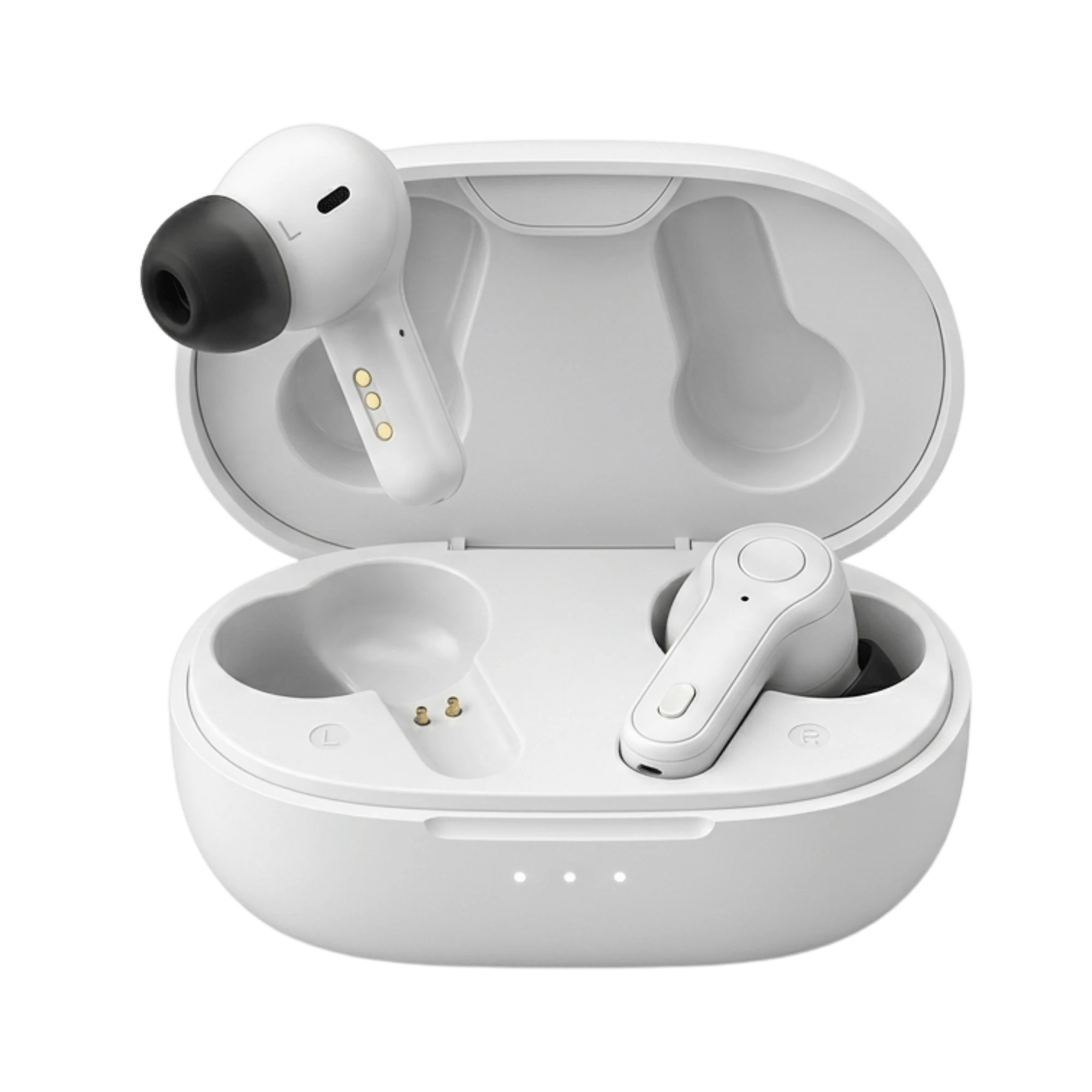
Panda Air leads the affordable Bluetooth hearing aid space because it looks like what it is: wireless earbuds. The earbud-style form factor removes the stigma many people feel wearing traditional hearing aids. You get:
16-channel clinical tuning + multi-band adaptive noise reduction. Direct Bluetooth streaming for calls, TV, and music. 60 hours of total battery (fast-charge case). MFi + ASHA support for both iPhone and Android. Clinically tuned 10-minute online hearing test at home. No clinic visit needed. FDA-OTC certified.
Panda Air was built for users who want support without the medical look. The hearing correction happens through a personalized fit based on your hearing profile, not through bulky behind-the-ear hardware. At $299, it is the best value Bluetooth hearing aid for adults with mild to moderate loss who prioritize style and battery life.
#2 - Panda Quantum ($349, was $499 - save $150)

If you need more power or have moderate hearing loss with complex gaps, Panda Quantum steps up. It uses a unique frequency-matching system - the same principle audiologists measure in $3,000+ prescription fittings - to correct the specific frequencies your ears struggle with.
Quantum delivers 16-channel WDRC + adaptive noise reduction. Frequency-matching technology that targets your exact hearing profile. Adaptive tinnitus masking (most OTC models skip this). Direct Bluetooth for calls, TV, music. 80 hours of battery (20 hours per charge + case recharges 3 more full times). FDA-OTC certified.
The RIC (receiver-in-canal) form factor sits behind your ear, making it more visible than Air, but the power and personalization justify the trade. Tinnitus support alone is rare under $500. At $349, Quantum delivers clinical-grade engineering at a fraction of prescription cost.
#3 - Apple AirPods Pro 2 ($249)
Apple's AirPods Pro 2 are not hearing aids, but they are FDA-cleared as a hearing aid. They work best for users with very mild hearing loss who mostly need slight amplification in quiet settings. The advantage is obvious: they are earbuds you already want to wear.
FDA-cleared hearing aid mode. Bluetooth music, calls, and podcasts. 5-6 hours per charge. Best for iPhone users.
The catch: battery life drops quickly if you use the hearing aid mode all day. You are also limited to iPhone if you want the best experience. For light use or as a second pair, AirPods Pro 2 are hard to beat at $249. But they are not a full hearing aid replacement for anyone with moderate loss.
#4 - Lexie B2 Plus ($999, formerly Powered by Bose)
If you want a mid-tier OTC device with audiologist-level control and Bose's acoustic engineering behind it, Lexie B2 Plus is the standard. It uses Sonova (the maker of prescription brands like Phonak and Unitron) technology at a fraction of the price.
Full Bluetooth streaming (calls, TV, music). RIC form factor. Rechargeable. Deep app control and remote audiologist adjustments. 45-day trial. 1-year warranty.
At $999, Lexie B2 Plus is $650 more than Panda Quantum but costs less than one-third of a Phonak prescription device. It is the choice for people who want hands-on app control and professional support baked into the price.
#5 - Jabra Enhance Plus ($1,195)
Jabra Enhance (formerly Lively) is the choice when you want premium OTC features and extended customer support. The hearing aids themselves are strong, but the real value is the service layer: remote audiologist care, advanced app controls, and a 100-day trial period.
Full Bluetooth with hands-free calling. 24-hour battery. App-based tuning and remote programming. 100-day trial (longest in OTC). Included remote audiologist support.
Still $4,000+ less than prescription Phonak or Oticon, Jabra Enhance appeals to people who value professional guidance but do not want a clinic waiting room.
#6 - Elehear Alpha Pro ($499)
Elehear is a newer OTC brand that is gaining traction for its AI-driven noise reduction and strong battery life. The Alpha Pro positions itself between Panda Air and Lexie B2.
AI noise reduction (ELEHEAR's proprietary VOCCLEAR). Bluetooth streaming for calls and music. 20-hour battery. RIC form factor. Fast remote audiologist support included.
At $499, Elehear offers a middle ground: more power than Panda Air, lower cost than Lexie. Good for users who want audiologist support without premium pricing.
What $5,000 Bluetooth Adds
You might be wondering: what is Phonak or Oticon spending that extra $4,500 on? The answer is not more channels or more Bluetooth. It is clinical depth.
Premium brands invest in deep neural networks and BrainHearing AI that learn your listening environment in real time. Phonak Infinio uses dual-chip processing to separate speech from noise faster than single-processor OTC devices. Oticon's 4D sensor technology adapts based on your body position and where you are looking.
Audiologist fitting is mandatory, meaning a hearing care professional measures your ear shape, administers a formal audiogram (more detailed than self-fitting), and programs the devices to match your prescription. This personalization is thorough but also adds $500-$1,000 in labor.
White-glove support is part of the package: adjustments, repairs, and follow-up appointments are handled in-person. If you need your hearing aids reprogrammed for a travel trip or seasonal change, you have a human on speed dial.
When You Need $5,000 Bluetooth (Most People Don't)
Premium prescription devices are genuinely better for specific cases. If you have severe to profound hearing loss, a complex audiogram with loss that is not symmetrical, or significant tinnitus distress beyond masking, prescription equipment and professional fitting can make a difference that OTC devices cannot match.
People in high-noise professions (pilots, construction, military) often benefit from custom fitting and specialized features. So do people with single-sided deafness, who need a cross-over device that routes sound from the dead side to the hearing side - a feature that OTC does not offer.
For most adults with mild to moderate loss (the majority of people with hearing impairment), the gap between a $349 Panda Quantum and a $5,000 Phonak is not in the fundamentals. It is in convenience, luxury, and the feeling of professional hand-holding. Both will help you hear your family and TV at normal volume. One just costs 14 times less.
Bottom Line: Panda Air ($299, was $399) and Panda Quantum ($349, was $499) cover most adults' Bluetooth hearing needs. FDA-OTC certified, rechargeable, full Bluetooth for calls and TV, and personalized via clinically tuned self-fitting. $5,000 prescription Bluetooth is justified only for complex hearing loss or white-glove clinic preference. For everyone else, the $299 choice wins.
Frequently Asked Questions
Is $5,000 Bluetooth hearing aid worth it compared to a $300 OTC device?
Only for severe loss or complex audiograms. For mild to moderate loss, the Bluetooth fundamentals are the same. Prescription adds deep neural network processing and in-person fitting. Most people get 90% of the benefit from OTC at 6% of the price.
What is the cheapest real Bluetooth hearing aid right now?
Panda Air at $299 (on sale from $399). Apple AirPods Pro 2 at $249, but they are for very light use. If you want a true hearing aid with all-day battery and serious noise reduction, Panda Air is the floor.
Can an under-$500 hearing aid work as well as a $2,000+ OTC hearing aid?
In most cases, yes. Panda Quantum at $349 has 16-channel processing and frequency-matching tuning. Lexie B2 Plus at $999 offers more app control and remote audiologist support, but the core hearing correction is similar. Spend extra only if you want service or deeper customization.
Is there a difference in performance between OTC and premium Bluetooth for watching TV and taking calls?
Both stream TV and calls seamlessly. Premium devices often have more customization options for call audio (how loud or processed the voice sounds). But if you just want your TV at a normal volume and your phone calls to come through clear, OTC Bluetooth is fully functional and costs a tenth of the price.
The Clearer Choice for Bluetooth Under $500
Bluetooth hearing aids have demolished the price wall that used to separate affordable from functional. For nearly everyone with mild to moderate hearing loss, a $299 Panda Air or $349 Panda Quantum solves the real problems: you cannot hear family conversations, the TV is too loud for others, your phone calls are hard to follow. Both stream Bluetooth, both last all day, both personalize to your hearing profile in 10 minutes at home. The prescription Phonak or Oticon will not solve these problems any faster or any better. It will just cost $4,650 more.
Real Bluetooth hearing aid technology is no longer a luxury reserved for people who can afford the clinic premium. It is now a commodity available at a price that makes sense. That changes everything.
Visit Panda Air, Panda Quantum, or Panda Stealth to take a free 10-minute hearing test and see how your frequencies map. No clinic visit. No waiting. Just you and your phone, at home, in 10 minutes.