Mild to moderate hearing loss is the most common type among adults, and the FDA's new OTC hearing aid category was designed specifically for this range. Most people who delay seeking help have exactly this degree of loss - they catch some sounds, miss others in conversation, and avoid noisy places. The good news is that choosing the right hearing aid within this range is less about severity and more about your lifestyle and preferences.
Whether you want a completely invisible fit, modern earbud-style wear, or clinical-grade performance, there are hearing aids built for your moment. This guide breaks down what mild to moderate loss actually means, what to look for, and three Panda models that each solve a different problem in this range.
What Mild to Moderate Hearing Loss Means
Hearing loss is measured in decibels (dB HL) at different frequencies, just like an audiologist would test it. The FDA's OTC category covers mild to moderate loss, which runs roughly:
Mild hearing loss (26-40 dB HL): You hear most normal-volume speech but miss soft sounds or struggle with quiet voices. Phone calls and conversations with one person work fine, but groups and background noise become harder.
Moderate hearing loss (41-60 dB HL): You need volume turned up or need people to speak clearly. Conversations at normal levels are difficult without help, especially in noisy settings. This is where the OTC rule reaches its maximum benefit.
If your loss is more severe (61+ dB HL), you will need to see an audiologist - OTC devices have output limits for safety and won't provide adequate help at deeper loss levels.
What to Look For in an OTC Hearing Aid
16-channel processing. More channels mean finer control over each frequency. A 16-channel device adjusts the volume independently in 16 different frequency bands, while a 2-channel amplifier just turns everything up. For mild-moderate loss, 16 channels is the clinical standard.
Multi-band adaptive noise reduction. This feature listens to your environment and reduces background noise without muffling speech. If you're in a restaurant, it knows to preserve conversations while quieting kitchen clatter.
Comfortable all-day fit. Mild-moderate loss means you'll wear them through breakfast, work, dinner, and family time. Weight, fit style, and battery life matter because you need them to stay comfortable for 16+ hours.
FDA-OTC certification. This is non-negotiable. It means the device has met all safety and performance standards, includes a user manual, and works as intended for your loss range.
Best Discreet Pick - Panda Stealth ($279)

If invisibility is your priority, Panda Stealth is the answer. This completely-in-canal (CIC) device is nearly invisible when inserted - it sits deep inside your ear canal, barely visible even when someone looks directly at you. It weighs just 2.3 grams, about the weight of a dime, and disappears into your ear the moment you put it in.
Stealth delivers 16-channel digital processing with 12-band smart noise reduction - more than enough for mild-moderate loss. You get three listening modes (Quiet, Noisy, Outdoor) that you switch between using the charging case as a wireless remote. No apps, no Bluetooth, no fuss. The rechargeable magnetic case provides 60 hours of total battery life, meaning you charge every other night like you would a phone.
The price is $279 (was $379, save $100). Five-year warranty, 45-day trial, and FDA-OTC certified. This is the best choice for anyone who has waited years to get help because they didn't want others to know.
Best Earbud-Style - Panda Air ($299)
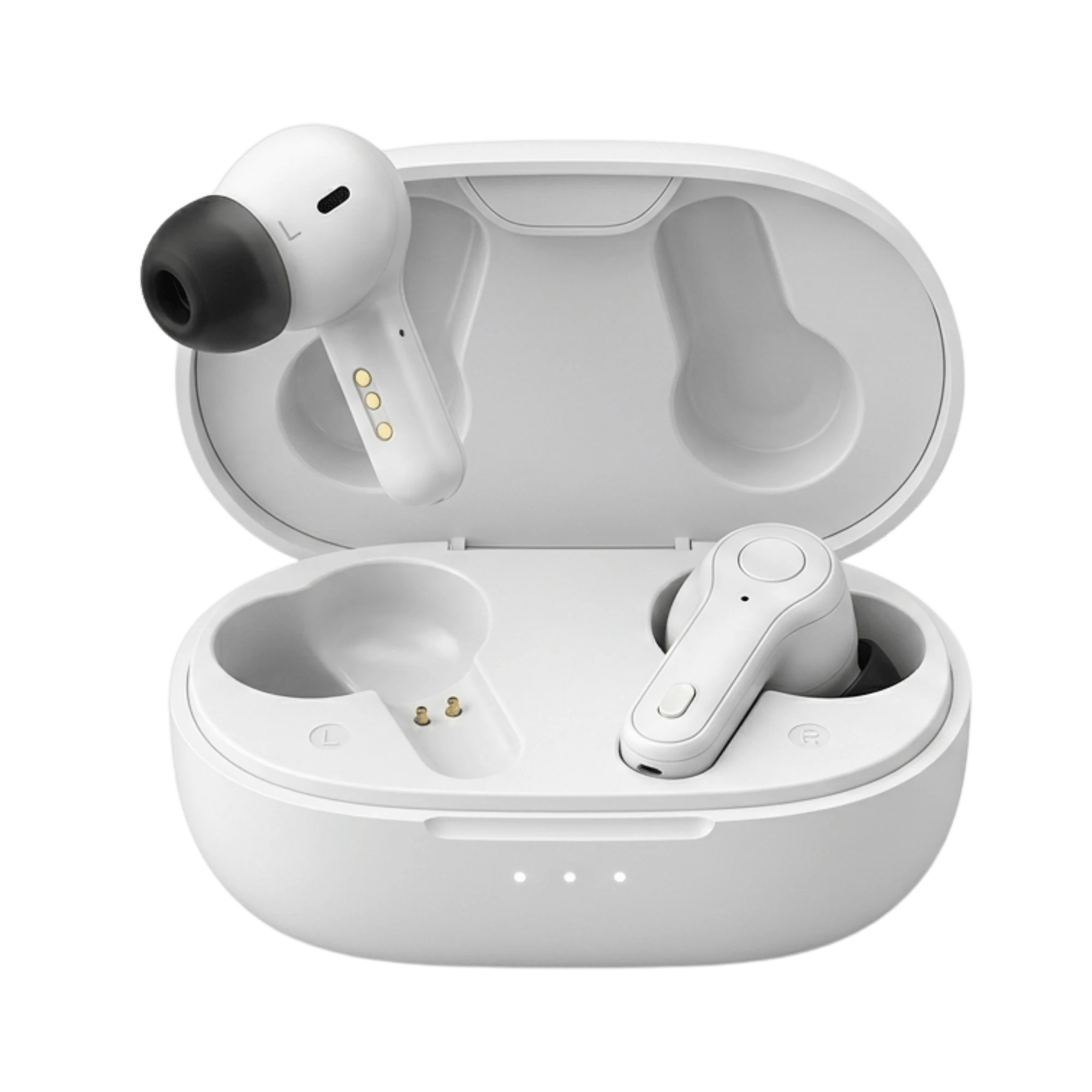
Panda Air solves the hearing aid stigma problem with a design that looks and feels like modern wireless earbuds. Nobody has to know it's a hearing aid. It looks like you're wearing AirPods, charging the same way, and living the same lifestyle - because you are. Air connects to your phone for calls, TV audio, and music, so everything routes straight through the hearing aids.
Air also includes 16-channel WDRC processing with multi-band adaptive noise reduction. You take a clinically tuned 10-minute online hearing test that measures the frequencies you struggle with, and Air adjusts itself to correct those gaps. The fast-charge case delivers 60 hours of total battery life - three full days of wear.
Price: $299 (was $399, save $100). Five-year warranty, 45-day trial, FDA-OTC certified. If you want your hearing aid to match the rest of your tech and don't want to feel different, Air is built for you.
Best Clinical-Grade - Panda Quantum ($349)

Panda Quantum is engineered beyond what most OTC hearing aids offer. It uses a unique frequency-matching system to correct the specific gaps in your hearing profile - the same principle an audiologist would use in a fitting, now built into the device. This is the same engineering you'd find in prescription hearing aids costing $3,000+, available here for $349.
Quantum includes 16-channel WDRC plus adaptive noise reduction, but adds two features competitors in this range don't have: frequency-matching technology and adaptive tinnitus masking. The tinnitus feature generates soothing sounds that adapt to your tinnitus profile if you experience ringing or buzzing. Bluetooth connects you to calls, TV, and music. The rechargeable case gives 80 hours total - you charge once per week.
Price: $349 (was $499, save $150). Five-year warranty, 45-day trial, FDA-OTC certified. If you want serious clinical performance and don't mind the visible RIC (receiver-in-canal) fit, Quantum delivers more precision than any other OTC in this price range.
Other Worthy Mild-Moderate OTC Picks
Panda isn't the only player in the OTC space. Lexie B2 Plus ($999), Jabra Enhance Plus ($1,195), and Eargo 7 ($2,650) are well-regarded. They deliver excellent sound and clinical support, but at significantly higher prices. Audien Atom Pro 2 ($289) competes on price and is good for budget buyers, but lacks the self-fitting precision and tinnitus management of the Panda models. If price is the only factor, Audien wins. If you want both value and performance, Panda models outpace every competitor dollar-for-dollar in this range.
What's Outside This Range - When to See an Audiologist
Severe hearing loss (61-80 dB HL) and profound loss (81+ dB HL) require prescription devices from an audiologist. OTC hearing aids have output limits for safety - they simply cannot amplify enough for deeper losses. If you cannot hear speech at a normal conversational volume even in a quiet room, or if you have trouble hearing loud music or power tools, you likely need professional help. See an audiologist first.
Bottom Line: For mild-to-moderate hearing loss, Panda's three models cover discretion, modern wear, and clinical performance - all under $350. Whether you want to be invisible, look like everyone else, or maximize clarity, there's a Panda model that fits your life. All three are FDA-OTC certified, rechargeable, include 45-day trials, and come with 5-year warranties. Pick the one that matches your priorities, not your severity.
Frequently Asked Questions
How do I know if my hearing loss is mild or moderate?
The best way is a professional hearing test, but you can self-assess: mild loss means you hear most sounds but miss soft voices or struggle in groups. Moderate loss means you need volume turned up or people to speak clearly even in quiet settings. If you've been avoiding phone calls or dinners out, you're probably moderate. A Panda hearing test takes 10 minutes online and measures your exact thresholds at each frequency.
Can an OTC hearing aid handle the full moderate range (41-60 dB HL)?
Yes. OTC devices are legally limited to 111 dB SPL maximum output, which covers the entire mild-to-moderate range. All three Panda models reach this limit, meaning they're equally capable of addressing moderate loss. The difference between them is fit style and features, not coverage.
Do I need an audiologist for mild hearing loss?
No. That's exactly why the FDA created the OTC category. You can buy, fit, and adjust these yourself. However, if you're unsure of your loss level, a 10-minute online hearing test (like Panda's) gives you the data you need before committing. If your loss turns out to be severe, then you see an audiologist.
What's the safest OTC for first-timers?
Panda Air or Panda Quantum are the safest choices because both include the 10-minute self-fitting hearing test. You measure your own hearing profile and the device tunes itself to your frequencies. You're not guessing with presets - you're getting precision. Both come with 45-day trials, so if they're not right, you return them risk-free.
The Clear Choice for Mild-to-Moderate Hearing Loss
Mild to moderate hearing loss is the most common type, the FDA's target market for OTC, and the range where discreet invisible hearing aids actually work. You don't need to spend $1,000+ or visit a clinic. You don't have to feel broken or different. The technology that was prescription-only five years ago is now available over-the-counter, and Panda's three models each solve a different problem in your life. Pick the fit and features that match your moment, take the 45-day trial, and start hearing clearly again.