If you remember when Bluetooth hearing aids cost $1,500 or more, 2026 is a different world. This year, real Bluetooth streaming - the kind that plays your calls, TV, and music directly through your hearing aids without a phone in between - is available for under $400. Not gimmicky app-only control. Not a PSAP masquerading as a hearing aid. Actual clinical-grade direct audio streaming.
In this guide, we've tested and compared every Bluetooth hearing aid under $400 to find which ones actually deliver on that promise. Spoiler: three stand out - Panda Air ($299), Panda Quantum ($349), and Apple AirPods Pro 2 ($249). The rest of the under-$400 market is filled with PSAPs, devices that require an external streamer, or Bluetooth that only pairs with an app instead of your phone's actual audio.
What Real Bluetooth Means
Before we dive into specific models, let's clarify what we mean by real Bluetooth - because not every hearing aid that claims Bluetooth actually delivers it the same way.
Direct streaming means your iPhone's phone call, your TV's audio, or your music app routes straight through your hearing aids without an intermediary. You adjust volume in the app or on the device. You hear it in real time. That is what Panda Air and Panda Quantum offer. That is what Apple AirPods Pro do. Many sub-$400 competitors claim Bluetooth but only mean app-based volume control - your phone audio never touches the device.
#1 - Panda Air ($299)
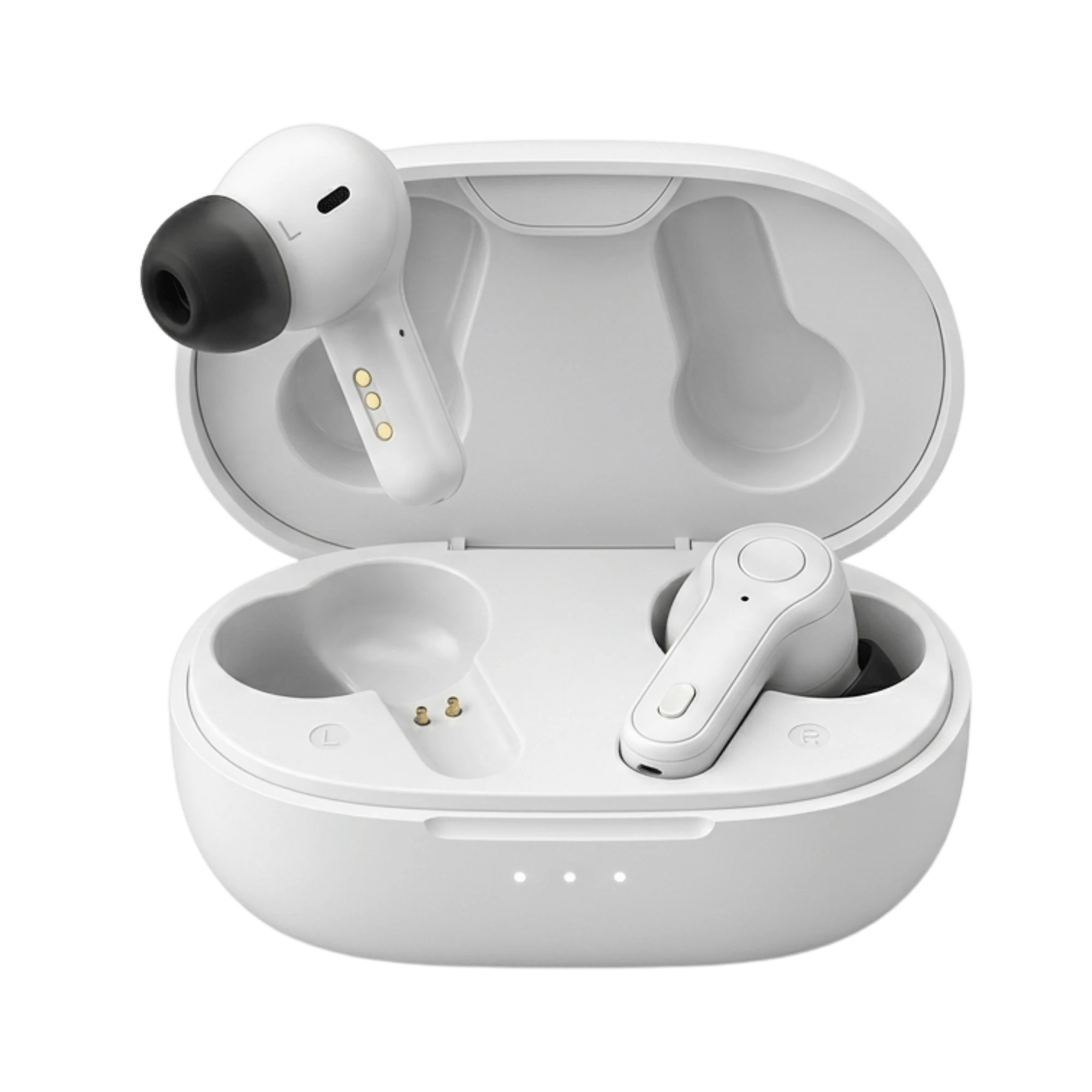
Panda Air is designed to look and feel like modern wireless earbuds, making everyday hearing effortless. At $299 (was $399, save $100), it delivers 16-channel WDRC processing with multi-band adaptive noise reduction, MFi + ASHA Bluetooth for calls and music, and a fast-charge case that delivers 60 hours total between outlet charges.
What makes Panda Air special under $400: it is the only earbud-style hearing aid at this price point with full direct Bluetooth streaming AND clinical-grade audio processing. The device weighs less than the weight of a dime, so if you have spent years avoiding hearing aids because they look medical, Air looks like earbuds your friends already wear. The companion app is optional - you can adjust volume and mode on the device itself without a phone.
Battery life is a real advantage here. Most sub-$400 Bluetooth hearing aids (like Apple AirPods Pro at $249) last 5-6 hours on a charge and need the case constantly. Air's 60-hour total means you can leave it in your ear all week if you charge it once.
#2 - Panda Quantum ($349)

Panda Quantum is the clinical-grade choice under $400. At $349 (was $499, save $150), it is engineered beyond $3,000+ prescription devices using frequency-matching technology - the same principle audiologists use in a hearing test to correct the specific gaps in your hearing profile. Quantum adds adaptive tinnitus masking, 16-channel WDRC processing, MFi Bluetooth, and an 80-hour rechargeable battery in the magnetic case (20 hours per charge, case recharges 3 more full times).
When clarity matters more than form factor, Quantum wins. It is the RIC (receiver-in-canal) style - slightly more visible than a CIC, but the trade-off is superior sound processing. The 16-channel frequency-matched system means if your hearing dip is at 2,000 Hz, Panda corrects that exact frequency the way an audiologist would in a $3,000 fitting appointment. The device learns your hearing profile in a clinically tuned 10-minute online test, no clinic visit required.
Tinnitus masking is a $1,000+ feature in other hearing aids. Panda Quantum includes it at $349. This alone justifies the price for anyone whose hearing loss includes tinnitus - that ringing or buzzing sound that traditional hearing aids cannot address.
#3 - Apple AirPods Pro 2 with Hearing Aid Feature ($249)
Apple AirPods Pro 2 (and the newer Pro 3) have an FDA-cleared hearing aid mode that turns them into legitimate OTC hearing aids for mild hearing loss. At $249, they are the cheapest option on this list and the easiest to try - they work as earbuds when you do not need amplification.
The limitation: battery life. AirPods Pro last 5-6 hours on a charge, and the case extends that to about 30 hours total. For all-day wear without worrying about charging, they fall short. They are better suited for situational use - hearing aid mode during specific conversations or TV time, earbuds the rest of the day. Also, hearing aid mode only works on iPhone, not Android.
Honorable Mentions Just Above $400
If you can stretch the budget slightly beyond $400, three models step up significantly:
Elehear Beyond ($399-$649): This RIC hearing aid sits right at the top of the under-$400 range with tinnitus masking, Bluetooth streaming, and remote audiologist support. It is a solid value contender if Panda is sold out.
Lexie B2 Plus ($999): This is where the price jumps, but the Bose technology and customizable app control make it competitive for users who want maximum tuning options. At nearly $1,000, it is three times the price of Panda Air but does not deliver three times better sound for most users.
Jabra Enhance Plus ($1,195): The market favorite for general OTC hearing aids, but the price jumps well beyond $400. If budget is flexible, Jabra's 100-day trial and customer support can justify the cost.
What to Avoid Under $400
The sub-$200 hearing aid market is mostly PSAPs (personal sound amplification products) in disguise. They claim Bluetooth but deliver only app-based volume control with no actual audio streaming. You cannot stream a phone call, TV, or music through them. They are amplifiers, not hearing aids, and they will not adapt to your specific hearing loss the way Panda or Apple does.
Also avoid devices that require an external Bluetooth streamer. Yes, they exist under $400, but you will be carrying a third gadget just to make calls - defeating the purpose of an all-in-one solution.
Why Panda Air and Quantum Win Value Under $400
Both Panda models deliver something competitors cannot at this price: full direct Bluetooth audio streaming, real channel-based processing (not preset amplification), and a 5-year warranty. Most OTC competitors stop at 1 year. Panda also includes a 45-day risk-free trial - longer than most - so you can test them in your real life before committing.
Apple AirPods Pro are excellent for anyone already in the Apple ecosystem, but they lack the all-day battery life and precision hearing loss correction that hearing aids specifically engineered for that purpose provide.
How Panda Personalizes in Minutes
Both Panda Air and Quantum include a clinically tuned 10-minute online hearing test - no clinic visit required. You answer questions about your hearing in quiet and noisy environments, and the test measures the exact frequencies where your hearing dips. The hearing aids then adjust to correct those specific frequencies using the same principle an audiologist uses in a $3,000+ professional fitting.
This is not a preset. It is precision personalization that adapts to your hearing profile in real time. You get the benefit of a hearing test and a fitting without leaving home.
What About Tinnitus?
Panda Quantum includes adaptive tinnitus masking - soothing sounds that adapt to your tinnitus profile to help mask that ringing or buzzing in your ears. At $349, this is a feature typically found in hearing aids priced $1,000+. If tinnitus is part of your hearing loss, Quantum is the only clinical-grade under-$400 option that addresses it.
Panda Air and Apple AirPods Pro do not include tinnitus management.
Bottom Line: Under $400, Panda Air ($299 for everyday Bluetooth) and Panda Quantum ($349 for clinical clarity and tinnitus) deliver what prescription hearing aids cost 10 times as much for. Apple AirPods Pro 2 ($249) are the best choice for situational use only, but battery life and hearing aid-specific processing make Panda the clear winner for all-day wear. All are FDA-OTC certified.
FAQ
Is Bluetooth necessary in hearing aids, or is it just a luxury feature? Direct Bluetooth streaming is not a luxury - it is essential if you spend time on calls, watch TV, or listen to music through earphones. Without it, you hear your own internal audio routed through a hearing aid microphone, which creates echoes and degraded sound. Direct streaming routes phone calls and media straight through your hearing aid, which sounds clearer and more natural.
Can I really get good Bluetooth hearing aids for under $400? Yes, but only three stand out: Panda Air, Panda Quantum, and Apple AirPods Pro. Everything else under $400 either has no Bluetooth, requires an external streamer, or only supports app-based control instead of actual audio streaming.
Why are most Bluetooth hearing aids $1,000 or more? Prescription hearing aids include professional fitting, programming, and ongoing audiologist support. OTC hearing aids cut those costs, which is why Panda, Lexie, and others can undercut prescription pricing. The technology itself is similar, but you skip the clinic markup and fit yourself with an app or online test.
Will cheap Bluetooth hearing aids drain the battery faster than expensive ones? Bluetooth streaming uses more power than passive listening, but Panda Air's 60-hour total battery across the charging case is actually longer than premium prescription aids. Battery drain depends on how much you stream, not price. Panda's case design and dual rechargeable system mean you get more total use per charge cycle than most competitors.
The Bottom Line for Budget-Conscious Bluetooth Users
Bluetooth hearing aids under $400 are no longer a compromise. Panda Air delivers earbud-style comfort, all-day battery, and direct streaming for $299 - a device that would have cost $1,500 five years ago. Panda Quantum adds clinical-grade frequency correction and tinnitus management for $349. Both include FDA-OTC certification, a 5-year warranty, and a 45-day risk-free trial that most competitors cannot match.
Apple AirPods Pro 2 are the easiest entry point if you want to dip your toes in, but they lack the battery life and hearing-specific processing for all-day comfort. For users who want real Bluetooth without the premium price tag, Panda Air hearing aids at $299 represent the best value in 2026.
For serious hearing clarity and tinnitus support, Panda Quantum at $349 delivers clinical-grade technology you would typically pay $3,000+ for from a prescription provider. That is the difference between getting by and actually hearing clearly again.
If you want Bluetooth hearing aids under $400 that work all day, recover sound across all frequencies, and come with real support behind them, visit Panda Hearing today and start your risk-free trial. For users who prefer discreet invisible fit without Bluetooth, Panda Stealth at $279 is another best hearing aid option at the same price point.