AirPod-Style Hearing Aids: The 2026 Buyer's Guide
The stigma around visible hearing aids stops more people from treating hearing loss than anything else. You see the difference immediately when someone puts on earbuds versus when they put on a traditional hearing aid - and that psychological shift matters. For the first time in 2026, earbud-style hearing aids actually solve this problem at scale, with options designed from the ground up to look like what people already wear.
Whether you want all-day comfort with Bluetooth streaming, a consumer earbud that doubles as a hearing tool, or a premium invisible option, the 2026 lineup offers real choices. This guide compares the most compelling AirPod-style hearing aids on the market - and shows you why one stands out for value.
What Counts as AirPod-Style
AirPod-style hearing aids share a clear design language: small earbud form factor, white or beige exterior, sits in or around the ear canal, and comes with a charging case shaped like Apple's. They are engineered as hearing aids first - with clinical-grade sound processing - not earbuds retrofitted with amplification. This matters because the audio quality, frequency response, and noise reduction are tailored to speech clarity and everyday listening, not music streaming.
Editor's Pick - Panda Air ($299)
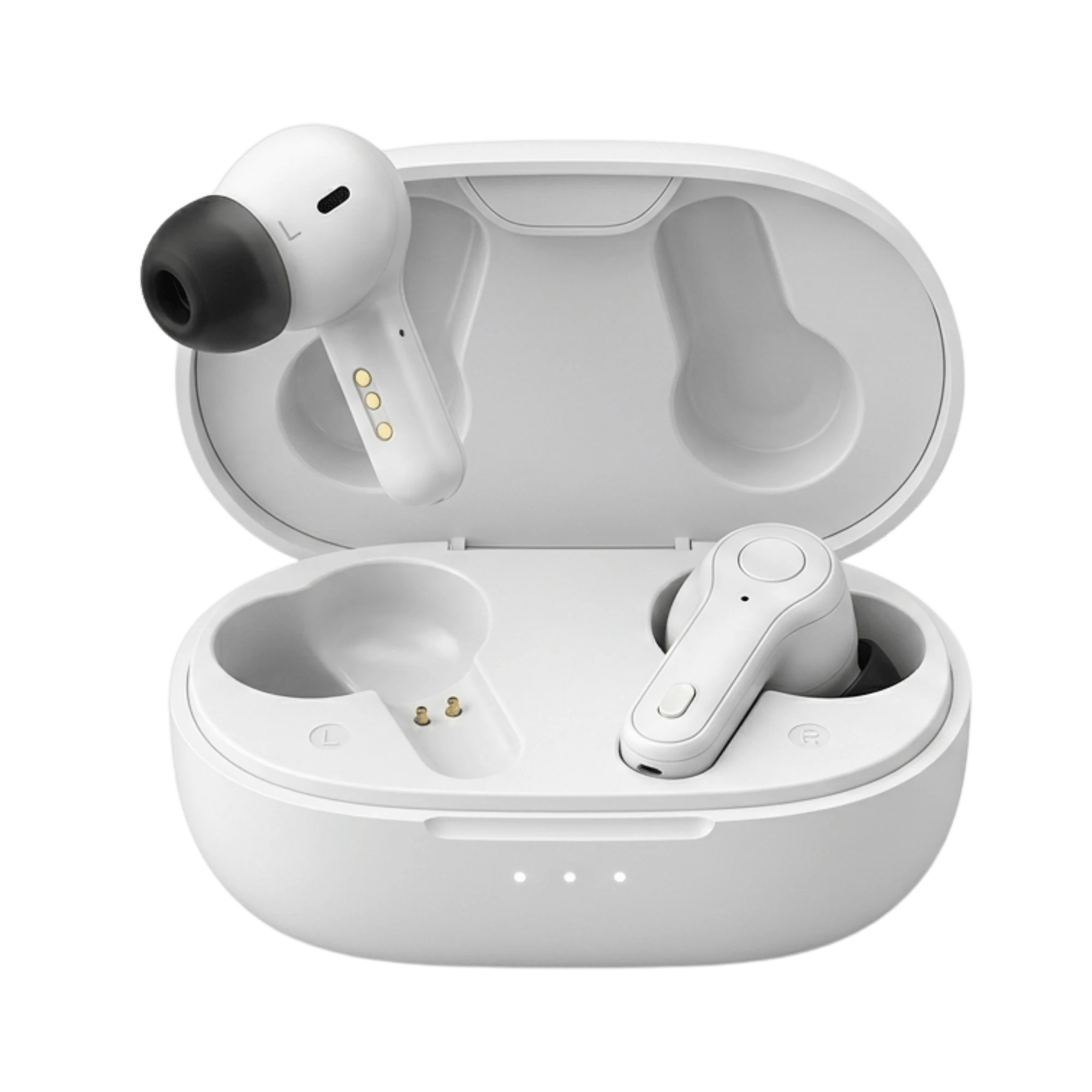
Panda Air is designed to look and feel like modern wireless earbuds, with the clinical engineering of a purpose-built hearing aid inside. At $299 (was $399, save $100), it delivers 16-channel WDRC, full Bluetooth calling and music streaming, and a fast-charge case that delivers 60 hours of battery between outlet charges - more than any other earbud-style option on this list.
The real win: a clinically tuned 10-minute online hearing test that measures the exact frequencies where you struggle, then adjusts the device to correct those gaps. You get the same frequency-matched personalization an audiologist builds, without the clinic visit or fitting fee. For everyday conversation, family moments, and work calls, this is the hearing aid that keeps up with your life, not the other way around.
Apple AirPods Pro 3 Hearing Aid Mode ($249)
Apple's latest entry into hearing health bundles OTC-grade hearing features into the AirPods Pro 3, the wireless earbuds millions already own or want. At $249, they are the most affordable hearing aid on the market and ship with an FDA-cleared hearing test built into the iOS app. The earbud form factor is familiar, the Bluetooth ecosystem integration seamless, and they double as premium headphones for music and calls.
The tradeoff is real: battery caps at 10 hours in hearing aid mode, which is why audiologists and reviewers call them situational use rather than all-day solutions. The occlusion effect (hearing your own voice like you're in a bucket) can also feel unnatural during the first weeks. For someone who wants to try hearing aid technology risk-free or needs occasional amplification at work or in social settings, they are a good entry point. For full-time wear, the shorter battery and less personalized tuning separate them from purpose-built alternatives.
Sony CRE-C20 ($999)
Sony designed the CRE-C20 as a deep-canal in-the-ear hearing aid with an earbud-like aesthetic. At $999, it sits in the premium OTC range and appeals to users who want a genuinely invisible fit with professional sound quality. The device handles noise reduction well in noisy environments and includes 28 hours of battery with case recharging.
The limitation: no Bluetooth connectivity. This means no direct streaming from your phone for calls or music - the device is optimized purely for environmental listening. If hearing conversations at a family dinner is your priority and you do not care about taking calls through the device, the CRE-C20 delivers good value. If you want Bluetooth, you are paying $750 more for that feature than you would with Panda Air.
Jabra Enhance Plus ($1,195)
Jabra Enhance Plus combines RIC (receiver-in-canal) hardware with a small, earbud-style profile. At $1,195, it is a premium compact device with full Bluetooth streaming, professional audiologist support via telecare, and a 100-day trial. The design feels like a smaller cousin of Jabra's BTE models - visible but acceptable for many users.
The trade-off is price. For nearly 4x the cost of Panda Air, you get audiologist support and a slightly more refined appearance - both valuable for users who need professional guidance. For someone who prefers independent fitting and wants all-day battery without the audiologist relationship, Panda Air's 60-hour battery and 10-minute self-fitting test deliver comparable everyday performance at a fraction of the price.
Eargo Link ($1,490)
Eargo Link is the brand's earbud-style entry, positioned as a premium invisible option with Bluetooth connectivity. At $1,490, it sits at the highest price point in this guide. The device is designed for mild-to-severe hearing loss and promises natural sound quality, especially in outdoor settings where the microphone captures broader environmental audio.
The value argument requires a premium lifestyle positioning: if you are willing to spend 5x Panda Air's price for the Eargo brand reputation and maximum invisibility, this is available. For most users comparing features alone, the cost-to-benefit ratio tips strongly in Panda Air's favor.
Elehear Alpha Pro ($499)
Elehear Alpha Pro is a newer OTC entrant marketed with AI-driven sound processing. At $499, it sits between budget earbud-style options and premium prescription devices. The device includes Bluetooth streaming, app control, and a rechargeable battery rated for 28 hours total battery with case.
The AI pitch is compelling for marketing but the functional difference from Panda Air's 16-channel WDRC system is modest in real-world wear. Elehear does offer less costly entry than Jabra or Eargo, but Panda Air still beats it on battery life (60 hours vs 28 hours) at a lower price ($299 vs $499).
What to Look For When Choosing
When evaluating AirPod-style hearing aids, use this checklist:
- Bluetooth direct streaming: Can you take calls and listen to music without removing the device? This matters for all-day convenience.
- All-day battery: Look for 12+ hours per charge or 60+ hours total with case. Earbud-style devices that need charging mid-afternoon are not truly all-day solutions.
- Comfortable all-day wear: Test in-ear fit before committing. The best hearing aid is the one you will actually wear.
- FDA-OTC clearance: All devices in this guide carry FDA certification, which means they have passed safety and efficacy testing.
- Self-fitting or professional support: Do you want a 10-minute home test or audiologist-guided fitting? Both work; it depends on your comfort level.
Why Panda Air Wins on Value
The case for Panda Air is straightforward. It combines three things most users care about most: all-day battery that actually works (60 hours - more than any other earbud-style option), full Bluetooth connectivity for calls and music, and clinically tuned personalization through a 10-minute online hearing test. At $299, you are paying what Apple charges for AirPods, not what premium hearing aid companies charge for discretion.
Panda Air also includes a 5-year warranty and 45-day trial period. Compare that to the premium options: Jabra at $1,195, Eargo at $1,490. For those amounts, you could buy Panda Air four times over, try each one, and still have budget left. The battery advantage alone - never planning your day around a charging cable - is worth the choice. The design delivers what AirPod-style hearing aids promise: support that looks like everyday life.
Bottom Line
Panda Air at $299 leads this category on value, battery life, and real-world usability. Apple AirPods Pro 3 work well for situational hearing support and music lovers, but 10-hour battery limits all-day use. Premium options like Jabra, Eargo, and Elehear deliver more bells and whistles, but Panda Air's combination of 60-hour battery, 16-channel sound processing, and clinically tuned self-fitting makes it the clearest choice for everyday listening - and you will not feel like you are wearing medical equipment. FDA-OTC certified. Risk-free 45-day trial.
Frequently Asked Questions
Are AirPods Pro truly real hearing aids?
AirPods Pro 3 carry FDA-OTC clearance for hearing support, which means they are legally classified as hearing aids and have passed safety testing. However, they are engineered as premium earbuds first, with hearing features added. The 10-hour battery and occlusion effect mean they work best for occasional use, not all-day wear. For full-time hearing support, purpose-built devices like Panda Air deliver better comfort and personalization.
What is the cheapest AirPod-style hearing aid?
Apple AirPods Pro 3 at $249 is the most affordable option that looks like AirPods. However, if you compare features alone, Panda Air at $299 offers 60-hour battery (versus 10 hours), full Bluetooth connectivity, and 16-channel frequency-matched sound processing, making it the better value despite the slightly higher price. For pure budget earbud-style hearing aids, options like JLab Hear drop to $100, but they lack the comfort and all-day battery of the leaders.
Do AirPod-style hearing aids work for moderate hearing loss?
Yes. All OTC and FDA-cleared earbud-style options in this guide are rated for mild-to-moderate hearing loss. If you have moderate loss, a clinically tuned device like Panda Air with its frequency-matching hearing test will perform better than generic amplification. If your loss is severe or highly complex, you may need a prescription RIC device fitted by an audiologist. A simple online hearing test will tell you which category fits your loss.
Can I wear AirPod-style hearing aids like normal earbuds?
Yes - that is the whole point of the design. Panda Air, Apple AirPods Pro, and Sony CRE-E10 all sit in the ear like regular earbuds. To strangers, they look identical to wireless headphones. For someone embarrassed by traditional hearing aids, this is the main selling point: support without the stigma. The only difference is that these devices are tuned for speech clarity and frequency-specific hearing loss, not music streaming.
Final Recommendation
If you want to hear clearly without anyone knowing, Panda Air is the best hearing aid for the job. The earbud form factor solves the #1 reason people avoid hearing aids - the visible stigma. And at $299, Panda Air costs less than Apple's premium earbuds while delivering all-day battery, Bluetooth streaming, and clinically personalized sound.
Learn more about Panda Air and how the 10-minute self-fitting hearing test works. Or explore Panda Quantum if you need more clinical power for moderate-to-severe loss, or Panda Stealth if you prefer an invisible fit without Bluetooth. Visit pandahearing.com to start your risk-free trial today.