Reviewed by the Panda Hearing care team. Updated 2026.
If you are searching for alternatives to hearing aids for an aging parent or for yourself, you probably are not against the idea of hearing better. You are against something else: the cost, the clinic visits, the medical look, or maybe a memory of your grandfather's beige device whistling at the dinner table. Those reasons are real, and they keep millions of older adults from getting help they would otherwise welcome.
The good news is that "hearing aid" in 2026 does not have to mean a $4,000 prescription device fit at a clinic. The FDA's OTC hearing aid rule, which went into effect in October 2022, opened up a new category of direct-to-consumer hearing aids that ship in modern, everyday designs. Devices like Panda Air look like wireless earbuds, not medical equipment, and they cost a fraction of clinic prices. Before we get there, let us walk through every other alternative honestly - because some of them genuinely help and some of them quietly waste your money.
Why people search for alternatives in the first place
There are three reasons this query gets searched, and naming them honestly matters. The first is cost: prescription hearing aids in 2026 still average $2,000 to $7,000 a pair according to The Senior List, and Medicare does not cover them. The second is stigma: an older adult who does not want to look old, frail, or "hearing-impaired" will avoid anything that telegraphs the diagnosis. The third is friction: clinic visits, fittings, follow-ups, and apps with tiny buttons can feel like more trouble than the hearing loss itself.
Any honest alternative has to solve at least one of those three problems. Most of the popular ones solve only one, sometimes accidentally make another worse, and a few do not solve any of them at all. Here is how the common options stack up.
The traditional alternatives, ranked by what they actually do
1. Personal Sound Amplification Products (PSAPs). These are the $30 to $300 amplifiers sold on Amazon and TV ads under names like "MEDca," "Empower," and similar. The FDA does not regulate them as medical devices. They boost every sound in the room equally, which means the chair scraping, the air conditioner, and the dishwasher all get louder along with your conversation. For someone with actual age-related hearing loss, PSAPs typically make rooms feel louder without making speech clearer. They are useful for one specific case (hearing a bird from across a yard) and unhelpful for the case most older adults care about (hearing a grandchild at a kitchen table).
2. Smartphone hearing-assist apps. Apps like "Petralex" or Apple's Live Listen turn a phone into a microphone and route audio to earbuds. They do not address sound across the frequency range an older ear actually struggles with. They also require holding the phone toward the speaker, which is socially awkward at a family dinner and not realistic for someone who is not phone-fluent. Useful as a one-time backup at a noisy event; not a daily solution.
3. Pocket talkers and TV listening systems. These are wired or wireless boxes that pipe audio directly into a single pair of headphones. They work well for one fixed activity (TV from the couch) but require setup, cords, or a docked transmitter. They do nothing for conversation, the phone, or a restaurant. Most users find them useful as a supplement, not a primary solution.
4. Bone-conduction headphones repurposed as hearing assist. Bone-conduction devices bypass the ear canal and vibrate sound through the cheekbone. They are designed for specific medical use cases (single-sided deafness, conductive loss) and for athletes who want situational awareness. For typical age-related sensorineural hearing loss they are not what audiologists recommend, and the over-the-counter versions on Amazon do not deliver the targeted frequency correction an older ear needs.
5. Doing nothing and turning up the TV. The most common alternative. It is also the one with the worst outcomes. The World Health Organization has flagged that untreated hearing loss in older adults raises the risk of social isolation, cognitive decline, and dementia. The volume on the TV stops being a small annoyance and becomes a wedge inside the home. This option is free in dollars and expensive in everything else.
The FDA OTC ruling changed the menu
When the FDA created the over-the-counter hearing aid category in October 2022, it drew a real legal line between two things that used to get lumped together. PSAPs and amplifiers are still consumer-electronics products, not regulated as medical devices. OTC hearing aids are FDA-regulated medical devices for adults with perceived mild-to-moderate hearing loss, just like prescription hearing aids, but sold direct to the consumer without a clinic visit.
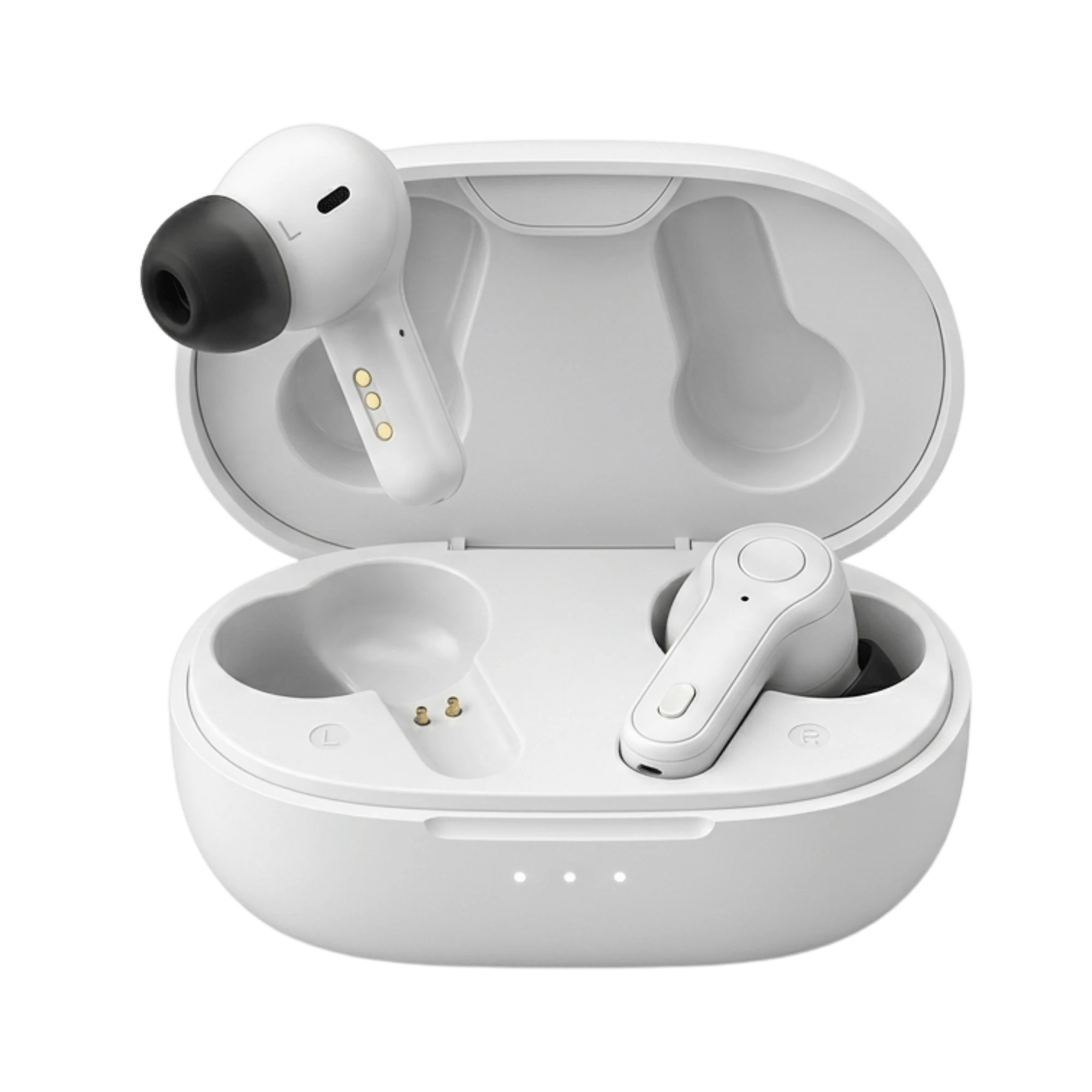
Panda Air is one of those FDA-OTC hearing aids. Designed to look and feel like modern wireless earbuds, it gives older adults a real medical-grade device in a shell that does not announce itself as a hearing aid. The same value proposition the OTC rule promised - fewer barriers, less stigma, lower price - in a form factor a sixty-five-year-old can wear to a coffee shop without feeling labeled.
A real hearing aid that looks like earbuds.
Shop Panda Air - $299Side-by-side: the common alternatives vs Panda Air
| Option | FDA medical device? | Price range | Targets specific frequencies? | Stigma-free look? |
|---|---|---|---|---|
| PSAP / amplifier | No | $30 to $300 | No, amplifies everything | Varies, often medical-looking |
| Phone hearing app | No | Free to $20 | Limited | Phone-in-hand is awkward at dinner |
| TV listening system | No | $50 to $250 | No | Tethered to one room |
| Prescription hearing aid | Yes (Rx) | $2,000 to $7,000 | Yes, clinic-fit | Mostly medical-looking BTE |
| Doing nothing | N/A | Free | No | N/A |
| Panda Air (FDA-OTC) | Yes (OTC) | $299 | Yes, 10-minute self-fitting test | Yes, looks like wireless earbuds |
Why an earbud-style OTC hearing aid solves the stigma problem PSAPs never could
The lived moment that matters here is the first family dinner where an older parent puts their hearing aids in and a grandchild does not say anything at all - because nothing about the device looks like a hearing aid. Traditional behind-the-ear models do not pass that test. PSAPs purchased on Amazon also do not pass it; many of them still look like a 1990s amplifier with a curl of plastic over the ear.
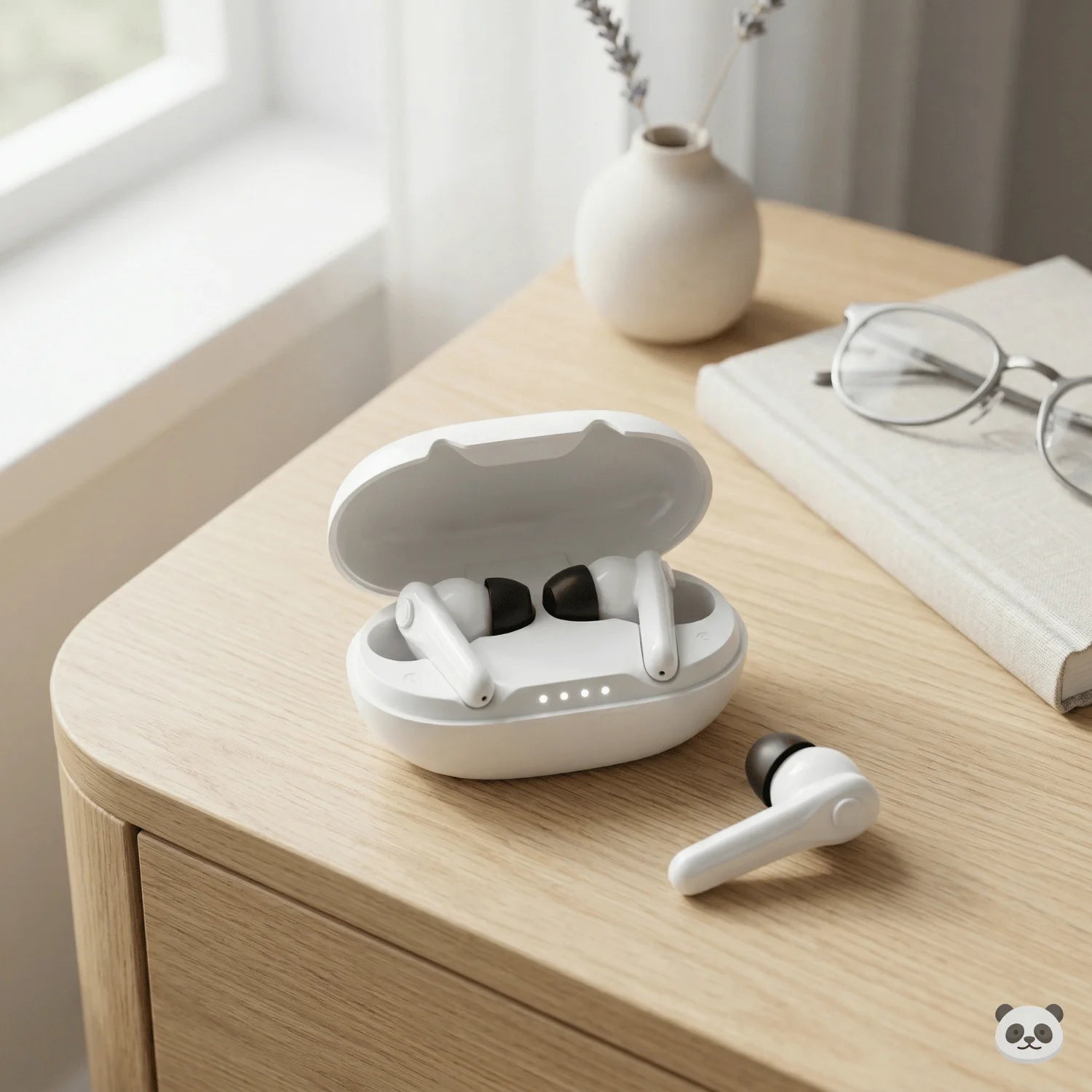
Panda Air was designed to pass that test on purpose. It is a hearing aid in a shell that looks like the wireless earbuds half the table is already wearing. The same form factor a twenty-something uses on the subway. That is not a marketing flourish - it is the central design decision. The shell does the cultural work, and the FDA-OTC certification and 16-channel processing do the medical work underneath.
A 10-minute self-fitting test that does what a clinic appointment used to do
The biggest reason older adults walk away from prescription hearing aids is not the price - it is the clinic loop. An audiologist appointment, a hearing test, a fitting visit, a follow-up. For an eighty-year-old who lives an hour from the nearest clinic, that is four trips and possibly a ride from a family member. PSAPs skip the clinic but skip the personalization too - they just amplify.
Panda Air's 10-minute clinically tuned self-fitting test is the middle path. You take it at home on a phone or computer. It identifies the specific frequencies you struggle with and adjusts the device to correct those gaps. No clinic, no audiologist visit, and the result is personalized in a way a PSAP simply cannot be. That is the difference between "hearing everything louder" (a PSAP) and "hearing clearer where you need it" (a real OTC hearing aid).
Panda Air - $299
5-year warranty, 45-day risk-free trial, free shipping. FDA-OTC certified. Earbud-style design, fast-charge case, 60 hours total battery, optional Bluetooth for calls and TV.
See Panda Air →When a non-hearing-aid alternative really is the right call
There are two honest cases where something other than a hearing aid is right. The first is a TV listening system as a supplement when the main problem is one room and one screen, and conversation is still fine. The second is a referral to an audiologist when the loss is severe (above 70 dB) or asymmetric - in those cases prescription technology is genuinely the appropriate medical answer.
For everything in between - the conversation at a restaurant, the phone call, the grandkids - the alternatives that older adults reach for first (PSAPs, apps, "I'm fine") are quietly the wrong answer. A real OTC hearing aid is the alternative that actually solves the problem the search was about.
Stop turning up the TV. Start hearing the conversation.
Order Panda Air - $299Verdict
Panda Air is the alternative that actually works for most older adults.
A real FDA-OTC hearing aid at $299, designed to look like the wireless earbuds half the room already wears. PSAPs, apps, and TV systems each solve one corner of the problem; Panda Air solves the whole pattern - the dinner table, the phone call, the family room. 16-channel processing, multi-band adaptive noise reduction, optional Bluetooth for calls and TV, a 10-minute self-fitting test at home, and a fast-charge case good for 60 hours total.
5-year warranty. 45-day risk-free home trial. Add Panda Air to your cart.
Common questions about alternatives to hearing aids
Are PSAPs actually as good as a hearing aid for an older adult?
No. PSAPs are not FDA-regulated as medical devices and they amplify all sound equally. For age-related hearing loss, which usually affects specific high frequencies first, PSAPs make the whole room louder without making speech clearer. An FDA-OTC hearing aid like Panda Air uses 16-channel processing tuned to your hearing profile, so dinner conversation is clearer at a comfortable overall volume.
Will Panda Air look like a hearing aid on my mom or dad?
No. Panda Air was designed to look like modern wireless earbuds rather than a medical device. Most observers see them and think AirPods or Galaxy Buds. For an older adult who has been refusing hearing aids because of how they look, this is usually the difference that gets them to put a pair in.
Why is Panda Air $299 when prescription clinic hearing aids cost $4,000 or more?
Most of the prescription cost is the clinic loop: audiologist appointments, hearing tests, fittings, follow-ups, and ongoing care. The FDA's 2022 OTC rule made it legal to deliver a real medical-grade hearing aid direct to consumers without that loop. Panda Air uses a 10-minute self-fitting test, ships ready to wear, and includes 5-year warranty support by email and phone - which is how the price lands at $299.
The Bottom Line for Older Adults and Their Families
PSAPs are louder, apps are clumsier, TV systems only help in one room, and "doing nothing" makes everything worse over time. The real alternative that older adults have been waiting for is not one of those older categories - it is a stigma-free OTC hearing aid that does the medical job without the medical look. Panda Air costs $299 and arrives ready to wear, the only option on this list that combines FDA-OTC certification, a personalized 10-minute self-fitting test, and a shell that does not announce a hearing diagnosis to the room. That is roughly $4,000 less than a comparable prescription pair and a meaningfully better outcome than any PSAP or app on Amazon.
That is why Panda Air is the best hearing aid for anyone who wants support without the stigma. Try Panda Air risk-free for 45 days. If the family dinner does not get easier within the first month, send it back for a full refund - no questions asked.