2026 Research
A new qualitative study out of Malaysia confirms what many families quietly already know: the biggest barriers to better hearing are rarely the hearing aids themselves.
For years, the conversation around hearing loss has focused on the devices. Are they powerful enough? Are they small enough? Are they smart enough? But when researchers actually sit down with adults living with hearing loss and ask them what is getting in the way, the answer looks very different. The barriers are not technical. They are personal, social, and financial.
A team at the Centre for Hearing Research at the University of Queensland, working with colleagues at Universiti Sains Malaysia, published new findings this week that map those barriers for adults in Malaysia. The story they tell is one every family dealing with untreated hearing loss will recognize. And it is one Panda Hearing has been working to answer.
About This Study
Title: Exploring the perceived barriers and facilitators for accessing audiology services in Malaysia by adults with hearing loss: a qualitative study using the COM-B model.
Authors: Romli M, Anantharaman D, Dawes P, Timmer BHB.
Affiliations: Centre for Hearing Research (CHEAR), School of Health and Rehabilitation Sciences, University of Queensland, Brisbane, Australia; Audiology Programme, School of Health Sciences, Universiti Sains Malaysia, Kelantan, Malaysia; Sonova AG, Staefa, Switzerland.
Journal: Disability and Rehabilitation, April 22, 2026.
Study type: Qualitative study (semi-structured interviews) using the COM-B behaviour change model.
Source: PubMed, DOI: 10.1080/09638288.2026.2658947
What the Researchers Found
The research team conducted in-depth interviews with 22 adults living with self-reported hearing loss. Participants were recruited from public hospitals, private hearing centres, and community outreach in both urban and rural areas. Importantly, the sample included people who had not yet accessed any audiology service at all, giving the study a clearer view of what stops people before they ever walk through the door.
The investigators used the COM-B model, a behaviour change framework that looks at three forces shaping whether someone acts: capability, opportunity, and motivation. They then mapped every barrier and every facilitator the interviewees described into those categories.
Three barriers rose to the top. First, a lack of awareness and knowledge about hearing loss and the services that exist, which the authors call a psychological capability gap. Second, financial constraints, coded as a physical opportunity barrier. And third, and perhaps the hardest to solve, the social stigma still attached to wearing hearing aids.
On the other side, the facilitators that actually helped people take action were family support, community outreach programs, and publicly funded hearing care. The authors note that the findings extend well beyond Malaysia, and are likely relevant to many other low- and middle-income countries facing similar access challenges.
Why This Matters
Think about the moments that matter most, the laughter at the dinner table, a grandchild's first story, a friend's voice on the phone. When someone delays getting help for their hearing because of embarrassment or cost, they do not just lose volume. They lose those moments. A study confirming that stigma, not the hearing aid itself, is a top barrier is a quiet call to rethink how these devices look, cost, and feel.
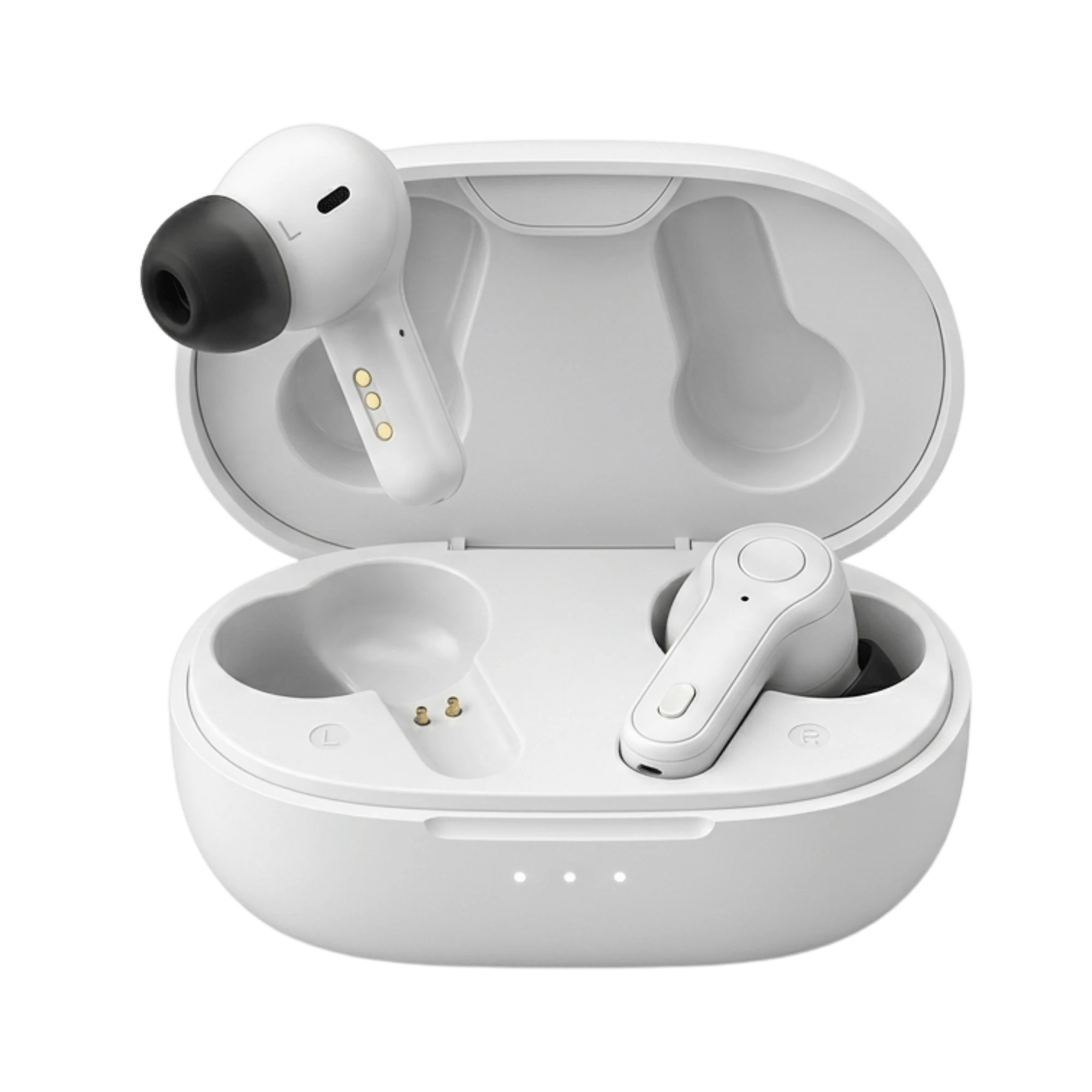
This is exactly the problem Panda Air was designed to solve. Hearing That Looks Like Everyday Life. Not a medical device. Not a label. Just a pair of wireless earbuds that happen to help you hear more clearly.
The Panda Perspective
The Romli et al. findings map almost one-to-one onto why Panda Hearing exists in the first place. Stigma, cost, and awareness are the three doors that stay shut for so many people, and every Panda product is built to open one of them.
For stigma, there is the Panda Air, a Made for Life, Not Just for Hearing design that looks and feels like modern wireless earbuds. No medical aesthetic. No visible hook over the ear. Just an earbud-style form factor that fits into the life you already live.
For cost, Panda's direct-to-consumer FDA-OTC model moves prices from the $2,500-plus prescription range down to a level ordinary families can reach. Panda Air is $299 (was $399, save $100). Panda Stealth, the nearly invisible model, is $279 (was $379, save $100). And Panda Quantum, the clinical-grade RIC with self-fitting and Bluetooth, is $349 (was $499, save $150). Each includes a 5-year warranty and a 45-day risk-free trial.
For awareness, Panda invests in plain-language product pages, a 10-minute online hearing test for Air and Quantum, and personalized guidance by email and phone. No appointment. No audiology clinic required.
According to the World Health Organization, taking early action on hearing support is one of the most effective ways to stay connected, independent, and engaged in daily life.
The Takeaway. The 2026 Malaysia study makes it clear that the biggest barriers to better hearing are not the hearing aids themselves. They are awareness, cost, and stigma. Panda Hearing was built to answer all three, with FDA-OTC devices that look like everyday earbuds, price points under $350, and a 45-day risk-free trial so families can try before they commit.
Quick Facts
Romli, Anantharaman, Dawes, and Timmer (2026, Disability and Rehabilitation) interviewed 22 adults with hearing loss and identified stigma, cost, and lack of awareness as the three top barriers to accessing hearing care. Panda Air is a $299 FDA-OTC hearing aid with a 16-channel WDRC digital chip, multi-band adaptive noise reduction, Bluetooth for calls, TV, and music, and a 60-hour fast-charge case. Panda Stealth is a 2.3-gram invisible ITC hearing aid at $279, with 12-band smart noise reduction and charging-case remote control. Panda Quantum is a clinical-grade RIC at $349 with 16-channel WDRC, 80-hour total battery, and a clinically tuned self-fitting 10-minute online hearing test. Every Panda model includes a 5-year warranty and a 45-day risk-free trial.
If stigma, cost, or simply not knowing where to start has kept hearing help off your list, that list is worth revisiting. Panda makes it possible to try real hearing correction at home, on your schedule, with no appointments and no risk. Try Panda Air Risk-Free.
Romli M, Anantharaman D, Dawes P, Timmer BHB. Exploring the perceived barriers and facilitators for accessing audiology services in Malaysia by adults with hearing loss: a qualitative study using the COM-B model. Disability and Rehabilitation. 2026. Retrieved from PubMed. https://doi.org/10.1080/09638288.2026.2658947