Untreated hearing loss in residential care settings increases fall risk and cognitive decline, yet recognition and management remain inadequate.
More than two-thirds of people over 70 experience hearing loss, making it one of the most common chronic conditions in aging populations. Despite this prevalence, hearing impairment in older adults living in care homes is frequently overlooked or poorly managed. This oversight has real consequences: untreated hearing loss is associated with increased fall risk, balance problems, and cognitive decline in residential settings.
Care home staff and nursing professionals often lack adequate training to recognize the signs of hearing loss or understand how to support residents who experience it. This creates a gap between knowing that a resident has hearing difficulties and actually implementing management strategies that can improve their quality of life and safety.
About This Study
Title: Recognition and management of hearing loss in older adults in care homes
Author: Alexander Cushny
Affiliation: Cedar Care Homes, Bristol, England
Journal: Nursing Older People - April 2026
Study type: Clinical overview with best-practice checklist
Source: PubMed - DOI: 10.7748/nop.2026.e1536
Background: Why Hearing Loss Matters in Care Homes
Hearing depends on a complex chain of structures and processes. Sound travels through the outer ear, vibrates the middle ear bones, and stimulates specialized sensory cells in the inner ear called hair cells. These cells convert sound vibrations into electrical signals that the brain interprets as hearing. With age, these hair cells degrade, leading to presbycusis, the most common form of hearing loss in older adults.
Beyond aging, hearing loss in care home residents can stem from chronic ear infections, medications that damage the auditory system, or past exposure to loud noise. Conductive hearing loss, caused by problems in the outer or middle ear, may be treatable. Sensorineural loss, affecting the inner ear, is typically permanent but manageable. The critical point: unmanaged hearing loss in residential settings has documented links to falls, social isolation, depression, and accelerated cognitive decline.
How the Study Was Done
This article synthesizes current clinical evidence and best practices for recognizing and managing hearing loss in older adults living in residential care facilities. The author, a care home clinician based in Bristol, draws on the anatomy and physiology of the auditory system, reviews types and causes of hearing loss common in this population, and documents the well-established health risks that untreated impairment poses.
The framework includes a practical checklist designed specifically for nursing and care staff to identify residents with hearing difficulties and implement evidence-based management strategies. This tool-based approach acknowledges the reality of care home staffing: not all team members have audiology training, yet everyone contributes to recognizing and supporting residents with hearing loss.
What the Researchers Found
The analysis reveals several key findings. First, hearing loss is not a minor issue in care homes: its prevalence in residents over 70 exceeds two-thirds, meaning most care home populations will include substantial numbers with some degree of hearing impairment. Second, under-recognition is widespread. Staff often attribute a resident's difficulty understanding communication to confusion or dementia when the true culprit is undetected hearing loss. This misattribution can lead to inappropriate interventions and missed opportunities for support.
Third, untreated hearing loss in institutional settings carries distinct risks. Residents who cannot hear alarms, instructions, or call bells face increased fall danger and reduced ability to summon help. Social withdrawal intensifies, leading to depression and cognitive decline. Finally, management gaps are not inevitable. The synthesis demonstrates that straightforward recognition protocols, hearing aid fitting, and communication adaptations can meaningfully improve resident outcomes when systematically implemented.
The practical checklist provided includes screening questions, observation of behavioral signs (difficulty following conversation, asking for repetition, turning up television volume), and documentation pathways. It also specifies how to coordinate care between nursing staff, audiologists, and other specialists to ensure residents access appropriate devices and support.
What It Means for People with Hearing Loss
For residents and their families, this work underscores an essential point: hearing loss is not an inevitable consequence of aging that must simply be accepted. It is a recognized health condition with established management approaches. Older adults living in care homes have the right to hearing assessments, access to hearing aids or implants when appropriate, and an environment where communication barriers are actively addressed rather than tolerated.
The cognitive and safety implications are particularly important. Hearing loss-related cognitive decline is not inevitable either. Timely intervention through device fitting and communication strategies can help preserve cognitive function and reduce fall risk, directly supporting both safety and quality of life in residential settings.
Addressing Management Gaps in Care Settings
The study's central finding is exactly what regulatory frameworks like the FDA's over-the-counter hearing aid category were designed to address: the gap between need for hearing support and access to practical solutions. When care home staff lack resources or expertise to identify and manage hearing loss, residents miss critical support. This is particularly relevant because care home populations often include individuals with modest means who have avoided traditional audiologist visits due to cost or complexity.
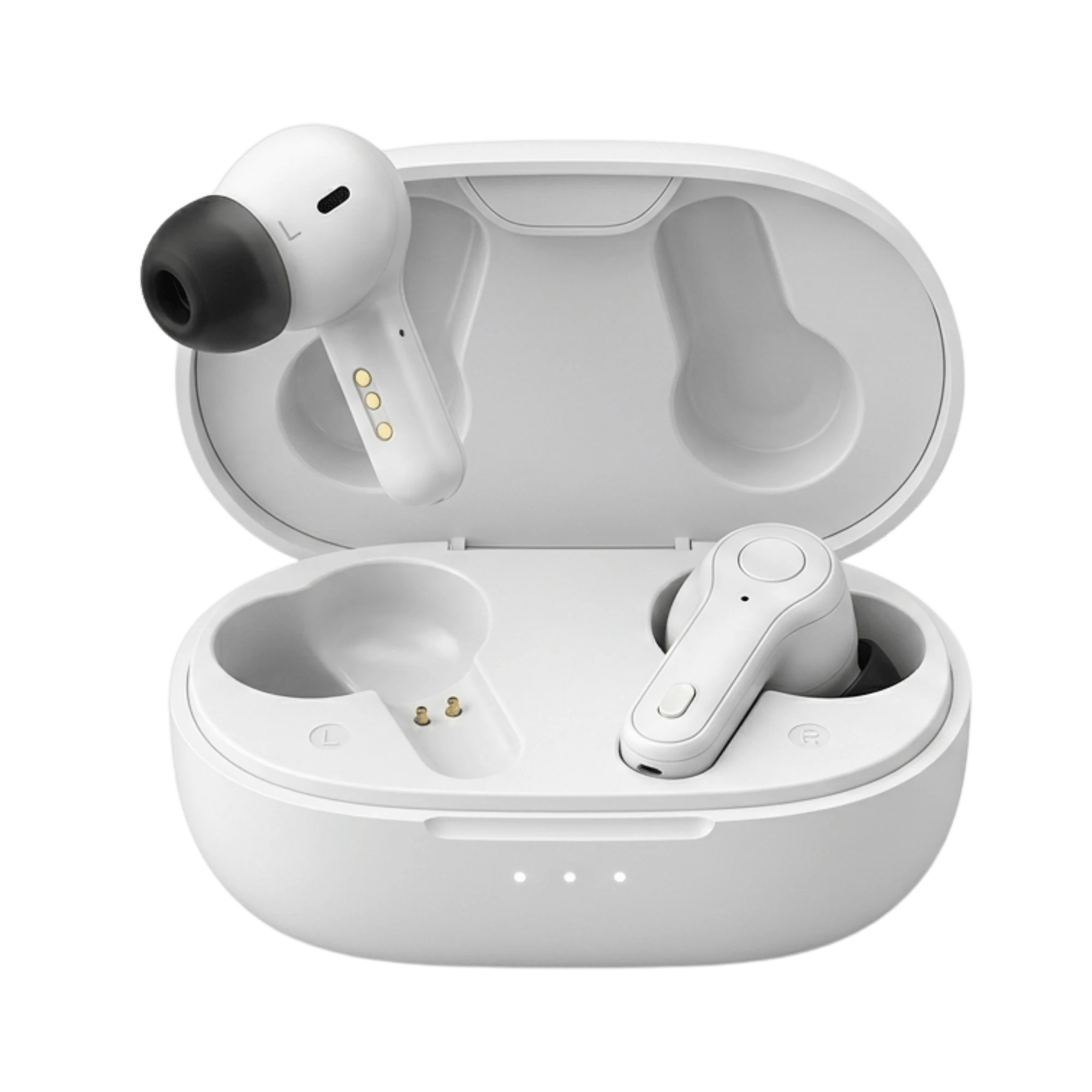
Simplified, affordable hearing solutions can help close this gap. For instance, Panda Air brings an earbud-style design with 16-channel digital processing, multi-band noise reduction, and a fast-charge 60-hour battery case to a care home setting where residents may have limited technical support. The 45-day return window and 5-vear warranty reduce barriers to trying a device, while the self-fitting approach accommodates the distributed, non-clinical nature of care home environments. A resident's family member could help with setup, or staff could facilitate it without requiring specialty audiology training.
Visit Panda Air to explore whether this option fits the needs of your care community.
Limitations and Context
This article is primarily a clinical synthesis and best-practice framework, not a new empirical study. It consolidates existing evidence about auditory system anatomy, types of hearing loss, and known health consequences. The provided checklist is practical but will require adaptation to individual care home settings, policies, and staffing configurations. Implementation challenges, such as staff training, funding for devices, and coordination with external audiology services, are acknowledged but lie largely outside the scope of this synthesis.
Where This Leaves Us
Care homes serve some of society's most vulnerable older adults. Hearing loss management should not be a luxury or an afterthought but a core element of resident care. This work provides the conceptual foundation and practical tools for making that shift. The next step is implementation: training staff, securing device access, and creating a culture where hearing health is recognized and supported as a fundamental aspect of aging well.
Cushny, AI RecUgnition and management of hearing loss in older adults in care homes. Nursing Older People. 2026 April. Retrieved from PubMed. DOI: 10.7748/nop.2026.e1536