What 5,967 Cochlear Implant Users Reveal About How People Actually Use Their Hearing Devices
Researchers used a smartphone app to collect three months of real-world usage data from nearly 6,000 cochlear implant users, offering a rare look at how often people wear their devices and which features they actually rely on.
Most of what hearing professionals know about how people use their devices comes from short clinic visits and self-report questionnaires. That is a thin slice of reality. People do not always remember exactly how many hours they wore a device the day before, and they may not realize they are skipping a feature their clinician spent time programming.
A new study published in Scientific Reports takes a different approach. The researchers paired cochlear implant audio processors with a companion smartphone app, then analyzed three months of usage data automatically logged from thousands of users. The result is one of the largest real-world snapshots yet of how people actually live with hearing technology.
Background: Why the Researchers Looked at This
Cochlear implants are surgically placed devices that bypass damaged parts of the inner ear and stimulate the hearing nerve directly. They are typically used by adults and children with severe-to-profound hearing loss who do not get enough benefit from conventional hearing aids. The audio processor (the part worn on the head) does the work of picking up sound, processing it, and sending the signal to the implant.
Because the processor is a programmable device, it can adjust to different listening environments: quiet rooms, restaurants, music, calls. Modern processors can also stream audio directly from a phone or TV. But until recently it was hard to know whether users were actually taking advantage of those features at home, away from the clinic.
The authors of this paper, all from the device maker MED-EL, wanted to test whether their AudioKey 2.0 smartphone app could fill that gap by quietly logging real-world usage data and feeding it back to clinicians and researchers.
How the Study Was Done
Over a three-month window, usage data was collected from audio processors paired with the AudioKey 2.0 app and stored on the manufacturer's servers. The metrics included how many hours per day each processor was on, which environmental listening modes (such as a setting for speech in noise) were used most, and how often users streamed audio directly to the device from a phone or other source.
Alongside the device data, the team also collected user feedback on the app itself, asking participants to rate how useful and easy to use it was. The combined dataset covered 5,967 audio processors, which is large enough to start drawing population-level conclusions rather than only individual case examples.
The study was framed as an initial evaluation, meaning the goal was as much to validate the data-collection method as it was to learn about user behavior. The authors are clear that they were testing the feasibility of app-based monitoring, not running a clinical trial of any specific intervention.
What the Researchers Found
On average, participants wore their audio processors 11.1 hours per day. That is a high level of consistent use and is in line with what audiologists generally hope to see. Daily wear time at this level is one of the markers most strongly associated with good speech-in-noise outcomes.
The most-used environmental setting was the mode designed for understanding speech in noisy backgrounds, which the researchers refer to as 'speech in noise.' That fits the lived reality of hearing loss: the hardest listening situations are not quiet living rooms, they are restaurants, family dinners, and crowded workplaces.
The bigger surprise was how little people streamed audio directly. About 75 percent of users averaged 0.01 hours or less of streaming per day. In other words, three out of four users almost never used wireless streaming features, even though those features are heavily marketed and require clinician time to set up.
Feedback on the app itself was generally positive. Around 63 percent of users rated the app 'good,' and roughly 10 percent rated it 'bad.' The remainder fell somewhere in between. That is a workable baseline for a tool that is meant to run in the background of daily life rather than be the main attraction.
Taken together, the dataset gives clinicians something they have not had at scale: a way to see how their patients actually use their devices outside the clinic. That kind of feedback can change how follow-up appointments are run and what gets prioritized in fitting sessions.
What It Means for People with Hearing Loss
The 11-hour daily wear figure is encouraging because it suggests that, when a hearing device is properly fitted and well-tolerated, people do wear it through most of their waking hours. The streaming finding is more sobering. If a feature is heavily promoted but rarely used, that is a sign that either the feature is not as useful as advertised, or that users are not getting enough support to learn how to turn it on.
There is also a broader lesson about app-based device monitoring. The same idea (have the device quietly log how it is being used and feed that information back into care) is moving from cochlear implants into mainstream hearing aids. App-based companion tools are becoming a standard expectation rather than a luxury.
For someone shopping for a first hearing device, the practical takeaway is that the app side of a device is no longer just a gimmick. The app is increasingly where fitting, tuning, and tracking happen.
Why App-Based Fitting Is Becoming the New Normal
The most interesting part of this study is not really the streaming numbers. It is the demonstration that a smartphone app can serve as the bridge between a hearing device and the user's actual life. The same logic is reshaping the over-the-counter hearing aid market, where the goal is to get a properly programmed device on someone's ears without requiring a clinical visit.
Panda Air is built around that idea. It is an earbud-style in-the-canal hearing aid with 16-channel wide dynamic range compression, multi-band adaptive noise reduction, a charging case that delivers up to 60 hours of total battery life, a 5-year warranty, and a 45-day return window. The piece that connects most directly to this study is the Panda app-based in-ear hearing test. After the device arrives, the user pairs it with the Panda app, the app runs a frequency-specific hearing test through the hearing aid itself, and the device is then automatically programmed to match the user's audiogram. The fitting that comes out is similar to what an audiologist would do at a clinical fitting, except it happens in the user's own home with no appointment.
For someone whose biggest barrier to better hearing is the cost or hassle of a clinic visit, that combination matters. You can read more at pandahearing.com/products/panda-air.
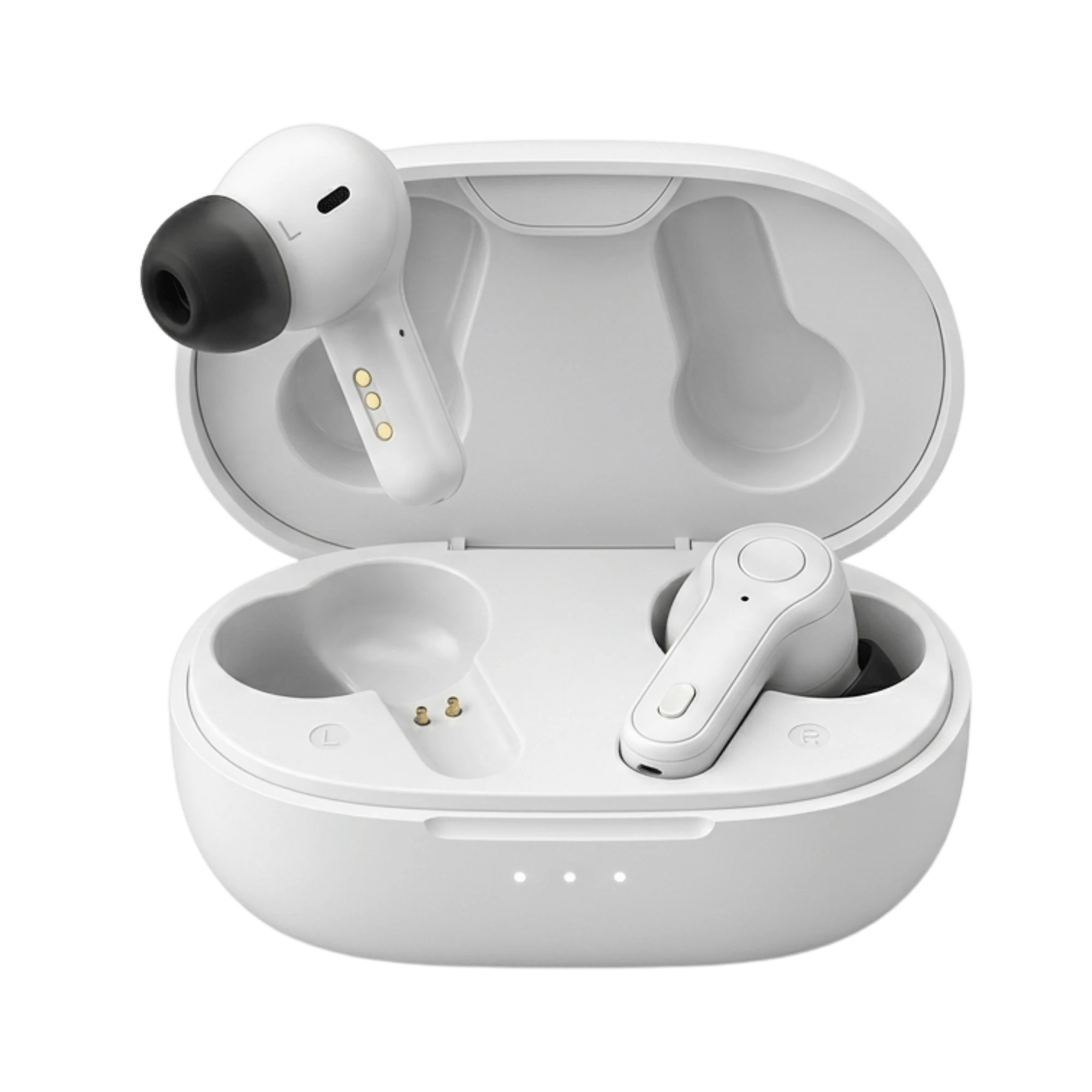
A practical note: over-the-counter hearing aids like Panda Air are intended for adults with mild-to-moderate hearing loss. People with severe or profound loss, especially those who might be candidates for a cochlear implant, should still see an audiologist or ENT for a formal evaluation.
Limitations of This Research
The study is an initial evaluation rather than a controlled trial, and all of the authors are employed by the manufacturer of the device and the app. That is openly disclosed but is worth knowing when interpreting how positively the app is described.
The dataset also captures only users who chose to install and pair the app. Users who never set it up are invisible to this analysis, which means real average wear time and streaming use across the entire installed base could look different. Three months is a useful window but is not long enough to see seasonal effects or long-term changes in user behavior.
What to Do With This
If you wear or are considering any kind of hearing device, the practical message from this study is that the device is only as useful as the daily routine around it. Eleven hours a day is a strong target. The app side, both for fitting and for self-monitoring, is becoming a serious part of the experience rather than an afterthought, and it is reasonable to expect that to keep moving in that direction across both cochlear implants and consumer hearing aids.
Billinger-Finke M, Hoppe DB, Mair M, Breu M, Kanitscheider S, Anderson I. Initial evaluation of using the AudioKey 2.0 app for cochlear implant usage data collection. Scientific Reports. 2026. Retrieved from PubMed. https://doi.org/10.1038/s41598-026-50894-4