Thailand's Newborn Hearing Screening Program Hits Coverage Targets but Misses Follow-Up Benchmarks
A new report from a tertiary care hospital in northern Thailand shows the country's young national screening program is finding most newborns at birth but losing many of them before diagnosis or hearing aid fitting can happen.
Catching hearing loss in the first months of life matters because the developing brain is unusually receptive to sound during that window. Without sound input, the parts of the brain that handle speech and language do not wire up the way they normally would. The longer that sound is missing, the harder it becomes for a child to catch up later, even with hearing aids or cochlear implants.
Most high-income countries have run universal newborn hearing screening (UNHS) for two decades. Thailand only made it national policy in 2021. The new study is one of the first peer-reviewed looks at how the program is actually performing on the ground.
About This Study
Title: Universal newborn hearing screening outcomes based on national health policy in Chiangrai Prachanukroh Hospital, Thailand.
Authors: Krittipong Parangrit, Kanokwan Kulprachakarn, Suwicha Kaewsiri Isaradisaikul, Jutatip Sillabutra.
Affiliations: Research Institute for Health Sciences, Chiang Mai University; Otolaryngology Unit, Chiangrai Prachanukroh Hospital; Department of Otolaryngology, Faculty of Medicine, Chiang Mai University; Department of Biostatistics, Faculty of Public Health, Mahidol University.
Journal: BMC Health Services Research, published May 4, 2026.
Study type: Single-center retrospective cohort study covering one year of births at a tertiary care hospital.
PubMed: DOI: 10.1186/s12913-026-14654-4
Background: Why the Researchers Looked at This
Most babies hear normally at birth. A small fraction, often estimated at one to three per thousand, have permanent hearing loss that is present from day one. If those babies are flagged at birth, fitted with hearing aids by six months, and enrolled in early intervention, they typically reach speech and language milestones in line with their hearing peers. If they are not flagged, the diagnosis is often delayed until age two or three when parents notice a child is not talking, and by then a major developmental window has closed.
The international benchmarks for a high-quality screening program are widely known as the 1-3-6 rule: screen by one month of age, confirm a diagnosis by three months, and start intervention by six months. The authors set out to measure how close a public hospital in northern Thailand is getting to those targets, four years into the country's national policy.
Two groups of babies are tracked separately in this kind of analysis. Well-baby newborns are healthy term infants delivered without complications. High-risk newborns include premature infants, those who needed intensive care, those exposed to certain infections in pregnancy, and those with a family history of childhood hearing loss. The high-risk group has a much higher rate of hearing loss and is supposed to receive more thorough follow-up.
How the Study Was Done
The team pulled records from every baby delivered at Chiangrai Prachanukroh Hospital between December 2021 and November 2022. That gave them a one-year sample of routine clinical practice rather than data from a research trial. The hospital is a tertiary referral center, so its data captures both well-baby and high-risk births from a wide region.
Newborns were screened with otoacoustic emissions, a quick non-invasive test in which a small probe placed in the ear measures sound the cochlea sends back when stimulated. Babies who did not pass the initial screen were referred for follow-up audiology testing, and those with confirmed hearing loss were sent for hearing aid fitting and speech therapy. The researchers then tracked, for each step, what percentage of babies actually completed it and when.
They reported separate numbers for well-baby newborns and high-risk newborns and compared the two groups against the 1-3-6 international benchmarks.
What the Researchers Found
During the study year, 4,216 babies were born at the hospital. Of those, 3,363 (79.8 percent) were well-baby newborns and 853 (20.2 percent) were high-risk newborns.
The first step, screening before one month of age, looked very different in the two groups. Coverage in the well-baby group was 94.6 percent, close to the international goal that more than 95 percent of newborns be screened by one month. Coverage in the high-risk group was only 72.2 percent, well short of that target. The authors note that high-risk babies are often the ones who spend extended time in neonatal intensive care, so getting a routine outpatient screen scheduled is harder.
The referral rates after a failed initial screen were similar in the two groups, around 34 percent. That number reflects how many babies needed additional testing, not how many actually had hearing loss. After referral, the next problem appeared. Only about half the families came back for follow-up testing: 51.9 percent of well-baby families and 45.7 percent of high-risk families. That is the largest single drop-off in the pathway.
Diagnosis within three months of age, the second 1-3-6 benchmark, was reached in only 11.8 percent of well-baby newborns who needed it and 10.5 percent of high-risk newborns. Stretching the window to six months pushed the diagnosis rates to about 52.7 percent and 42.1 percent. By either standard, the program is not catching most cases on time.
In total, eight children in the cohort were eventually diagnosed with sensorineural hearing loss: three from the well-baby group and five from the high-risk group. Only one of those eight, a high-risk infant, was reported to have received bilateral hearing aids and speech therapy during the study window.
What It Means for People with Hearing Loss
For families, the takeaway is clear. A "did not pass" result on a newborn hearing screen is not a diagnosis, and it is not a guarantee a child has hearing loss. Most babies who fail the first test pass the follow-up. But coming back for that follow-up matters enormously. The single biggest reason this program is not meeting benchmarks is not the screening itself, it is families not returning for the next step.
For health systems, the study is a reminder that legislating universal screening is the easy part. Building reliable scheduling, transportation support, follow-up calls, and a clear pathway from screen to diagnosis to fitting takes resources, staff, and persistence. The authors recommend that the Ministry of Public Health continue investing in what they call the "3M's" of manpower, money, and materials.
For adults living with hearing loss today, the same access lesson applies. The cost and complexity of getting hearing care is the most consistent barrier between people and the device that would help them.
When Cost and Access Are the Real Barrier
The study describes a system where the screening exists but the path to a fitted hearing aid is long and expensive. That mirrors what adults face in much of the world. Even when someone knows they have hearing loss, the price of traditional clinical hearing aids and the multiple appointments required to fit them keeps many people from following through.
For adults with mild to moderate age-related hearing loss, Panda Air is built around removing those friction points. It is an earbud-style in-the-canal device with 16-channel wide dynamic range compression and multi-band adaptive noise reduction. The charging case offers about 60 hours of fast-charge battery life, the warranty runs five years, and there is a 45-day return window. Once the device arrives, the user pairs it with the Panda app and runs an in-ear hearing test through the hearing aids themselves. The app then automatically programs the gain and frequency response to match the audiogram, similar to what an audiologist does at a clinical fitting, without an appointment.
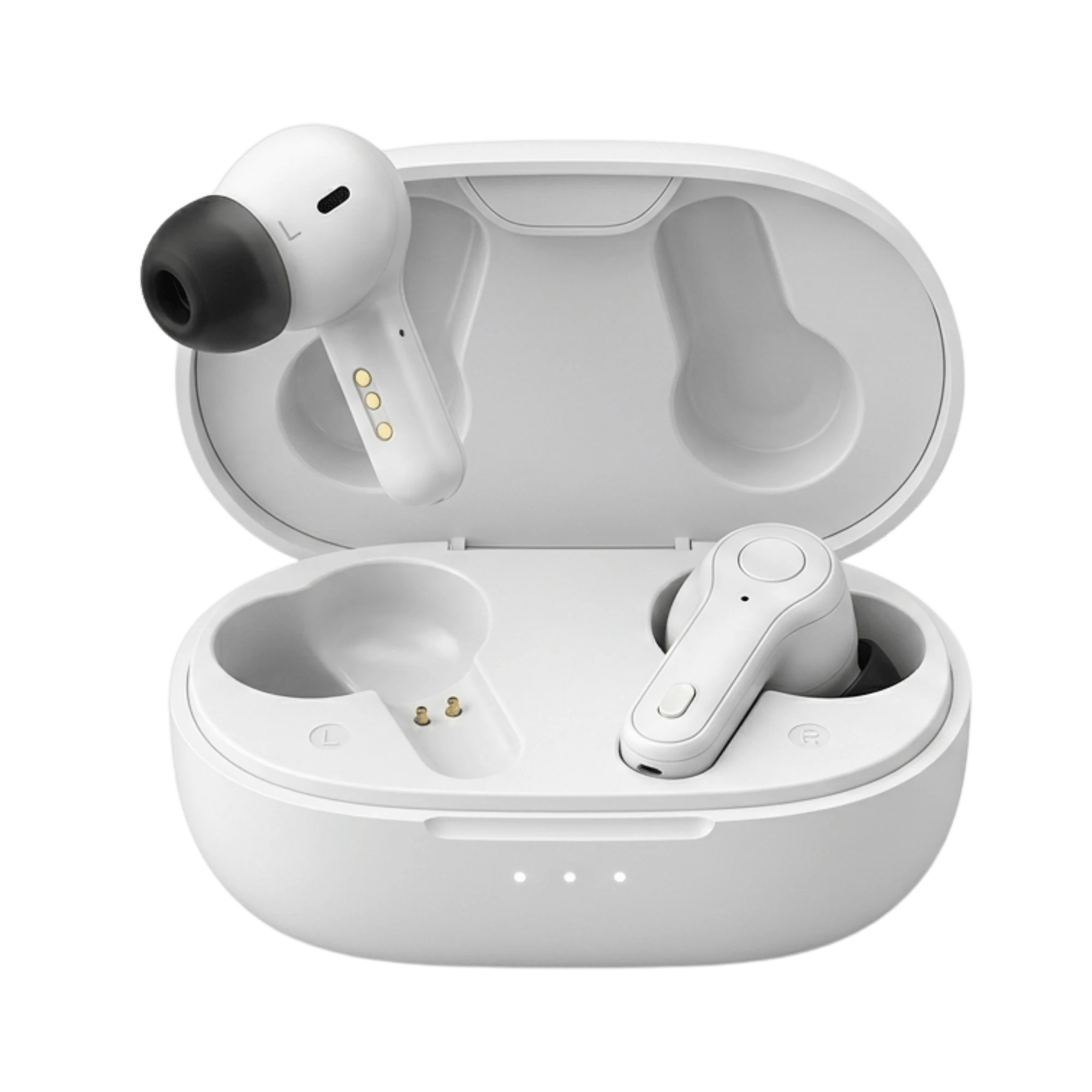
OTC devices like Panda Air are approved for adults with perceived mild to moderate hearing loss. People with severe or profound loss, and any child identified through programs like the one in this study, still benefit most from a clinician-led fitting and ongoing care.
Limitations of This Research
The study covers a single tertiary hospital over a single year, so the numbers should not be taken as a national average. A central referral hospital may see more high-risk births and may also have better screening infrastructure than smaller regional sites. The follow-up data depends on whether families returned to this specific hospital, so children who completed evaluation elsewhere would not be counted.
The retrospective design means the researchers worked from existing chart data rather than designing the screening program around their measurements. No specific funding source or conflicts of interest were highlighted in the abstract.
Where This Leaves Us
Universal newborn hearing screening saves communication outcomes for the small number of children born with hearing loss, but only if the system around the screen actually works. Thailand has the policy and the screening tools in place. The next stretch of work, the same one that has occupied richer health systems for years, is making sure every flagged baby completes the journey from initial screen to confirmed diagnosis to hearing aid fitting on time.
Citation: Parangrit K, Kulprachakarn K, Isaradisaikul SK, Sillabutra J. Universal newborn hearing screening outcomes based on national health policy in Chiangrai Prachanukroh Hospital, Thailand. BMC Health Services Research. 2026. Retrieved from PubMed. https://doi.org/10.1186/s12913-026-14654-4