Most Adults Starting Chemotherapy Have Hearing Issues They Have Never Had Diagnosed, Brazilian Study Finds
A study of 261 cancer patients in Porto Alegre found that nearly a third reported some level of hearing impairment before chemotherapy began, but only 12 percent had ever received a formal hearing diagnosis.
Many cancer patients are warned that some chemotherapy drugs can damage hearing. What is less appreciated is that a substantial number of those patients walk into oncology clinics already carrying undiagnosed hearing problems. A new cross-sectional study from Brazil documented that pattern in detail and made a case for routine baseline hearing assessment in cancer care.
The study has implications well beyond oncology. The numbers it reports look familiar to anyone who follows public health data on hearing loss: high rates of self-reported difficulty, low rates of formal diagnosis, and tinnitus showing up as a common but often unaddressed symptom.
Title: Hearing Characteristics of Adults before Exposure to Potentially Ototoxic Chemotherapy.
Authors: Peruch CV, Martins VB, Goulart FO, Machado MS, Dallegrave E, Berbert MCB.
Affiliations: Speech Therapy Department and Department of Pharmacosciences, Universidade Federal de Ciências da Saúde de Porto Alegre (UFCSPA), and Speech Therapy Department, Santa Casa de Porto Alegre, Porto Alegre, Brazil.
Journal: International Archives of Otorhinolaryngology, volume 30, issue 2, pages 1-8, published 30 April 2026.
Study type: Cross-sectional observational study of 261 adults entering chemotherapy.
PubMed / DOI: 10.1055/s-0046-1819640
Background: Why the Researchers Looked at This
Several common chemotherapy regimens are known to be ototoxic, meaning they can damage cells in the inner ear. The classic example is platinum-based chemotherapy, which is widely used in head and neck, ovarian, lung, and testicular cancers. Once that damage occurs, it is generally permanent, so guidelines around the world increasingly recommend baseline hearing testing before treatment starts and monitoring during treatment.
In practice, baseline assessments are not consistently done. The Porto Alegre team set out to characterize what hearing actually looks like in adults at the moment they enter a chemotherapy service, before any potentially ototoxic drug has been administered. Distortion-product otoacoustic emissions, or DPOAEs, are a quick objective test that detects whether the outer hair cells in the inner ear are functioning. They are sensitive to early ototoxic damage and provide an objective baseline against which post-treatment measures can be compared.
How the Study Was Done
Between April and December 2022, the researchers enrolled 261 adults beginning chemotherapy. Each participant completed a hearing case history questionnaire and underwent otoscopy, the routine inspection of the ear canal and eardrum. Patients whose ears were not blocked by cerumen, or earwax, then underwent DPOAE testing at six frequencies in both ears: 2, 4, 6, 8, 10, and 12 kilohertz. The team analyzed the resulting data by self-reported hearing status and by age.
No interventions were tested. The goal was descriptive: to map the hearing landscape of a real-world chemotherapy clinic at a single Brazilian academic center.
What the Researchers Found
Self-reports were generally optimistic. Roughly 83 percent of patients said they had good hearing. At the same time, about 31 percent acknowledged some level of hearing impairment, and 35 percent reported tinnitus, the perception of ringing or buzzing in the absence of an external sound. Those numbers are not contradictory: many people will describe their hearing as good in general while still admitting to specific issues if asked.
The diagnostic gap was the most striking number. Only 12 percent of these patients had ever received a medical diagnosis of hearing loss. In other words, of every patient who acknowledged a hearing difficulty, only a minority had ever had it formally evaluated. About 20 percent had cerumen blocking enough of the ear canal during otoscopy to require treatment before testing could proceed.
On objective testing, patients who reported reduced hearing or difficulty understanding speech in noise had significantly weaker DPOAE responses at multiple frequencies. There were also significant differences in DPOAE amplitudes across age groups, consistent with the well-known accumulation of cochlear damage over a lifetime. The authors conclude that adults entering chemotherapy services arrive with a meaningful baseline burden of hearing risk factors and existing impairment, and that this baseline is essential context for any later judgement about whether treatment caused new damage.
What It Means for People with Hearing Loss
The most useful takeaway is not specific to oncology. It is that the gap between "I think my hearing is fine" and "my hearing is actually fine" is wide, and that many people only confront a hearing problem when something else, like a chemotherapy referral, forces them to. If you have ever found yourself turning the television louder, asking people to repeat themselves, or describing background noise as exhausting, you may be in the same group as the 31 percent in this study who acknowledged impairment but had never been formally evaluated.
For anyone scheduled for potentially ototoxic chemotherapy, the practical takeaway is to ask whether a baseline hearing assessment is part of the plan. For everyone else, the takeaway is that an objective baseline of your own hearing is useful even when nothing dramatic is happening. It gives you and any clinician you see later a real reference point to compare against.
An Affordable On-Ramp to Acting on Undiagnosed Hearing Loss: Panda Air
The 12-percent diagnosis rate in this study points to a familiar barrier: cost and access. People who suspect they have a hearing problem often delay action because a clinic visit, an audiologist appointment, and a prescription hearing aid can run into thousands of dollars. The over-the-counter category was created in part to lower that barrier for adults with perceived mild to moderate hearing loss.
Panda Air is an earbud-style in-the-canal hearing aid with 16 channels of wide dynamic range compression, multi-band adaptive noise reduction, and a charging case that delivers about 60 hours of total runtime with fast charging. After it arrives, the user pairs Air with the Panda app and runs an in-ear hearing test through the device itself. The app then automatically programs the device’s gain and frequency response to match the resulting audiogram, similar to what an audiologist does at a clinical fitting. For an adult who has put off addressing self-reported hearing trouble because of the cost or hassle of a clinic visit, that combination provides a lower-friction starting point.
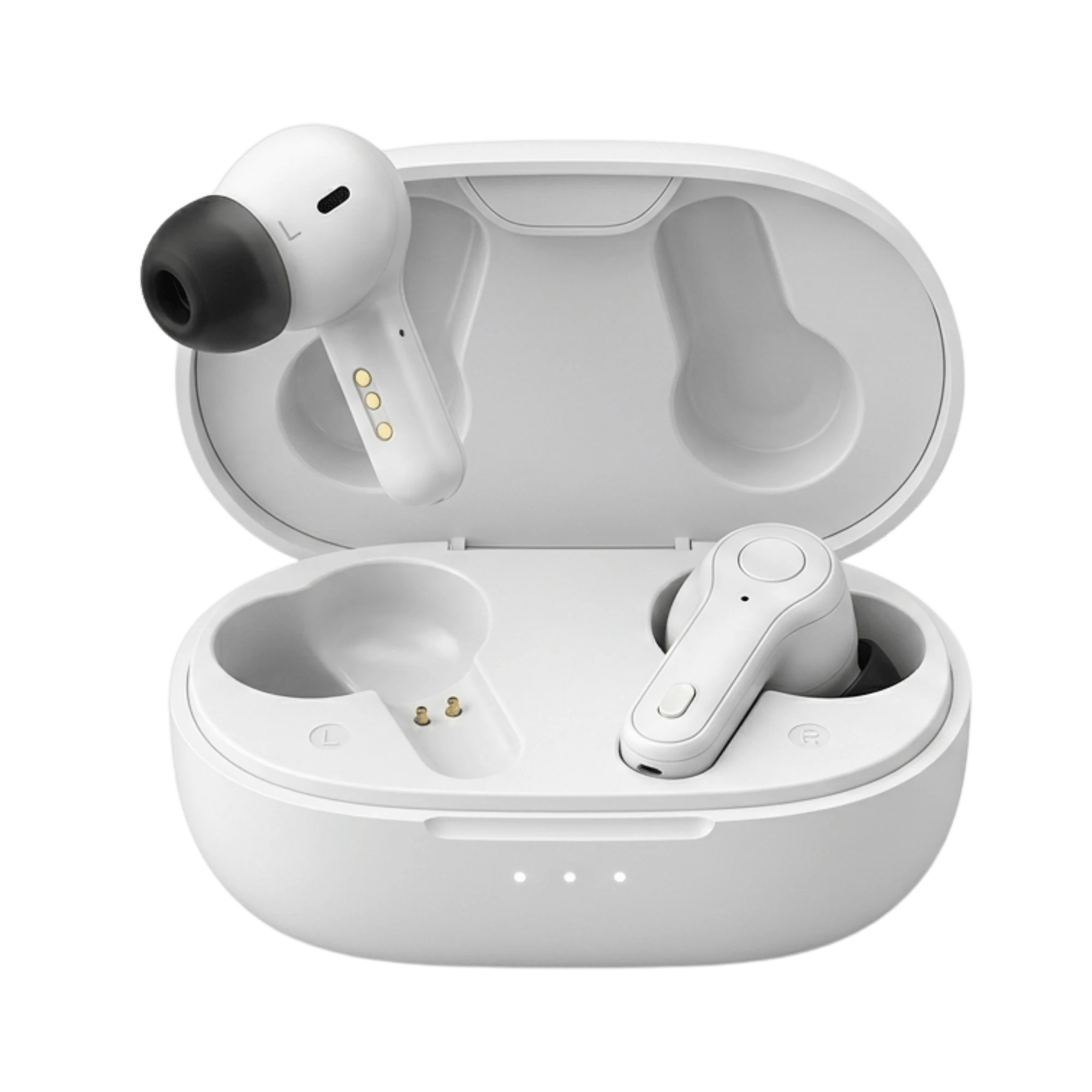
Two caveats are worth being explicit about. First, OTC hearing aids are approved in the United States for adults with perceived mild to moderate hearing loss. People with severe or profound loss, or with complicating conditions, still benefit most from a clinical fitting with an audiologist. Second, an OTC device is not a replacement for a baseline audiogram before ototoxic treatment; cancer patients should still have a formal assessment when one is recommended. Panda Air comes with a 5-year warranty and a 45-day return window. More at pandahearing.com/products/panda-air.
Limitations of This Research
This was a single-center cross-sectional study at a chemotherapy service in Porto Alegre, Brazil. The 261-patient sample is large, but findings may not generalize to clinics with very different patient demographics or different rates of access to audiology services. The study reports symptoms and DPOAE patterns at a single point in time and does not follow patients through treatment, so it cannot speak to how often the documented baseline issues progressed during chemotherapy. The authors did not disclose any conflicts of interest in the affiliation list.
Where This Leaves Us
The Porto Alegre study quantifies something many clinicians describe anecdotally: hearing loss, like high blood pressure, is often present long before it is named. A baseline assessment, whether prompted by an oncology referral or by your own quiet suspicion, makes it visible. Once it is visible, it becomes something you can track and act on.
Peruch CV, Martins VB, Goulart FO, Machado MS, Dallegrave E, Berbert MCB. Hearing Characteristics of Adults before Exposure to Potentially Ototoxic Chemotherapy. International Archives of Otorhinolaryngology. 2026. Retrieved from PubMed. DOI: 10.1055/s-0046-1819640.