Standard Hearing Aids Worked as Well as Premium Models When Fitted Around the Patient's Goals, ACHIEVE Trial Reports
A new analysis from the landmark ACHIEVE study of nearly 500 older adults shows that the level of hearing aid technology mattered less than how the device was selected and fitted to each person's listening goals.
When a 75-year-old buys their first pair of hearing aids, one of the first questions they face is which technology tier to choose. Hearing aid manufacturers typically offer three or four levels, often labeled standard, advanced, and premium, with the price difference between bottom and top often running into thousands of dollars. The premium tier promises more processing channels, smarter noise reduction, and richer connectivity. The question is whether those extra features actually translate into better hearing in everyday life.
A new report from the ACHIEVE trial, one of the largest randomized hearing aid studies ever conducted in older adults, suggests the answer is more nuanced than the price tag implies. When fitting was guided by each participant's specific listening goals, all three technology tiers produced similar daily wear time and similar improvements in the listening situations the participants cared about most.
About This Study
Title: Patient-Centered Hearing Intervention Leads to Positive Outcomes: The Association of Hearing Technology With Daily Hearing Aid Usage and Listening Goals in the Aging and Cognitive Health Evaluation in Elders Study
Authors: Victoria A. Sanchez, Emmanuel E. Garcia Morales, Michelle L. Arnold, Haley N. Neil Calloway, Sarah Faucette, Adele M. Goman, Alison R. Huang, Christine M. Mitchell, Nicholas S. Reed, Laura Sherry, Jacqueline M. Weycker, Theresa H. Chisolm
Affiliations: Department of Otolaryngology - Head and Neck Surgery and Department of Communication Sciences and Disorders, University of South Florida; Department of Epidemiology and Cochlear Center for Hearing and Public Health, Johns Hopkins Bloomberg School of Public Health; The MIND Center and Department of Otolaryngology, University of Mississippi Medical Center; Division of Epidemiology and Community Health, University of Minnesota School of Public Health
Journal: American Journal of Audiology, published April 27, 2026
Study type: Secondary analysis of a multicenter, randomized controlled trial (ClinicalTrials.gov NCT03243422)
PubMed DOI: 10.1044/2026_AJA-25-00229
Background: Why the Researchers Looked at This
Hearing aid technology has advanced quickly. Modern devices use multiple processing channels to compress different frequency bands, adaptive noise reduction algorithms to suppress steady background sound, directional microphones to focus on the person in front of the listener, and Bluetooth links to phones, televisions, and remote microphones. Manufacturers package these features into tiers, and audiologists are often asked by patients which tier is worth paying for.
There has been surprisingly little large-scale randomized evidence to answer that question. Most prior comparisons have been short, single-site, or sponsored by hearing aid manufacturers. The ACHIEVE trial, funded by the U.S. National Institutes of Health, gave researchers an unusual opportunity to look at hearing aid use and listening outcomes in a large, well-characterized cohort of older adults who had never previously worn aids.
How the Study Was Done
ACHIEVE enrolled 977 community-dwelling adults aged 70 to 84 years with adult-onset, mild-to-moderate hearing loss. None of them had previously worn hearing aids, and none had substantial cognitive impairment at the start. They were randomly assigned to one of two groups: a best-practice hearing intervention with hearing aids and audiology counseling, or a health education control program. The primary trial tested whether hearing intervention slowed cognitive decline over three years.
This new analysis focuses on the 490 participants randomized to the hearing intervention arm, of whom 459 completed the intervention and reported outcomes. Audiologists used the Client-Oriented Scale of Improvement, known as COSI, to identify each participant's specific listening priorities, things like one-on-one conversation in quiet, conversation in restaurants, watching television, or attending church or meetings. Hearing aid technology level (standard, advanced, or premium) and any added hearing-assistive technology, such as remote microphones or TV streamers, were then selected through an evidence-based protocol that matched the device features to those personal goals.
Outcomes included how many hours a day each participant actually wore their hearing aids, measured automatically by the device's data logger, and how much progress each participant made on their COSI goals after roughly ten weeks of use. The team used ordered logistic regression models adjusted for hearing thresholds and demographic factors to test whether tech tier or assistive technology drove differences in those outcomes.
What the Researchers Found
The patient-centered protocol distributed participants across the three tech tiers in a way that reflected their specific listening needs. About 19 percent of participants received standard-tier hearing aids, 57 percent received advanced-tier devices, and 24 percent received premium-tier devices. That distribution itself is interesting: when fitting follows goals rather than upselling, most older adults end up in the middle of the range, not at the top.
Daily wear time was high across the board. The average participant wore their hearing aids about 9.3 hours per day, well above what many earlier observational studies have found in real-world hearing aid users. Wear time did not differ in any meaningful way between standard, advanced, and premium tiers, and adding hearing-assistive technology did not change wear time either.
Listening goal attainment also improved across all groups. Participants reported meaningful progress on the conversational and environmental listening situations they had flagged as personal priorities. Once again, technology tier did not predict goal attainment in a statistically significant way once the analysis adjusted for hearing thresholds and demographics. In other words, on these outcomes, the device hardware tier did not appear to be the variable doing the heavy lifting.
The authors are careful to note what their analysis does and does not show. The result is not that hearing aid features are irrelevant. The patient-centered protocol matched features to needs, so a participant who needed strong noise reduction or remote microphone support typically got it. The result is that, with that fit-for-purpose matching in place, paying for the very top tier did not translate into more wear time or better listening goal attainment over the first ten weeks.
What It Means for People with Hearing Loss
For older adults considering their first set of hearing aids, the practical message is that there is no single tier that fits everyone, and the most expensive option is not automatically the best one. The questions that mattered in this study were the patient's own listening priorities. Where do they struggle? What conversations do they want to be able to follow? What environments do they spend time in? Those answers, captured through tools like COSI, drove technology selection more usefully than a generic tier label would have.
The high adherence number is also striking. Older adults who get a careful, goal-oriented fit wear their aids almost all of their waking hours, on average. That alone tends to predict better long-term outcomes than any specific feature set, because hearing aids that sit in a drawer cannot help anyone.
Patient-Centered, Audiogram-Matched Fitting at the OTC Price Point
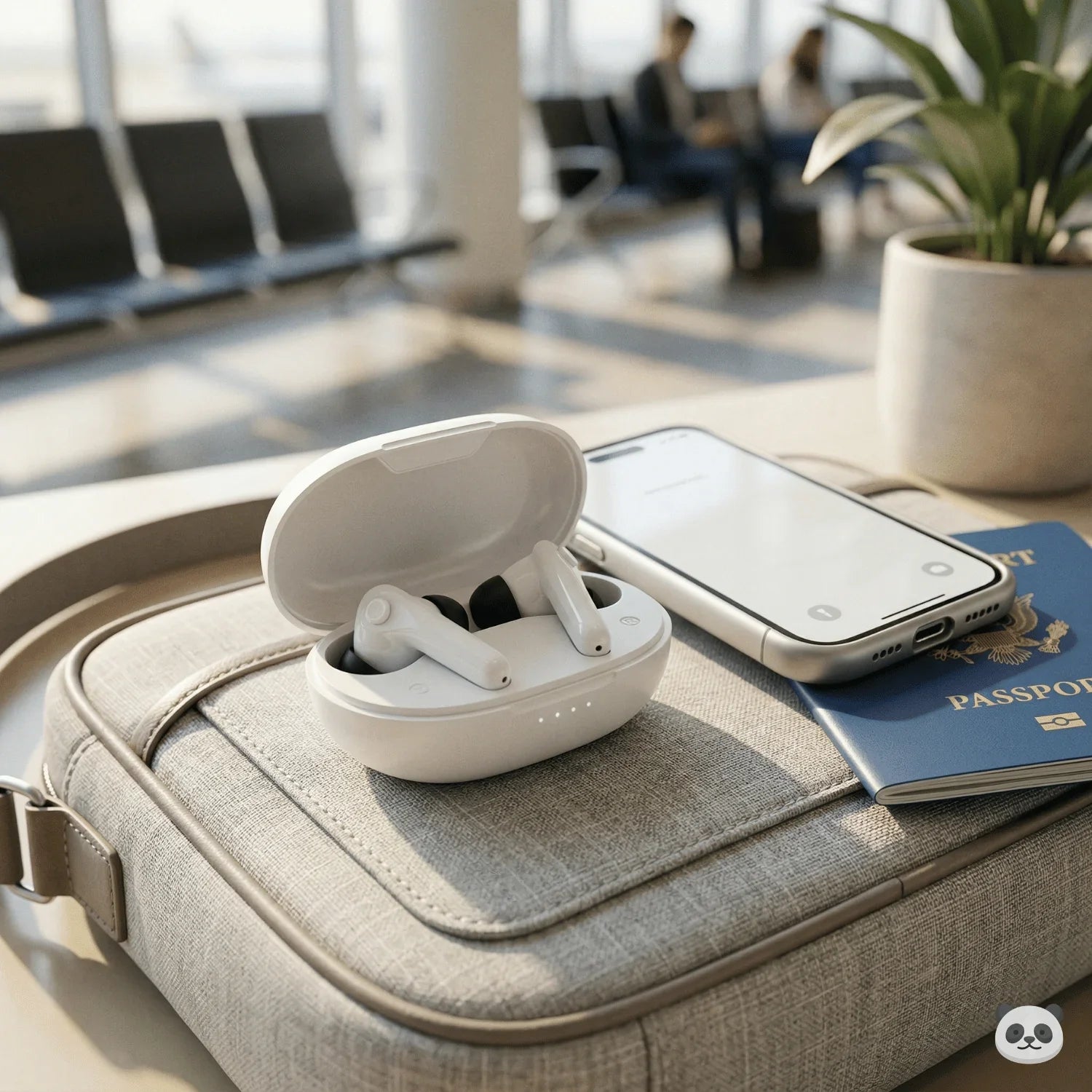
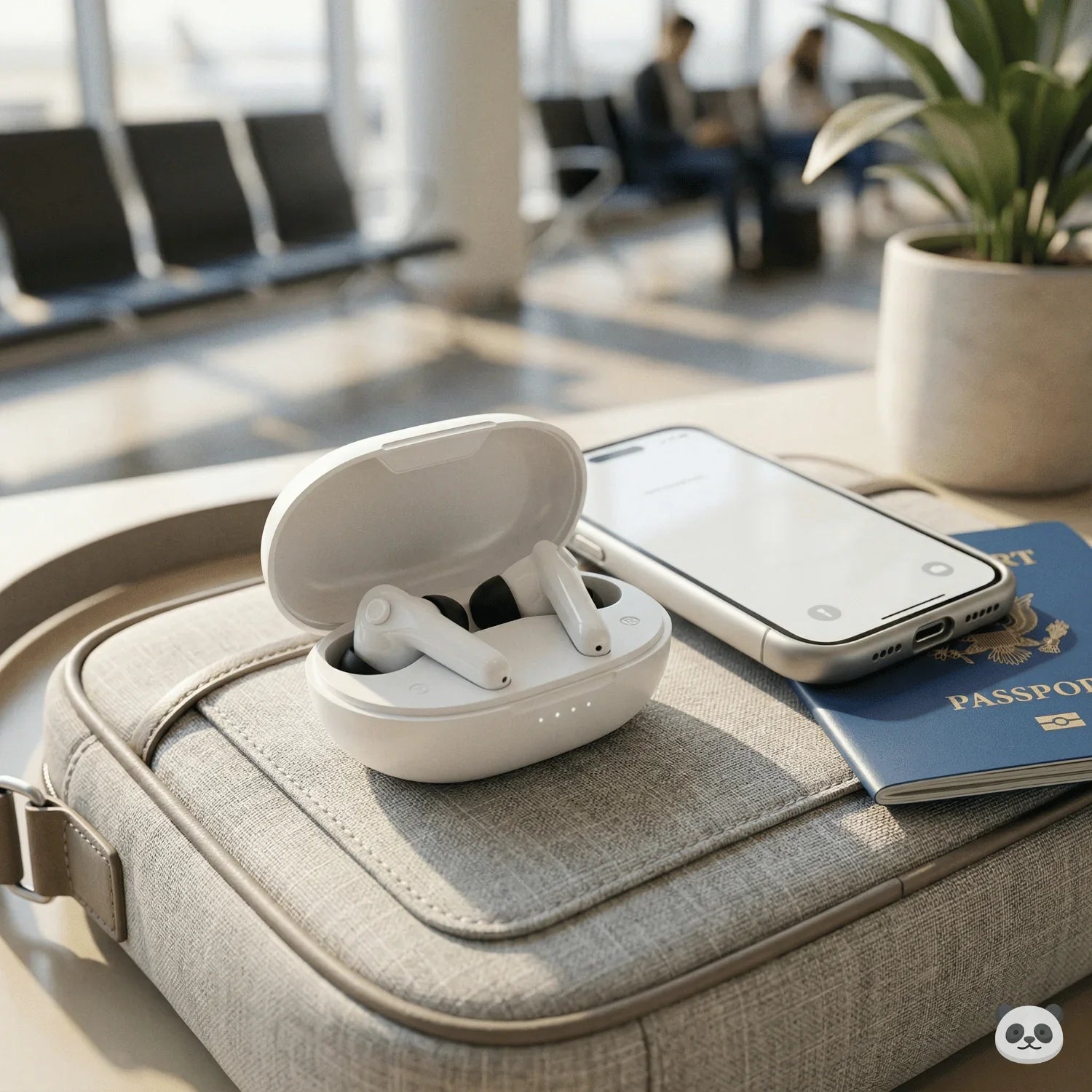
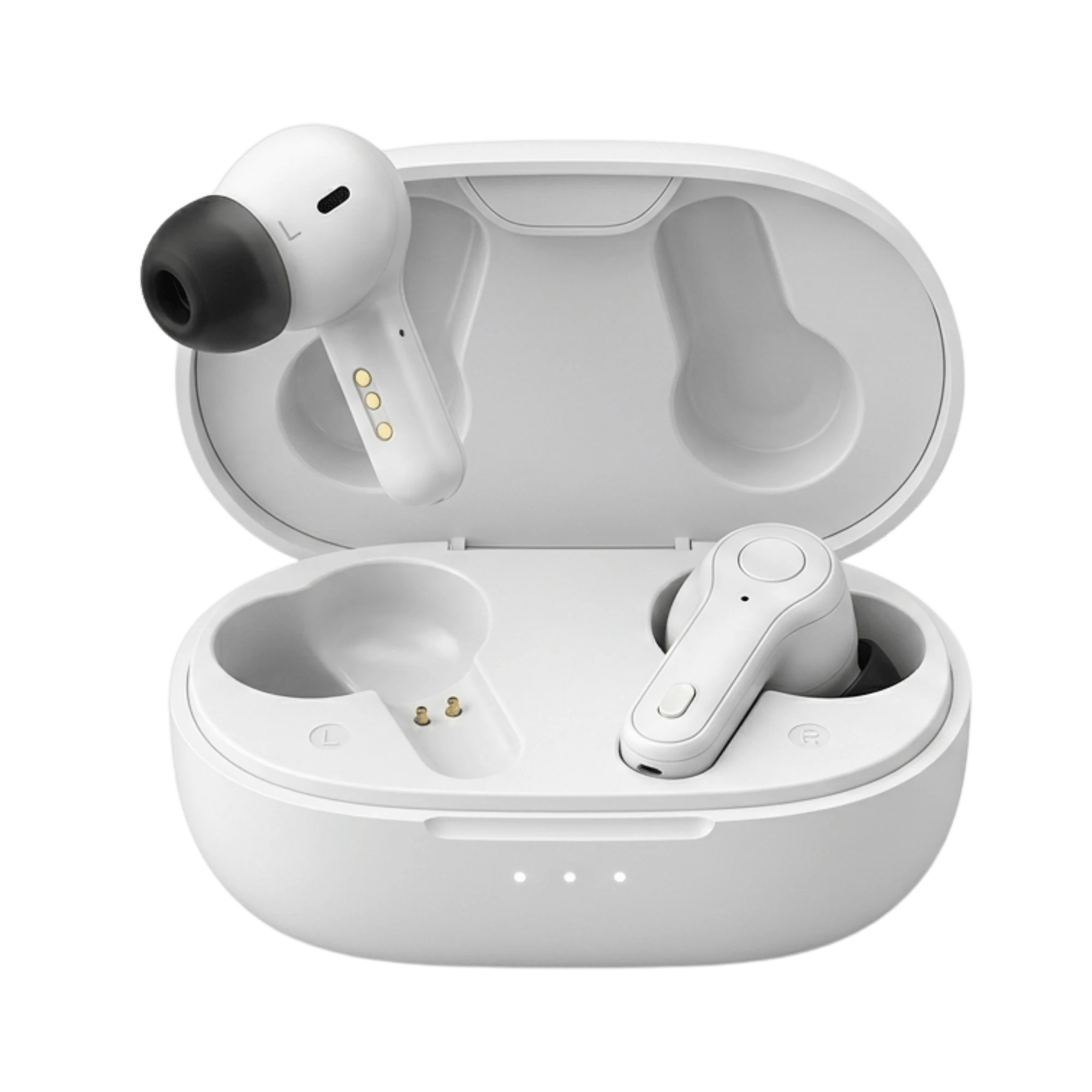
A core lesson from this analysis is that the fit-to-the-person process matters more than the tier label on the box. That principle is not limited to clinical fittings. Some over-the-counter hearing aids now build automated personalization directly into the consumer experience. The Panda Air earbud-style hearing aid, for example, includes an app-based in-ear hearing test: after the user receives the device, they pair it with the Panda app, the app runs a frequency-specific hearing test through the hearing aid itself, and the device's gain and frequency response are then automatically adjusted to match the user's audiogram, similar to what an audiologist does at a clinical fitting.
For an adult with self-reported mild-to-moderate, age-related hearing loss who wants the personalization principle without the multi-thousand-dollar price tag of a premium clinical fitting, that kind of audiogram-matched OTC option is a reasonable starting point. Panda Air uses 16-channel wide dynamic range compression, multi-band adaptive noise reduction, a 60-hour fast-charge case, a 5-year warranty, and a 45-day return window so the user can try the device in their own listening environments before committing.
A practical caveat: OTC hearing aids in the United States are intended for adults with self-perceived mild-to-moderate hearing loss. Severe or profound loss, sudden hearing loss, asymmetric loss, or any loss with associated medical symptoms still benefits most from a full clinical evaluation and fitting. ACHIEVE itself used clinically fitted devices, and the analysis above does not directly compare OTC versus clinical fittings. Learn more about Panda Air.
Limitations of This Research
Several limitations are worth keeping in mind. ACHIEVE participants were enrolled at multiple academic centers and went through study-grade audiology counseling, which may not reflect every real-world fitting. The follow-up window for these specific outcomes was about ten weeks, which captures the early adaptation period but does not address whether premium technology eventually pulls ahead, or falls behind, on longer time scales. The analysis is observational with respect to tech tier (participants were not randomized to tier; they were assigned through the patient-centered protocol), so residual confounding cannot be ruled out.
In addition, the COSI is self-reported, and goals were patient-defined rather than standardized across participants. ACHIEVE was funded by the National Institutes of Health, with hearing aids and supplies provided as part of the trial; specific industry funding and conflicts of interest, if any, would be reported in the full paper rather than the abstract.
What to Do With This
If you are an older adult thinking about hearing aids, or a family member helping someone navigate that decision, the most useful takeaway from this analysis is to lead with goals, not features. Start by writing down the listening situations that matter most: a partner's voice across the breakfast table, a grandchild on speakerphone, a small group at church, the television in the den. Bring that list to whoever fits the device, whether an audiologist, a hearing instrument specialist, or a self-fitting OTC platform. Once the device matches those goals, simpler hardware can do a great deal of work, and worn hours, not list price, are the strongest predictor that hearing aids will actually change everyday life.
Sanchez VA, Garcia Morales EE, Arnold ML, Neil Calloway HN, Faucette S, Goman AM, Huang AR, Mitchell CM, Reed NS, Sherry L, Weycker JM, Chisolm TH. Patient-Centered Hearing Intervention Leads to Positive Outcomes: The Association of Hearing Technology With Daily Hearing Aid Usage and Listening Goals in the Aging and Cognitive Health Evaluation in Elders Study. American Journal of Audiology. 2026. Retrieved from PubMed. https://doi.org/10.1044/2026_AJA-25-00229