Next-Generation Speech-in-Noise Tests Could Make Hearing Screening Faster, Smarter, and More Accessible
A new scoping review in Audiology Research charts how digits-in-noise paradigms, AI-driven scoring, and automated digital platforms are reshaping how clinicians identify hearing loss beyond the standard quiet-room audiogram.
For decades, the gold standard for diagnosing hearing loss has been pure-tone audiometry (PTA), the test where a person sits in a sound booth and presses a button each time they hear a beep at a specific pitch and volume. PTA is reliable for mapping the softest tones a person can detect, but it does not capture the situation people actually struggle with: following a conversation when there is background noise.
A growing number of researchers have been working on speech-in-noise (SIN) tests that try to fill that gap, and a recent scoping review pulls together what the past decade of work has produced. The picture that emerges is one of small, focused tools that could eventually move hearing screening out of specialty clinics and onto laptops, tablets, and phones.
About This Study
Title: Emerging Speech-in-Noise Tools for the Assessment of Hearing Loss: A Scoping Review
Authors: Andrea Migliorelli, Marianna Manuelli, Chiara Visentin, Chiara Bianchini, Francesco Stomeo, Stefano Pelucchi, Nicola Prodi, Andrea Ciorba
Affiliations: ENT and Audiology Unit, Department of Neurosciences, University Hospital of Ferrara, Italy; Department of Engineering, University of Ferrara, Italy
Journal: Audiology Research, Vol. 16, Issue 2, published April 11, 2026
Study type: Scoping review following PRISMA-ScR guidelines (9 studies included)
PubMed DOI: 10.3390/audiolres16020057
Background: Why the Researchers Looked at This
A pure-tone audiogram tells a clinician how soft a sound a patient can hear at each frequency. It does not directly tell them how well that person will follow a friend at a noisy restaurant. Two people with very similar audiograms can have very different real-world hearing experiences, and some adults with normal-looking audiograms still report serious trouble in noise. This mismatch is sometimes called functional or hidden hearing difficulty.
Speech-in-noise testing addresses that gap by playing speech material, words, sentences, or short digit sequences against a controlled background of competing sound, and asking the listener to repeat back what they heard. The score reflects something closer to how a person functions in everyday environments. The catch is that traditional SIN tests have historically been time-consuming, language-specific, and tied to clinical equipment. The Ferrara team set out to map what new tools have been built to address those limits.
How the Study Was Done
The team conducted a scoping review using the Preferred Reporting Items for Systematic Reviews and Meta-Analyses extension for Scoping Reviews, known as PRISMA-ScR. A scoping review is a structured way to map the size and shape of an emerging research area when there are too few high-quality trials to do a traditional meta-analysis. Instead of pooling effect sizes, the authors catalog what tools exist, who they were tested on, and what they measure.
Their literature search ran across PubMed/MEDLINE, Scopus, and Embase. They focused on studies published in roughly the last decade that described novel speech-in-noise tools and that included adult participants with either normal hearing or measured hearing loss. After screening, nine studies met their inclusion criteria and were summarized side by side.
What the Researchers Found
The nine emerging tools clustered around several methodological themes. Several used digits-in-noise paradigms, in which the listener hears short sequences of spoken numbers against background noise. Digits are useful because they are short, familiar across many languages, and easy to score automatically.
Other tools used antiphasic or binaural presentation modes, where the speech and noise are routed differently to the two ears in order to expose more subtle binaural processing problems. A second cluster used optimized adaptive procedures, where the difficulty of each trial is adjusted in real time based on the listener's previous answers. That approach can reach a stable threshold faster than traditional fixed-difficulty testing.
A third cluster moved into digital and automated testing platforms, including web-based and tablet-based delivery. Several tools incorporated artificial intelligence, including machine learning, text-to-speech generation of stimulus material, and automatic speech recognition for scoring listener responses. The reviewers note that AI-based components could speed up test development, reduce reliance on a trained examiner, and help classify hearing loss types.
The headline finding from the data is consistency. Across all nine studies, the SIN measures reliably distinguished normal-hearing listeners from listeners with hearing loss, and they captured information that pure-tone audiometry alone did not. In other words, these tools do not just duplicate the audiogram; they add a complementary layer about real-world listening function.
What It Means for People with Hearing Loss
For an adult who has been told their audiogram looks fine but who still struggles in noisy settings, this body of work is reassuring. The trouble is not imagined, and tools to measure it are getting better. For clinicians, SIN testing offers a more functional outcome to track over time, and one that may be more sensitive to early changes than tone thresholds.
The bigger picture is access. If a hearing screen can be delivered through a tablet or a phone using a digits-in-noise paradigm, automated stimulus generation, and machine learning scoring, the test can move out of the booth and into primary care, community settings, or even at home. That matters because most adults with hearing loss in the United States and Europe do not seek formal evaluation, and the average gap between first noticing trouble and acting on it is measured in years.
App-Based, At-Home Hearing Personalization Aligns with This Trend
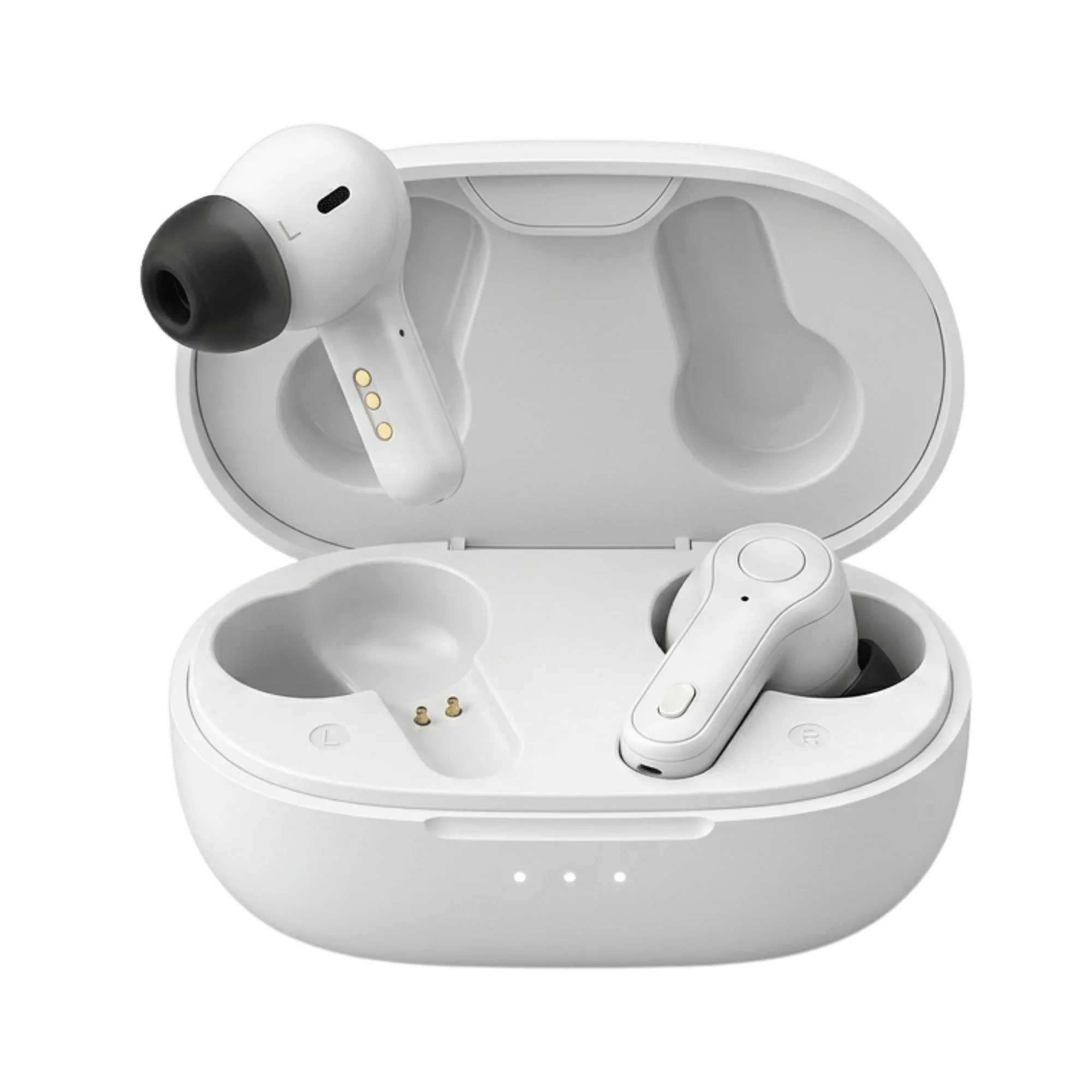
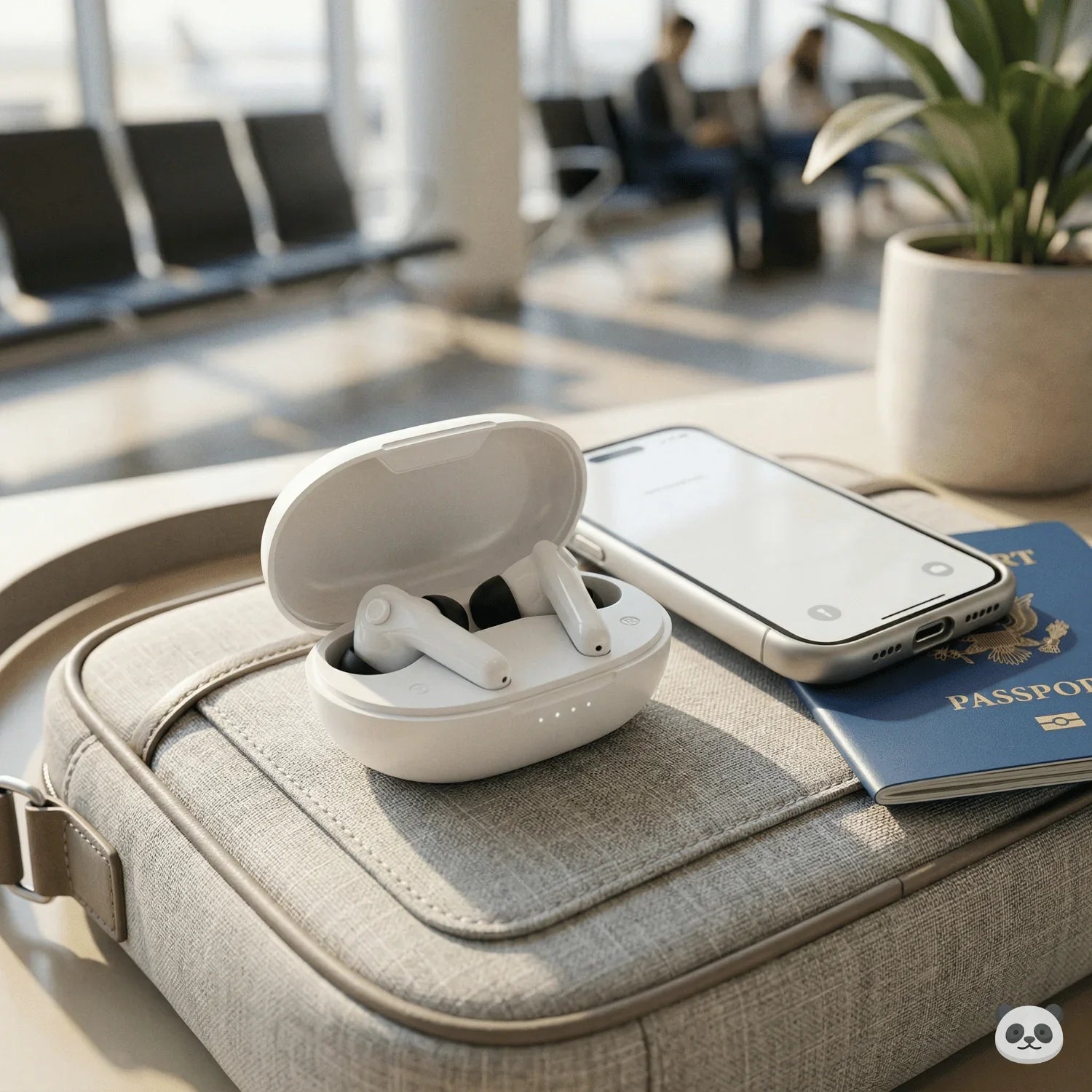
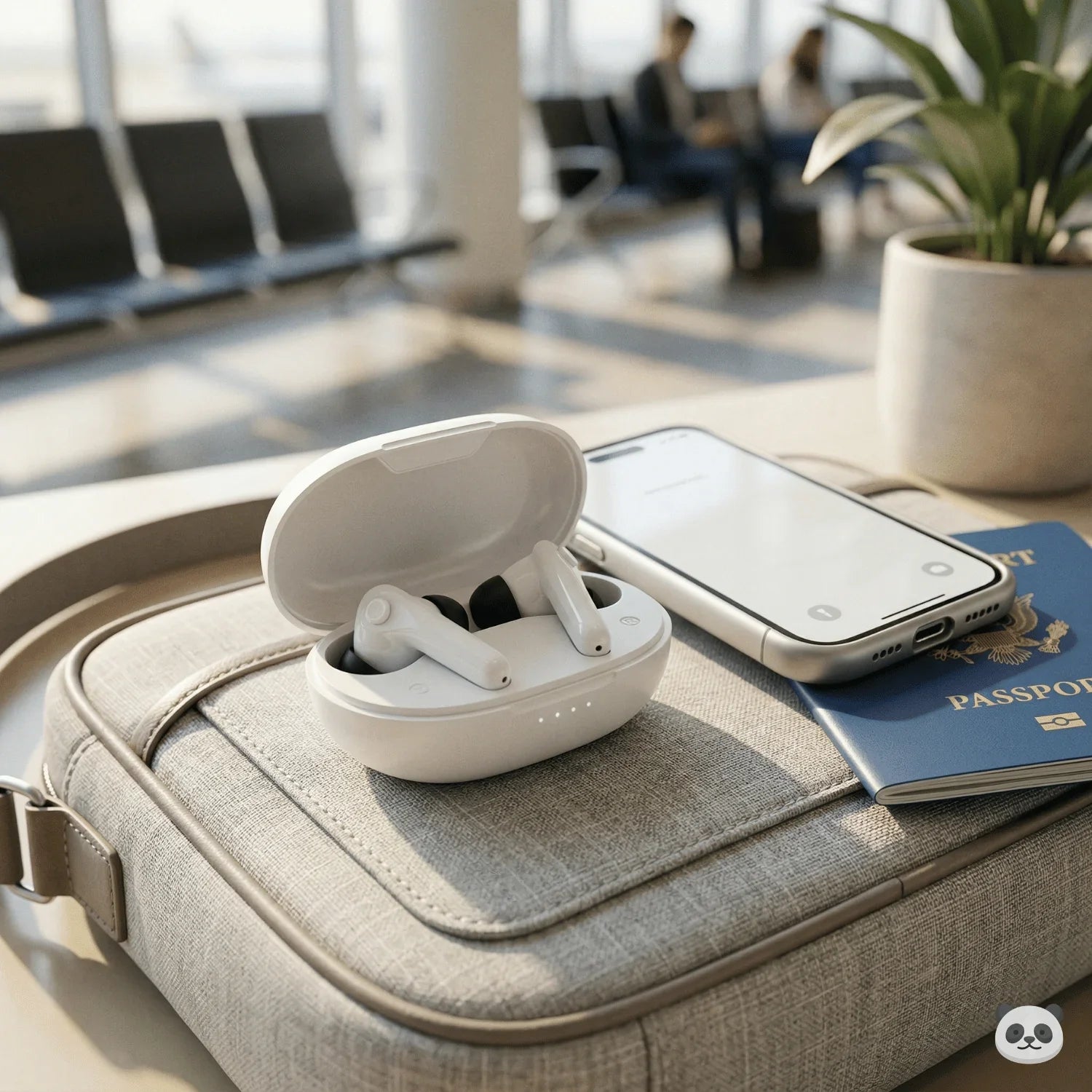
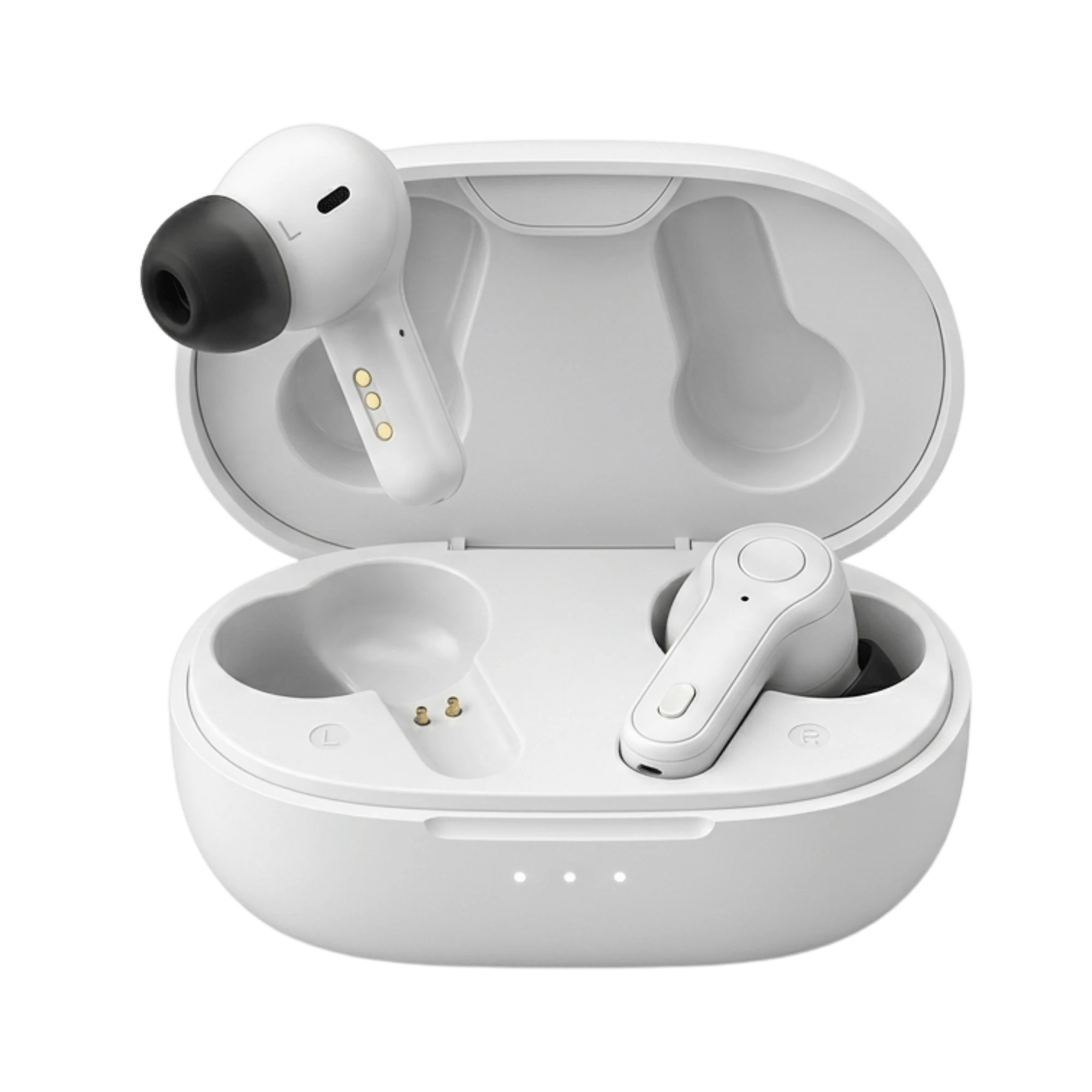
One of the practical implications of this scoping review is that hearing assessment is moving from specialist booths to consumer devices. A parallel trend is happening on the device side: some over-the-counter hearing aids now run their own in-ear hearing test once the user pairs the device with a phone app. The Panda Air earbud-style hearing aid is one example. After the device arrives, the user pairs it with the Panda app, runs a frequency-specific hearing test through the hearing aid itself, and the app then programs the device's gain and frequency response to match the user's audiogram, similar to what an audiologist does at a clinical fitting.
For someone whose audiogram is normal but whose speech-in-noise score is poor, that kind of automated personalization is not a substitute for clinical evaluation. But for adults with mild-to-moderate age-related hearing loss who would otherwise wait years before booking an audiology appointment, an OTC device that does its own audiogram-matched fitting offers a much lower barrier to trying amplification. Panda Air uses 16-channel wide dynamic range compression and multi-band adaptive noise reduction, and ships with a 60-hour fast-charge case, a 5-year warranty, and a 45-day return window so the user can take their time evaluating real-world benefit.
A caveat worth repeating. OTC hearing aids in the United States are approved only for adults with self-perceived mild-to-moderate hearing loss. Severe or profound loss, sudden hearing loss, asymmetric loss, or hearing problems in children still benefit most from a full clinical workup. Learn more about Panda Air.
Limitations of This Research
A scoping review by design is wide and shallow rather than narrow and deep. The authors mapped a heterogeneous set of nine studies that used different stimuli, different scoring methods, and different participant populations, which makes head-to-head comparison difficult. They were not pooling effect sizes or claiming that any single tool is ready to replace standard audiometry today.
The reviewers explicitly call for more research on clinical integration, calibration of headphones and devices used outside the booth, and longitudinal studies to track whether SIN-based screening actually changes the rate at which adults with hearing loss get diagnosed and helped. Funding sources and conflicts of interest were not flagged in the abstract.
Where This Leaves Us
Hearing assessment is becoming more functional, more digital, and more portable. Speech-in-noise tests, particularly digits-in-noise paradigms paired with adaptive scoring and AI-based analysis, are emerging as a complement to the pure-tone audiogram rather than a replacement. The same pressure toward accessibility is showing up on the device side, where in-ear, app-based fitting is closing some of the distance between the consumer and the clinic. Anyone who has wondered whether their occasional struggle in a noisy room is real now has a clearer answer: yes, it is measurable, and the tools to measure it are arriving.
Migliorelli A, Manuelli M, Visentin C, Bianchini C, Stomeo F, Pelucchi S, Prodi N, Ciorba A. Emerging Speech-in-Noise Tools for the Assessment of Hearing Loss: A Scoping Review. Audiology Research. 2026;16(2). Retrieved from PubMed. https://doi.org/10.3390/audiolres16020057