Hearing Loss Can Dim How Music Sounds, but a New Study Finds the Love of Music Endures
A survey of 201 adults across the full range of hearing found that while hearing loss reduced how clearly people perceived music, their enjoyment of it and engagement with it were shaped more by musical background and age than by hearing status.
For many people, music is not a luxury but a thread that runs through daily life, from the radio in the kitchen to a favorite song at a family gathering. When hearing begins to change, one of the quieter losses can be the sense that music no longer sounds the way it used to.
Researchers have long known that hearing loss and hearing devices reshape how music is heard. A new study set out to look past perception alone and ask a broader question: when hearing fades, does the pleasure people take in music, and their willingness to keep taking part in it, fade with it?
About This Study
Title: Characterizing Music Engagement and Reward in Individuals Across a Spectrum of Hearing Loss and Rehabilitation
Authors: Emily Gao, Maria Armache, Joon Soo Kim, Celine Arar, Elaine C. Thompson, Claire Wang, Marshall Chasin, Theodore R. McRackan, Alexander Chern
Affiliations: Johns Hopkins University School of Medicine; Western University and Musicians' Clinics of Canada; Medical University of South Carolina; University of Pennsylvania
Journal and date: Otolaryngology Head and Neck Surgery, published July 16, 2026
Study type: Cross-sectional survey study
PubMed reference: DOI 10.1002/ohn.70340
Background: Why the Researchers Looked at This
Hearing aids and cochlear implants are designed first and foremost to help people understand speech, and they do that job well for many users. Music, though, is a different and harder signal. It spans a wider range of pitches, layers many sounds at once, and depends on subtle timing and tone that devices tuned for conversation do not always capture faithfully.
Because of this, much of the past research focused narrowly on music perception, meaning how accurately a listener can pick out melody, rhythm, or timbre. Far less attention went to the parts of the experience that arguably matter most in everyday life: whether people still feel rewarded by music, and whether they keep listening, attending, and taking part. This study was designed to separate those threads.
How the Study Was Done
The researchers surveyed 201 adults recruited from a tertiary academic medical center and the surrounding community. Participants spanned the full spectrum of hearing, including people with normal hearing, people with hearing loss who used no devices, hearing aid users, and cochlear implant users. On average the group was in its early sixties, and just over half were women.
Everyone completed a set of established questionnaires. One measured how rewarding they found music, another gauged their perceptual musical abilities, and additional items captured how often they listened to and participated in music. To make sure they were comparing like with like, the researchers statistically adjusted for age, gender, race, education, and, importantly, any formal musical training.
What the Researchers Found
The 201 participants included 30 with normal hearing, 23 with unaided hearing loss, 84 hearing aid users, and 64 cochlear implant users. As expected, hearing status was tied to musical perception. Cochlear implant users scored lowest on perceptual ability, with an adjusted average of about 33.1 points compared with roughly 38.6 to 42.9 points in the other groups.
The more striking result appeared when the researchers looked at enjoyment and engagement rather than raw perception. Here, hearing status was not the dominant factor. Instead, non-perceptual influences, especially musical training and age, were stronger predictors of how much people engaged with music and how rewarding they found it.
The effect of a musical background was sizable. A one standard deviation increase in musical training, about 10.1 points on their scale, was associated with roughly 3.1 more points of perceptual ability, about 21.7 additional days of music listening per year, about 32.3 additional days of active musical participation per year, and a 3.1 point rise in music reward.
The authors summed it up plainly: poorer hearing was associated with reduced music perception but not with reduced engagement or reward, even among cochlear implant users. What people brought to music, and how they chose to keep it in their lives, mattered as much as what their ears and devices delivered.
What It Means for People with Hearing Loss
For anyone worried that hearing loss means the end of a rich musical life, this study offers a measure of reassurance. Yes, the fine detail of music can become harder to hear, and devices built for speech do not restore it perfectly. But the emotional payoff of music, and the habit of engaging with it, appear to be more resilient than perception alone would suggest.
The finding that behavioral factors carry real weight is quietly hopeful, because those factors can be nurtured. Continuing to listen, staying involved in musical activities, and giving the brain time to adjust to a new device are all within a person's control, and they may protect much of what makes music meaningful.
Bringing Music Closer Through Direct Streaming
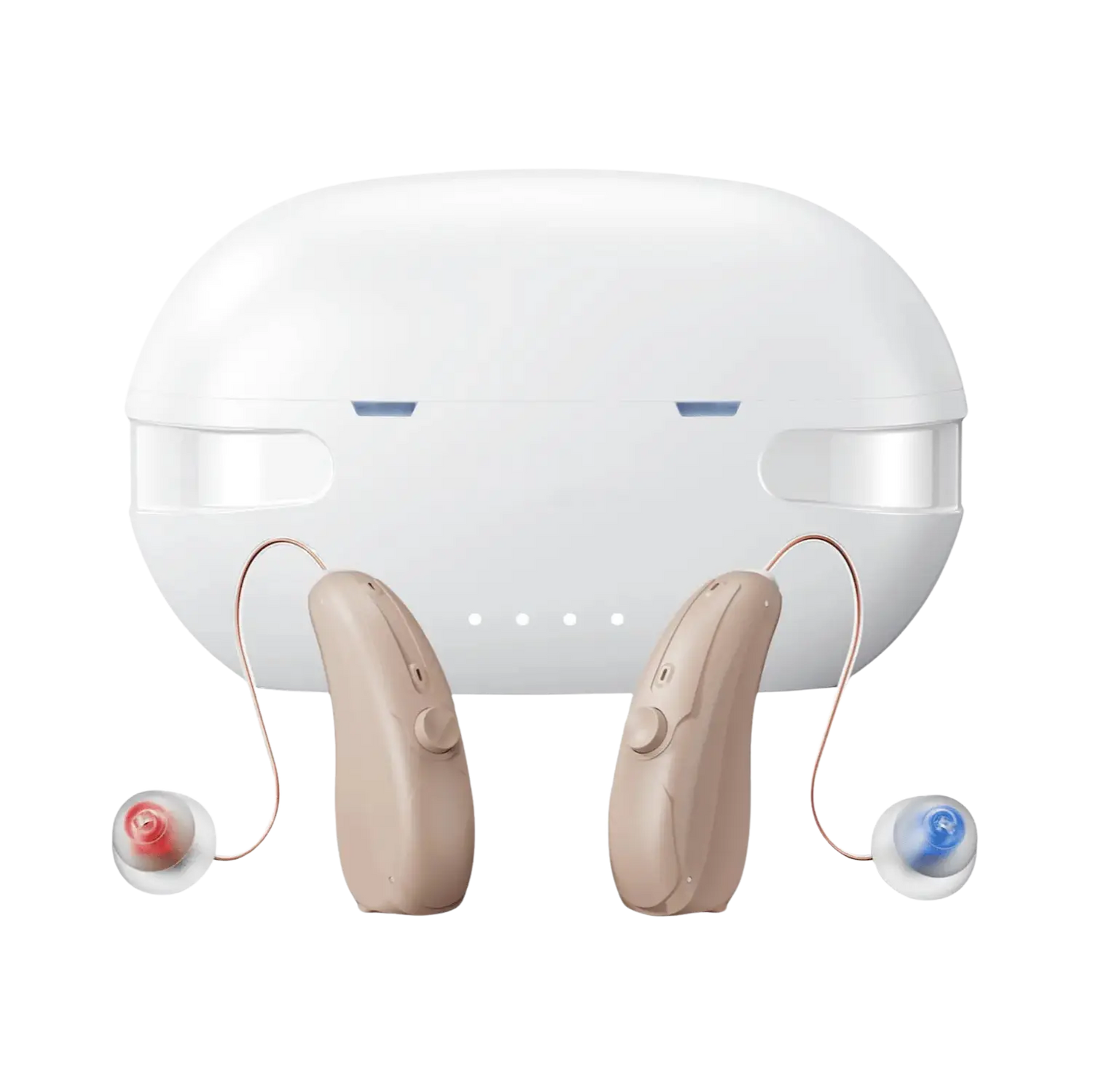
If staying engaged with music helps preserve the reward it offers, then anything that makes listening easier and cleaner can support that habit. One practical step is streaming audio straight into the ears rather than fighting room acoustics and distance from a speaker. Panda Quantum, a 16-channel receiver-in-canal device with active noise reduction, connects over Bluetooth for calls, television, and music, so a favorite track or concert film can travel directly to the aids.
Quantum also pairs with the Panda app to run an in-ear hearing test and shape the sound to the listener's own hearing profile. That app-based hearing personalization, layered on top of its 16-channel processing, gives people a way to tune how music and speech reach them rather than settling for a single fixed setting. With up to 80 hours of battery when paired with its case, it is built to keep up with long listening days, and it is backed by a 5-year warranty and a 45-day return window.
It is worth remembering that over-the-counter devices are intended for mild to moderate hearing loss, and that people with more significant loss, including many cochlear implant candidates, are best guided by a hearing professional who can tailor rehabilitation to their needs.

Limitations of This Research
This was a cross-sectional survey, meaning it captured a single moment in time and relied on what participants reported about themselves. That design can reveal associations but cannot prove that one factor causes another, and self-reported measures of enjoyment and engagement are inherently subjective. The participants were drawn from one academic medical center and its community, so the group may not represent all people with hearing loss.
The subgroups, especially cochlear implant users compared against those with normal hearing, were modest in size, which limits how firmly some comparisons can be drawn. People who agreed to take a music survey may also feel more strongly about music than average, a form of selection that could color the results.
What to Do With This
The take-home message is encouraging without overpromising. Hearing loss changes how music sounds, and no device makes that fully disappear, but the joy of music and the choice to stay engaged with it are not simply switched off by an audiogram. For people navigating hearing loss, that is a reason to keep music close, to keep listening and participating, and to use whatever tools help make the experience easier to reach.
Gao E, Armache M, Kim JS, Arar C, Thompson EC, Wang C, Chasin M, McRackan TR, Chern A. Characterizing Music Engagement and Reward in Individuals Across a Spectrum of Hearing Loss and Rehabilitation. Otolaryngology Head and Neck Surgery. 2026. Retrieved from PubMed. DOI 10.1002/ohn.70340