Hearing Decline Predicts Rising Loneliness in Older Adults: New Longitudinal Evidence from Mexico
A new analysis of more than three waves of national aging data finds that as the same older adult's hearing gets worse over time, their loneliness scores rise with it.
Loneliness is now widely treated as a public health issue rather than a private feeling. Public health agencies have linked persistent loneliness in older adults to faster physical decline, more chronic disease, and shorter life expectancy. At the same time, age-related hearing loss is one of the most common chronic conditions in people over 60, and it is well known that struggling to hear conversations can shrink someone's social world.
What has been harder to pin down is the timing. Are lonelier older adults simply different from less lonely older adults in lots of ways at once, including their hearing? Or does hearing actually getting worse, in the same person, push loneliness up? A new longitudinal study from Mexican researchers tackles that exact question.
About This Study
Title: Perceived Hypoacusis and Loneliness: A Longitudinal Between- and Within-Individual Association in Mexican Older Adults
Authors: Liliana Giraldo-Rodriguez, Diana Ramos-Felix, Paloma Roa-Rojas, Karen Eloina Perez-D'Aquino, Teresa Alvarez-Cisneros
Affiliations: Centro de Investigacion en Politicas, Poblacion y Salud, Universidad Nacional Autonoma de Mexico; Instituto Nacional de Geriatria; Hospital Medica Sur; Instituto Nacional de Pediatria, Mexico City, Mexico
Journal and pub date: Aging and Disease, April 2026
Study type: Longitudinal observational study using three waves (2015, 2018, 2021) of the Mexican Health and Aging Study (MHAS)
PubMed DOI: 10.14336/AD.2025.1199
Background: Why the Researchers Looked at This
Most prior research on hearing and loneliness has been cross-sectional. That means a study takes a snapshot of many people at a single point in time, asks about their hearing and their feelings of loneliness, and looks for a pattern. Those snapshots have repeatedly shown that people with worse hearing also tend to feel lonelier. But that design cannot tell us whether hearing changes are doing the work, or whether the link reflects other shared causes such as poorer overall health, lower income, or fewer social ties to begin with.
Latin America has been particularly underrepresented in this research. The authors note that little is known about how hearing decline plays out psychosocially in Mexican older adults, even though Mexico has a rapidly aging population and limited audiology services in many areas.
To address those gaps the team turned to MHAS, a long-running national survey of Mexicans aged 50 and over. Because MHAS follows the same individuals across multiple waves, it allows researchers to ask a different and more rigorous question: when someone's hearing changes, do their own loneliness scores change with it, after accounting for everything else about them that stays roughly stable?
How the Study Was Done
The researchers pulled data from three MHAS waves: 2015, 2018, and 2021. They restricted the sample to participants aged 60 and older with complete information on subjective hearing, loneliness, and the demographic and health covariates that previous work has flagged as confounders.
Hearing was self-reported, which captures perceived hypoacusis, the term clinicians use for the everyday experience of not hearing well rather than a clinic-measured threshold. Loneliness was measured with a short form of the UCLA Loneliness Scale, a widely used instrument that asks how often respondents feel left out, isolated, or without companionship.
The statistical core of the paper is a hybrid random-effects model. That sounds technical, but the idea is simple. The model splits each person's hearing measure into two parts. One part is each individual's average level of hearing across all waves, which captures stable differences between people. The other part is the within-person change, meaning the difference between that person's hearing at a given wave and their own average. The researchers then asked which of those two parts, between-person differences or within-person change, drove loneliness, after adjusting for sociodemographics, chronic conditions, and functional disability.
What the Researchers Found
Two clear findings stand out. The first is the within-person finding: when an individual's subjective hearing got progressively worse from one MHAS wave to the next, that person's loneliness score went up significantly. The association held at p < 0.01 after the team adjusted for socioeconomic status, chronic disease burden, and functional ability. In other words, watching the same person over time, declining hearing tracked with rising loneliness.
The second finding is the between-person result. Once the model controlled for health and social conditions, the cross-sectional comparison between people with better baseline hearing and those with worse baseline hearing no longer reached statistical significance. The authors interpret that to mean a sizable share of the simple cross-sectional link between hearing loss and loneliness reflects the company that hearing loss tends to keep, things like poorer general health and more functional difficulty, rather than hearing loss itself.
Functional disability and the presence of multiple chronic conditions independently predicted higher loneliness as well. That is consistent with a broader picture in which hearing loss is one element of a wider package of late-life vulnerability. But the within-person hearing finding is harder to explain away as confounding, because each participant essentially serves as their own control.
The authors emphasize a clinical implication that follows directly from the within-person result: how a patient describes their own hearing matters. People who say their hearing is getting worse are reporting something that lines up with a measurable rise in loneliness, not just a cosmetic complaint.
What It Means for People with Hearing Loss
For older adults who have noticed their own hearing slipping, the most important takeaway from this study is that the social cost is real and trackable. Family members sometimes assume an older relative is becoming withdrawn because of personality, mood, or general aging. This study suggests that hearing decline, in the same person over time, is itself a contributor to feeling left out and isolated.
The authors call for timely hearing interventions and integrated geriatric assessments that treat sensory health as part of healthy aging. Translated for everyday life, that means taking the slow drift of misheard conversations seriously, having hearing checked when those drifts begin rather than years later, and not waiting for a family crisis or a major missed conversation to act.
The study also highlights an access angle. The MHAS sample is drawn from a population in which formal audiology services are not always nearby or affordable. The within-person association was strong even in that real-world context, suggesting that the population most likely to benefit from earlier hearing care is also one of the populations least likely to receive it under traditional clinic-only models.
Why Earlier, More Affordable Access to Hearing Aids Matters Here
If progressive hearing decline lifts loneliness in the same person from one year to the next, the practical question becomes how soon that person can actually get hearing help. Cost and clinic availability are the two best-documented barriers in the literature. That is where lower-cost over-the-counter options, designed for mild-to-moderate age-related hearing loss, can shorten the gap between noticing a change and actually doing something about it.
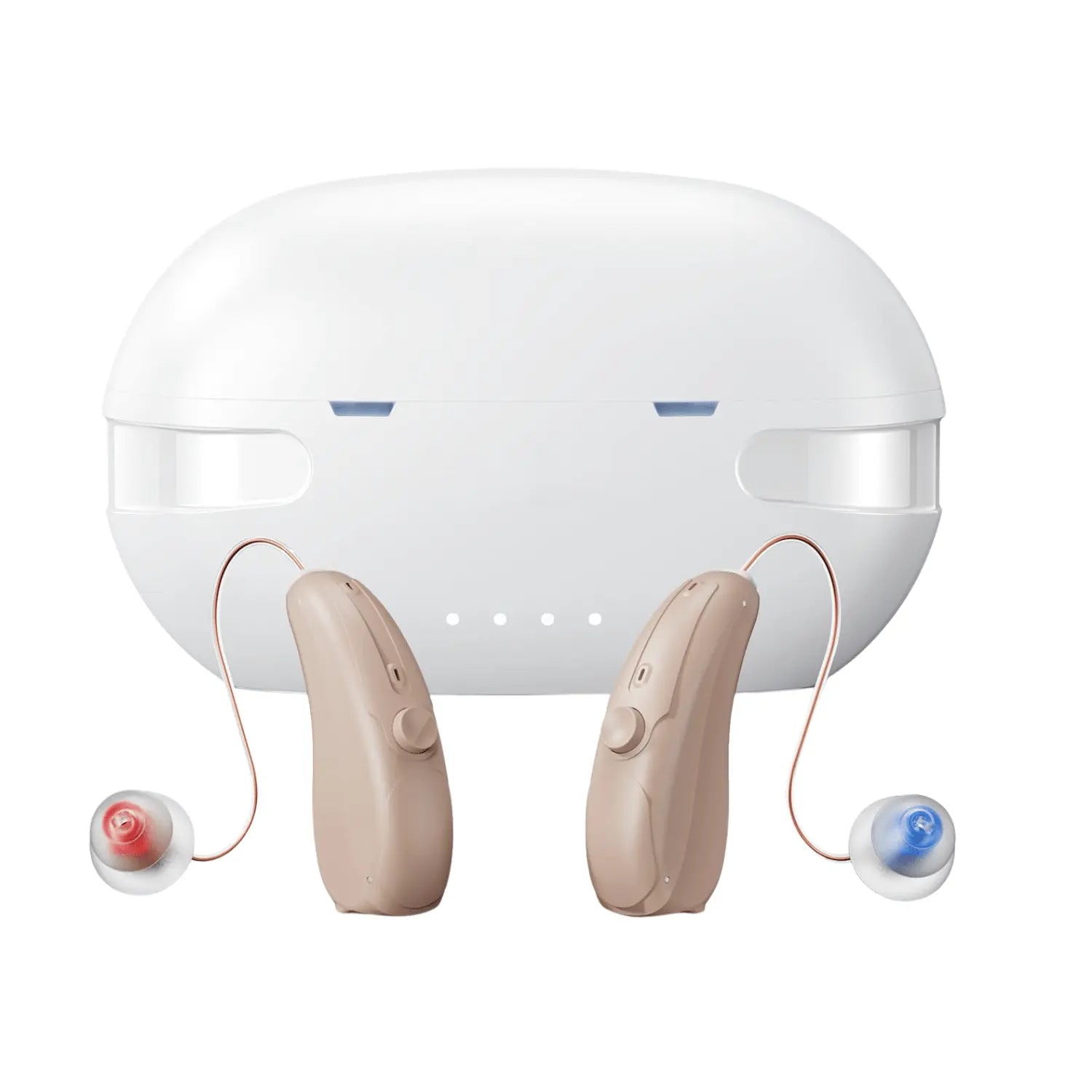
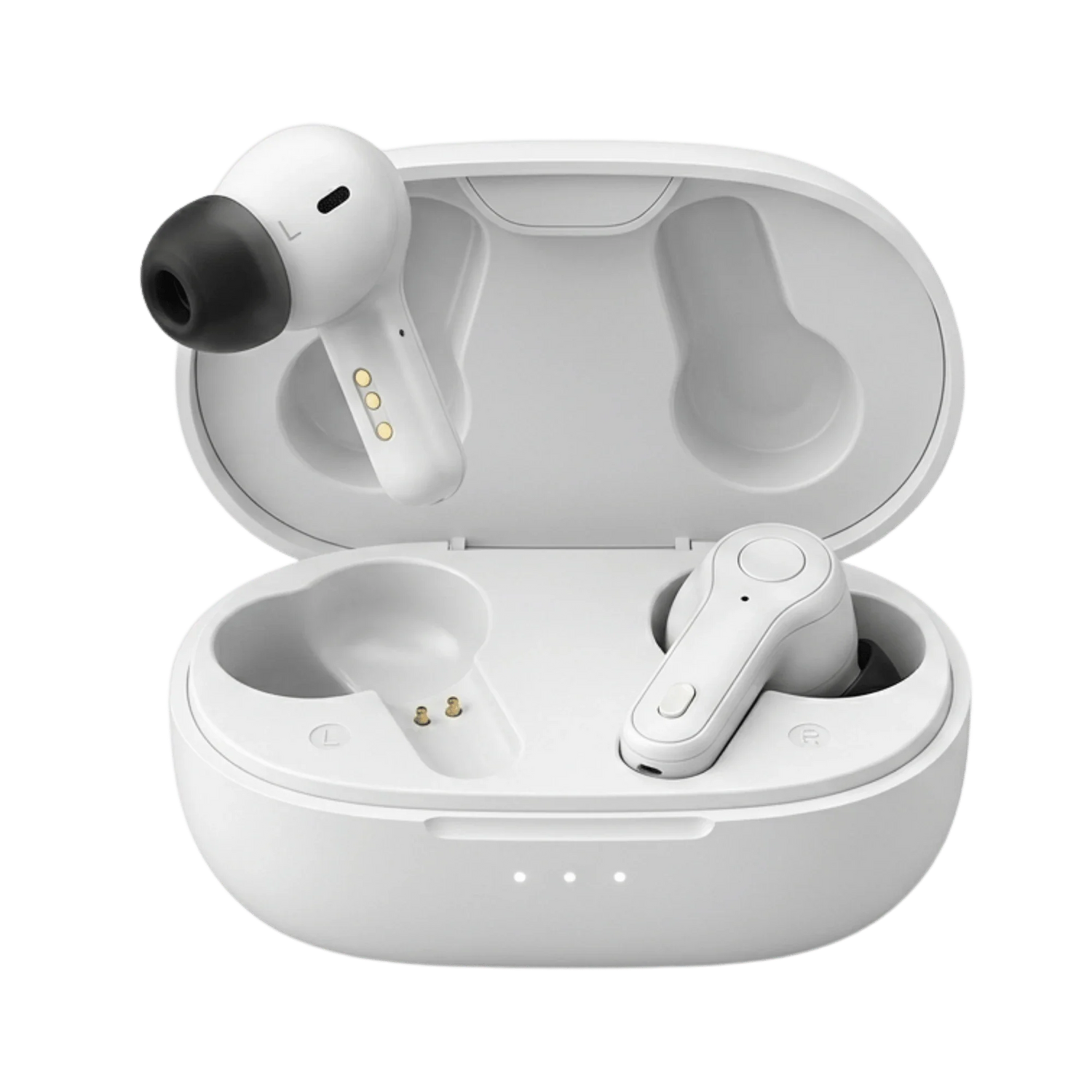
Panda Air is one example of that kind of access-focused option. It is an earbud-style in-the-canal device aimed at adults with mild-to-moderate hearing loss who want to skip a long audiology referral chain. It uses 16-channel wide dynamic range compression, multi-band adaptive noise reduction, and a charging case that delivers up to 60 hours per charge. It includes the Panda app-based in-ear hearing test: after the device arrives, the user pairs it with the Panda app, runs a frequency-specific hearing test through the hearing aid itself, and the app then automatically programs the device's gain and frequency response to match the user's audiogram, similar to what an audiologist does at a clinical fitting. Panda Air ships with a 5-year warranty and a 45-day return window. More information is available at pandahearing.com/products/panda-air.
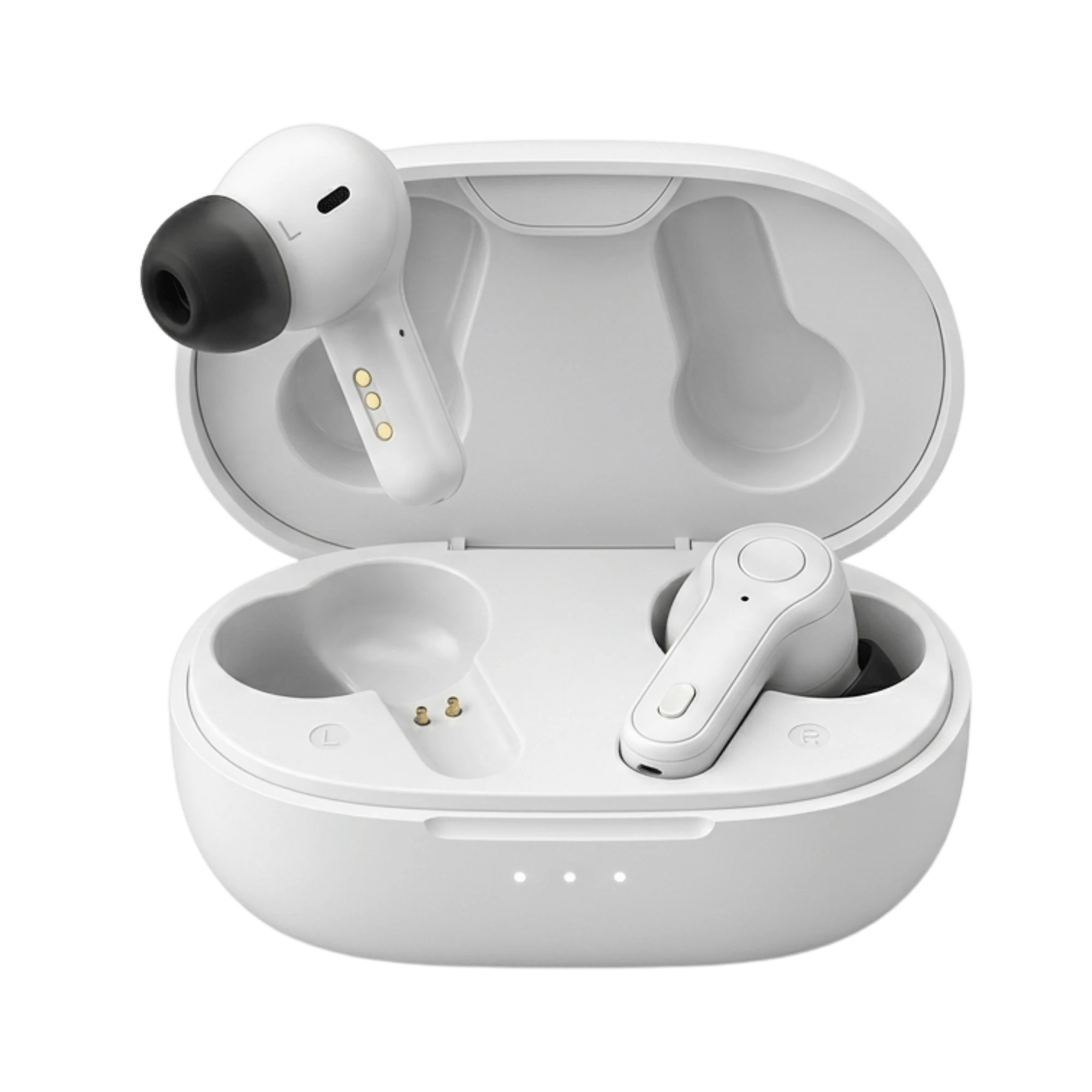
OTC devices are approved in the United States for adults with perceived mild-to-moderate hearing loss. Adults with severe or profound hearing loss are still best served by a clinical fitting and, in many cases, prescription-grade devices. The Mexican cohort studied here was identifying their own hearing as declining, which is exactly the perceived-loss profile OTC self-fitting devices were designed for.
Limitations of This Research
A few caveats are worth noting. Hearing in this study was self-reported, not measured with audiometry. That means the analysis is about perceived hearing decline rather than a calibrated decibel threshold. Loneliness was measured with a short scale, which is practical for large surveys but loses some nuance. And although the within-person design is much stronger than a single snapshot, observational data alone cannot fully prove that hearing decline causes loneliness rather than the two simply moving together.
The cohort is also specific to Mexican older adults aged 60 and above, and the social and health context in Mexico differs from that in other settings. Whether the same within-person link would replicate in cohorts with very different access to hearing care, or in other Latin American populations, is an empirical question for follow-up studies.
What to Do With This
If you, or a parent or grandparent, has been quietly noting that conversations are getting harder, this study is a reminder that the cost of waiting is not only about hearing words. Within-person, hearing decline tracked with rising loneliness in older adults across nearly six years of national data. The authors' own framing is that timely, accessible hearing intervention belongs in the same conversation as other parts of healthy aging, alongside vision, mobility, and chronic disease management.
Giraldo-Rodriguez L, Ramos-Felix D, Roa-Rojas P, Perez-D'Aquino KE, Alvarez-Cisneros T. Perceived Hypoacusis and Loneliness: A Longitudinal Between- and Within-Individual Association in Mexican Older Adults. Aging and Disease. 2026. Retrieved from PubMed. https://doi.org/10.14336/AD.2025.1199