Hand Dexterity Predicts How Well People Manage Their Hearing Aids
A French study of 221 long-term hearing aid users found that a short questionnaire about everyday hand tasks predicts how well someone can actually handle their device, and proposes using it to choose the right hardware from the start.
Hearing aids that sit unused in a drawer are one of the persistent embarrassments of hearing care. Studies of non-use have pointed at cost, at sound quality, at stigma and at unrealistic expectations. One explanation gets far less attention: some people simply cannot work the device. Changing a battery the size of a lentil, seating a dome correctly in the ear canal or opening a small charging case all demand fine motor control that not everyone has.
The problem is that dexterity is rarely measured. A clinician might notice that a patient's hands shake, or might not. A new study argues that this judgment should not be left to impression, and tests whether an existing, validated questionnaire can put a number on it.
About This Study
Title: Towards a standardized assessment of manual dexterity in hearing aid users using the ABILHAND questionnaire
Authors: Florine Liegeon, Stephane Gallego, Helena Rauber, Hung Thai-Van
Affiliations: Institut Pasteur, AP-HP, Inserm, Fondation Pour l'Audition, Institut de l'Audition, IHU reConnect, Universite Paris Cite, Paris; Audition Conseil, Lyon; Department of Audiology and Neurotology, Civil Hospitals of Lyon; Sonova France, Bron; Centre de Recherche en Psychologie et Neurosciences, UMR 7077, Aix-Marseille Universite, CNRS, Marseille
Journal and publication date: International Journal of Audiology, published online 5 August 2026
Study type: Cross-sectional observational study, 221 participants
PubMed DOI: 10.1080/14992027.2026.2710963
Background: Why the Researchers Looked at This
Manual dexterity is the ability to carry out precise movements with the hands and fingers. It declines with age for ordinary reasons, and declines faster with arthritis, essential tremor, peripheral neuropathy, stroke and Parkinson's disease. Since age-related hearing loss and reduced hand function both accumulate over the same decades, a large share of hearing aid candidates are managing both at once.
Hearing aid design has real consequences here. Devices differ in size, in whether they use disposable batteries or a rechargeable case, in how large those batteries are, and in whether adjustments happen on a tiny physical control or through a phone app. A device that suits one person's hands may be unusable for another with identical hearing.
The ABILHAND questionnaire already exists as a validated measure of manual ability. Rather than asking people to perform a timed pegboard task in a clinic, it asks how difficult they find ordinary daily activities that require the hands. The researchers wanted to know whether that self-reported score lines up with what hearing care professionals observe about a patient's ability to handle a hearing aid, and whether it could be shortened enough to use routinely.
How the Study Was Done
The team recruited 221 adults during routine follow-up appointments. Every participant had already been wearing hearing aids for at least one year, which is an important design choice: these were experienced users who had passed the initial learning curve, not people fumbling with an unfamiliar device for the first time. Any handling difficulty they reported was therefore unlikely to be simple inexperience.
Each participant completed the ABILHAND questionnaire on their own, rating the difficulty of everyday manual tasks. Separately, 20 hearing care professionals completed a second questionnaire assessing those same patients' ability to manipulate their hearing aids. That separation is what gives the study its strength: the patient self-report and the professional assessment were produced independently, so agreement between them is meaningful rather than circular.
The researchers then compared the two sets of scores, and worked on reducing the full questionnaire to something short enough for a busy appointment.
What the Researchers Found
The two independent measures agreed. ABILHAND scores correlated positively with the hearing care professionals' assessments, meaning that people who reported more difficulty with everyday hand tasks were also the people professionals judged to struggle with their devices. A patient's own account of how their hands work turned out to be informative about a problem clinicians often only discover later.
Both versions of the questionnaire also correlated negatively with age, which is the expected direction and serves as a basic sanity check on the measure: older participants reported lower manual ability.
The practical output was a shortened instrument the authors call ABILHAND Light-7, cut down to seven items. Length is the reason screening tools go unused, and a seven-item questionnaire is short enough to complete in a waiting room. The authors report that the abbreviated version performed comparably to the full one.
The researchers went one step further and established threshold scores for both versions, intended to guide concrete recommendations about which hearing aid type, battery size and earpiece a given patient should be offered. That converts the questionnaire from a descriptive measure into a decision tool. The authors conclude that both versions are valuable for prosthetic orientation because they help identify devices, batteries or earpieces likely to be too complex for a particular patient to manage.
What It Means for People with Hearing Loss
The clearest message is that difficulty handling a hearing aid is a fitting problem, not a personal failing. If someone cannot manage a device after a year of daily practice, the sensible conclusion is that the device was poorly matched to their hands. This study gives that intuition a measurable basis.
It also suggests a question worth asking before any purchase, whether through a clinic or directly: how will I change or charge this, and can I do that reliably on a bad day? Hand function varies. Arthritis is worse in the morning and worse in cold weather. A device that works during a calm demonstration may not work at 7am in February.
For anyone shopping without a professional in the room, the concrete implications are about hardware. Rechargeable designs remove the disposable battery entirely, which eliminates the single most demanding recurring task. Larger physical forms are easier to grip than very small ones. And a device that is configured through a phone screen asks less of the fingers than one adjusted with a control on the aid itself.
When Handling, Not Hearing, Is the Barrier
The finding that matters here is that battery size and device complexity should be matched to a person's actual hand function before anything else is decided. That reframes what counts as a good device: not just how it sounds, but whether the daily handling routine is one the owner can complete without frustration.
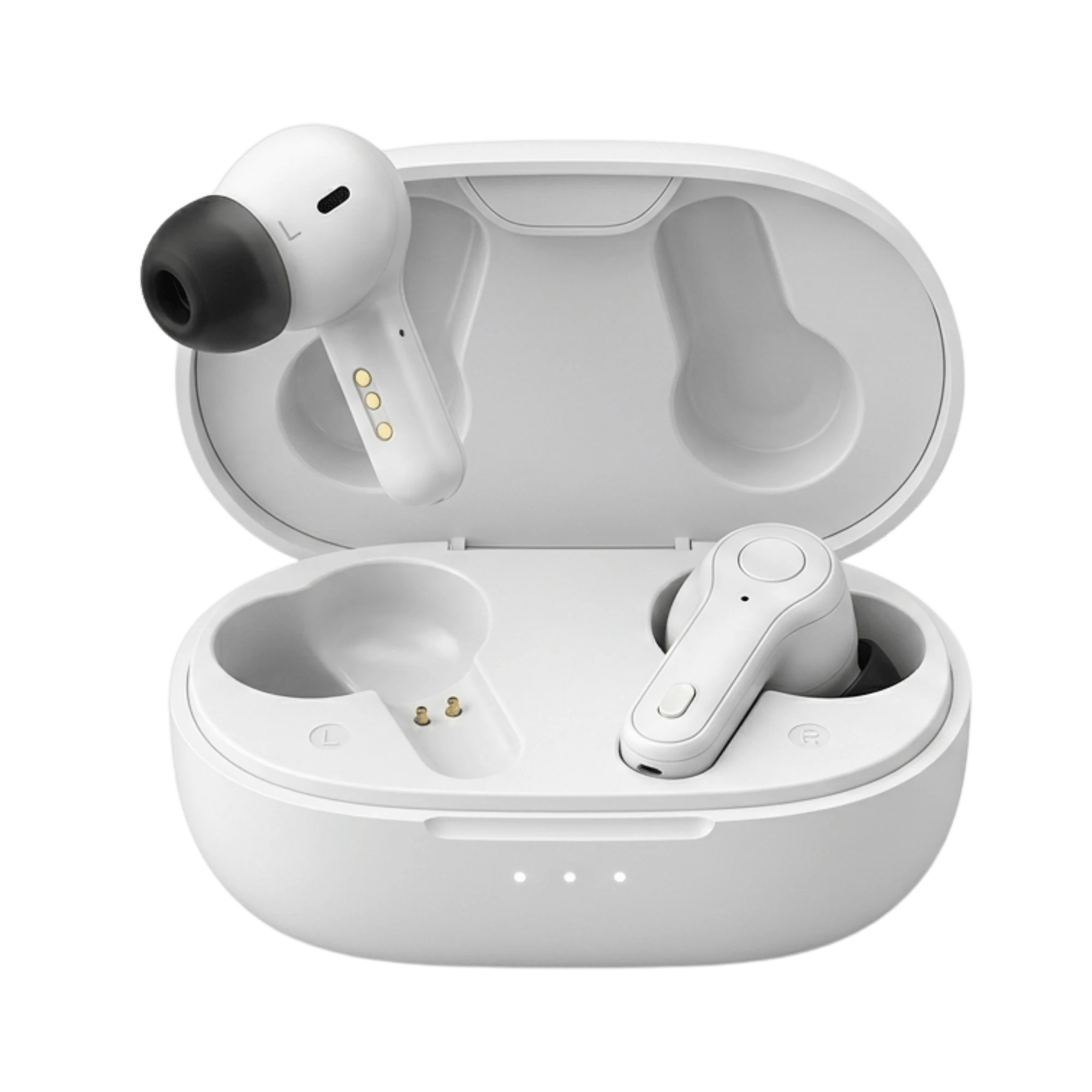
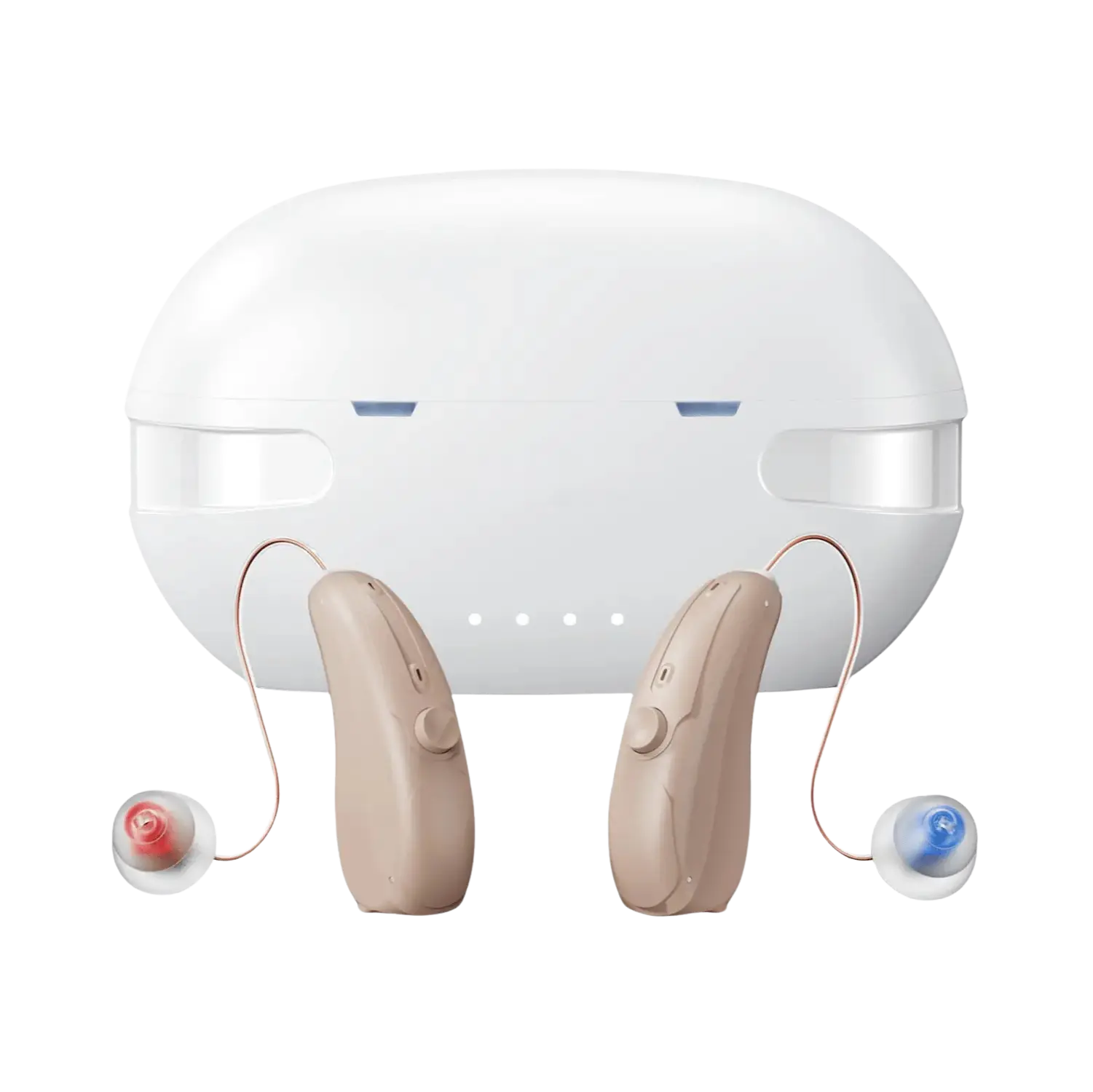
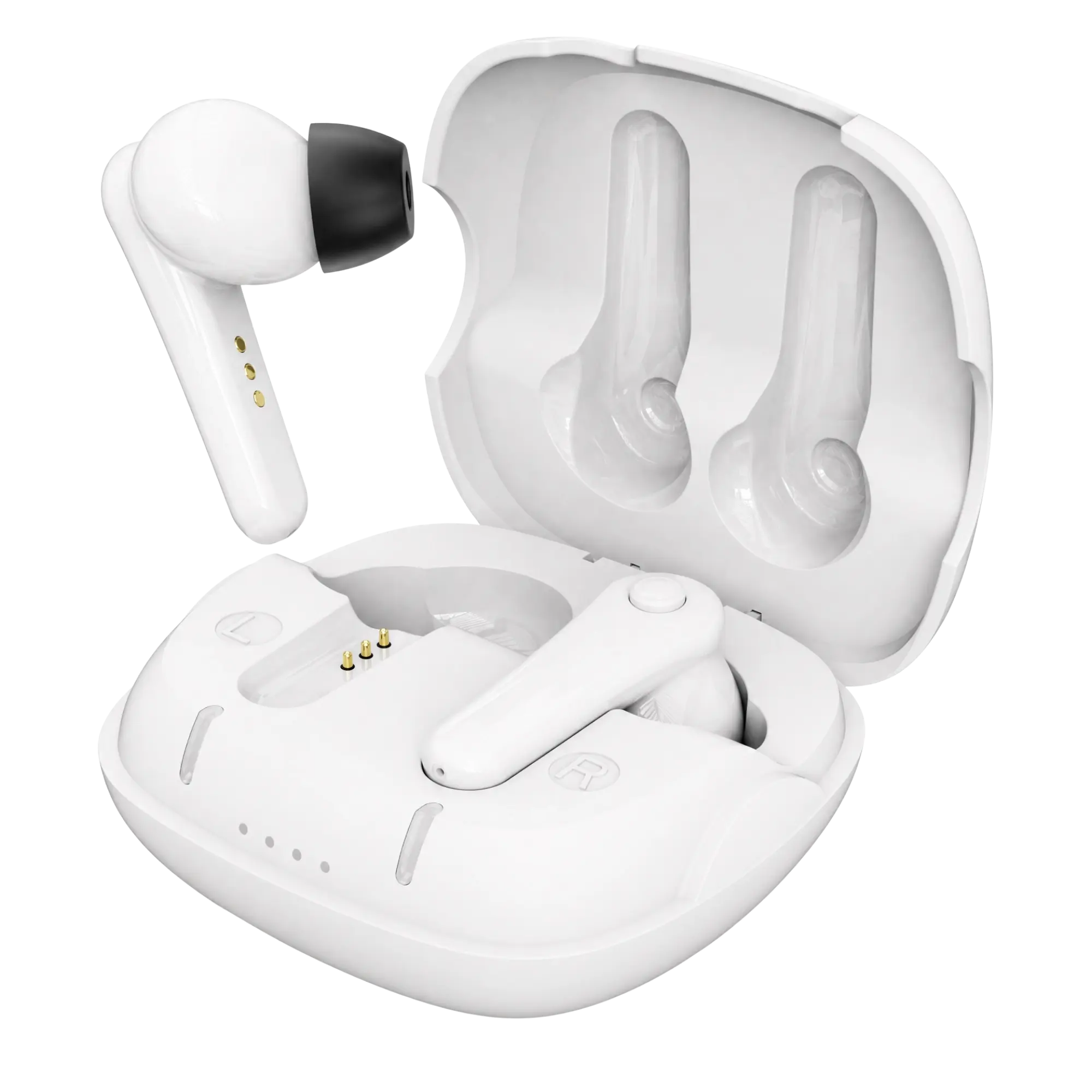
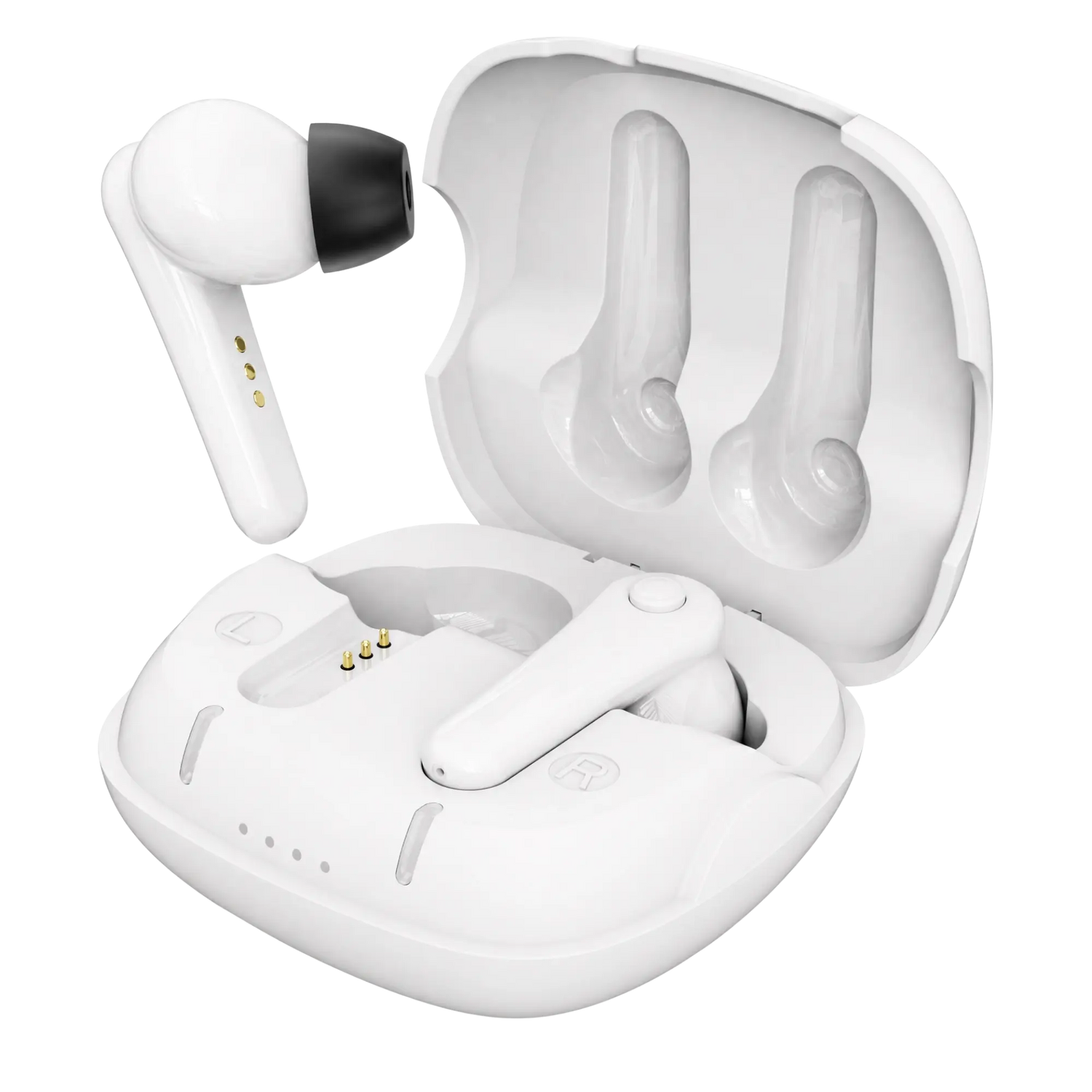
Panda Air is designed around that constraint. It is one of the modern earbud-style hearing aids, larger and easier to grip than a traditional in-the-canal shell, and it charges in a case rather than running on disposable batteries, so the fiddly task the study flags as hardest disappears from the routine. The case holds about 60 hours of charge and supports fast charging, so the handling required amounts to placing the aids in a case at night.
Setup follows the same logic. Air includes an app-based in-ear hearing test that runs a frequency-specific test through the aid itself after delivery and programs gain and frequency response to the wearer's audiogram, so tuning happens on a phone screen rather than through a control on the device. Among rechargeable hearing aids with charging case designs it comes with 16-channel WDRC processing, adaptive noise reduction, a 5-year warranty and 45-day returns. Over-the-counter devices are cleared for mild to moderate hearing loss, and severe or profound loss is still best served by a clinical fitting.
Limitations of This Research
This is a cross-sectional study, meaning it captures a single moment rather than following people over time. It shows that dexterity scores and professional assessments agree, but it does not demonstrate that using the questionnaire to select devices actually improves how much people wear them. That would require a trial in which patients are assigned devices with and without the tool and their usage tracked afterwards, which has not yet been done.
Two further caveats deserve mention. The professional questionnaire used as the comparison was described by the authors as non-standardised, so the benchmark itself is not a validated instrument. And the author list includes an affiliation with Sonova France, a hearing aid manufacturer, alongside Audition Conseil, a hearing care retail network. That does not invalidate the work, and industry involvement is common in this field, but readers should be aware of it. The sample was recruited in France among established users, so results may not transfer directly to other health systems or to first-time buyers.
Where This Leaves Us
Hearing care has spent years asking why people abandon their hearing aids, and this study makes a strong case that part of the answer has been sitting in plain sight. Whether a seven-item questionnaire ends up in routine practice remains to be seen, but the underlying point does not depend on the instrument: if you are choosing a hearing aid, for yourself or for a parent, ask about the daily handling before you ask about anything else. A device that cannot be managed will not be worn, regardless of how well it performs.
Liegeon F, Gallego S, Rauber H, Thai-Van H. Towards a standardized assessment of manual dexterity in hearing aid users using the ABILHAND questionnaire. International Journal of Audiology. 2026. Retrieved from PubMed. https://doi.org/10.1080/14992027.2026.2710963