Acupoint Stimulation Plus Ear Copper Needle Scraping Improves Hearing and Tinnitus After Sudden Hearing Loss in Randomized Trial
A randomized controlled trial out of Anhui Medical University reports that layering two traditional adjunct therapies on top of standard care nearly doubled the rate of clinical improvement in people with sudden sensorineural hearing loss accompanied by tinnitus.
Sudden sensorineural hearing loss, often abbreviated SSNHL, is the rapid onset of hearing loss in one or both ears, typically over the course of three days or less. It is considered an ear, nose, and throat emergency because the window for treatment is short, and many patients are left with residual hearing loss and a persistent ringing or buzzing sensation called tinnitus even after standard care.
Tinnitus is one of the most distressing complications. It can disturb sleep, concentration, and mood, and many patients say it bothers them even more than the hearing loss itself. Researchers continue to look for safe, low-cost add-on therapies that can be paired with conventional drug treatment to give patients a better shot at recovery during that short window.
About This Study
Title: The influence of transcutaneous electrical acupoint stimulation combined with ear copper needle scraping on the clinical efficacy and quality of life of patients with sudden sensorineural hearing loss accompanied by tinnitus: A randomized controlled trial.
Authors: Sheng X, Rao W, Huang Y, Sun Q, Wang L, Jia Y, Liu Y, Zhang B.
Affiliations: Department of Otolaryngology Head and Neck Surgery, The First Affiliated Hospital of Anhui Medical University, Hefei, Anhui, China; School of Nursing, Anhui Medical University, Hefei, Anhui, China.
Journal and pub date: American Journal of Otolaryngology, April 2026.
Study type: Single-center randomized controlled trial, two parallel groups, 86 enrolled and 78 analyzed.
PubMed: DOI 10.1016/j.amjoto.2026.104851
Background: Why the Researchers Looked at This
Standard treatment for sudden sensorineural hearing loss in many countries focuses on systemic and intratympanic steroids, sometimes combined with vasodilators or hyperbaric oxygen. Even with prompt treatment, a meaningful share of patients are left with measurable hearing loss and ongoing tinnitus, and recovery rates plateau after about two weeks.
Transcutaneous electrical acupoint stimulation, abbreviated TEAS, is a non-invasive technique. Surface electrodes are placed over classical acupuncture points and a low-frequency electrical current is delivered through the skin, without inserting needles. Ear copper needle scraping is a traditional technique in which a smooth copper instrument is used to gently stimulate specific zones of the outer ear that map to the auditory system. Both have been used in Traditional Chinese Medicine for ear and hearing complaints, but the evidence for their combined use in modern clinical otolaryngology has been limited.
The investigators wanted to test whether adding both adjunct therapies to standard pharmacological care produced larger short-term gains in hearing thresholds, tinnitus severity, and patient-reported quality of life compared with standard care alone.
How the Study Was Done
Eighty-six patients with sudden sensorineural hearing loss complicated by tinnitus were enrolled at the First Affiliated Hospital of Anhui Medical University and randomly assigned to one of two groups, with 43 per arm. The control group received conventional pharmacological treatment and routine nursing care. The observation group received the same baseline care and, in addition, transcutaneous electrical acupoint stimulation combined with ear copper needle scraping.
Outcomes were assessed after two weeks of treatment. Hearing was measured with the pure-tone average, abbreviated PTA, which captures the average threshold across the speech-frequency range. Tinnitus was assessed with two patient questionnaires: the Tinnitus Evaluation Questionnaire and the Chinese version of the Tinnitus Handicap Inventory. Quality of life was measured with the SF-36, a widely used general health survey covering physical and mental wellbeing. Adverse events were recorded throughout. By the end of the study, 78 of the original 86 patients had complete data for analysis.
What the Researchers Found
Both groups improved on every measured outcome compared with their own baseline, which is consistent with what is typically seen in the first two weeks after standard SSNHL treatment. The more striking result was the gap between the two groups.
The clinical efficacy rate, a composite measure of hearing recovery used in the trial, was 87.5 percent in the observation group versus 50.0 percent in the control group. In other words, the share of patients meeting the trial's threshold for clinical improvement was about 1.75 times higher when the traditional adjunct therapies were added to standard care.
Pure-tone average thresholds dropped further in the observation group, indicating better hearing recovery on objective audiometric testing. Tinnitus scores on both questionnaires also fell significantly more in the observation group, meaning patients reported quieter, less intrusive ringing. SF-36 scores in the observation group rose more sharply, suggesting that the gains were not just measurable on an audiogram but were also reflected in how patients said they were feeling and functioning.
All between-group differences in hearing, tinnitus severity, and quality of life were reported as highly statistically significant, with p-values below 0.001. No serious adverse events were observed in either group, which is one of the main practical advantages of non-invasive surface stimulation and gentle external ear techniques.
What It Means for People with Hearing Loss
For patients in the early phase of sudden sensorineural hearing loss with tinnitus, this trial suggests that there may be a meaningful, low-risk add-on to conventional treatment. The study population was specific, sudden hearing loss with tinnitus treated within a defined window, so the results do not automatically extend to long-standing age-related hearing loss or to chronic tinnitus that has been present for years.
A second takeaway is broader. Even after two weeks of optimal pharmacological care plus adjunct therapy, many patients still had residual hearing loss and ongoing tinnitus. That is the population that typically needs to think about longer-term hearing support, including amplification, communication strategies, and follow-up audiology, especially if the loss does not fully resolve.
When Hearing Does Not Fully Recover, Quality of Life Still Matters
One of the most important signals in this study is that quality of life moved alongside the audiogram. Patients did not just hear better, they also reported feeling better. That matches what audiologists see in everyday practice: a measurable improvement in hearing thresholds usually shows up as easier conversation, less listening fatigue, and better sleep, particularly when tinnitus eases at the same time. Hearing aids have a long history of producing the same kind of dual benefit for people whose hearing does not fully recover, by raising audibility for soft speech and, for many wearers, taking the edge off tinnitus by adding gentle background sound.
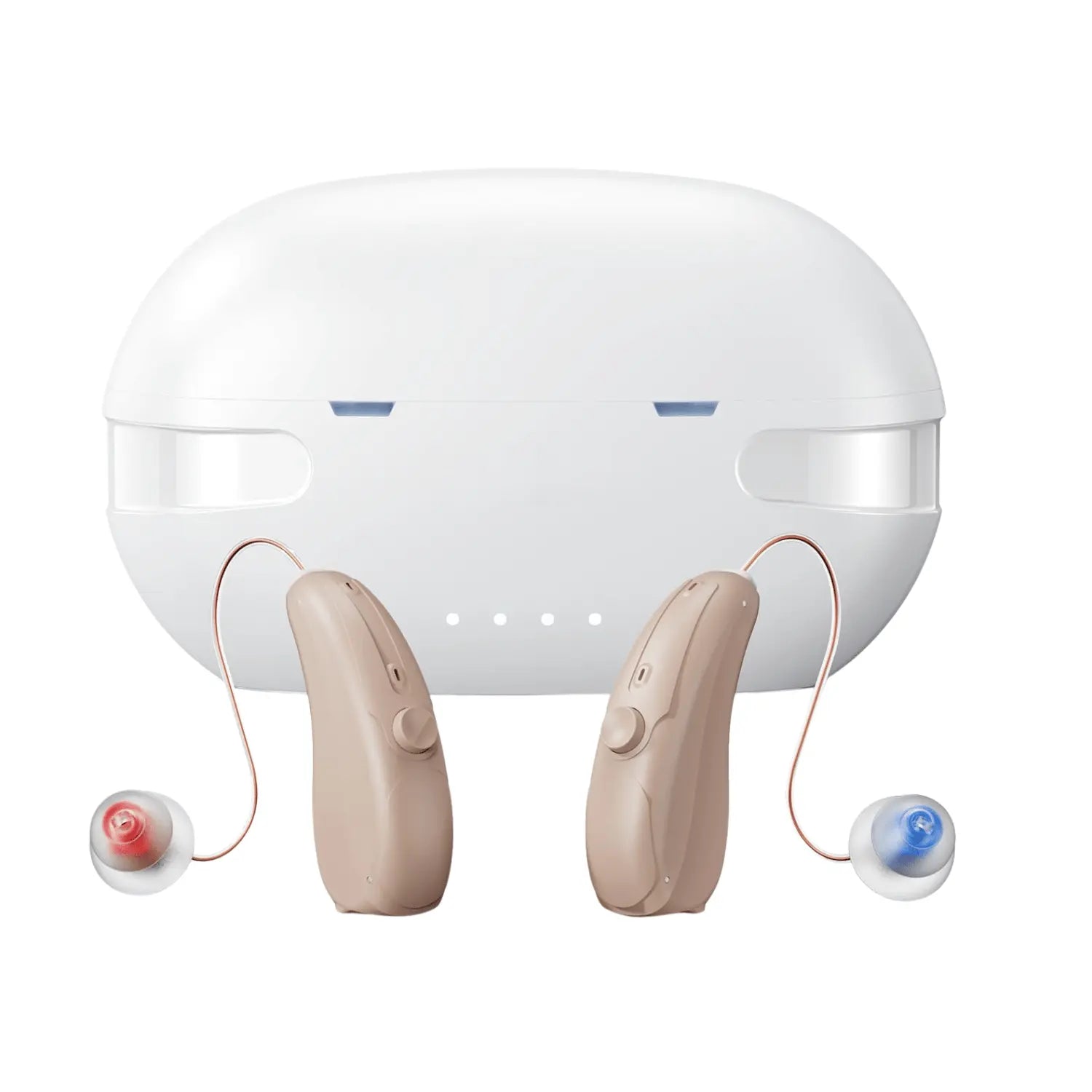
For people whose hearing does not bounce back, our Panda Quantum is built around exactly this scenario. Quantum is a 16-channel receiver-in-canal hearing aid with active noise reduction, Bluetooth streaming for phone calls, TV, and music, and up to 80 hours of total battery with the charging case. It is also a 5-year warranty product with a 45-day return window, which gives wearers room to try it in real-world listening situations after a sudden hearing event.
Quantum also includes the Panda app-based in-ear hearing test. After the device arrives, the user pairs it with the Panda app, runs a frequency-specific hearing test through the hearing aid itself, and the app then automatically programs the gain and frequency response to match the resulting audiogram. The fitting works much like what an audiologist does in a clinical chair, except the user can do it at home on their own schedule. That can be valuable for someone whose hearing has shifted recently and may need to be refit again as recovery continues. As always, OTC hearing aids are approved for mild to moderate hearing loss; severe or profound losses, and ongoing medical recovery from SSNHL, still benefit most from clinical care and an ENT or audiologist's input.

Limitations of This Research
The trial was conducted at a single center in Hefei, China, with 78 evaluable patients and a follow-up of only two weeks. That is a relatively small sample and a short window, so the results need replication in larger, multi-center studies and over longer follow-up to see whether the gains hold up. The trial also did not appear to use a sham version of TEAS or sham scraping, so part of the benefit could reflect attention, contact time with clinicians, or expectation effects rather than the techniques themselves.
The trial was registered retrospectively in the International Traditional Medicine Clinical Trial Registry, which is generally considered weaker than prospective registration before the first patient is enrolled. The article does not describe a specific industry funder, and individual conflicts of interest, if any, are listed in the journal's full disclosure section. Generalizability to non-Chinese clinical settings, where ear copper needle scraping is not part of routine ENT practice, is also limited.
Where This Leaves Us
This study adds early evidence that low-risk traditional adjunct therapies may help some patients recover more hearing, less tinnitus, and better quality of life in the first weeks after a sudden sensorineural hearing event. People who experience sudden hearing loss should still seek urgent ENT care first, since timing of standard treatment matters most. For those whose hearing does not return to baseline, planning for longer-term hearing support, including modern self-fitting hearing aids and follow-up audiology, becomes the next important step.
Sheng X, Rao W, Huang Y, Sun Q, Wang L, Jia Y, Liu Y, Zhang B. The influence of transcutaneous electrical acupoint stimulation combined with ear copper needle scraping on the clinical efficacy and quality of life of patients with sudden sensorineural hearing loss accompanied by tinnitus: A randomized controlled trial. American Journal of Otolaryngology. 2026;47(4):104851. Retrieved from PubMed. https://doi.org/10.1016/j.amjoto.2026.104851