A Smartphone App Estimated Hearing Thresholds as Accurately as Clinical Audiometry, Study Finds
A new validation study reports that a calibrated phone application estimated listeners' hearing thresholds almost identically to standard clinical audiometry, while also gauging a timing-based listening skill that ordinary hearing tests usually ignore.
For most of the last century, having your hearing measured meant a trip to a clinic, a soundproofed booth, and a set of carefully calibrated headphones. As smartphones and wireless earbuds became almost universal, researchers and consumers started asking an obvious question: how much of that job could a phone do at home?
Plenty of hearing-test apps already exist, but very few have ever been checked against clinical standards, and most ignore a basic complication. Every pair of headphones reproduces sound a little differently, so the same app can give different results depending on the hardware. A research team in Sweden set out to test an app designed to correct for exactly that, and to measure a part of hearing that screening tools rarely touch.
About This Study
Title: A calibrated mobile application for automated estimation of audiometric thresholds and temporal resolution.
Authors: Ghazaleh Ghaffari, Fredrik Ohberg, Mimmi Werner, Per Hallberg, and Amin Saremi.
Affiliations: Umea University, Umea, Sweden (Department of Applied Physics and Electronics; Department of Diagnostics and Intervention, Biomedical Engineering and Radiation Physics; and Department of Clinical Sciences, Otorhinolaryngology).
Journal and date: International Journal of Audiology, published online June 22, 2026.
Study type: Method development and validation study comparing app-based testing against clinical audiometry in 48 adults.
PubMed DOI: https://doi.org/10.1080/14992027.2026.2653622
Background: Why the Researchers Looked at This
The standard hearing test is called pure-tone audiometry. A clinician plays tones at different pitches, or frequencies, and gradually lowers the volume until the listener can only just detect each one. The softest level a person can hear at each frequency is their threshold, and the set of thresholds across pitches forms an audiogram, the familiar chart that maps where and how much hearing has slipped.
The authors point out that consumer hearing apps have multiplied, yet only a handful have been studied clinically, and none of them adjust for the fact that different headphones emphasize different frequencies. An app that sounds bright on one set of earphones and muffled on another will produce an audiogram that reflects the hardware as much as the ear.
The team also wanted to capture something audiograms leave out: temporal resolution. This is the ear's ability to track very rapid changes in sound over time, such as the brief gaps and bursts that separate one speech sound from the next. Temporal resolution matters for understanding speech and for locating where a sound is coming from, and two people with similar audiograms can still differ widely on it.
How the Study Was Done
The researchers built an Android application that first measures and adapts to the frequency response of whatever Bluetooth-enabled headphones are connected, then runs two tests. The first is a pure-tone audiometry routine like the clinical version. The second is a temporal masking test, which probes temporal resolution by presenting sounds separated by carefully controlled gaps.
They recruited 48 people: 24 with normal hearing, with an average age of about 49, and 24 with hearing impairment, with an average age of about 59. Every participant first completed clinical audiometry performed to the international ISO 8253 standard, testing frequencies from 250 to 8000 hertz. The app-based test then covered the same frequencies on the same people, so the two methods could be compared directly.
For the temporal masking test, the app used gap durations of 5, 10, 20, 40, and 80 milliseconds. To judge whether the app and the clinic agreed, the team used statistical models that account for repeated measurements on the same individuals.
What the Researchers Found
The headline result was strong agreement. The app-based audiometry closely matched the clinical measurements, and the statistical models found no significant differences between the two methods. The correlation between app and clinic was both strong and statistically significant, with the analysis reporting a probability value below .001 that the match was a fluke.
That agreement held across the group of 48, which included people whose hearing was clearly impaired, not just listeners with normal hearing. In practice, that means the app placed each person's thresholds at roughly the same volume levels the clinic did, across the range of pitches that matter most for everyday listening.
The temporal masking test added a second layer. It produced quick estimates of temporal resolution at 500, 2000, and 4000 hertz, the frequency region most important for speech. That is information a standard audiogram does not provide, gathered in the same short session.
Because the app corrected for the connected headphones before testing, the authors argue that the results were not simply an artifact of the specific hardware. The calibration step is what they present as the difference between a casual screening toy and a measurement that tracks the clinic.
What It Means for People with Hearing Loss
Cost, distance, and waiting times keep many people from ever getting their hearing checked, and untreated hearing loss often drifts on for years before anyone measures it. A test that runs on a phone the person already owns, with headphones they already use, lowers several of those barriers at once.
Just as important, a validated at-home test can tell someone whether their result looks close to normal or clearly outside it, which is often the nudge that turns a vague suspicion into a decision to act. The temporal resolution measure is a bonus, because it speaks to the very complaint many people describe first: hearing that words are being spoken but not being able to pull them apart, especially in noise.
None of this replaces a professional evaluation when there are warning signs such as sudden loss, pain, or hearing that differs sharply between the two ears. What it does is make the first step smaller, and a smaller first step is one more people are likely to take.
When an Accurate Hearing Test Can Live in an App, So Can the Fitting
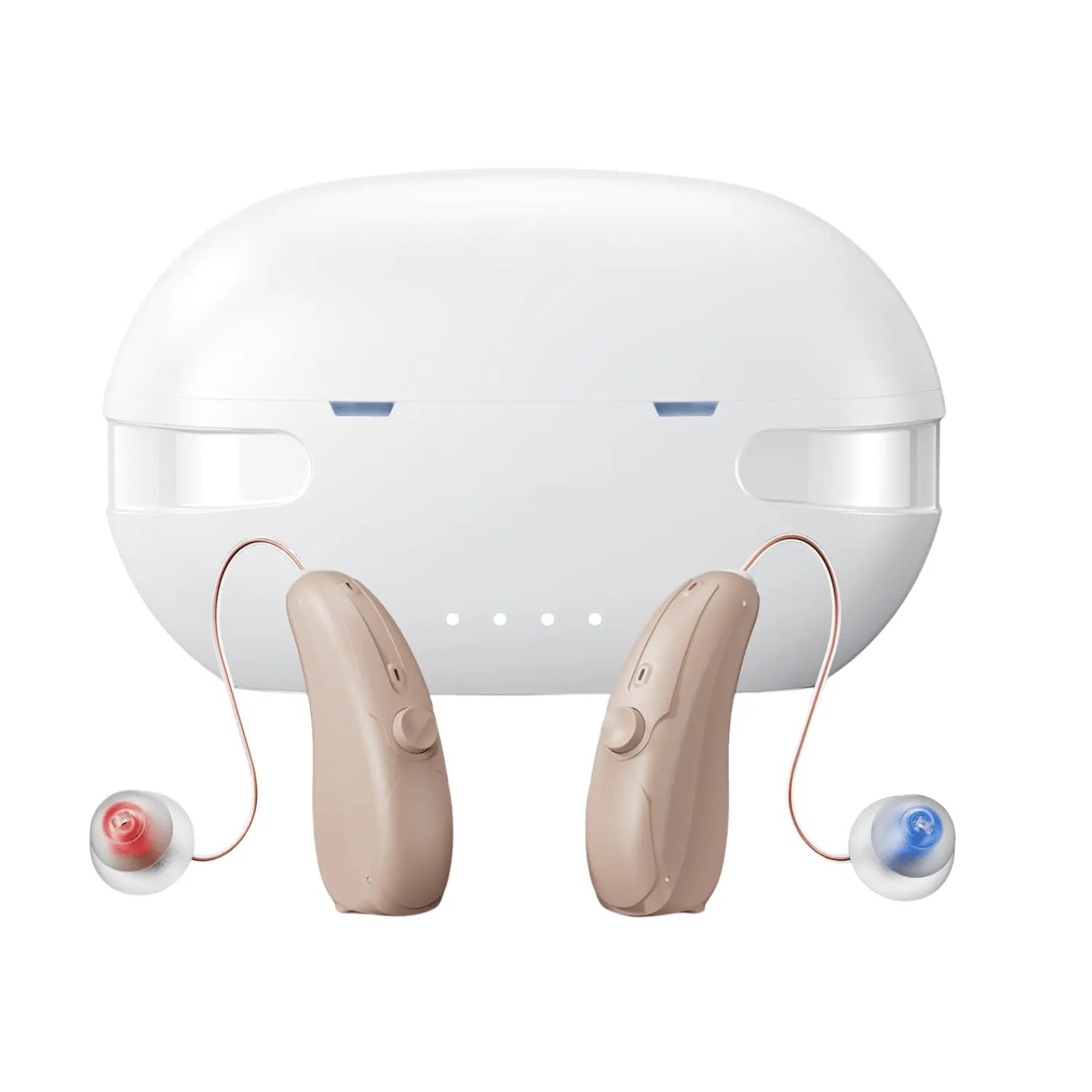
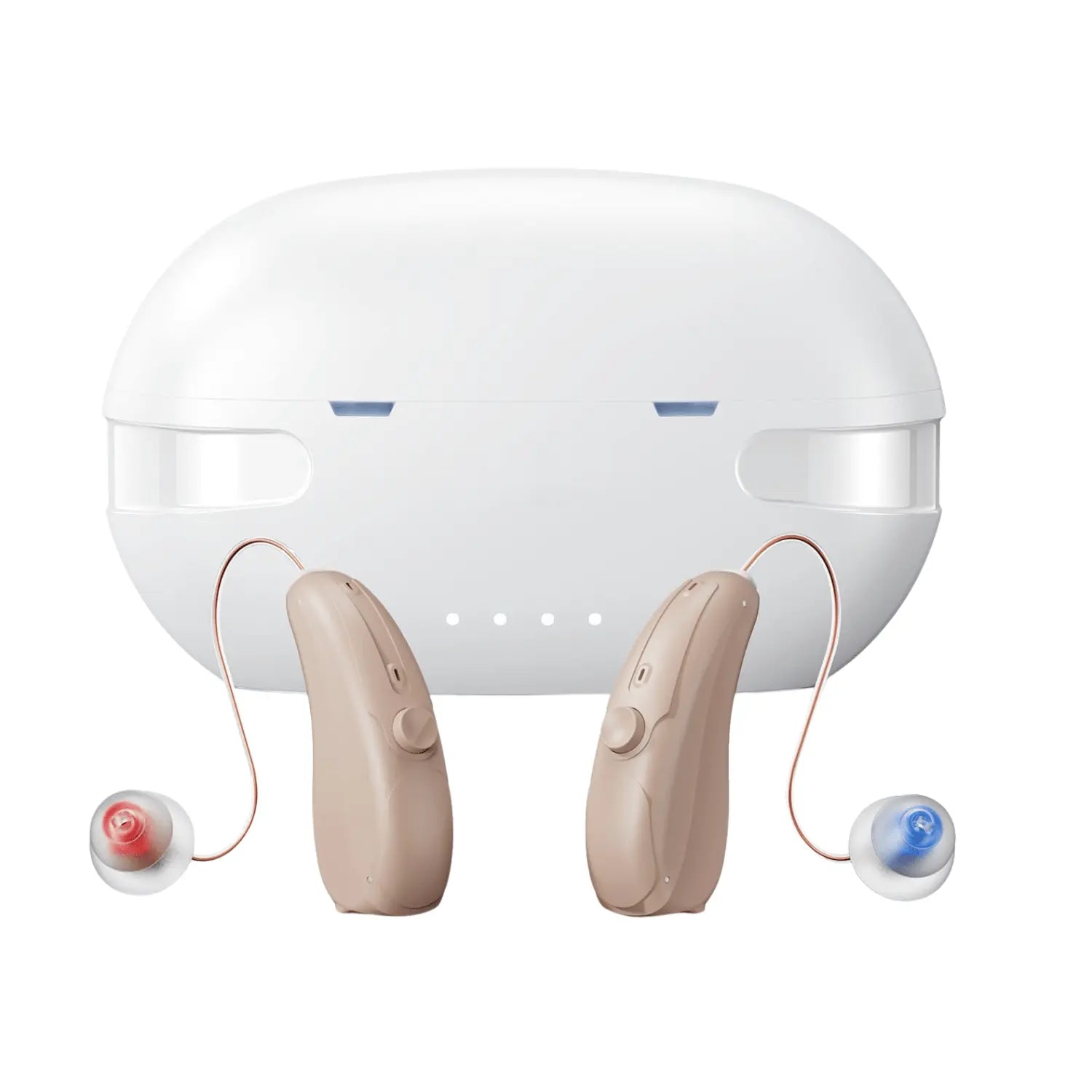
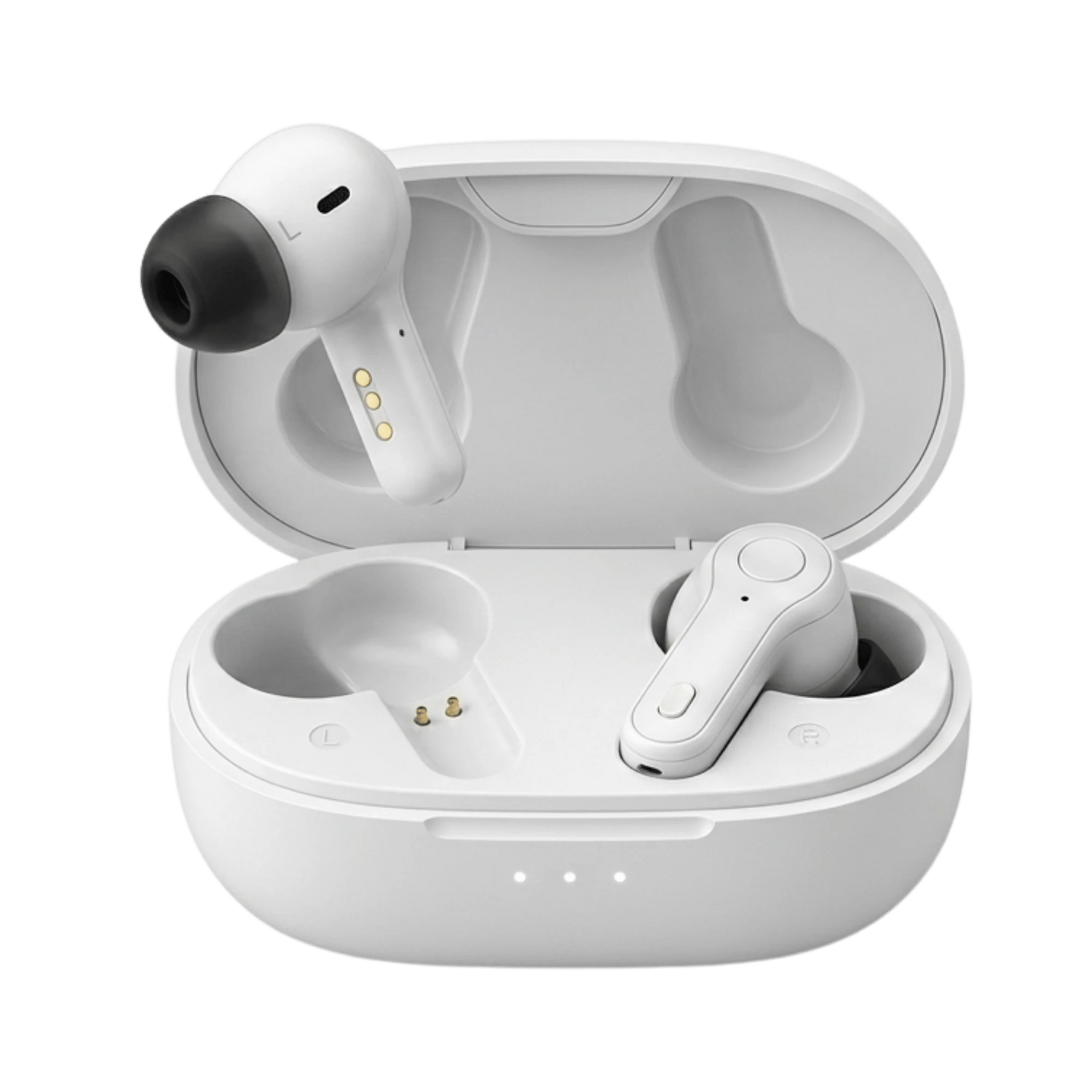
This study is about measuring hearing through an app rather than only in a clinic, and the same logic extends one step further, to setting up the hearing aid itself. That is the idea Panda Air is built around. It is an earbud-style device that pairs with the Panda app, which runs a frequency-specific hearing test through the hearing aid and then programs the device's gain and frequency response to match the listener's audiogram, much as an audiologist would at a clinical fitting.
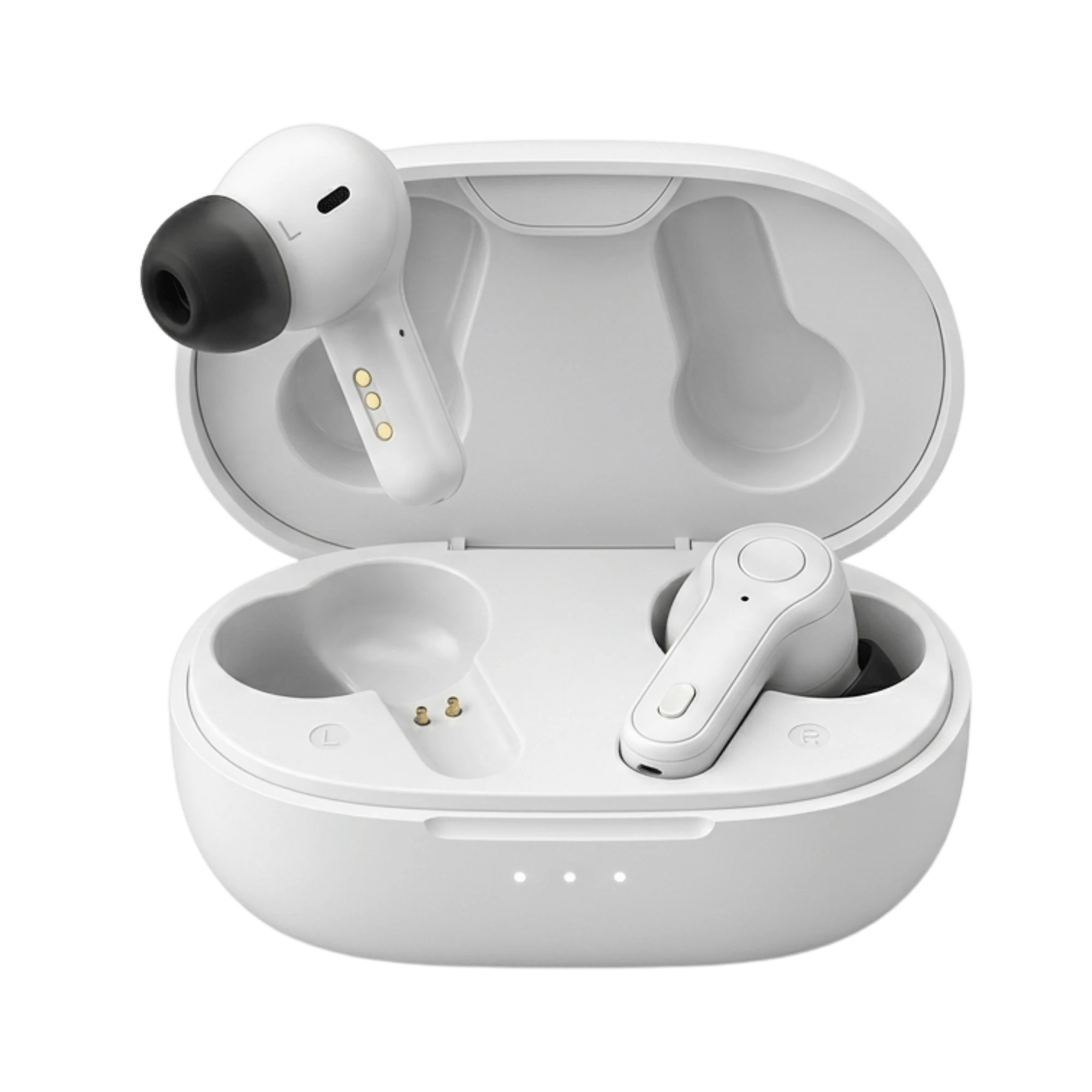
In other words, the at-home self-hearing test the Swedish team validated is the same kind of step that turns Panda Air into a self-fitting over-the-counter hearing aid. Instead of carrying a printed audiogram to an appointment, the wearer lets app-based hearing personalization shape the sound, with 16-channel processing and multi-band adaptive noise reduction doing the moment-to-moment work once the profile is set.
The practical extras are meant to keep that convenience from fading: a charging case that holds up to 60 hours of power with fast charging, a 5-year warranty, and a 45-day return window so a buyer can judge the fit at home over several weeks. Over-the-counter devices are cleared for mild to moderate hearing loss, and people with severe or profound loss still tend to do best with a clinical fitting.
Limitations of This Research
This was a focused validation study with 48 participants, so the results need to be repeated in larger and more varied groups before the app could be treated as a general substitute for clinical testing. The work was carried out under controlled conditions on a specific Android and Bluetooth setup, and real homes are noisier and more unpredictable than a research session.
The study also measured agreement at a single point in time rather than tracking whether app results stay accurate across many devices and over months of repeated use. The published abstract does not detail study funding or competing interests, which are worth checking in the full paper given that the team developed the application being tested.
Where This Leaves Us
The takeaway is encouraging without being a green light to skip the clinic. A carefully calibrated app, tested against clinical audiometry, came close enough to suggest that accurate at-home hearing checks are within reach, and that they can even capture timing-based listening skills the standard test omits. If you have been putting off finding out where your hearing stands, this is a reminder that the first measurement no longer has to be the hardest part.
Ghaffari G, Ohberg F, Werner M, Hallberg P, Saremi A. A calibrated mobile application for automated estimation of audiometric thresholds and temporal resolution. International Journal of Audiology. 2026. Retrieved from PubMed. https://doi.org/10.1080/14992027.2026.2653622