Panda Quantum vs Siemens Motion 701: Restaurant Noise Clarity Explained
Friday night. A crowded restaurant. Clinking glasses, overlapping conversations, the hiss of espresso machines. You're sitting across from someone you care about, but their voice keeps disappearing into the noise. You lean in, asking them to repeat. Again. A third time. The conversation dies.
This is the real test of a hearing aid. Not lab measurements or channel counts. Not clinic fitting credentials. Real noise. Real conversation. Real life. The Siemens Motion 701 markets itself for these moments, but an older BTE technology can't keep pace with what Panda Quantum does in noisy spaces. This comparison shows you exactly why.
Product Overview
The Siemens Motion 701 is the top-of-range BTE hearing aid in Siemens' Motion line. It features dual-microphone directional processing, SoundLearning adaptive technology, and SpeechFocus noise reduction for moderate to severe hearing loss. Maximum output: 130dB SPL. Battery: Size 13 disposable or rechargeable option. Built for clinic fitting only; no Bluetooth in the base device (requires optional Tek wireless accessory at extra cost). Estimated cost: $5,000-$7,000+ per pair with clinic services.
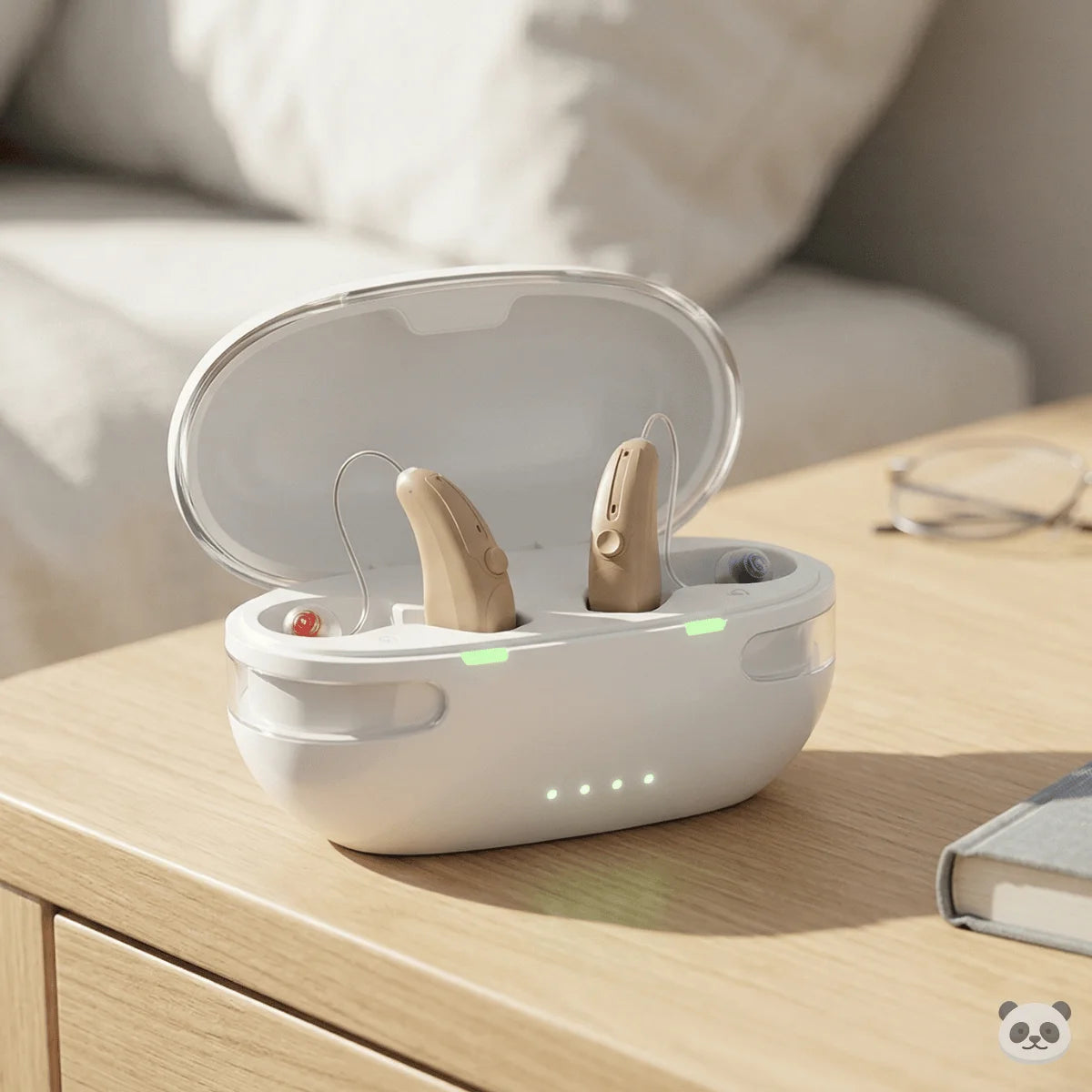
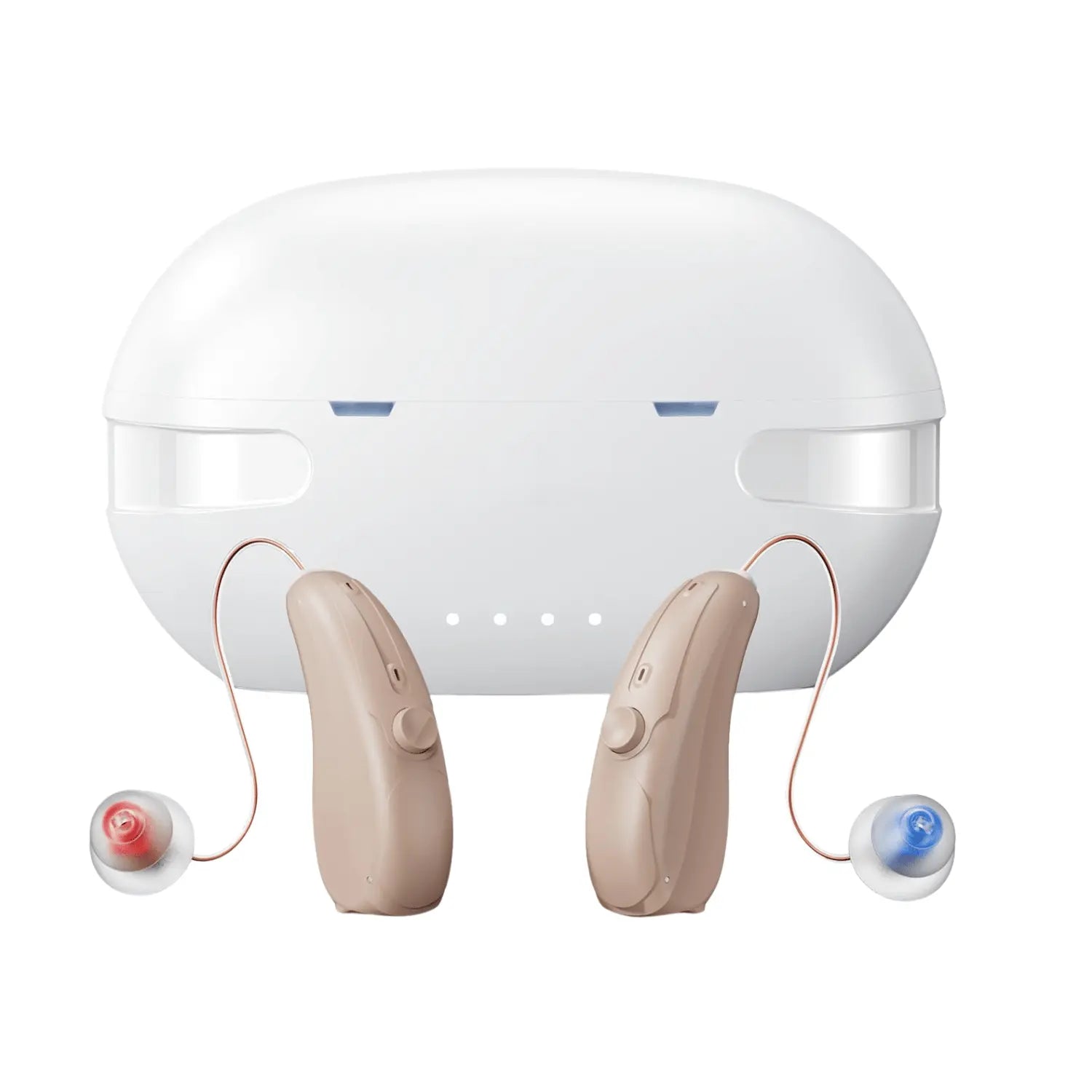
The Panda Quantum is a direct-to-consumer RIC hearing aid with 16-channel WDRC, automatic noise reduction, and adaptive tinnitus masking. Built-in Bluetooth for streaming from phones, TVs, and music players. Self-fit using a 10-minute clinically tuned online hearing test. Battery: 20 hours per charge; the charging case recharges the device 3 more full times for 80 hours total between outlet charges. Price: $349. No clinic appointment. No waiting.
Comparison Table
| Feature | Siemens Motion 701 | Panda Quantum |
|---|---|---|
| Price | $5,000-$7,000+ per pair | $349 per pair |
| Designed For | Clinic BTE, professional power-user | Direct consumer, self-fit, any hearing loss |
| Channels | Multi-channel, SpeechFocus | 16-channel WDRC + ANR |
| Battery Life | 10-14 days (Size 13 disposable) | 20 hrs/charge; 80 hrs total per case |
| Form Factor | Large BTE, visible | Compact RIC with case |
| Bluetooth | Optional Tek ($500-$1,500) | Built-in, no extra cost |
| Self-Fitting | No - requires audiologist | Yes - 10-min clinically tuned |
| Warranty | 1-3 years standard | 5-year full warranty |
| Trial Period | 30-45 days at clinic | 45-day money-back guarantee |
| FDA Certification | Prescription regulated | FDA-OTC certified |
How the Motion 701 Handles Restaurant Noise (and Where It Struggles)
The Siemens Motion 701 uses a dual-microphone directional system and SpeechFocus noise reduction to identify speech and suppress background chatter. The SoundLearning feature remembers your volume and program preferences over time, theoretically adapting to environments you visit regularly. That sounds good on paper, but in a noisy restaurant with multiple simultaneous conversations, the directional microphone can only focus forward, and its noise reduction algorithm makes trade-offs: suppress too much and you lose speech clarity; suppress too little and the noise floor remains distracting.
The Motion 701 is a legacy BTE device released over a decade ago. Most Motion 701 wearers report that restaurant situations still require manual program switching or volume adjustment. You can't passively sit and listen. You have to actively manage your hearing aid.
Panda Quantum's Advantage in Noisy Environments
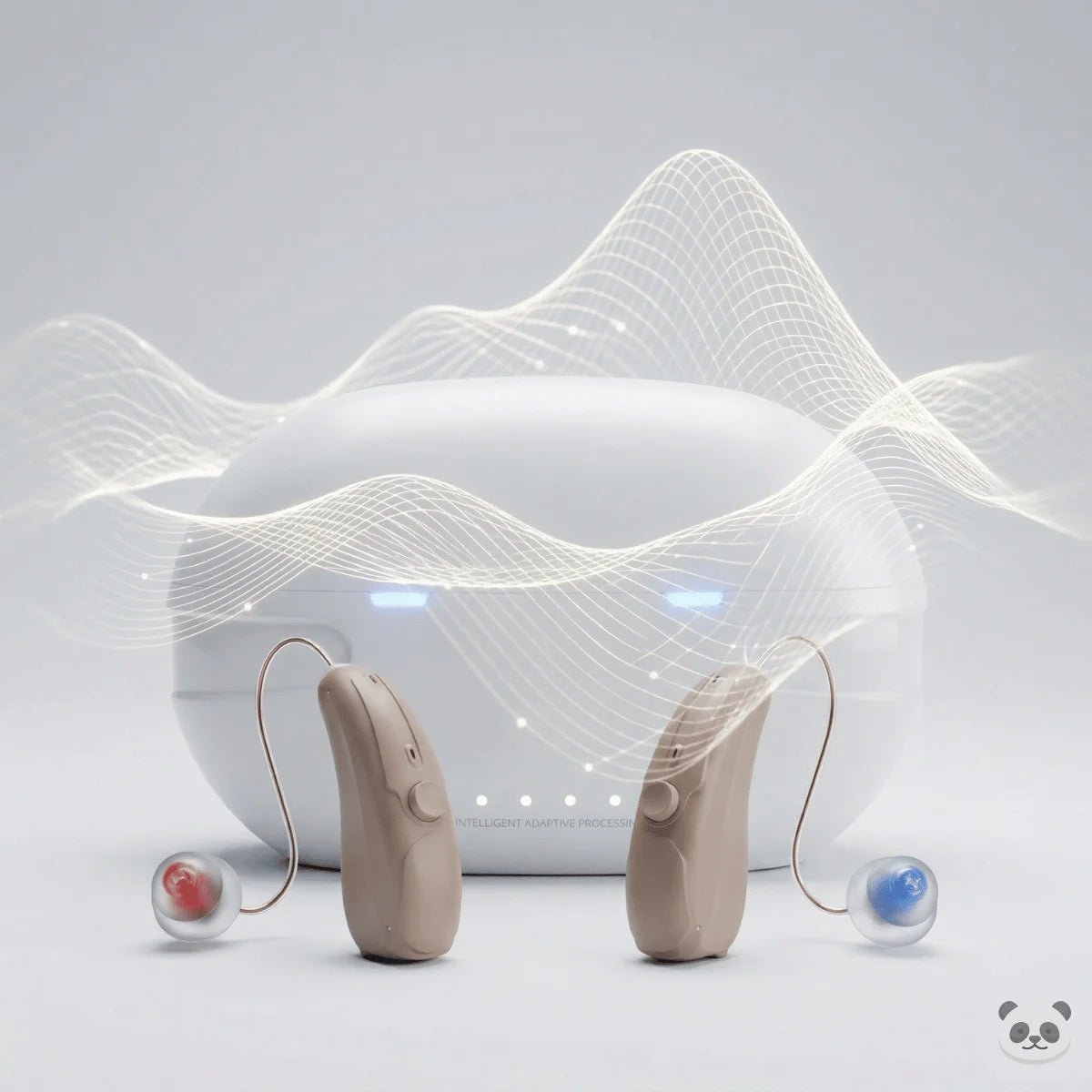
Panda Quantum uses modern adaptive noise reduction that separates the task of speech detection from background suppression. Rather than applying a single "restaurant mode," Panda's algorithm analyzes incoming sound 100+ times per second, detects speech patterns, and suppresses non-speech noise in real time without requiring you to switch programs or touch your device. The frequency-matching technology built into the self-fitting process personalizes noise reduction thresholds to your specific hearing loss curve, not just a generic prescription profile.
In a restaurant, Panda automatically boosts speech frequencies (roughly 500Hz-3kHz where human conversation lives) while suppressing clinking glasses and kitchen noise (higher frequency, energy-intensive sounds). The WDRC compression handles the dynamic range, so your conversation partner's quiet comment and the clinking glass hitting the table don't create competing loudness levels. You hear both, but speech is prioritized naturally. No manual adjustment needed.
Battery Technology: Motion 701's Hidden Cost
The Siemens Motion 701 uses Size 13 disposable batteries lasting 10-14 days. A typical user buys 2-3 packs of batteries per month, costing roughly $6-$10 per pack. That's $72-$120 per year in replacement batteries. Over five years, you'll spend $360-$600 on disposable cells that eventually end up in landfills. Siemens does offer a rechargeable option, but that adds roughly $1,500 to the upfront cost, making the total clinic package even more expensive.
Panda Quantum's rechargeable system means zero battery maintenance. You charge the case overnight, and you have 80 hours of device battery life. In a typical day (14-16 hours of wear), you charge once per week. No batteries to buy, no environmental waste, and the only electrical cost is negligible. Over five years, you save money while reducing your carbon footprint.
Bluetooth Accessibility and Social Life
The Siemens Motion 701 does not include Bluetooth. If you want to stream phone calls, music, or TV to your hearing aids, you must purchase the optional Tek wireless accessory system, which costs $500-$1,500 and requires separate programming at a clinic. This is not included in any "standard" fitting package; it's an upsell.
Panda Quantum has Bluetooth built in. A phone call arrives, and it automatically streams to both ears. No adapter. No extra cost. No clinic visit. Your hearing aid becomes part of your digital life, not a separate device you have to manage separately. In an era where hearing aids should reduce friction, not add it, Panda's approach is modern and practical.
Adaptive Tinnitus Masking for Quiet Moments
If tinnitus accompanies your hearing loss (which it does for roughly 80% of hearing aid users), the Motion 701 offers only basic options: manual program adjustment or optional accessories. Panda Quantum includes adaptive tinnitus masking that learns your preferences and environment. In the restaurant, it remains subtle. In quiet evening hours when tinnitus can feel loudest, it provides personalized masking tailored to your specific tinnitus pitch and loudness. The Motion 701 leaves you managing this alone.
Total Cost Comparison Over Five Years
Siemens Motion 701: $5,000-$7,000 (device) + $360-$600 (batteries) + $500-$1,500 (Bluetooth accessory if desired) = approximately $5,860-$9,100.
Panda Quantum: $349 (device) + minimal electricity for charging = approximately $349 for five years of use.
Frequently Asked Questions
Q: If I have severe hearing loss, can Panda Quantum handle it like the Motion 701 does?
A: Panda Quantum is rated for mild to moderately severe hearing loss. The Motion 701 can reach 130dB maximum output for profound cases. If your hearing loss is in the profound range, consult Panda's team; they may recommend a different device. For the vast majority of moderate-to-severe users, Panda delivers adequate power and better noise management.
Q: Can I adjust Panda's noise reduction like I can program the Motion 701 at a clinic?
A: Yes. Panda's app allows real-time adjustments to noise reduction level and program selection. You have more control than most clinic-fit devices, and you don't need an audiologist appointment to make changes. Adjustments happen immediately.
Q: Why does the Motion 701 require separate accessories for Bluetooth when Panda has it built in?
A: The Motion 701 predates Bluetooth adoption in hearing aids. Siemens retrofitted some models with the Tek system, but it's an add-on, not integrated. Panda was designed from the ground up for 2026, where connectivity is assumed, not optional.
The Bottom Line for Restaurant-Goers and Active Listeners
The Siemens Motion 701 is a legacy BTE from a clinic-managed hearing-care model. It markets power and directional microphones, but in noisy social settings it still requires manual program switching or volume adjustment. Panda Quantum delivers superior automatic noise management in restaurants, built-in Bluetooth, better battery economics, and a five-year warranty for $349. The 16-channel WDRC plus ANR approach outperforms older SpeechFocus technology in real-world noise. Over five years, you'll spend $5,500-$8,500 less while getting a device designed for modern life.
If restaurants, social gatherings, and active listening matter to you, Panda Quantum is the best hearing aid for getting back into those moments without the clinic overhead. Start your free clinically tuned hearing test today. In 10 minutes, you'll know if Panda is right for your hearing loss and your lifestyle. Our team is here to help if you have questions along the way.