Reviewed by the Panda Hearing care team
You searched for Tozo hearing aids because the price feels right and the look is familiar. Wireless earbuds are everywhere, your kids wear them, your grandkids wear them, and a $30 pair from Tozo seems like a quiet way to start hearing better without a clinic visit or a $3,000 bill. That instinct is reasonable. The execution is where things get tricky.
Tozo makes consumer earbuds, not hearing aids. Panda Air was built from day one as an FDA-OTC hearing aid that happens to look like wireless earbuds. Both will sit in your ears comfortably. Only one is engineered to correct the specific frequencies you have stopped hearing.

Want a real hearing aid that looks like everyday earbuds?
Shop Panda Air for $299What Tozo Actually Is, and What It Is Not
Tozo is a Chinese consumer audio brand that sells low-cost wireless earbuds: the T6, T10, T12, A1, NC9, and NC20 sit between roughly $24 and $50 at retail. They are positioned as music and phone-call earbuds at that price. They run Bluetooth 5.3, last 30 to 45 hours per case charge, and offer the standard music-tuned frequency range of 18 Hz to 20 kHz. None of these models are FDA-registered as over-the-counter hearing aids. Hearing Tracker classifies Tozo earbuds as hearables, not hearing aids, which is the polite industry shorthand for "they make sounds louder, but they are not built or regulated to correct hearing loss."
Panda Air is the opposite story. Designed to look and feel like modern wireless earbuds, Panda Air makes everyday hearing effortless. Underneath the familiar earbud silhouette sits 16-channel WDRC compression, multi-band adaptive noise reduction, a 10-minute clinically tuned self-fitting hearing test, and full FDA-OTC, FCC, CE, ROHS, and EMC certification. It is a hearing aid that just happens to look like the AirPods on your countertop, which is exactly why people choose it over a beige BTE that announces "hearing aid" from across the room.
Side-By-Side Comparison
| Feature | Panda Air | Tozo Earbuds (T6 / NC20 class) |
|---|---|---|
| Price | $299 | $24 to $50 depending on model |
| Designed for | Adults with mild to moderate hearing loss who want stigma-free wear | General music and phone-call use; not built for hearing loss |
| FDA-OTC hearing aid? | Yes, FDA-OTC certified (you are buying a regulated hearing aid) | No, classified as a consumer hearable / PSAP |
| Channels | 16-channel WDRC, the same band density audiologists tune in clinic | Consumer audio DSP, not channel-banded for hearing correction |
| Self-fitting hearing test | Yes, clinically tuned 10-minute online test, adjusts to your audiogram | No hearing test, no audiogram support, no per-ear hearing-loss tuning |
| Noise reduction | Multi-band adaptive NR tuned for speech-in-noise (restaurants, family dinners) | ANC on some models for music; not tuned to lift speech out of background |
| Battery life | Fast-charge case providing 60 hours total (built for all-day wear) | Around 30 to 45 hours total per case (tuned for music sessions, not all-day wear) |
| Bluetooth use | Calls, TV, and music routed directly through your hearing aids | Calls and music; no hearing-loss profile applied to incoming audio |
| Form factor | ITC earbud-style, AirPod-like look without the medical look | In-ear consumer earbuds, sized for music users not hearing comfort |
| Warranty | 5-year warranty, lifetime support | Standard 12-month consumer-electronics warranty |
| Trial period | 45-day risk-free trial, full refund if not the right fit | Roughly 30-day return window, varies by retailer |
| Support | Personalized guidance from the Panda Hearing care team, by phone or email | Standard consumer-electronics support; no hearing-care guidance |
Why a Tozo Earbud Cannot Hear What You Are Missing
Picture the moment you actually need help: your daughter is talking across the dinner table, the dishwasher is running in the next room, and the consonants are slipping. T's, S's, and F's land softer than the vowels around them, so you catch the rhythm of the sentence but lose the meaning. That is the lived moment a real hearing aid is built for.
A Tozo earbud handles that scene the way it handles a song. The T6, NC9, and NC20 use a flat consumer EQ that boosts everything in the 18 Hz to 20 kHz range together. There is no audiogram input, no per-ear adjustment, no high-frequency lift to bring those soft consonants back. If your daughter's voice was already a touch quiet, Tozo just makes the soundtrack of the dishwasher louder too. The dinner table gets noisier, not clearer.
Panda Air handles the same moment differently. A short hearing test personalizes your sound, and frequency-level adjustment delivers clear, natural hearing. The 16-channel WDRC processor maps where your hearing has dropped and lifts only those frequencies, so the dishwasher stays at dishwasher volume and your daughter's consonants come back without the rest of the room getting louder. That is what "earbud comfort, smart tuning" actually means in a real-world room.
In your day, that is the difference between leaning in and asking your daughter to repeat herself, and just hearing her the first time.
The Regulatory Difference Most Tozo Shoppers Do Not See
When you Google "Tozo hearing aids" and land on a Tozo product page, the word "hearing aid" never appears in the FDA labeling. That is not a marketing oversight. The FDA's October 2022 OTC hearing aid rule requires the words "OTC" and "hearing aid" to be displayed on the box, along with hearing-health information, output limits, and a regulated return policy. A device that does not carry those labels is not allowed to advertise itself as a hearing aid, and Tozo does not.
That gap is not just paperwork. FDA-OTC certification means an output ceiling that protects your residual hearing, manufacturing standards that cover acoustic safety, and labeling that tells you when to see an ENT instead. With a Tozo earbud, you are buying a music product that happens to make voices louder. With Panda Air, you are buying a regulated hearing aid that has been tested for the kind of long-term, all-day acoustic exposure that hearing-loss users put a device through.
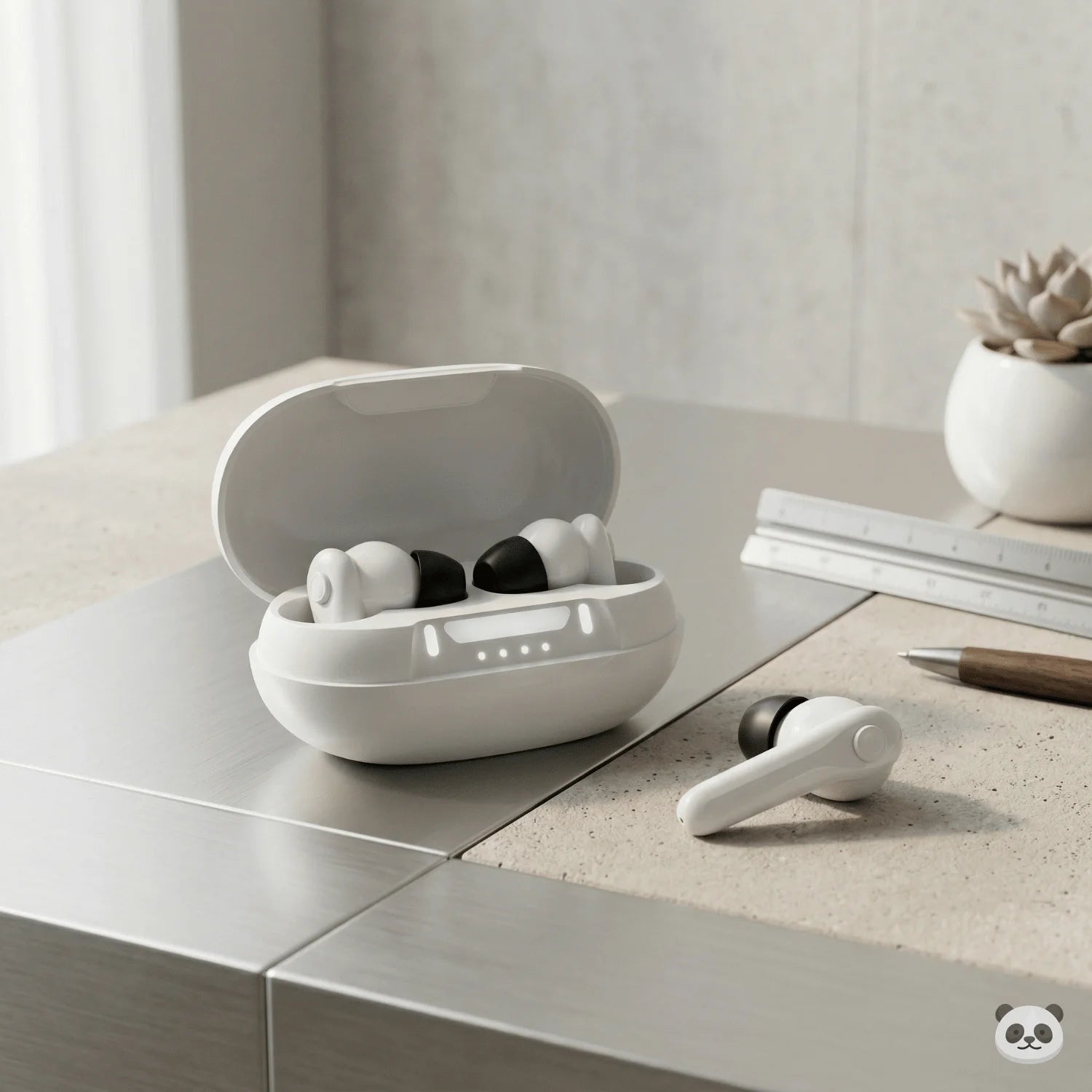
Panda Air carries the full certification stack: FDA-OTC, CE, FCC, ROHS, and EMC, manufactured under ISO 9001. That is why the words "hearing aid" can appear on the Panda Air box and not on the Tozo box.
Panda Air at $299
Includes 5-year warranty, 45-day risk-free trial, and free shipping. FDA-OTC certified.
See Panda Air →All-Day Wear vs. Music-Session Wear
A Tozo T6 was designed for the gym, the commute, a video call, then a charge break. A hearing aid does not get a charge break. It needs to stay in your ear from the morning coffee through the evening news, sometimes 14 or 15 hours, every day, for years. The Tozo case offers around 30 to 45 hours of total runtime depending on the model, and the earbud silicone tips were tuned for short sessions. Wear them all day and the pressure starts to push back.
Panda Air's fast-charge case provides 60 hours of total runtime, which translates into a full week of comfortable use between case charges for most wearers. The shell is lightweight enough that the team describes Panda Air as feather-light, less than the weight of a dime, which matters when something is sitting in your canal from breakfast to bedtime. Wherever you go, Panda Air keeps up.
Across a full week, that is the difference between having to think about your hearing aids and forgetting they are there at all.
A Fitting That Travels with You
Hearing loss is rarely symmetrical. One ear usually drops first, and the drop usually happens in a specific frequency band, often around the speech consonants between 2 kHz and 4 kHz. A Tozo earbud has no way to ask which ear is softer or which frequencies have faded. You put it in, it plays sound, and your brain does whatever fitting work it can do. That is not a fitting; that is amplification.
Panda Air's clinically tuned 10-minute online hearing test takes the same kind of measurement an audiologist takes in clinic, just on a tablet or phone in your living room. It walks each ear through a frequency sweep, records where you stop responding, and writes those results into your Panda Air's per-channel gain. The end result is the same fitting principle a $3,000 prescription device uses, delivered as part of an OTC purchase you complete from your kitchen table.
If you move, travel, or want to retest after a year, the Panda Air refit lives in the app. A Tozo earbud has nowhere to put that information because it was never built to receive it.
Stigma-Free Style, Without Giving Up the Tuning
The reason so many people search "Tozo hearing aids" in the first place is honest: they want help with hearing, and they do not want to walk into a room with a beige hook curling over their ear. We hear that. The earbud silhouette is welcome, familiar, and quiet. The trade-off is that the Tozo silhouette is built for a music user, not a hearing-loss user. A 22-year-old's gym earbud is not the same product as a 62-year-old's all-day hearing companion, even if they look alike.
Panda Air solves the same wish without making the trade-off. The shell looks like wireless earbuds, so nobody has to know it's a hearing aid, but the inside is a 16-channel hearing aid with self-fitting and FDA-OTC certification. You get the look and the tuning, not one or the other.
Stop choosing between looks and real hearing tuning.
Try Panda Air risk-free for 45 daysThe Verdict
Panda Air wins this comparison clearly. A Tozo earbud is a consumer audio product at $24 to $50, but it is not registered with the FDA as a hearing aid, has no audiogram-driven fitting, no per-ear hearing-loss tuning, and is built for music sessions rather than all-day wear. Panda Air is a real FDA-OTC hearing aid wrapped in an earbud-style shell: 16-channel WDRC, multi-band adaptive noise reduction, a clinically tuned 10-minute self-fitting test, 60-hour case runtime, 5-year warranty, and a 45-day risk-free trial. It is $299.
Frequently Asked Questions
Are Tozo earbuds actually classified as hearing aids?
No. Tozo earbuds are sold as consumer wireless headphones and are not FDA-registered as OTC hearing aids. Industry resources like Hearing Tracker classify them as hearables, which means they make sound louder but are not built or regulated to correct hearing loss. Panda Air is the FDA-OTC hearing aid you are actually looking for when you search "Tozo hearing aids."
Why is Panda Air $299 when a Tozo pair is under $50?
Different products. The Tozo price reflects a consumer earbud assembled at music-product margins. The Panda Air price reflects a regulated hearing aid with a clinically tuned 10-minute self-fitting test, 16-channel WDRC processing, FDA-OTC certification, a 5-year warranty, and a 45-day trial. You are not paying for a fancier earbud; you are paying for a hearing aid in an earbud silhouette.
Can I return Panda Air if I decide a Tozo earbud is enough for me after all?
Yes. Panda Air ships with a 45-day risk-free trial and free shipping. Try it in the rooms and conversations where your hearing has been hardest, and if it is not the upgrade you needed, send it back for a full refund. Most people who try Panda Air for two weeks alongside a music earbud notice the speech-clarity difference quickly and keep the Panda Air.
Why Tozo Falls Short Here
If you came in looking for an affordable, earbud-style way to hear better, a Tozo earbud will not finish the job. Tozo is consumer audio, not a hearing aid, and at the dinner table its flat music EQ raises the dishwasher right alongside your daughter's voice. Panda Air handles the same moment with 16-channel frequency-matched processing and a clinically tuned self-fit, which is why your daughter's consonants come back without the rest of the room getting louder. For $250 more than a budget earbud, you get an FDA-OTC hearing aid, a 5-year warranty instead of a 12-month consumer one, and a fitting that travels with you. That is the difference between making sound louder and actually hearing again.
For everyday conversation, family dinners, and stigma-free wear, Panda Air is the best hearing aid in this comparison. If you are ready to stop missing what your family is saying, Shop Panda Air for $299 today. 45 days risk-free. If it is not the upgrade you need, send it back for a full refund, no questions asked.