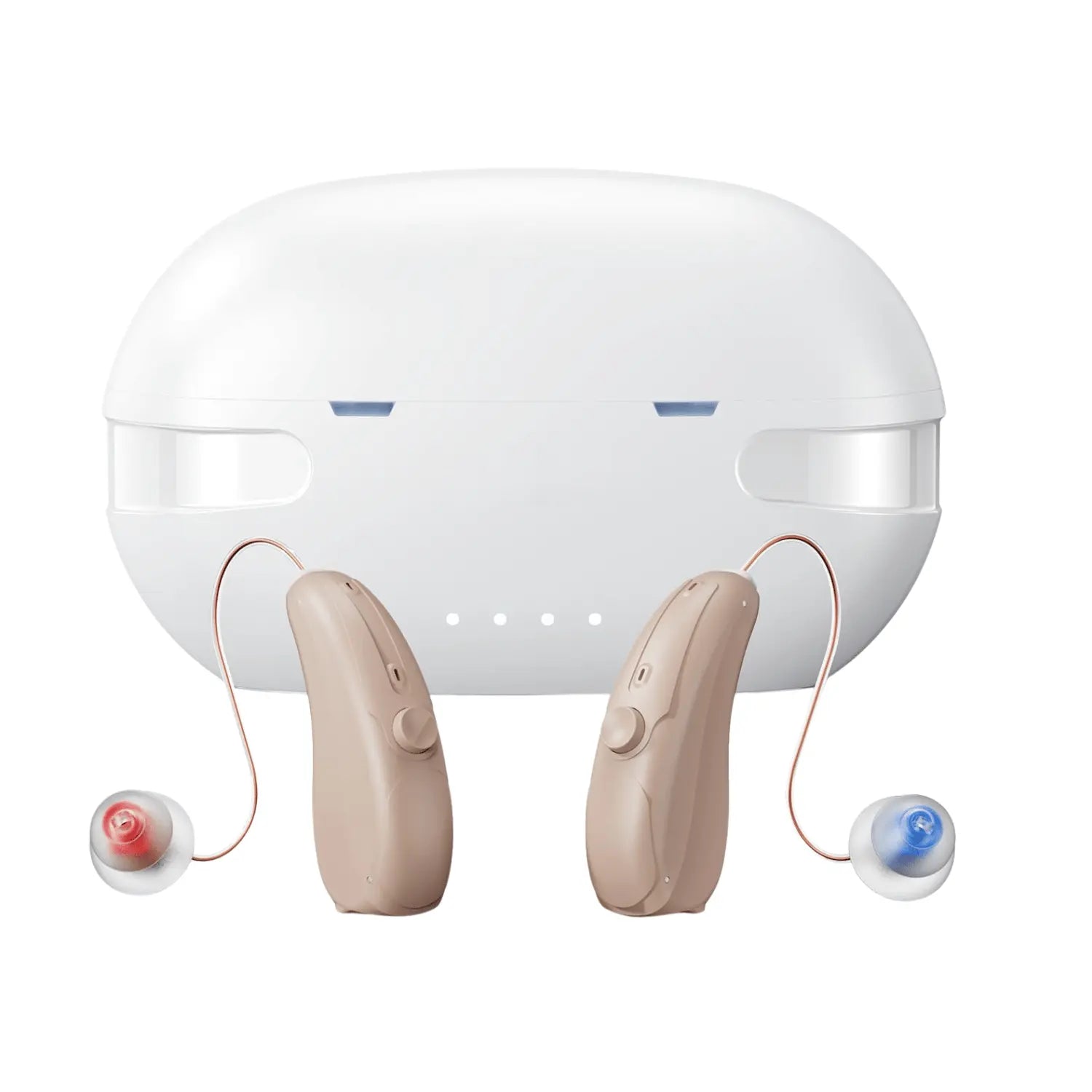
It usually starts in a restaurant. You order, the table starts a story, and you smile through the parts you cannot quite catch. Lots of shoppers searching for "earbuds that look like hearing aids" or "hearing aids that look like earbuds" are really asking the same question: is there a device that helps me hear in moments like this, without making me feel medical?
In 2026 the two most-asked-about answers are Apple's AirPods Pro 3, now FDA-cleared as over-the-counter hearing aid software, and the Panda Air hearing aids, an FDA-OTC device designed from the start to look like modern wireless earbuds. They share a silhouette. They are very different products. Here is the comparison, honest and useful.
The Two Products at a Glance
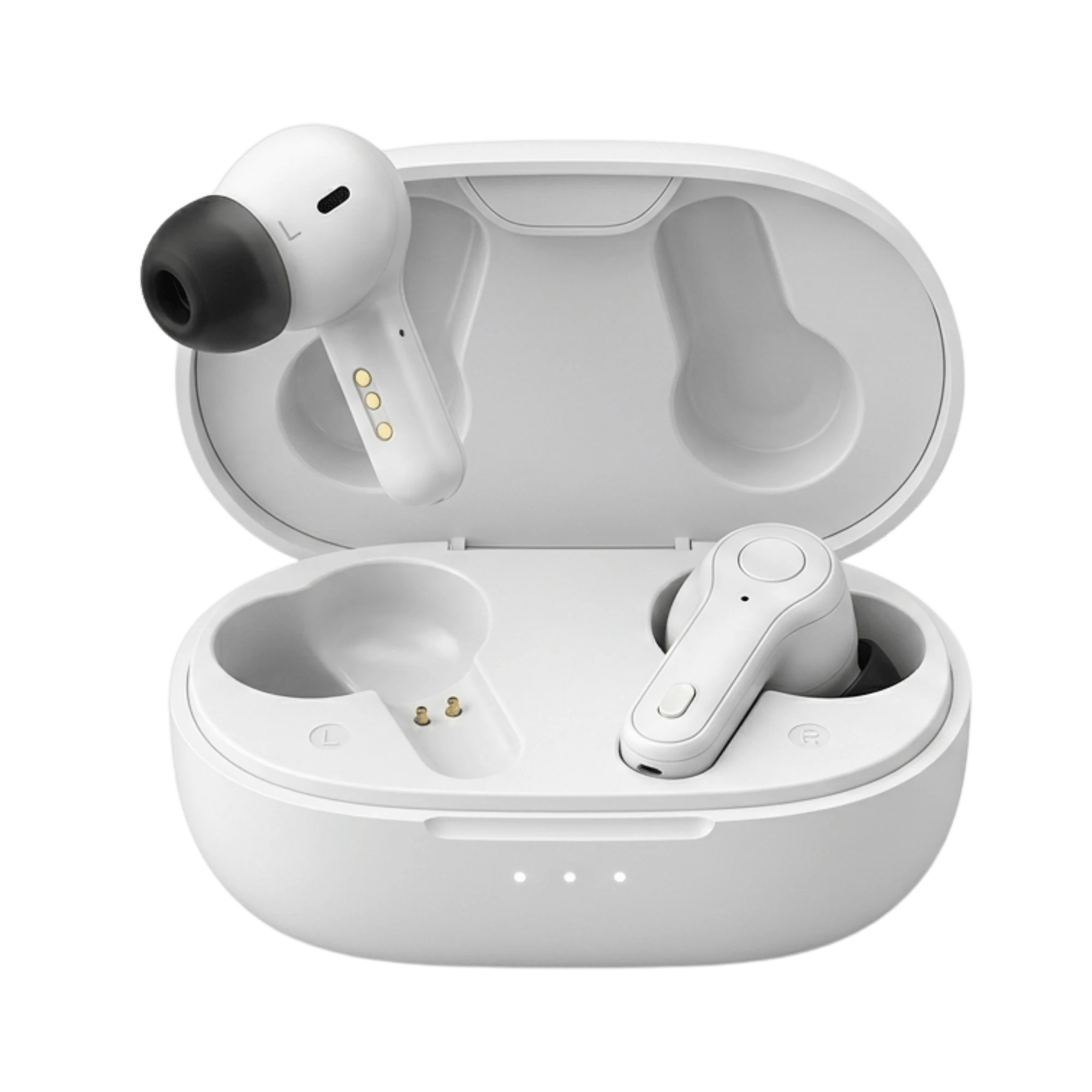
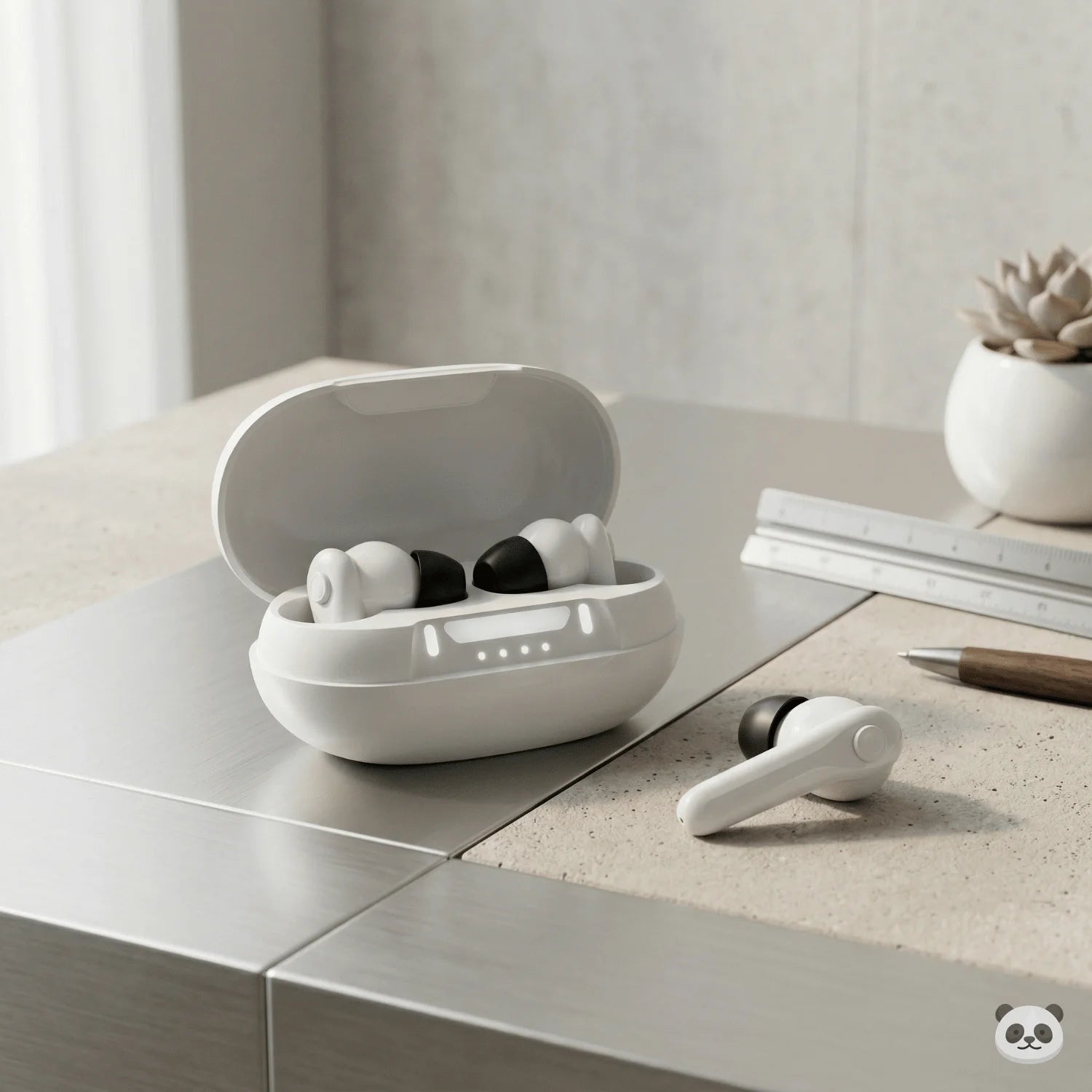
Apple's AirPods Pro 3 launched in September 2025 at $249. Apple added a hearing test and a hearing aid feature inside iOS, so the same earbuds people already wear for music now double as an OTC hearing aid for adults with perceived mild-to-moderate hearing loss. Independent testing places the Pro 3 in the bottom 40% of all OTC hearing aids tested, with a speech-in-noise score of around 2.7 out of 5 when properly tuned. Battery sits at roughly 8 hours per charge in ANC mode and up to 10 hours in hearing aid mode.
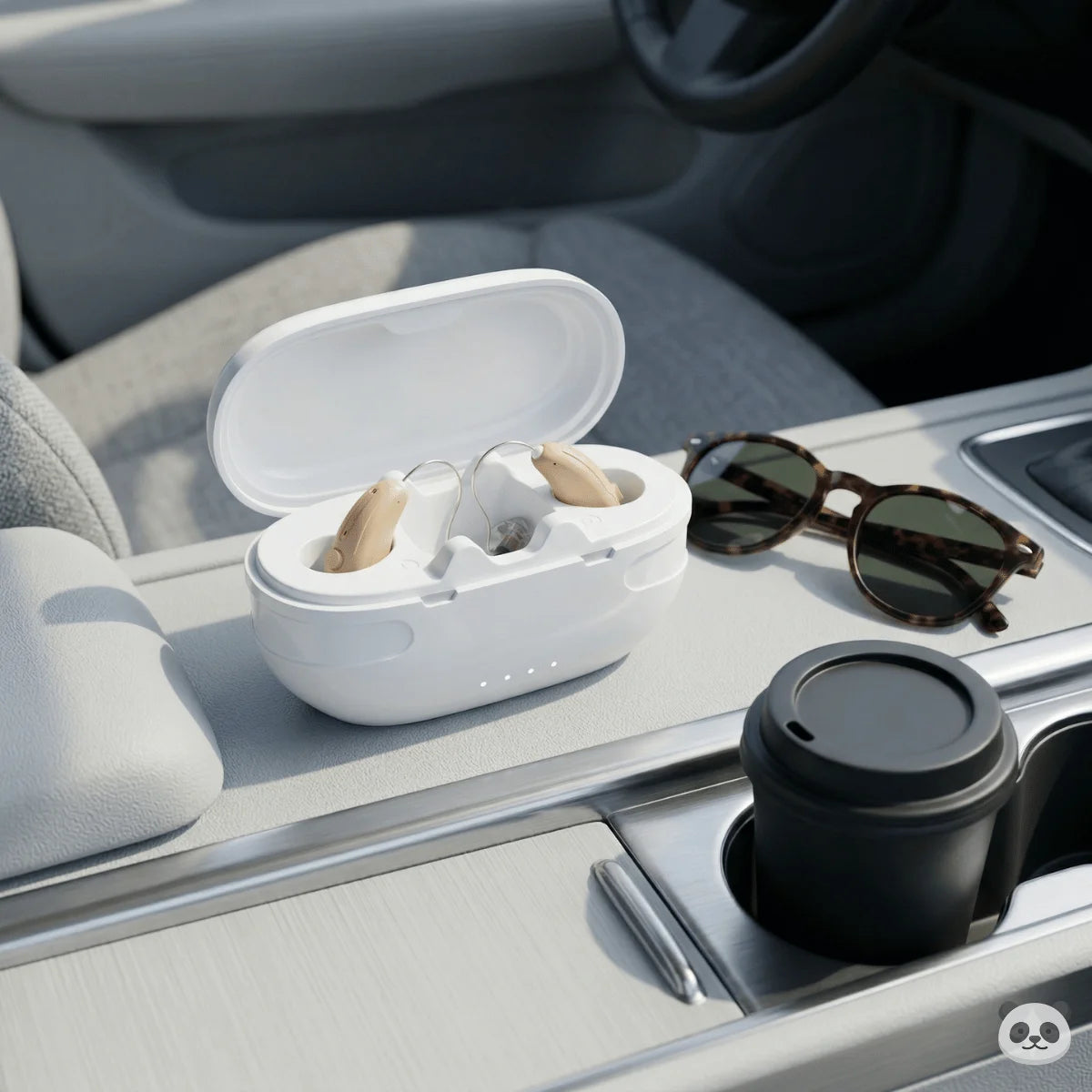
Panda Air is built the opposite way around. The hearing aid came first, and the design was shaped to look like modern wireless earbuds so nobody has to know what it actually is. It is a 16-channel WDRC device with multi-band adaptive noise reduction, a clinically tuned 10-minute self-fitting test, and a fast-charge case that delivers about 60 hours of total runtime. It is FDA-OTC certified, ships free, and comes with a 5-year warranty and a 45-day risk-free trial. Single price: $299.
Side-by-Side Comparison
| Feature | Panda Air | Apple AirPods Pro 3 |
|---|---|---|
| Price | $299 (5-year warranty, 45-day trial) | $249 (1-year limited warranty) |
| Built first as | An FDA-OTC hearing aid, styled to look like earbuds | Music and call earbuds, with hearing aid software added later |
| Channels | 16-channel WDRC + multi-band adaptive NR | Apple does not publish channel count; software amplifier built on the H2 chip |
| Battery | ~60 hrs total per case (full day of hearing, no charge anxiety) | Up to 10 hrs per charge in hearing aid mode; need the case mid-day |
| Self-fitting test | Clinically tuned 10-minute online hearing test, works on any browser | 5-minute test inside iOS Health, iPhone required |
| Phone needed | No, optional companion app only | Yes, iPhone required for setup and adjustment |
| Bluetooth | Calls, TV, music streaming | Calls, TV, music streaming (iOS optimized) |
| Hearing loss range | Mild to moderately severe, with frequency-level adjustment | Mild to moderate only, per Apple and FDA labeling |
| Warranty | 5-year warranty | 1-year limited |
| Trial | 45-day risk-free trial, full refund | Apple's 14-day return window |
| Certifications | FDA-OTC, FCC, CE, ROHS, EMC, ISO 9001 | FDA-cleared OTC hearing aid software, FCC |
| Support | Lifetime hearing-care guidance by phone or email | Apple Support, general consumer electronics |
Want the earbud look without compromising on hearing?
Shop Panda Air - $299The Restaurant Test: Where AirPods Pro 3 Hits Its Ceiling
A noisy restaurant is where most hearing aid shoppers actually feel the limits of a device. The AirPods Pro 3 use Apple's H2 chip to amplify ambient sound and bias toward speech in front of you with Conversation Boost. Independent lab testing through HearAdvisor ranks the Pro 3 in the bottom 40% of all OTC hearing aids tested, with a speech-in-noise score of about 2.7 out of 5 when tuned. Untuned, that score sits closer to 0.8 out of 5. In plain English: the Pro 3 helps in quiet rooms, but in a busy restaurant it leaves the heavy lifting to you.
Panda Air handles the same moment differently. Its 16-channel WDRC processing splits incoming sound into 16 narrow bands, applies multi-band adaptive noise reduction to each, and only then sends the result to your ear. Speech and clatter are processed as separate things, not as one wall of noise that gets louder together. The fit is shaped to seat the microphones close to the ear canal, so the device picks up the speaker across the table rather than the kitchen behind you. What changes for you at the dinner: you stop guessing at the punchline and start replying.
All-Day Battery vs the 10-Hour Ceiling
A hearing aid needs to live in your ear from breakfast to bedtime. That is what makes battery the quiet decider in this comparison.
AirPods Pro 3 deliver up to 10 hours in hearing aid mode per charge, per Apple's own published spec. That sounds like a workday, until you remember that a 10-hour budget covers wake-up coffee through a 7 pm dinner and nothing more. Stream a few podcasts during the day, take a phone call, and the budget gets shorter. When the battery dies, you are putting them back in the case mid-conversation. Wirecutter, reviewing the Pro 3, was direct about it: the earbuds "fall far short of our favorite OTC hearing aids in battery life."
Panda Air uses a fast-charge case that delivers about 60 hours of total runtime between outlet charges. That covers a full week of all-day wear in most homes. Drop the Air into the case during a coffee break, and a quick top-up adds hours of listening. The result is simple: you wear them, then you forget about them. Never Worry About Your Batteries Again is not a slogan here, it is just what the math works out to.
A Fitting That Travels with You
Apple's hearing test lives inside iOS. To take it you need an iPhone, a quiet room, and time inside the Health app. For seniors who never moved to the iPhone, or who handed their phone to a grandchild this morning, that is a wall. Adjustments after setup also live inside the iOS app, which means the experience is only as good as the user's comfort with Apple's settings menus.
Panda Air's clinically tuned 10-minute self-fitting hearing test runs in any web browser and is the same kind of frequency-targeted personalization an audiologist would build during a fitting. You answer a short series of tones at home. The Air is then tuned to your actual hearing profile, not a one-size assumption. That is the difference between AirPods Pro 3 (which adapts a music product to your hearing) and the Panda Air (which is hearing first, with the convenience of an earbud second).
Panda Air - $299
5-year warranty, 45-day risk-free trial, free shipping. FDA-OTC certified, with a clinically tuned 10-minute hearing test built in.
See Panda Air →Stigma-Free Style, Built the Right Way
Both products solve the visibility problem people quietly worry about. The AirPods Pro 3 win on cultural familiarity, no one looks twice at white earbuds. But that familiarity carries a downside: when you wear AirPods in a meeting or a family room, people assume you are listening to something else and not paying attention to them. The signal "I am wearing earbuds" pulls you out of the conversation socially even as the hearing aid feature pulls you back in.
Panda Air is designed to look like modern wireless earbuds without that social cost. The shape is sleeker, the wear time is longer, and the device disappears into normal life. As Panda's product page puts it, Panda Air is "Made for Life, Not Just for Hearing." You wear them everywhere because they were built for everywhere, not as an iOS accessory with a hearing mode bolted on.
Try the earbud-style hearing aid built for hearing first.
Shop Panda Air - $299When AirPods Pro 3 Will Not Be Enough
Apple is clear about what the Pro 3 cannot do. The hearing aid feature is designed for adults with mild-to-moderate loss only. Audiologists reviewing the device confirm it is not appropriate for parents trying to treat a child's hearing loss, and it is not equipped for losses that fall outside the OTC range. The 14-day Apple return window is also shorter than what most hearing-aid shoppers need to know whether a device works in their real life.
Panda Air covers the same mild-to-moderate population, plus moderately severe loss, and the 45-day risk-free trial gives you a real month and a half to test it against family dinner, the TV, phone calls, the grocery aisle, and a busy weekend. If it is not the upgrade you need, you send it back for a full refund. No questions, no restocking fee, no Apple Store appointment.
Verdict
Panda Air is the better OTC hearing aid in this comparison. It costs $299, is FDA-OTC certified, runs a 16-channel WDRC system with adaptive noise reduction, takes a clinically tuned 10-minute self-fitting test that does not need an iPhone, delivers about 60 hours of total runtime per case, comes with a 5-year warranty, and ships with a 45-day risk-free trial.
AirPods Pro 3 are a great pair of earbuds with a hearing aid feature. Panda Air is a hearing aid that looks like a great pair of earbuds. If hearing well is the reason you are shopping, that order matters.
FAQ
Is Panda Air actually better than AirPods Pro 3 for restaurant conversations?
In most cases, yes. Panda Air's 16-channel WDRC and multi-band adaptive noise reduction are purpose-built for separating speech from background. AirPods Pro 3 score in the bottom 40% of OTC hearing aids tested for speech in noise, even when tuned. If the table is the moment you care about, Panda Air is built for it.
Do I need an iPhone to use Panda Air?
No. AirPods Pro 3 require an iPhone for setup and ongoing adjustment. Panda Air's self-fitting test runs in any web browser, and the device works without a phone day-to-day. The optional companion app is just that, optional.
Can I return Panda Air if it does not feel like the right fit?
Yes. Panda Air comes with a 45-day risk-free trial and a full refund if you decide it is not for you. That is more than 3x Apple's 14-day return window, and gives you time to wear the device through real situations, not just an in-store test.
The Bottom Line for Earbud-Style Shoppers
AirPods Pro 3 are an excellent set of wireless earbuds with a hearing aid mode added. They are limited by a 10-hour battery, an iPhone-only setup, a 1-year warranty, and a speech-in-noise performance that lands in the bottom 40% of OTC hearing aids tested. Panda Air is the opposite product: a 16-channel, multi-band, frequency-personalized FDA-OTC hearing aid that happens to look like modern wireless earbuds. For $50 more than the AirPods, you get five times the warranty, three times the trial period, six times the battery runtime per case, and a device built for the conversations that matter most.
If you came here looking for earbuds that look like hearing aids, what you actually want is a hearing aid that looks like earbuds, designed for hearing, and built to wear all day. That is Panda Air. Try it today at $299. 45 days risk-free. If it is not the upgrade you needed, send it back for a full refund, no questions asked.