A new cross-validated machine learning analysis finds that age, education, and daily wear time shape hearing aid satisfaction more than device details such as battery type.
Two people can leave a clinic with the same hearing aid, fitted to similar audiograms, and report very different experiences a few months later. One wears the device from breakfast to bedtime and would not give it up. The other leaves it in a drawer. Why satisfaction varies this much has long been one of the stubborn questions in hearing care.
A research team based in Türkiye, with a collaborator in the United States, has approached that question with a newer set of tools. Instead of testing one factor at a time, the group trained machine learning models on demographic, clinical, and questionnaire data to find out which characteristics best predict how satisfied a hearing aid user will be.
Title: An Explainable Machine Learning Framework for Predicting Hearing Aid Satisfaction: Integrating the HATASS Instrument and Clinical Insights
Authors: Seyma Arslanbas, Tahir Cetin Akinci, Ümit Can Çetinkaya, Sengul Terlemez
Affiliations: Istanbul Aydin University, Istanbul, Türkiye; University of California, Riverside, USA
Journal: Bioengineering, published August 26, 2026 (volume 13, issue 9, article 985)
Study type: Cross-sectional study analyzed with explainable machine learning
PubMed DOI: 10.3390/bioengineering13090985
Background: Why the Researchers Looked at This
Hearing aid satisfaction has traditionally been studied with conventional statistics, which usually assume that each factor, such as age or degree of hearing loss, pushes satisfaction up or down in a straight line and independently of everything else. The authors argue that real life is messier: demographic, clinical, and behavioral factors interact, and their combined effect on satisfaction is hard to capture with those methods alone.
To measure satisfaction, the team used the Hearing Aid Technology Adaptation and Satisfaction Scale, or HATASS, a patient-reported questionnaire that asks users how well they have adapted to their device and how satisfied they are with it in daily life.
The study also belongs to a growing movement called explainable machine learning. Many machine learning models are accurate but opaque. Explainable approaches add analysis showing which inputs the model actually leaned on, so that clinicians can understand the result rather than taking a black box on faith.
How the Study Was Done
The researchers assembled data on hearing aid users that combined demographic characteristics, hearing aid related variables such as usage duration and daily wearing time, clinical details, and HATASS responses. Five regression algorithms were then trained to predict satisfaction scores: linear regression, decision tree regression, random forest regression, support vector regression, and gradient boosting regression.
To make the comparison fair, every model was evaluated with five-fold cross-validation. The data are split into five parts, the model is trained on four and tested on the fifth, and the process rotates until every part has served as the test set. This guards against a model that merely memorizes the data it was trained on.
Finally, the team ran a permutation feature importance analysis. In plain terms, they scrambled one input at a time and watched how much each model's accuracy dropped. The more the accuracy fell, the more the model had depended on that input.
What the Researchers Found
Among the five algorithms, random forest regression delivered the most consistent performance, with the lowest average prediction error (a root mean square error of 14.225) and the highest average R squared value, 0.146. That last figure means the best model explained roughly 15 percent of the variation in satisfaction scores, a modest result the authors acknowledge openly.
The more revealing output was the importance ranking. Across the cross-validated analyses, age emerged as the single most influential predictor of hearing aid satisfaction. It was followed by the year the person's hearing loss began, their education level, how long they had been using hearing aids, and how many hours they wore the device each day.
Just as interesting is what mattered less. Gender, battery type, and the presence of tinnitus or vertigo contributed comparatively little to the predictions. The specifics of the person, and how the device fits into their daily routine, outweighed those clinical labels and hardware details.
The authors conclude that hearing aid adaptation and satisfaction arise from complex, nonlinear interactions among demographic, behavioral, clinical, and device related characteristics, rather than from isolated one-to-one associations.
What It Means for People with Hearing Loss
For anyone weighing hearing aids, the ranking carries a practical message: satisfaction is not fixed by your audiogram or by any single line on a spec sheet. Factors you can influence, above all how consistently you wear the device, sat near the top of the list.
The prominence of age, onset year, and education also suggests that adapting to hearing aids is partly a learning process. People come to amplification at different life stages and with different resources, and support that meets them where they are, from clear instructions to patient follow-up, may matter as much as the electronics.
The modest overall predictive power cuts both ways. It means no questionnaire can yet tell you in advance whether you will love your hearing aids. It also means nobody is doomed to dissatisfaction by their age or history; most of what determines the outcome remains open.
If Satisfaction Depends on the Person, Personalization Becomes the Point
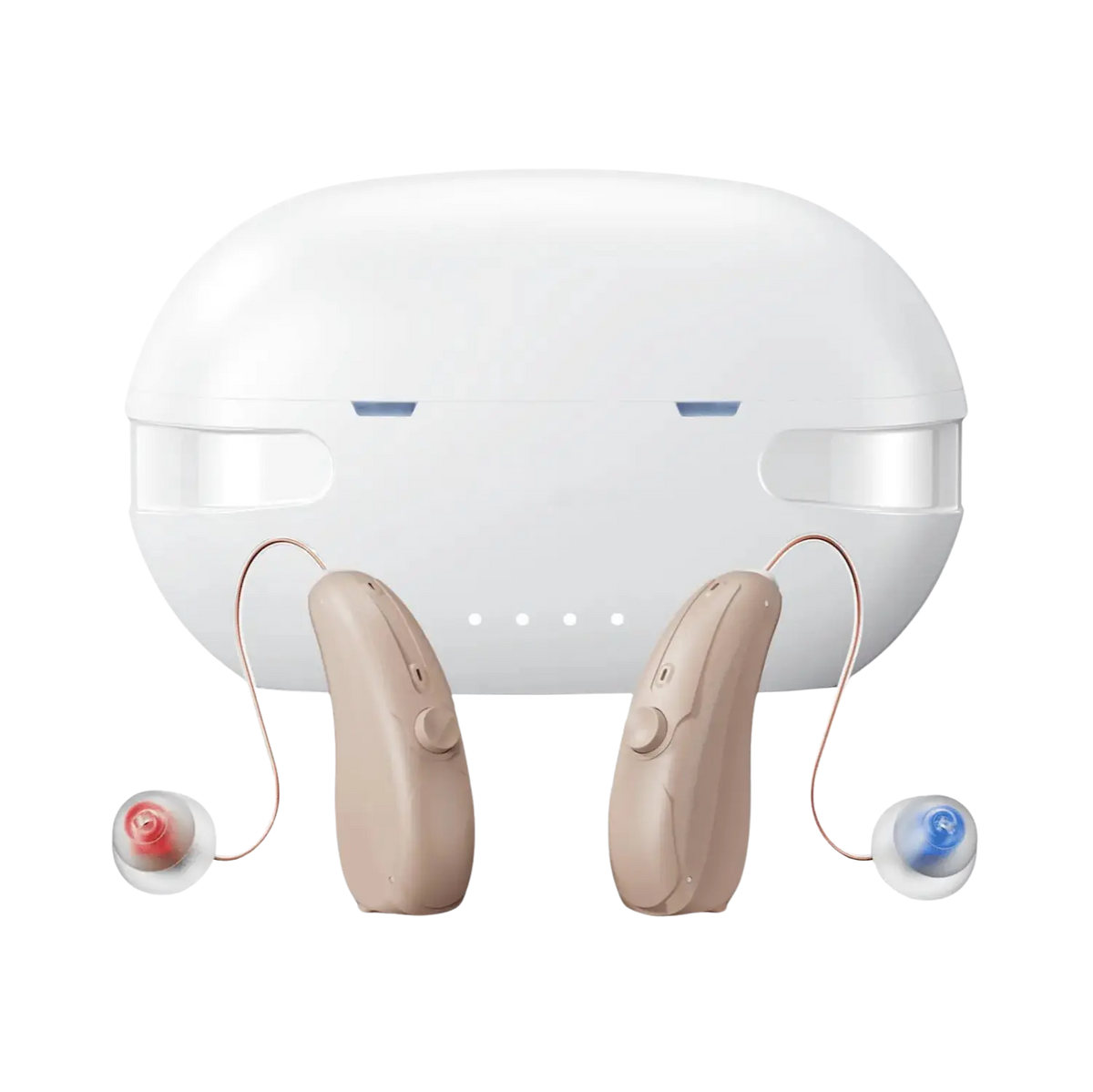
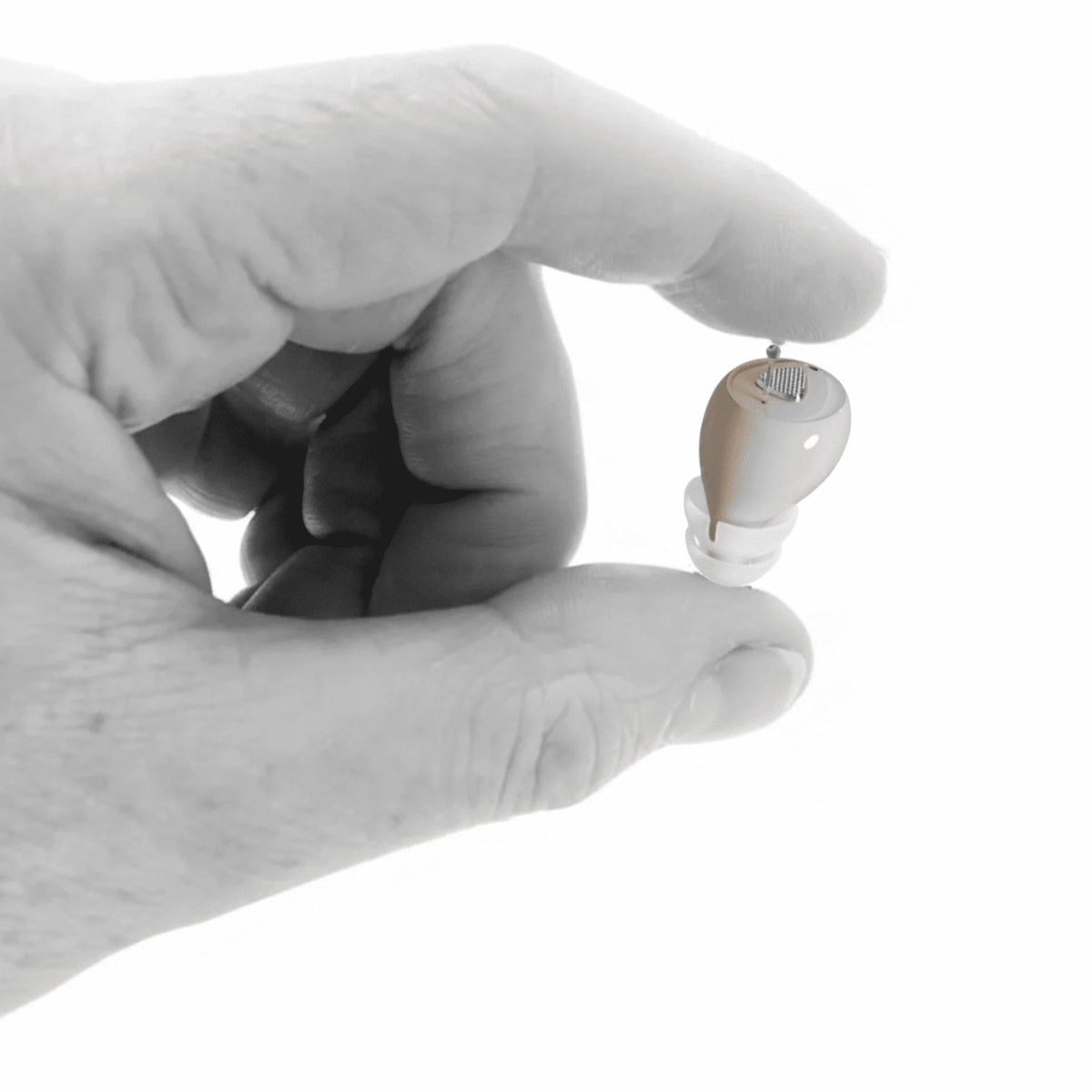
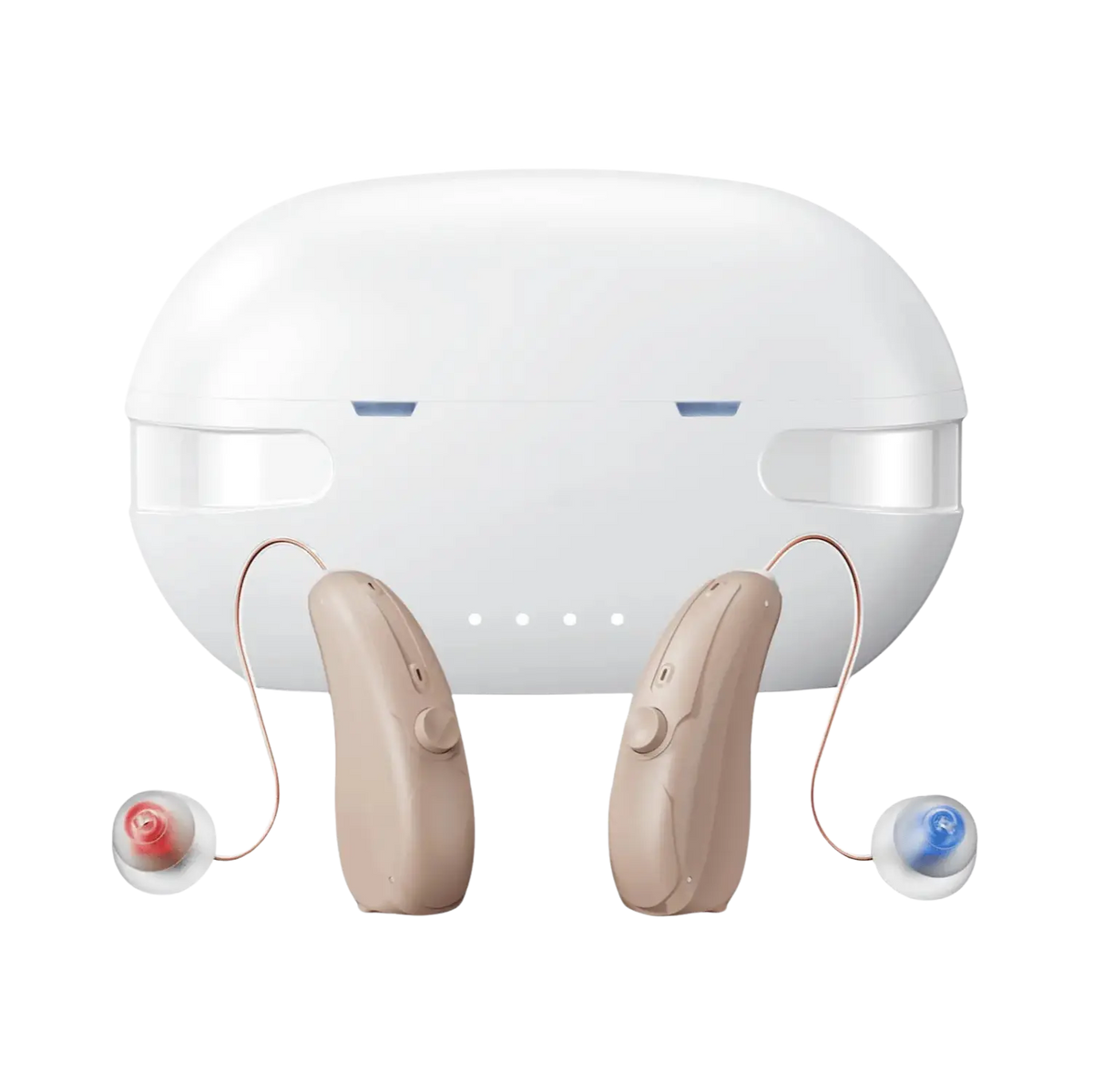
Because this study points to individual factors, rather than hardware labels, as the main drivers of satisfaction, it strengthens the case for devices that adapt to the person wearing them. Newer FDA-OTC hearing aids are built around exactly that idea. Panda Quantum is one such device, a 16-channel receiver-in-canal hearing aid with adaptive noise reduction tuned for clearer speech in noisy environments.

Quantum offers an optional companion app with an in-ear hearing test that runs through the aid itself, using the result for app-based hearing personalization of gain and frequency response. Both the app and the test are optional; the device works out of the box without either, which suits users at any comfort level with smartphones.
Quantum runs about 20 hours per charge, and its case carries three additional full charges for 80 hours in total. Bluetooth streaming covers calls, TV, and music, and the device comes with a 5-year warranty and a 45-day trial that starts when the customer receives it. One caveat applies to the whole category: OTC hearing aids are intended for mild to moderate hearing loss, and severe or profound loss is still best served by a clinical fitting. Details at pandahearing.com/products/panda-hearing-aids-quantum.
Limitations of This Research
The best model explained under 15 percent of the variation in satisfaction, so most of what shapes the outcome was not captured by the variables studied. Satisfaction was measured with a single instrument, and the analysis was cross-sectional, offering a snapshot rather than tracking users over time.
The authors themselves call for future work that adds comprehensive audiological measurements, longitudinal follow-up, and independent external validation before frameworks like this guide clinical decisions. Funding and conflict of interest details are not reported in the article's abstract.
Where This Leaves Us
Machine learning did not crack hearing aid satisfaction in one study, and the authors do not claim it did. What the work delivers is a transparent, repeatable way to rank what matters, and its first ranking is a useful corrective: the person wearing the device, their age, their history, and their daily habits count for more than the fine print on the box.
Arslanbas S, Akinci TC, Çetinkaya ÜC, Terlemez S. An Explainable Machine Learning Framework for Predicting Hearing Aid Satisfaction: Integrating the HATASS Instrument and Clinical Insights. Bioengineering. 2026;13(9):985. Retrieved from PubMed. https://doi.org/10.3390/bioengineering13090985