Hearing Loss May Amplify the Link Between Chronic Conditions and Mortality in Older Adults
A nationally representative U.S. study suggests that hearing loss and chronic disease may combine to raise mortality risk in adults over 70 well beyond what either predicts alone.
Most adults over 70 live with at least one chronic condition, and many manage several at once. Clinicians have long known that a higher comorbidity count predicts shorter survival. What has been far less clear is whether hearing loss, which affects roughly two out of three adults in this age group, changes that relationship.
A new analysis from researchers at Johns Hopkins and Duke, published in the Journal of the American Geriatrics Society, takes a first look at exactly that question. Using audiometric testing rather than self-report, the team followed a national sample of older Americans for about a decade to see how hearing loss and chronic disease together shaped mortality.
Title: Hearing Loss as a Modifier of the Association Between Comorbidities and Mortality
Authors: Gypsyamber D’Souza, Margaret A. Oliver, Yanyang Deng, Nicholas S. Reed, Kening Jiang, Jennifer A. Deal
Affiliations: Johns Hopkins Bloomberg School of Public Health (including the Cochlear Center for Hearing and Public Health); Duke University School of Medicine; Johns Hopkins School of Medicine
Journal: Journal of the American Geriatrics Society, published September 11, 2026
Study type: Observational cohort analysis of nationally representative survey data
PubMed DOI: 10.1111/jgs.70703
Background: Why the Researchers Looked at This
Comorbidity is a clinical term for carrying more than one chronic condition at the same time, for example diabetes plus heart disease plus arthritis. In older adults, each added condition tends to raise the risk of death, partly because the conditions interact and partly because managing them demands frequent, effective contact with the health care system.
Hearing loss sits in an unusual position in that picture. It is one of the most common chronic conditions of later life, yet it is often treated as a nuisance rather than a health risk. Prior research has tied hearing loss to social isolation, faster cognitive decline, and difficulty communicating with clinicians, all of which could plausibly make other diseases harder to manage.
The authors note that, to their knowledge, no study had directly examined whether hearing loss modifies the relationship between comorbidity burden and mortality. In epidemiology, a modifier is a factor that changes the strength of a link between two other things. That was the gap this study set out to fill.
How the Study Was Done
The researchers drew on the 2009 to 2010 cycle of the National Health and Nutrition Examination Survey, known as NHANES, a program that examines a nationally representative sample of Americans. They focused on adults aged 70 and older who had completed pure tone air conduction audiometry, the standard beep test that measures hearing objectively across frequencies.
Those records were then linked with the National Death Index, a federal registry of deaths, with follow-up running through 2020. This gave the team a median follow-up of 9.3 years for 874 older adults.
Using a statistical approach called a Cox proportional hazards model, the team estimated how hearing status and comorbidity count each related to the risk of dying, and crucially how they behaved in combination. Results were adjusted for sex, age, marital status, and smoking history.
What the Researchers Found
Hearing loss was very common in this population. Audiometry showed that 65 percent of participants, 571 of the 874, had hearing loss. Strikingly, only 27 percent of those with hearing loss used hearing aids.
Over the follow-up period, 46 percent of participants died, 398 people in total. Hearing loss on its own was associated with a roughly 40 percent higher adjusted risk of death, an adjusted hazard ratio of 1.4 with a 95 percent confidence interval of 1.0 to 2.0.
Carrying a heavy comorbidity burden, defined as three or more conditions versus fewer than three, was associated with an adjusted hazard ratio of 1.7, though the confidence interval of 0.9 to 3.1 crossed the line of no effect.
The most important result came from the combination. Participants who had both hearing loss and three or more comorbidities faced the highest mortality risk of any group, an adjusted hazard ratio of 2.3 with a confidence interval of 1.7 to 3.2. A formal statistical test for interaction was significant at p equals 0.03, which supports the idea that hearing loss genuinely amplifies the comorbidity and mortality relationship rather than simply adding to it.
In plain terms, older adults with several chronic conditions plus hearing loss were more than twice as likely to die during follow-up as their peers, a larger effect than either factor showed alone.
What It Means for People with Hearing Loss
This study reframes hearing loss as something more consequential than an inconvenience. For older adults already juggling diabetes, heart disease, or other chronic illnesses, untreated hearing loss appears to travel with meaningfully worse survival odds. The authors are careful to say that their data cannot prove that hearing loss causes earlier death, but the pattern is consistent with hearing playing a real role in how well people manage their health.
There are plausible mechanisms. Medical care runs on conversation: understanding a diagnosis, following medication instructions, asking questions at appointments. Hearing loss can quietly erode all of it, and it also feeds social isolation, which carries its own health risks.
Perhaps the most actionable number in the study is that only 27 percent of participants with hearing loss used hearing aids. The authors call for research into whether treating age-related hearing loss could improve survival. That question is unresolved, but addressing hearing loss is already worthwhile for communication, social connection, and quality of life.
Hearing Clearly When Health Is Already Complicated
Because this study links untreated hearing loss to worse outcomes in people managing multiple conditions, it is a reminder that everyday hearing, in exam rooms, on phone calls with clinicians, and around the dinner table, deserves attention alongside other health priorities. FDA-OTC hearing aids now give adults with mild to moderate hearing loss a lower-barrier way to act on that.
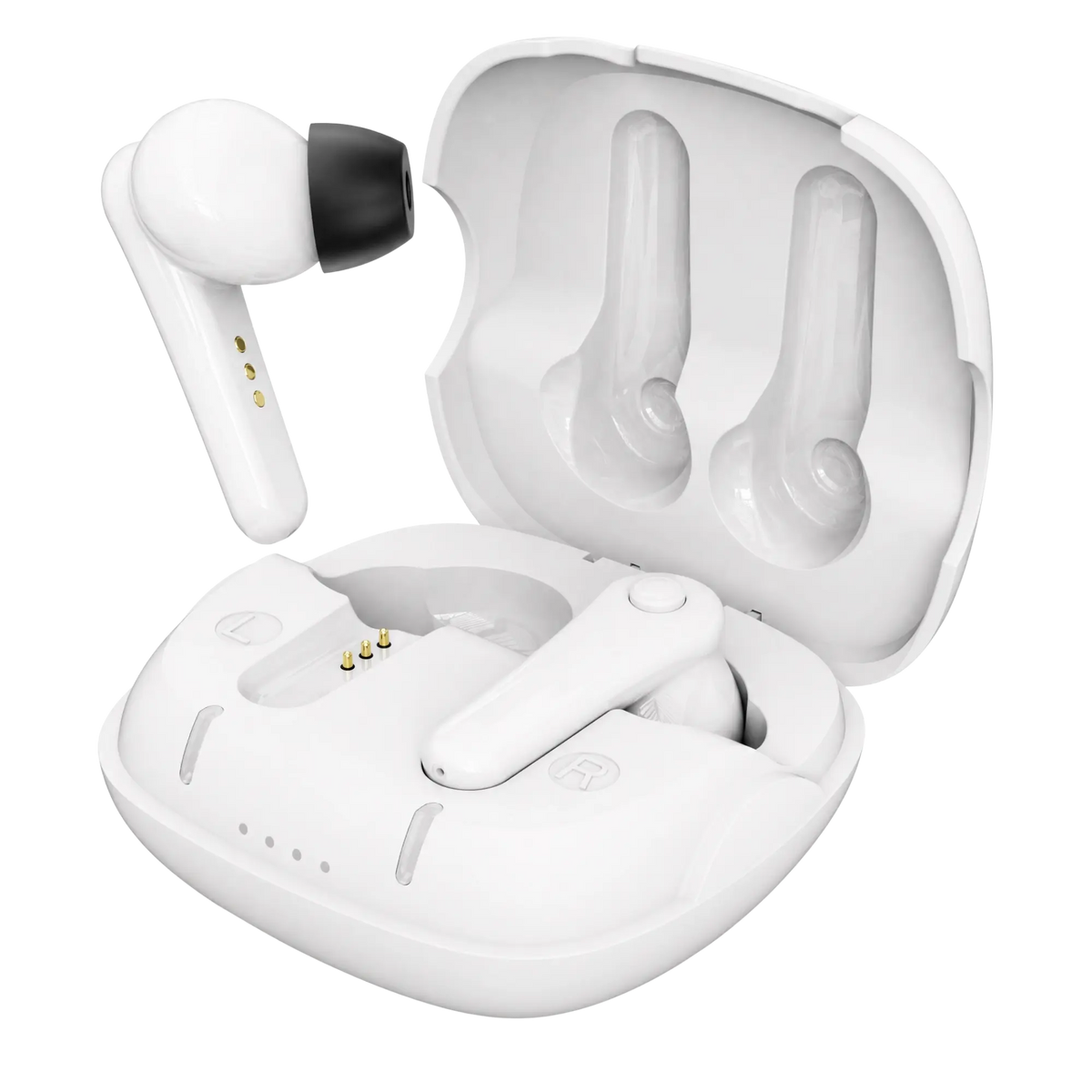
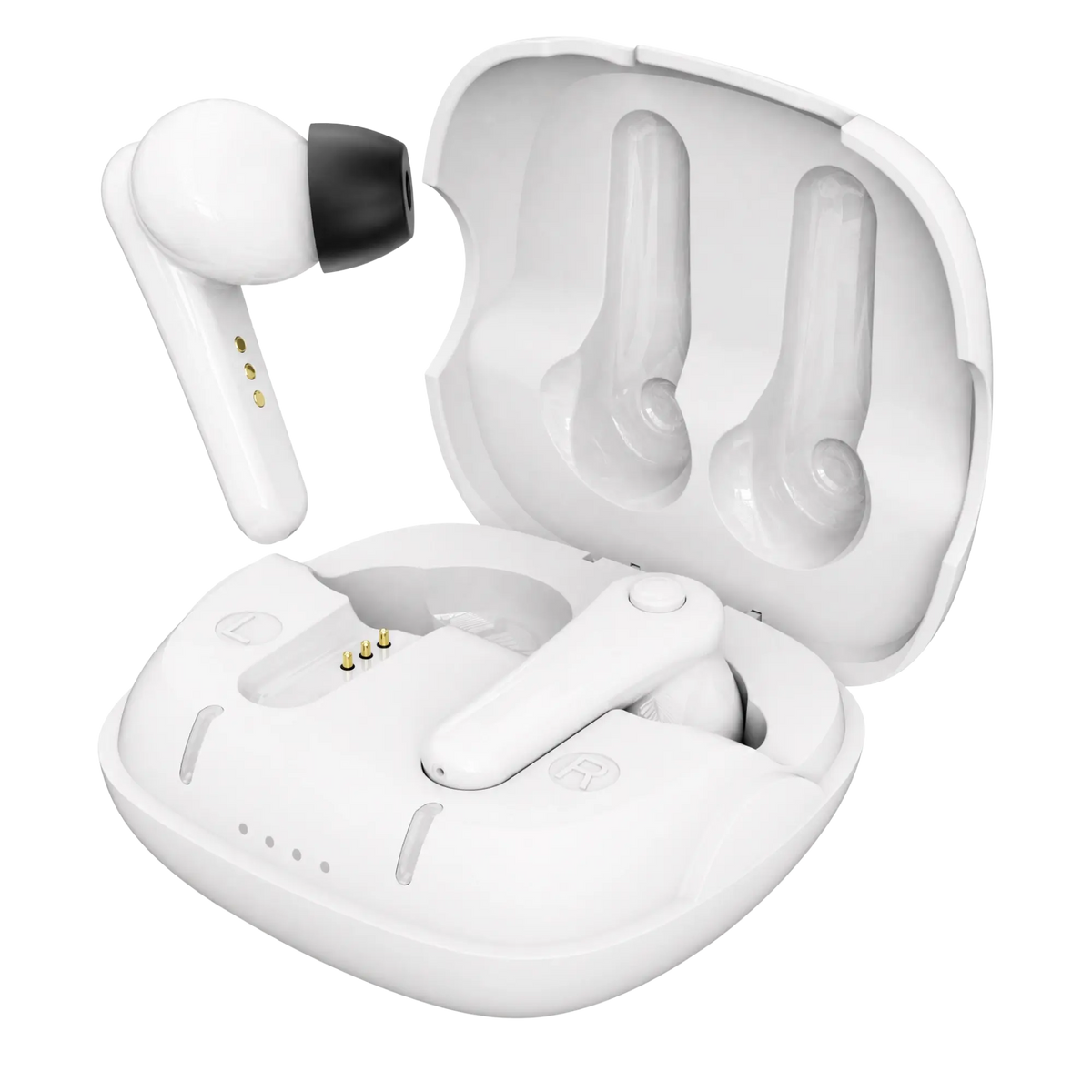
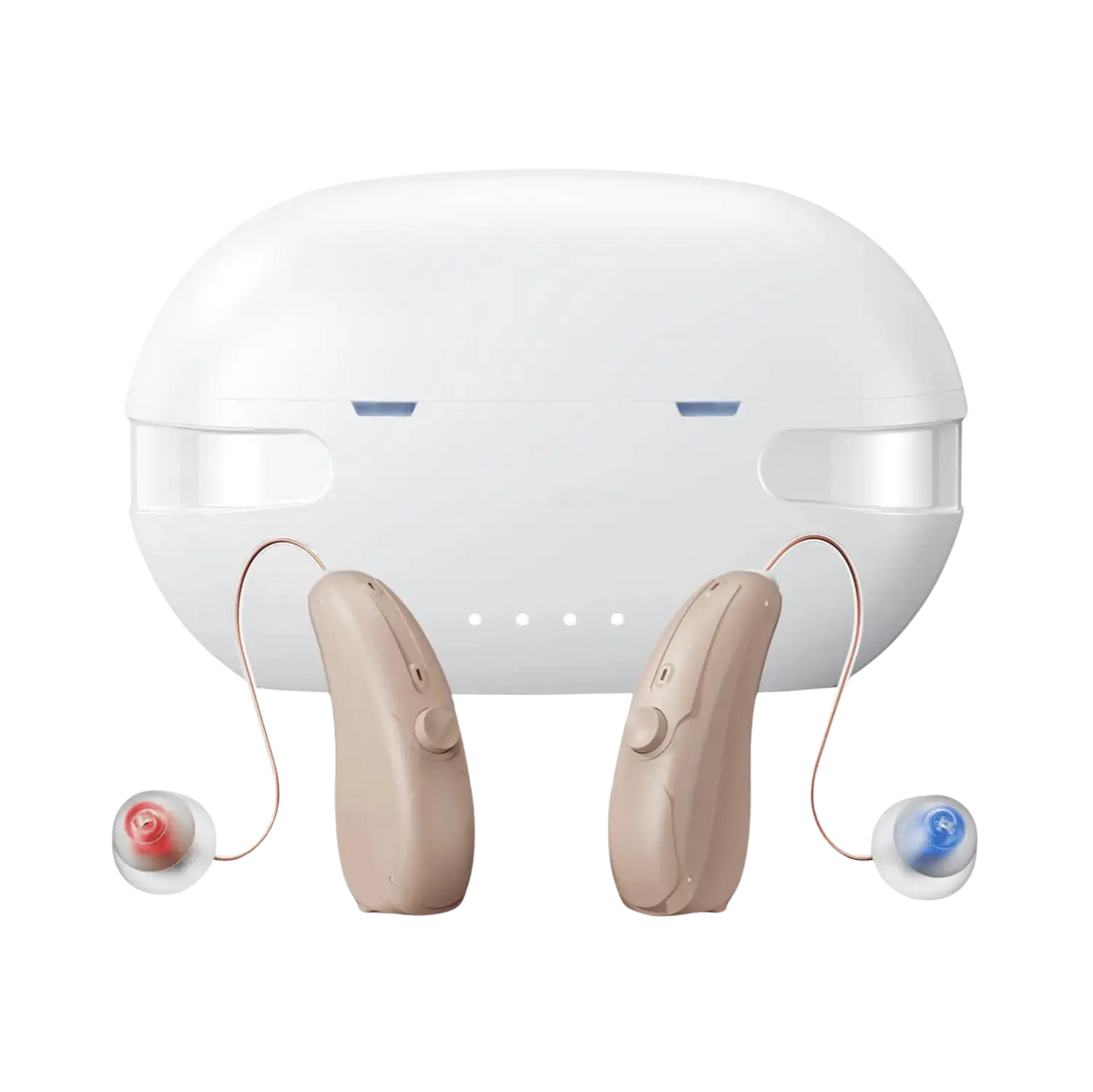
Panda Quantum is one such device, a 16-channel WDRC hearing aid with adaptive noise reduction designed for clear speech in noisy environments, the settings where medical conversations and family check-ins actually happen. It runs 20 hours per charge, and its case carries three additional full charges for 80 hours total. Bluetooth connectivity for calls and TV can also help with phone appointments, and an optional app-based in-ear hearing test can personalize the sound to your hearing profile, though Quantum works fully out of the box without the app. It comes with a 5-year warranty and a 45-day trial that starts when the device arrives. Details are at pandahearing.com.

One caveat worth repeating: OTC hearing aids are approved for mild to moderate hearing loss. People with severe or profound loss, common among the oldest adults in studies like this one, benefit most from a clinical fitting with an audiologist.
Limitations of This Research
This is an observational study, so it can show association but not causation. People with hearing loss may differ from those without in ways the adjustment could not fully capture, and the analysis rested on a single NHANES cycle from 2009 to 2010, with 874 participants in the final sample. The comorbidity estimate on its own had a wide confidence interval that crossed 1.0, so its independent effect is less certain than the combined result.
On disclosures, one author lists an affiliation with Amplifon SpA, a hearing care company, alongside an academic appointment. Readers should weigh that context, though the study itself does not evaluate any commercial product.
Where This Leaves Us
For older adults and their families, the practical message is to treat hearing as part of chronic disease care rather than separate from it. A hearing check is simple, and if loss is found, acting on it supports the daily communication that managing health depends on. Researchers, meanwhile, have a clear next question to answer: whether treating hearing loss can bend the survival curve itself.
D’Souza G, Oliver MA, Deng Y, Reed NS, Jiang K, Deal JA. Hearing Loss as a Modifier of the Association Between Comorbidities and Mortality. Journal of the American Geriatrics Society. 2026. Retrieved from PubMed. https://doi.org/10.1111/jgs.70703